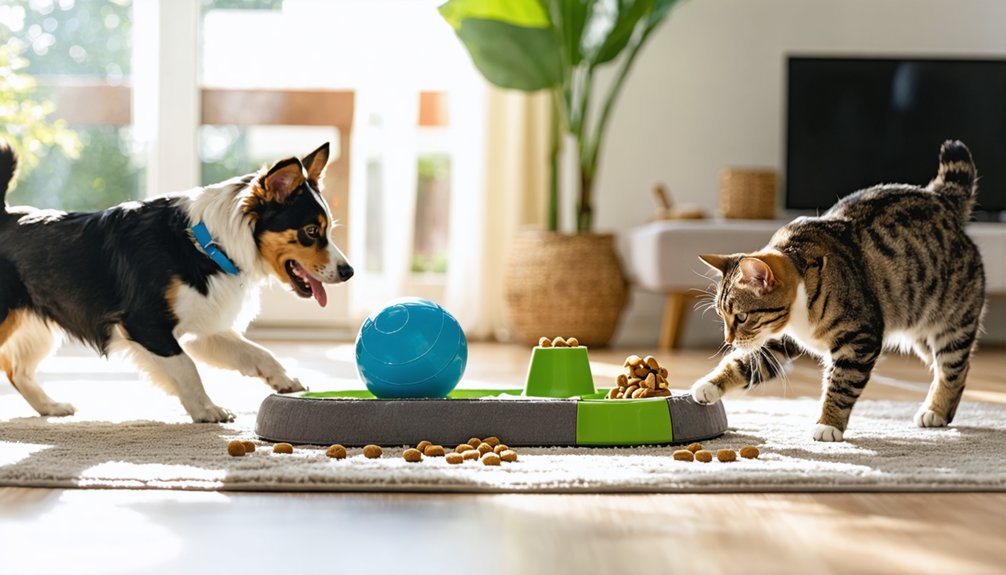
Interactive pet toys keep indoor dogs and cats engaged longer when they combine food rewards, scent work, chewing, and unpredictable movement. Puzzle feeders like KONG Wobbler, Dog Brick, and slow-feeder balls extend mealtimes and promote problem-solving. Snuffle mats and lick mats encourage calming foraging and repetitive oral activity. Motion-activated toys add solo-play variety for high-energy pets. Rotating puzzles, chew toys, and sensory toys each week helps preserve novelty, with more practical options and pet-specific picks ahead.
Highlights
- Puzzle and treat-dispensing toys like KONG Classic, Dog Brick, and IQ Treat Ball extend play by rewarding problem-solving and slowing fast eating.
- Snuffle mats and lick mats keep indoor pets busy through scent work and repetitive licking, which can reduce stress and promote calmer behavior.
- Motion-activated toys such as rolling balls, robotic chasers, and spinning teasers encourage solo play and sustain interest with unpredictable movement.
- Match toys to your pet’s age and energy level, using softer puzzles for seniors and tougher, more active toys for puppies and high-energy pets.
- Rotate puzzle, chew, motion, and scent toys weekly to maintain novelty, prevent boredom, and keep indoor dogs and cats mentally engaged longer.
Best Interactive Pet Toys for Indoor Pets
For indoor dogs and cats, the most effective interactive toys combine mental stimulation, safe physical activity, and sustained engagement. Evidence-supported options include puzzle designs such as the KONG Classic, Nina Ottosson Dog Brick, ZippyPaws Smarty Paws, and Outward Hound Hide-a-Squirrel, which reward problem-solving and persistence while reducing boredom in housebound pets. The KONG Classic remains a gold-standard toy with more than 40 years of use and a 4.89/5 rating.
Treat-dispensing toys like the West Paw Zogoflex Tux, KONG Wobbler, Brightkins Surprise Party, and snuffle mats add sensory stimulation through licking, sniffing, nudging, and chewing. These toys can also help slow fast eaters while extending feeding time and reinforcing positive behavior. Snuffle mats also support nose work by hiding treats in fabric flaps that encourage pets to sniff and forage.
For movement indoors, soft choices such as the Chuckit! Indoor Ball or curiosity-driven toys like the Wobble Wag Giggle Ball support active play without excessive impact.
Many households also appreciate budget enrichment toys that are durable, easy to demonstrate, and simple to scale from beginner to advanced difficulty levels.
Interactive Dog Toys for Fast Eaters
Among interactive options for indoor pets, toys designed for fast eaters offer a distinct feeding benefit by slowing intake while keeping dogs mentally engaged.
By regulating pace, they may help reduce choking risk, support digestion, and lower the likelihood of bloat associated with rapid consumption.
Unlike basic Speed‑control bowls, interactive feeders wobble, spin, or roll unpredictably, requiring pawing or nose nudges to release kibble. The Pet Zone IQ Treat Ball offers adjustable difficulty, making it useful as dogs get better at dispensing food.
Chew‑resistant puzzles such as the KONG Wobbler, KONG Gyro, Tug-a-Jug, Spin Maze UFO Slow Feeder, and Lickin’ Layers Fun Feeder turn meals into problem-solving sessions. These toys also provide mental stimulation, which can help reduce boredom during mealtime. The KONG Wobbler also unscrews easily for quick filling and cleaning, making it simpler to use for daily meals.
Owners typically add up to one cup of dry food, secure the top, and encourage rocking rather than chewing.
Frozen fillings can extend use, while the added mental work may increase activity and reduce destructive behaviors indoors.
Interactive Cat Toys That Spark Hunting
Many indoor cats retain a strong drive to stalk, chase, and pounce, so interactive toys that imitate prey can provide a practical outlet for those instincts. Wand toys with feathers, strings, or beetle and lizard attachments support prey simulation by encouraging stalking, leaping, and controlled pounces. Rotating options such as ribbon wands or Cat Dancer styles can help maintain novelty for households seeking enhancing daily routines. Toys that mimic natural prey are especially effective because they safely channel predatory behavior while supporting agility and coordination. This kind of play engages natural predatory instincts while keeping cats mentally stimulated. Detachable wand attachments add variety in play and make it easier to rotate prey styles that keep hunting sessions fresh.
Electronic motion toys add unpredictable movement that strengthens chase reflexes. Wind-up mice, concealed-track toys, fluttering butterflies, and insect-like devices promote batting, pursuit, and problem-solving, including in multi-cat homes. Lifelike mice, fish shapes, crinkly Dust Bunnies, and feather teasers further sharpen hunting skills, while occasional scent enrichment can deepen engagement. Used thoughtfully, these toys support exercise, reflexes, and emotional well-being for indoor cats.
Puzzle Feeders That Make Meals Last Longer
Because indoor pets often finish meals quickly and then seek additional stimulation, puzzle feeders offer a practical way to turn feeding into a longer, more engaging activity.
For cats and dogs, these tools combine treat‑hunting mechanics with meal delivery, helping reduce boredom, curb destructive habits, and slow overeating. Products like the Aelflane Treat Dispensing Slow Feeder are designed for interactive enrichment and currently have a 4.6/5 rating from 955 reviews. Most cat puzzle feeders in this category are priced under $20, making them a budget-friendly option for daily enrichment.
Common formats include mazes, ball tracks, sliders, and hidden‑compartment games that reward paw and nose manipulation. New options such as the Tower of Treats – Level 4 add a more advanced problem-solving challenge for pets ready to move beyond beginner puzzles.
This supports cognitive sharpness, natural hunting behavior, and light physical activity.
Beginners often do best with simple level 1‑2 designs placed near the food bowl, then progress as confidence builds.
Supervision during early use improves safety and success.
Buyers often compare slow feeder durability alongside material safety and cleaning ease.
When used consistently, puzzle feeders can support feeding schedule optimization while strengthening daily routines that help indoor pets feel settled.
Snuffle Mats and Scent Toys for Boredom
Snuffle mats and scent toys build on the same food-based enhance strategy as puzzle feeders but shift the challenge toward scent work and foraging. Fabric strips tied to a sturdy base hide kibble or treats, encouraging dogs and cats to sniff, search, and paw. This scent enrichment taps natural hunting instincts indoors, adds light physical activity, and often slows fast eating, supporting digestion and calmer behavior. For anxious pets, this kind of activity can provide a soothing routine and serve as a calming outlet for excess energy. The IKEA UTSÅDD option is made with recycled polyester and other safe materials free from harmful substances.
They also function as approachable foraging puzzles for households seeking practical enrichment. A simple DIY version uses a non-skid rubber sink mat, 200 to 300 fleece or T‑shirt strips cut to about 1.5 by 7 inches, and secure knots layered densely. Most snuffle mats are machine washable, which makes regular cleaning simple for busy pet owners. Ready‑made options include IKEA UTSÅDD, Jackson Galaxy’s mat, Snuffies designs, and Walmart’s Vibrant Life shamrock style for everyday use.
Chew and Lick Toys That Calm Pets
How can a simple pattern of licking and chewing help an indoor pet settle? Evidence suggests repetitive oral activity lowers arousal, extends focus, and eases boredom. Lick mats spread with wet food or peanut butter use ridges to slow intake, increase saliva, and support teeth and gums. Suction cups or crate attachments add stability, making them useful Calming lickies for dogs needing quiet time.
Treat-dispensing chew toys and frozen fills add longer challenges. KONG styles can hold spreads, bully sticks, or frozen treats, rewarding persistence while keeping dogs occupied. Puppy versions use gentler rubber for teething relief. Lick sticks support training and bonding through positive reinforcement, while freezable grooves prolong relaxation. Frozen single-ingredient chews and teething rings offer soothing chewables that satisfy natural chewing instincts and encourage safe, enriching routines at home.
Motion-Activated Pet Toys for Solo Play
Motion-activated toys give indoor dogs and cats a way to chase, pounce, and problem-solve during solo play, especially when owners are away. These toys respond to touch or use Autonomous motion to mimic prey, helping satisfy natural chase instincts while reducing boredom. Common formats include rolling balls, bouncing devices, robotic chasers, spinning feathers, and motorized mice.
Examples show how varied the category is. Wicked Ball Air self-rolls and changes direction, while Potaroma Ball offers three modes for different energy levels. For dogs, Kong Jumbler and Hyper Pet Doggie Tail add unpredictable movement and sound. For cats, JW Cat Crazies, feather toys, and magnetic mats create irregular motion that sustains interest. Selection should prioritize safety, size, durability, and lifelike unpredictability for longer independent engagement.
Smart Pet Toys That Keep Pets Engaged
While many indoor pets benefit from simple chase toys, smart pet toys add a stronger cognitive element by combining food rewards, responsive movement, and sensor-based interaction to sustain engagement.
Puzzle feeders, treat dispensers, and snuffle mats prompt pets to forage, manipulate, and persist, which can reduce boredom and support calmer behavior at home.
Examples include Outward Hound puzzle feeders for dogs, PetDreamHouse slow feeder and lick pads for cats, and remote activated dispensers like the Arf Pets Dog Treat Dispenser.
Electronic options such as Wicked Ball, Pet Qwerks Babble Ball, and auto rolling cat balls add sensor driven enrichment through changing motion and light.
Some households also use AI companionship through robotic pets that respond to touch or sound.
Rotating toys and using brief daily sessions helps maintain novelty and attention.
Interactive Pet Toys by Age and Energy
Choosing interactive pet toys by age and energy level helps indoor dogs and cats stay engaged without creating frustration or overstimulation.
Across Age tiers, puppies benefit from teething chews, treat puzzles, chase toys, hide-and-slide games, and motion-activated toys that support developing problem-solving and safe energy release.
Adults often respond well to treat-dispensing balls, wobbling feeders, sound-and-light toys, Tug-a-Jug styles, and spinning kibble toys that combine movement with food rewards.
Seniors usually do best with gentle puzzle feeders, softer chews, crinkle toys, squeaky toys, and slower treat dispensers that offer stimulation without heavy physical demand.
Matching toys to Energy levels also improves outcomes.
High-energy pets typically need rope toys, launchers, durable dispensers, erratic bounce balls, and motion toys, while low-energy pets benefit from stationary puzzles and sound-based options.
Rotate Interactive Pet Toys to Keep Interest
How can indoor dogs and cats stay interested in the same toys over time? Evidence suggests toy rotation helps preserve novelty, reduce boredom, and support mental sharpness.
By limiting access to all toys at once, caregivers recreate a “new toy” effect that encourages exploration and problem‑solving while preventing overuse. This approach can also reduce destructive habits linked to understimulation and extend toy lifespan.
A practical engagement schedule often involves rotating selections every week or two, or sooner when interest fades.
Many households pack away half the toys and reintroduce them on a weekly “new toy day.”
Mixing puzzle, chew, motion, and scent‑based toys broadens sensory input and keeps play varied.
For busy pet owners, subscription boxes can provide effortless refreshes, helping indoor pets feel stimulated, settled, and included daily.
References
- https://petsourcenc.com/best-interactive-dog-toys-reviews/
- https://bestfriends.org/pet-care-resources/best-indoor-cat-enrichment-ideas-toys-puzzles-and-more
- https://cheerble.com/blogs/cheerble-blog/keep-your-pup-mentally-stimulated-and-engaged-with-smart-dog-toys
- https://www.petplay.com/collections/enrichment-toys/feature_enrichment+type_cat
- https://www.chewy.com/b/interactive-dog-toys-319
- https://myintelligentpets.com/collections/frontpage
- https://heapet.com/collections/smart-interactive-pet-toys
- https://www.petmate.com/blogs/petmate-academy/dog-mental-stimulation-toys-for-a-calmer-happier-pet
- https://ridgesidek9winchester.com/the-13-best-interactive-dog-toys-to-keep-busy-indoors-this-winter/
- https://jefferspet.com/collections/interactive-dog-toys