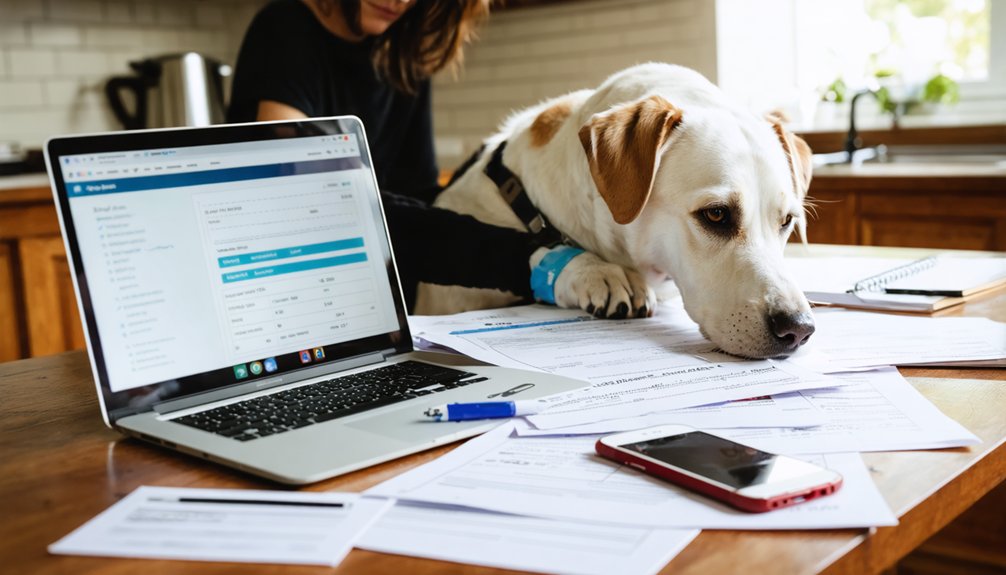
Pet insurance reimbursement is commonly delayed by incomplete claim forms, missing invoice pages, unclear diagnoses, absent medical records, clerical mismatches, and late submission. Delays are less likely when owners submit full itemized invoices, proof of payment, SOAP notes, and at least 12 months of prior records when required. Each related visit should be filed separately with consistent details. Careful checks of policy numbers, pet identifiers, deadlines, and waiting periods help prevent denials; further guidance explains each step.
Highlights
- Submit complete, legible itemized invoices with all pages, taxes, discounts, invoice numbers, and proof of payment to prevent verification delays.
- Match pet name, policy number, birthdate, address, and provider details exactly to insurer records to avoid clerical holds.
- Include clear diagnosis, visit reason, timelines, SOAP notes, and required medical history so adjusters can quickly confirm coverage.
- File each claim within the policy deadline, after waiting periods, using the insurer’s portal or app for faster processing.
- If denied, review the denial reason, compare it to policy terms, and appeal promptly with complete supporting documentation.
Pet Insurance Claim Mistakes That Slow Payment
Several avoidable errors routinely slow pet insurance claim payment, and most arise before an adjuster even evaluates coverage. Common problems include incomplete invoices, missing pages, omitted taxes or discounts, and incorrect vet bills attached to the file.
Because invoice verification depends on a full itemized record, even minor clerical inconsistencies can place a claim on hold or force resubmission. Insurers also frequently pause review when the claim form does not clearly list the pet’s diagnosis or visit reason. Owners should also review the full policy in advance to understand coverage exclusions that may affect reimbursement.
Delays also follow missing medical records, especially when insurers need records from every veterinarian covering the period before enrollment through the policy claim waiting window. If records are incomplete, or pre‑existing condition questions require added documentation, review times lengthen. Some insurers also stretch pre-existing definitions to question claims even when the exact injury or illness never occurred before.
Filing after a 90‑ or 180‑day deadline can trigger denial outright. Claims submitted during waiting periods, or after plan limits are reached, also stall reimbursement expectations for many households.
Write Pet Insurance Claim Descriptions Clearly
Clear claim descriptions help insurers verify eligibility faster because the information on the form must match the veterinary record exactly. A complete submission uses accurate terminology from the veterinarian, a concise timeline of symptoms or injury onset, and clear terminology for diagnosis, treatment, and exam findings. It also includes pet identification, policy number, and policy alignment with coverage rules. Reviewing the policy for coverage limits before submitting helps prevent avoidable reimbursement delays or denials. Confirming claim guidelines in advance also helps ensure the description and supporting details meet the insurer’s submission requirements. Most insurers also require claims to be filed within 90–180 days of the treatment date, so submitting promptly helps avoid automatic denial.
For claim verification, insurers expect proper documentation: itemized invoices, test results, receipts, and full medical records when needed. A detailed breakdown with expense itemization shows clear costs for consultations, medications, procedures, and diagnostics. Descriptions should explain the condition, treatment progression, and any relevant history without vague wording or inconsistencies. Double-checking entries and following the insurer checklist support prompt filing, fewer questions, and a smoother reimbursement experience for everyone involved.
Link Related Vet Visits in Your Claim
For ongoing conditions, related veterinary visits should be linked carefully even when each appointment requires its own claim submission.
Insurers usually process each invoice independently, so separate forms or portal entries are needed for every visit. If you submit by fax, email, or mail, include a completed claim form for each visit unless you use the website or app.
Delays often occur when owners combine visits without showing how they connect to the same diagnosis.
Clear records support continuity.
Each submission should repeat the diagnosis or reason for care using consistent wording, a practical form of Condition tagging. Missing records or bills can slow processing, so follow the insurer’s documentation checklist for every related visit.
Medical notes, claim numbers, policy details, and prior claim copies help establish Visit chronology across follow-up appointments.
Veterinary teams can strengthen this process by recording insurance history in patient files and noting coverage at scheduling. They should also log the insurer name and claim number in the patient record as part of insurance tracking.
When documentation stays consistent across related visits, insurers can connect treatment episodes more reliably, reducing callbacks and helping reimbursement move forward with fewer interruptions.
Include Every Invoice Page and Charge
One overlooked invoice page can stall an otherwise valid pet insurance claim. Insurers generally require the complete, final itemized invoice, not a summary, estimate, or partial screenshot. Every fee, tax, discount, and treatment must appear, along with the invoice number, pet name, owner information, treatment date, and paid‑in‑full or zero‑balance status. This level of charge transparency helps reviewers confirm eligibility without follow‑up. Keep the proof of payment receipt with the invoice to show any out‑of‑pocket expense was actually paid. Submitting any relevant medical records with the invoice can also prevent delays by giving adjusters the required information they need to review the claim. Claims can also be filed through a mobile app for real-time updates during processing.
Multi‑page invoices demand careful invoice pagination. All pages should be submitted legibly, even when discounts, multiple pets, or separate services appear on later pages. Blurry images, tiny text, or credit card slips covering details often trigger delays or denials. Clear scans or photos, paired with supporting SOAP notes or test results when needed, reduce clarification requests and help claims move through processing faster for everyone.
Gather 12 Months of Vet Records
Complete invoices show what was charged, while prior veterinary records show what was already known about the pet’s health before treatment.
For many first claims, insurers request about 12 months of history, though some ask for 14 days after enrollment, 18 months, or even 24 months. This record record establishes a baseline, confirms routine exams, and helps distinguish new problems from pre-existing conditions. With MetLife Pet, first claim records typically include the past 12 months of veterinary SOAP notes when you submit your initial claim. Insurers generally will not share claim costs until they review medical records.
Useful files include pet identification, microchip verification, vaccination dates, lab results, a medication list, SOAP notes, emergency notes, and visit reasons. Together, they build a reliable condition timeline that supports the claim timeline. Clear pet identifiers on every page also help prevent mix-ups between pets with similar names.
For adopted or very young pets, adoption paperwork and all available shelter, rescue, or breeder records help fill gaps.
When records are missing, review slows because staff must request history from prior clinics.
File Your Pet Insurance Claim on Time
Because pet insurance deadlines are strict, claims should be filed as soon as possible after treatment rather than held until paperwork accumulates.
Most policies require submission within 90 days of the veterinary service date, not the diagnosis date, and missing that window usually shifts the full cost to the pet owner.
Timely filing also depends on using the insurer’s preferred channel and sending complete records together.
Electronic portals and apps typically move faster than mail, especially when paired with digital uploads of the paid invoice and full medical notes.
Claim calendar alerts help households track treatment dates and avoid preventable delays.
Before filing, policyholders should also confirm that the visit falls outside any applicable waiting period, since claims submitted too early are commonly rejected regardless of documentation or accuracy provided.
Avoid Pre-Existing Condition Claim Denials
Often, pre-existing condition denials stem from how broadly insurers define the term: an injury or illness may be excluded if it was contracted, manifested, diagnosed, or treated before the policy effective date or during the waiting period, and even symptoms that appeared before coverage began can trigger denial without a formal diagnosis.
Effective denial prevention starts with early enrollment, ideally at adoption, before allergies, ligament injuries, or chronic disease appear.
Honest disclosure and complete veterinary records matter because insurers review prior notes for symptoms, bilateral patterns, and hereditary conditions that manifested early.
Policyholders benefit from checking each waiting existing exclusion carefully, especially for incurable illnesses and knee or cruciate issues, which are often permanently excluded.
Some providers may later cover curable conditions after sustained symptom‑free periods under continuous coverage rules.
Catch Clerical Errors Before You Submit
Even when a condition is covered, a claim can still be stopped by simple administrative mistakes.
Before submission, careful Policy verification and Form accuracy help prevent avoidable delays that many pet owners experience.
Misspelled pet names, swapped digits in policy numbers, and incorrect birthdates often stop systems from matching claims to active records.
Wrong addresses can create the same problem and delay reimbursement.
A field by field review reduces these clerical denials.
Names should match policy details exactly.
Policy numbers need digit level confirmation.
Birthdate and address entries should reflect current insurer records.
Provider information also matters: mismatched NPI numbers can interrupt veterinary verification and halt approval.
Complete documentation is equally important.
Clear forms, itemized bills, and all pages attached support smoother processing and fewer administrative rejections overall.
Follow Up on Delayed Pet Insurance Claims
A delayed pet insurance claim should be followed up promptly to identify the exact cause before the issue grows into a denial or expiration problem. The insurer should be contacted for claim notification, receipt confirmation, status, required documents, and estimated processing time. Every call, portal message, date, name, and reference number should be recorded, with weekly follow-ups if nothing changes.
The veterinarian should also be contacted to confirm records were sent completely and legibly. Itemized invoices, diagnostics, and medical history should match the insurer’s requirements. A careful policy review helps identify waiting periods, filing deadlines, pre-existing condition flags, and time-limited benefit caps. Claimants should monitor portals for missing attachments, keep copies of all submissions, and ask whether seasonal backlogs, staffing shortages, or system updates are affecting processing times.
Appeal a Denied Pet Insurance Claim
When a pet insurance claim is denied, the first step is to review the denial letter carefully to identify the stated reason and the insurer’s appeal procedure.
The denial should be compared against policy terms, with attention to exclusions, pre-existing condition language, and simple paperwork issues such as missing invoice pages.
If wording is unclear, customer service can clarify terminology and confirm appeal timing.
A strong appeal relies on a complete documentation checklist: medical records, itemized invoices, diagnostic results, medication logs, vaccine history, and a veterinarian letter addressing the denial reason and claim number.
The formal appeal should explain why coverage applies and include all supporting evidence.
If the insurer upholds the denial, escalation may involve a second appeal, internal review, regulatory complaints, or legal counsel for significant disputes.
References
- https://www.lemonade.com/pet/explained/veterinarians-role-in-pet-insurance-claims/
- https://www.wallaceinsurancelaw.com/pet-insurance-denied-claim-next-steps-tips-on-filing-a-lawsuit/
- https://www.puppilot.co/blog/understanding-veterinary-claim-delays-common-causes-and-how-to-avoid-them
- https://www.wbab.com/contributor/biggest-surprises/BQXCWIQJK45LFE6FJGRSSUHQLQ/
- https://www.bostondoglawyers.com/post/pet-insurance-claim-denied-what-pet-owners-can-do-when-coverage-is-refused
- https://money.com/pet-insurance-claim-denied-what-to-do/
- https://therebelchick.com/navigating-pet-insurance-claims-tips-for-a-smooth-process/
- https://www.dtcpagroup.com/post/pet-insurance-and-veterinary-accounting-managing-claims-and-reimbursements
- https://www.petinsuranceguideus.com/2013/08/dont-overlook-this-reason-that-pet-insurance-claims-are-denied/
- https://manypets.com/uk/articles/the-most-common-reasons-pet-insurance-claim-are-refused/