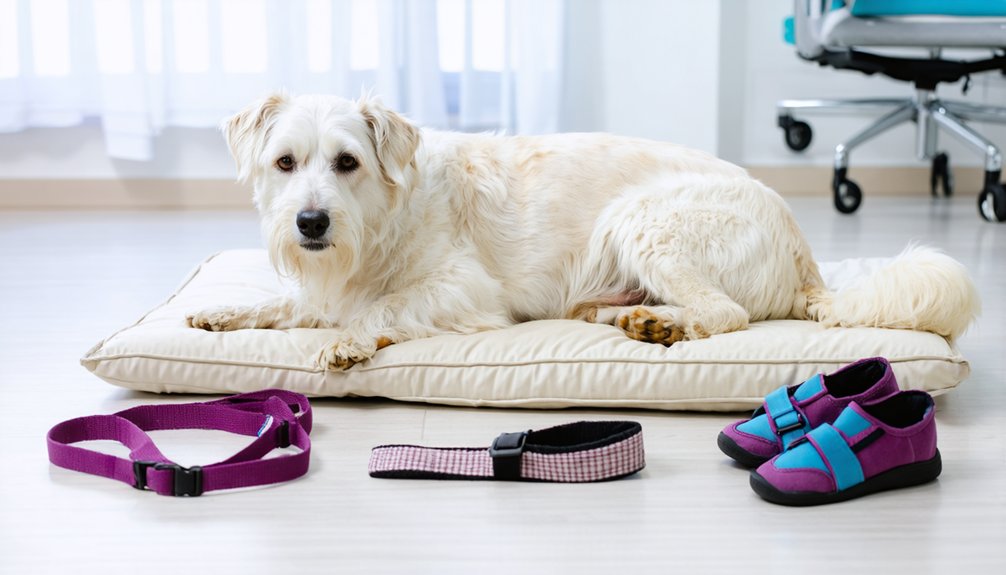
Veterinarians commonly recommend a mix of wound-care supplies, compression garments, recovery suits, joint supplements, lifting devices, slings, and non-slip home aids after surgery, injury, or mobility decline. Choices depend on the pet’s diagnosis, pain level, body size, skin sensitivity, and daily routine. Protective booties, collagen dressings, and styptic powder may also help healing. Proper fit and close monitoring matter most. The sections below outline which products tend to help in each recovery stage.
Highlights
- Keep a post-op kit with saline, chlorhexidine, gauze, tape, gloves, thermometer, cold packs, and styptic powder for immediate wound care.
- Use recovery vests, compression sleeves, booties, or protective dressings to reduce swelling, prevent licking, and keep wounds cleaner.
- Support joint healing with vet-trusted supplements, weight management, low-impact exercise, and collagen dressings that maintain a moist healing environment.
- Choose mobility aids like slings, lift harnesses, recovery straps, or wheelchairs to help pets stand, walk, and avoid painful strain.
- Set up recovery spaces with non-slip mats, supportive beds, crates, and easy water access, and avoid common mistakes like poor confinement or missed pain control.
Which Pet Recovery Products Help First?
In the first hours after a pet is injured or recovering from surgery, the most useful recovery products are the ones that clean wounds, control bleeding, limit swelling, and allow safe handling. Vet-informed kits typically include sterile saline, chlorhexidine, antiseptic wipes, gauze, nonstick pads, tape, gloves, and a slip leash or soft muzzle for safer post-op care. Waterproof storage helps keep sterile supplies usable in wet conditions, making rain-day protection especially important for emergency care. Keep an emergency contact sheet with your veterinarian and nearest after-hours clinic in a waterproof sleeve for fast triage when urgent decisions are needed.
Cold packs, towels, and Mylar blankets support pain recovery, pain management, and comfort solutions while temperature is stabilized. A digital thermometer and needleless syringe improve recovery monitoring, and styptic powder helps stop minor bleeding quickly. If bleeding continues after two pressure dressings or remains uncontrolled for more than 10 minutes, treat it as a vet takeover emergency. These supplies complement pet nutrition, mobility aids, rehabilitation techniques, therapy options, and realistic healing timelines by protecting wounds early, so families can feel prepared, connected, and confident during recovery.
Pet Recovery Products for Compression Support
Several compression-based recovery products can support healing by stabilizing vulnerable tissue, reducing swelling, and protecting surgical or irritated areas without the bulk of traditional bandaging.
Vet-informed options include lower leg compression sleeves that improve circulation, limit edema, insulate arthritic limbs, and shield suture sites or lick spots. Many sleeves come in regular and long lengths to better fit both average and tall, leggy breeds.
Surgical recovery vests offer graded compression to protect wounds and bandages while avoiding the stress of cones, and zip closures simplify dressing. Some full-body options provide three compression levels to support both post-surgical recovery and anxiety relief.
Calming recovery vests and anti-anxiety compression shirts add gentle swaddling pressure that may ease stress while covering hot spots or lower-body incisions. The Calm Paws Premium Recovery Vest and Calming Disk for Dogs adds dual function support by protecting lower-body wounds while offering a scented calming disk infused with natural essential oils.
Soft stretch materials, adjustable straps, and rear leg cuffs help create a secure fit.
Shoppers should compare fabric sizing and sizing options carefully, including regular or long sleeve lengths and broader vest ranges for varying girths and body lengths.
Pet Recovery Products for Joint Stability
Beyond external compression and wound coverage, many recovery plans also include joint-stability support to protect healing limbs and improve comfort during movement.
For Joint stability, veterinarians often recommend supplements containing glucosamine, chondroitin sulfate, MSM, green-lipped mussel, and omega-3 fatty acids, which support cartilage, cushioning, connective tissues, and inflammation control. For dogs needing stronger daily support, concentrated options like Run Free™ are designed for extra joint support, especially in active, aging, or large-breed pets.
Evidence suggests these products work best with daily use over six to eight weeks, especially when paired with weight management, appropriate diet, and veterinary oversight. Even a modest 5–10% weight loss can markedly improve mobility and reduce inflammation in overweight dogs. Low-impact exercise such as walking or swimming can further protect healing joints and support healthy weight maintenance.
Green-lipped mussel has shown promise for dogs recovering from orthopedic surgery and may reduce long-term reliance on pain medication.
Trusted veterinary brands such as Nutramax, VetriScience, and Virbac offer maintenance, concentrated, and soft chew formulas customized to age, size, and recovery stage.
This supports Mobility enhancement and steadier daily function.
Pet Recovery Products for Safe Lifting
How can a recovering dog be lifted without adding pain or risking reinjury? Vet-recommended lift straps and support slings are designed to distribute weight under the sternum and pelvis, not the abdomen, bladder, or healing joints. This patented hip lift helps create more comfortable, pain-free support during assisted movement.
This Lifting technique is especially helpful after TPLO, ACL/CCL repair, fracture surgery, or hip replacement, and for dogs with hind-end weakness, trouble rising, or difficulty with stairs and vehicles.
Full-body recovery straps add padded front-and-rear support for daily movement, while hand-held slings assist controlled walking during rehabilitation. Many harnesses use 1000D nylon with breathable mesh lining to provide durable, comfortable support during assisted movement.
For outdoor emergencies, packable rescue slings with head-to-tail suspension allow one person to carry an injured dog with balanced support. Some models feature a packable design that folds into a stuff sack for easy storage in a backpack.
Proper strap sizing matters: these products come in multiple sizes so dogs of every build can receive secure, dignified mobility assistance.
Pet Recovery Products for Wound Protection
When a pet is healing from surgery or managing a skin injury, wound‑protection products help shield vulnerable tissue, reduce self‑trauma, and support cleaner recovery.
For wound shielding, vets often recommend breathable booties or recovery sleeves to block licking around paws, sutures, IV sites, or shaved skin while allowing airflow and easier monitoring than bulky bandages. The Pet Injury Duo Pack pairs breathable booties with a no-rinse HOCl wound cleanser to help protect paw injuries and support healing.
Cleaning also matters. Non‑rinse cleansers, chlorhexidine solutions, and antimicrobial wipes help flush debris, moisturize tissue, and lower bacterial or fungal risk. Veterinarian-formulated styptic powders can provide fast bleeding control for minor cuts, nail clipping accidents, or other small wounds during recovery.
For deeper support, collagen dressings can encourage tissue regeneration, reduce scarring, and decrease dressing changes. Products like Kollavet® Collagen Sheets and Particles provide a moist healing environment while supporting tissue regeneration in post-op and injury care.
Pet‑safe ointments, including medical‑grade honey or probiotic formulas, add antibacterial coverage.
Non‑stick pads, vet wrap, adhesive dressings, and styptic powder round out care, with healing compression used only when clinically appropriate.
Pet Recovery Products for Mobility Changes
Many pets recovering from surgery, injury, or age-related decline benefit from mobility products that reduce strain, improve stability, and help preserve daily function.
Veterinarians often recommend a customizable harness such as the Help ’Em Up Harness for pain-free support during standing, walking, and daily transitions. Its lifting handle assists safe full-body movement and steadier navigation.
For pets needing greater assistance, an adjustable wheelchair like Walkin’ Wheels can reduce limb pressure while encouraging continued walking. Because it adjusts in length, width, and height, it supports a more accurate fit as needs change.
Recovery sleeves may add warmth and gentle stability for arthritic or weakened legs, while supportive accessories—such as age-friendly litter boxes, automatic feeders, and hands-free leashes—help pets stay included in everyday routines with less physical stress overall.
Pet Recovery Products for Rehab at Home
Home rehab works best when the recovery space and support tools match the pet’s medical limits, mobility needs, and daily routine. Vet-informed setups often include a low supportive bed, non-slip mats, a crate or playpen, and easy-access water to reduce strain and slipping.
For assisted movement, lifting harnesses such as Help’Em Up, RuffWear, Walkabout, and Handicapped Pets can steady dogs during stairs, car entry, and rising from the floor. Wraps and braces may add comfort and controlled support during daily exercises.
For strength and proprioception, balance discs, wedges, boards, physioballs, and textured platforms like K9 Kore and Nubby Infinity are common Therapy toys in rehab plans. ToeGrips, protective boots, training pads, and thermal therapy tools can further support safe, consistent recovery at home for many pets.
How Do Vets Match Products to Pets?
Because recovery needs vary widely, veterinarians match products to pets through a structured assessment of the animal’s diagnosis, pain level, mobility limits, body size, breed fit, skin sensitivity, and home routine.
Treatment planning often combines the veterinarian’s exam with rehabilitation input, then adjusts as healing progresses. Initial medical or surgical care addresses primary problems before supportive products are introduced.
Selection then becomes highly specific. Custom fitting relies on measurements such as chest circumference, while breed‑specific sizing improves postoperative suit accuracy for many dogs and cats.
Therapeutic material selection matters for pets with sensitive skin, favoring breathable, non-toxic, hypoallergenic, antimicrobial fabrics.
Activity‑level assessment helps clinicians pair products with diet and recovery goals, including calorie changes during restricted movement. Pain control, calm behavior support, and home setup further guide safe, individualized recommendations.
When Should Pets Use Braces or Carts?
A pet may need a brace or cart when movement changes signal pain, instability, or declining function, especially if limping, altered gait, foot dragging, slow rising, reduced coordination, or pain on touch is present. Veterinarians often evaluate these signs alongside diagnosis to determine Brace timing and Cart necessity.
Braces are commonly considered for CCL tears, arthritis, luxating patella, stifle instability, or carpal and tarsal weakness. Dental braces may be indicated for painful malocclusions, jaw mismatch, or misaligned canine teeth, with assessment often beginning once adult teeth appear near six months. Early interceptive care may help some young patients, while active-force orthodontics usually waits until eight to ten months. Use varies by condition, from several active hours daily to longer-term support after surgery, always guided by veterinary monitoring.
Mistakes to Avoid With Pet Recovery Products
Even when a brace, cart, cone, suit, supplement, or medication is appropriate, recovery can be set back by common handling errors. Vets caution that imadequate monitoring and loose confinement often allow excess movement, weight bearing, or missed complications that delay healing from the first day. Food, water, and bedding should stay within easy reach to support rest.
Another frequent setback is premature gear removal. Taking off cones or recovery suits before the recommended timeline increases licking, contamination, and incision infection risk. Pain control, nutrition, and rehab also matter: untreated discomfort can drive overuse, while poor diet slows tissue repair. Medication mistakes, including expired doses or species-mismatched flea products, can cause toxicity. Thoughtful routines, backup gear, and close veterinary coordination help families protect progress and avoid preventable setbacks together.
References
- https://www.veterinaryteachingacademy.com/shop
- https://www.dvm360.com/view/new-mobility-products-for-the-veterinary-market
- https://academy.royalcanin.com/en/veterinary/braces-prosthetics-and-wheelchairs-for-rehabilitation
- https://walkinpets.com/blogs/blog/dog-surgical-recovery-support
- https://vetmed.tamu.edu/news/pet-talk/physical-rehabilitation-for-dogs/
- https://primepetrehab.com/pet-mobility-exercises/
- https://embarkvet.com/resources/mobility-support-tools-for-dogs/
- https://rvmga.com/assistive-devices
- https://www.whole-dog-journal.com/care/senior_dog/orthopedic-equipment-for-dogs-designed-for-increased-mobility-and-extra-support/
- https://www.treelinereview.com/gearreviews/best-dog-first-aid-kits