
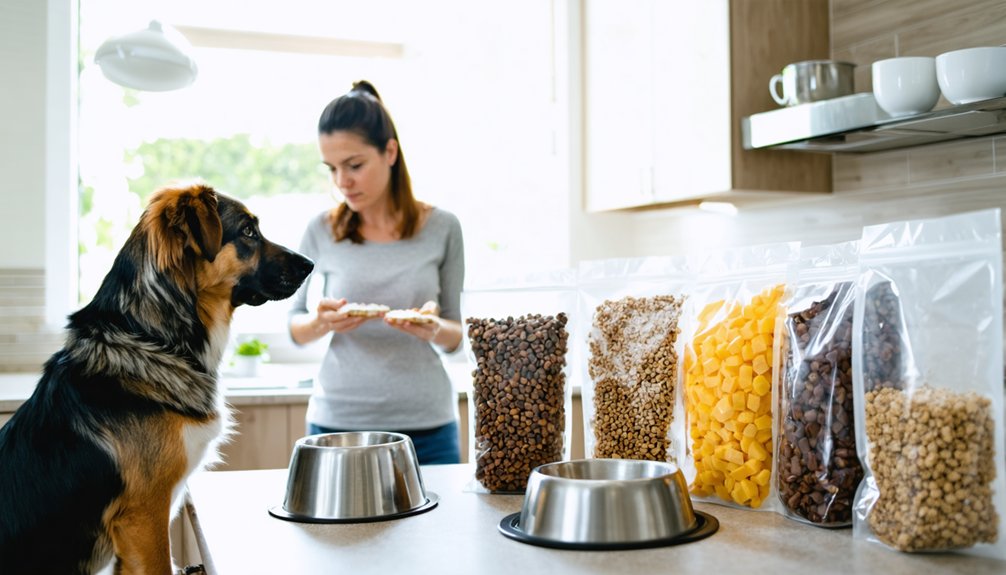

Freeze-dried raw pet food is not automatically safer because low moisture slows growth but does not reliably kill pathogens. Studies and recalls show Salmonella, E. coli, Clostridium, and even resistant bacteria can survive, especially without a validated kill step such as HPP. Safety also depends on AAFCO nutritional completeness, bone type, and strict handling at home. Puppies, seniors, and immunocompromised households face higher risk. The key questions below clarify when freeze-dried raw is a reasonable choice.
Highlights
- Ask whether the product uses a validated kill step like HPP, because freeze-drying alone does not reliably eliminate pathogens.
- Check for AAFCO complete-and-balanced labeling, since freeze-drying preserves food but does not guarantee nutritional adequacy.
- Verify contamination history, recalls, and testing transparency, as raw freeze-dried foods can still contain Salmonella, E. coli, and other pathogens.
- Consider who is at home, because puppies, seniors, immunocompromised pets, children, and older adults face higher infection risk.
- Follow strict raw-food hygiene, including handwashing, surface disinfection, sealed storage, and prompt cleanup of bowls, leftovers, and feces.
Is Freeze-Dried Raw Pet Food Really Safer?
At first glance, freeze-dried raw pet food may appear safer because its low moisture content slows bacterial growth; however, the available evidence does not support that assumption. Freeze-drying is also a minimal processing method that preserves the food without traditional cooking.
Freeze-drying removes water but does not heat food enough to eliminate contamination, so the product remains raw. FDA surveillance and university research consistently report higher contamination rates in raw pet foods than in cooked alternatives, reinforcing expert concern. Dormant bacteria may still survive the process unless a validated kill step is used. Studies have also found that raw pet foods carried parasite DNA, while cooked foods did not.
For pet owners seeking trustworthy reg benefits, the key distinction is whether a validated kill step was used before freeze-drying. High-Pressure Processing can reduce pathogens without cooking, but not every brand uses it or labels products clearly.
A practical cost analysis should consequently weigh convenience against contamination risk, handling burden, and possible household exposure. Fully cooked freeze-dried diets offer a safer middle ground for many families.
What Bacteria Can Survive Freeze-Drying?
Although freeze-drying sharply reduces moisture, it does not reliably kill many bacteria that may already be present. Evidence shows spore-formers such as Bacillus and Clostridium can persist because spore resistance protects them during low-temperature dehydration and storage. If spores later reactivate, they may pose ingestion risks. Mold spores also survive in a dehydrated state, making mold-free ingredients important before freeze-drying.
Research also finds meaningful survival among non-spore-formers. Gram-negative bacteria, including Escherichia coli, Enterobacter cloacae, Pseudomonas putida, and Salmonella, can remain viable after drying, often at substantial rates. Gram-positive organisms frequently survive even better: Enterococcus faecium, Lactobacillus acidophilus, Corynebacterium, and related species retain high post-process viability. A comparative Cryobiology study found species-specific survival after freeze-drying, with some microbes retaining over 80% viability during storage while others dropped below 20% within weeks. Experts note that matrix effects, cell structure, and vacuum sealing all influence survival. For pet-owning communities seeking confidence, the key point is simple: freeze-drying often preserves microbes rather than eliminating them outright.
How Often Is Freeze-Dried Raw Contaminated?
Survival data help explain why contamination is not a rare finding in commercial raw pet foods, including freeze-dried formats. In one Food Standards Agency survey, 35% of raw dog and cat foods carried pathogens, and 29% of those failed UK safety criteria. Salmonella appeared in about 21%, E. coli in 12%, and MRSA in nearly 10%.
For freeze-dried products specifically, studies found lower coliform counts than other raw formats, yet live Salmonella, Cronobacter, E. coli, and Clostridium perfringens were still recovered. Recent recalls and FDA advisories confirm ongoing exposure concerns. Clean Label Project testing also found that air- and freeze-dried dog foods showed elevated heavy metal levels compared with fresh/frozen options. A 2025 study also found Klebsiella in freeze-dried treats, underscoring pathogen presence even in products many owners assume are safer. This matters beyond label labeling,,, because market trends, consumer perception, pet owner demographics, the regulatory environment, supply chain logistics, environmental impact, cost analysis, and flavor varieties can shape choices while obscuring how often contamination is still detected.
Can Freeze-Dried Raw Spread Resistant Bacteria?
Why does freeze-dried raw remain a resistance concern despite its dry, shelf-stable appearance? Evidence shows freeze-drying lowers water activity but does not reliably eliminate pathogens or resistance genes.
Viable *Salmonella enterica*, *E. coli*, resistant *Pseudomonas*, *Klebsiella*, and *Clostridium perfringens* have been identified in freeze-dried raw products, while parasite genes also appear in raw-only diets. Veterinary associations often advise against raw diets because of safety issues.
Research on microbial persistence shows dormant organisms can reactivate during rehydration, feeding, or digestion.
For households seeking confident, community-informed choices, the concern is spread as well as presence.
Handling contaminated food can transfer bacteria to hands, bowls, counters, and other foods, and raw-fed pets may shed resistant organisms in feces.
Antibiotic profiling and culture data indicate freeze-dried raw can contribute to multidrug-resistant exposure without strict hygiene and validated kill steps.
Which Pets Face the Biggest Raw Food Risks?
Certain pets face markedly higher raw-food risk than others, especially those whose immune defenses are immature, weakened, or physiologically stressed.
Evidence places young pets among the most vulnerable: puppies and kittens have immature immunity, and FDA testing found Salmonella and Listeria in raw samples, pathogens that can hit developing digestive systems hard while remaining clinically silent. The FDA also reported that raw pet food showed higher contamination rates than other pet foods. This concern aligns with AVMA guidance that raw proteins discouraged for dogs and cats because of pathogen risk. Raw meat consumption has also been identified as a significant risk factor for Salmonella shedding in dogs.
Senior pets also warrant caution. Age-related immune decline increases susceptibility to Salmonella, Campylobacter, E. coli, Clostridium, and Listeria, and veterinary guidance notes greater illness risk from raw proteins in older animals.
Immunocompromised and pregnant pets face especially serious consequences, including severe infection, fetal harm, and complications from pathogens such as Toxoplasma gondii or H5N1.
Smaller breeds may also be affected more severely because contaminated portions represent a larger exposure relative to body size.
What Risks Does Freeze-Dried Raw Pose to People?
The concern does not stop with vulnerable pets, because freeze-dried raw can also expose people in the home to foodborne hazards. Studies and case investigations show raw pet foods are more often contaminated with Salmonella, Listeria monocytogenes, E. coli, and Campylobacter than cooked diets, creating real human transmission risks during feeding and cleanup.
Exposure can occur through hands, bowls, countertops, pet saliva, and splashing juices, so careful hygiene matters for every household member. Minnesota investigators linked Salmonella illness in a family, including two siblings, to a dog fed raw food, despite no direct food contact. Contaminated feces can also spread bacteria to soil, crops, and water sources, extending the risk beyond the food bowl. Experts also note concerns about parasites and bacteria carrying antibiotic-resistance genes. Because labeling is often unclear and warning statements inconsistent, a prudent care approach treats freeze-dried meat as raw unless verified otherwise, regardless of regulatory wording.
Does Freeze-Dried Raw Meet Complete Nutrition?
Whether freeze-dried raw meets complete nutrition depends less on the format itself than on the specific formula and its substantiation. Many products are designed to satisfy AAFCO complete-and-balanced standards, and labels can confirm this through guaranteed analysis and feeding statements. Expert review typically focuses on protein levels, essential fats, micronutrients, and ingredient sourcing. Some brands emphasize Whole Food Nutrition and avoid grains, gluten, fillers, and synthetic vitamins or minerals in their formulations. Some freeze-dried raw diets also follow a B.A.R.F. model with an 80:20 meat-to-produce ratio to support balanced nutrition.
Freeze-drying supports strong nutrient retention because moisture is removed with minimal heat, helping preserve sensitive vitamins, enzymes, and amino acids. Well-formulated recipes often pair high-quality muscle meat with organ meats, fish, and whole-food produce to deliver bioavailable nutrients. Some veterinarian-developed options also include prebiotics, antioxidants, and omega-3 sources for digestive, immune, and skin support. Some formulas also back up their nutritional profile with a guaranteed analysis of at least 37% crude protein and 26% crude fat, signaling high protein density. For pet owners seeking confidence and community standards, transparent labeling remains the most reliable indicator of nutritional completeness.
Are Bones in Freeze-Dried Raw a Problem?
How problematic bones in freeze-dried raw may be depends largely on processing, bone type, and feeding practice rather than on the format alone.
Experts note that freeze-dried bones keep a porous bone texture, often light enough to break by hand, and they soften with saliva, behaving more like raw than cooked bones.
That makes them generally lower risk than cooked bones and often preferable to dehydrated bones, which can be more brittle.
Still, no bone is risk free. Very hard bones may fracture teeth, and any raw or freeze-dried bone can carry pathogens such as Salmonella, Listeria, or E. coli.
When chosen appropriately, bones can support dental health, mineral intake, and enhancement.
Most veterinary guidance places raw bones first, freeze-dried second, dehydrated with caution, and cooked bones last, if ever offered.
How Should You Handle Freeze-Dried Raw Safely?
Handle freeze-dried raw pet food with the same care used for any raw animal product, because reduced moisture does not eliminate contamination risk.
Hands should be washed with soap and water before and after handling, and clean, dry hands or a dedicated scoop help limit moisture and cross-contamination.
For Shelf storage, experts recommend sealed containers kept in a cool, dry place away from sunlight, with pet food separated from human food areas and tools.
Any surfaces, utensils, bowls, and feeding areas that contact raw food should be cleaned and disinfected before and after use; stainless steel bowls support easier sanitation.
If frozen, food should be thawed in the refrigerator, never the microwave, served promptly, and discarded after two hours.
Following brand guidance also protects Shelf life and household hygiene.
When Is Freeze-Dried Raw Not Worth It?
Safe handling can reduce household exposure, but it does not answer the larger question of value.
Freeze-dried raw may not be worth it when cost comparison shows steep per-serving prices, especially for large dogs or multi-pet homes.
Experts also note that freeze-drying preserves many pathogens rather than eliminating them, leaving Salmonella or Listeria concerns despite premium pricing.
It may also fall short when nutrition is uncertain.
Some products are not AAFCO complete and balanced, and dry-matter marketing can overstate protein and fat advantages.
For households with children, older adults, or immunocompromised members, even reduced moisture does not remove human exposure risks through handling or stool shedding.
When convenience, shelf life, and branding outweigh verified safety and balanced nutrition, many owners may find better value in safer alternatives with lower environmental impact.
References
- https://pmc.ncbi.nlm.nih.gov/articles/PMC6849757/
- https://www.fda.gov/animal-veterinary/animal-health-literacy/get-facts-raw-pet-food-diets-can-be-dangerous-you-and-your-pet
- https://ncceh.ca/resources/blog/raw-food-thought-antimicrobial-resistance-and-barf-pet-diets
- https://mypetsanimalhospital.com/is-raw-pet-food-safe-for-cats-and-dogs/
- https://www.aafco.org/consumers/understanding-pet-food/raw-foods/
- https://www.cdc.gov/healthy-pets/media/pdfs/raw-pet-food-p.pdf
- https://nutrinews.com/en/salmonella-outbreak-in-dog-food-safety-tips-for-pet-owners-and-manufacturers/
- https://puppylongevity.com/nutrition/freeze-dried-raw-dog-food-guide/
- https://wefeedraw.com/blog/freeze-dried-raw-dog-food-safety
- https://sites.tufts.edu/petfoodology/2025/10/27/raw-pet-food-research-update/