
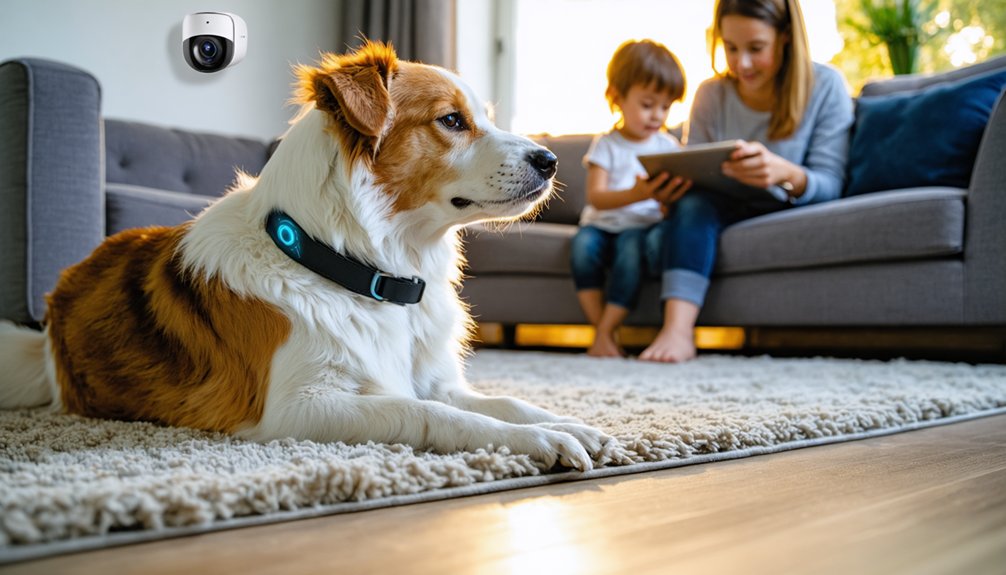

AI pet cameras and wearables are making at-home pet care more proactive and precise for modern families. Cameras can recognize individual pets, track routines, and flag unusual behavior such as pacing, hiding, or litter box changes. Wearables monitor activity, sleep, temperature, pulse, and location around the clock. Together, these tools compare daily patterns against each pet’s baseline, helping families catch health or stress issues earlier and share useful data with veterinarians. The full overview becomes clearer ahead.
Highlights
- AI pet cameras and wearables track daily behavior, sleep, activity, and vital signs to give families a fuller view of pet health at home.
- Personalized baselines help detect subtle changes like lethargy, itching, drinking shifts, or heart-rate spikes before obvious symptoms appear.
- Real-time alerts, GPS tracking, and geo-fencing improve safety by warning families about wandering, distress, or unusual behavior immediately.
- Interactive features like two-way audio, treat dispensing, and calming routines help families manage separation anxiety and support anxious pets.
- Shared dashboards and health summaries make it easier for owners and veterinarians to monitor trends, review footage, and guide care decisions.
What AI Pet Cameras Actually Do
In practice, AI pet cameras function as monitoring systems that identify individual cats and dogs, detect routine behaviors, and keep animals in frame as they move.
They support multi‑pet households by recognizing up to five animals, labeling clips by name, and using auto‑tracking to follow movement across a room.
Beyond identification, activity detection captures meals, play, drinking, litter box use, and rest patterns, then sends real‑time alerts when behavior shifts or mischief begins. Some systems also log wellness trends like eating, drinking, weight, and activity in a single dashboard for health tracking. Petlibro’s Scout, for example, can detect eating, drinking, litter‑box use, and walking with pet recognition AI.
Two‑way audio and sound cues help families reassure or redirect pets immediately, while night vision preserves visibility after dark.
Daily summaries and cloud storage organize highlights and recent history for shared understanding at home. Mobile monitoring can also provide real-time alerts as activity changes throughout the house.
Because privacy matters, many models include a privacy cover and defined data policies, helping households feel informed, connected, and secure together.
How Pet Wearables Track Health at Home
Pet wearables extend at-home care by continuously measuring signals that owners cannot reliably observe on their own. Devices such as Maven Pet and PetPace track respiratory patterns, pulse, temperature trends, posture, rest, and itch behaviors, while FitBark and Tractive capture sleep, calories, distance, and activity. These AI wearables turn everyday routines into useful pet health, data analytics for families seeking confident, connected pet wellness. Some wearable sensors also provide 24/7 health tracking, alerting owners when changes appear in breathing, heart rate, rest, activity, water intake, or itch behaviors.
At home, monitoring is not one-size-fits-all. Platforms compare activity and rest against individualized baselines shaped by breed, age, size, weight, and daily habits. They translate raw readings into wellness, sleep, and activity scores, helping households understand whether a pet may need more exercise, recovery, or routine adjustment. Shared with veterinarians, this continuous record supports clearer assessments than isolated observations or occasional clinic visits. This kind of ongoing monitoring can support early detection before minor health changes become more serious problems. Some advanced wearables also deliver real-time GPS alerts, helping families quickly locate pets if they wander off.
Why Smart Pet Alerts Catch Problems Early
Two capabilities make smart pet alerts especially effective at catching problems early: continuous monitoring and baseline-aware AI analysis. Cameras and collars watch posture, sleep, activity, heart rate, respiration, and temperature every few seconds, then compare those signals against each pet’s normal patterns. That approach helps surface subtle pain, stress, injury, or illness before obvious symptoms appear. Vet-developed systems also use clinical validation to turn those signals into actionable health insights for pet parents.
Alerts become more useful when systems combine live video, vital trends, and early consumption data from fountains or litter boxes into one health picture. Smart water fountains can flag shifts in drinking patterns that may point to emerging health concerns. A resting heart-rate spike, extra licking, or reduced water intake can trigger near real-time notifications and faster veterinary review. For households seeking confident, connected care, that speed supports safer decisions, prevents hazards, and reduces missed warning signs. It also supports energy optimization by focusing attention where risk is rising most. Shared analytics can also speed vet booking by helping certified veterinarians review issues sooner.
Which Pets Benefit Most From AI Monitoring?
Which pets gain the most from AI monitoring becomes clearer when risk, behavior variability, and time spent alone are considered together.
Dogs often rank high because smart collars track location, activity, sleep, temperature, and other essential signs continuously, offering dependable oversight for active, social animals. Mobile app integration and geo-fencing alerts add another layer of safety for dogs that roam or spend time outdoors. Real-time location tracking also helps families recover lost pets faster through GPS tracking.
Cats also benefit, especially in homes where subtle signs are easy to miss; AI feeding stations, cameras, and robotic litter systems support timely awareness and daily engagement. Because cats can be startled by loud devices, quieter systems with subtle interaction often improve acceptance.
A Senior pet may benefit most overall, since wearables reveal declines in activity or sleep and support more informed veterinary decisions.
Anxious pets are another strong fit, as behavioral data and interactive robots support anxiety reduction and steadier routines.
High-energy pets also gain value when GPS boundaries, activity tracking, and structured play help families maintain connection daily.
How AI Pet Cameras Read Behavior Changes
Spotting behavior changes begins with establishing a baseline, and that is where AI pet cameras differ from ordinary video feeds. They continuously map behavioral patterns such as eating, drinking, litter box visits, walking routes, and hiding habits, then compare new activity against what is typical for each animal.
In multi-pet homes, individual profiles and improving visual recognition help systems distinguish similar-looking pets with increasing accuracy over time.
This enables anomaly detection that is more useful than simple motion alerts. Cameras can flag lethargy, unusual pacing, shifts in emotional state, or abnormal litter box behavior while reducing false alarms. Some advanced systems can even identify signs of stress or illness early, allowing families to respond before problems escalate.
Features like pan-tilt tracking, stationary observation modes, highlight reels, and cloud-stored clips give families a clearer, shared view of daily routines, making timely response and behavior support more informed and confident.
What Smart Collars Reveal About Pet Health
Beyond location tracking, smart collars reveal a pet’s health through continuous biometric and behavioral monitoring that turns daily activity into clinically useful perception.
Advanced devices collect heart rate, respiration, temperature, sleep, and movement data every two minutes, creating baselines that expose subtle deviations linked to pain, cardiac strain, osteoarthritis, or seizure activity before visible symptoms appear. AI also enables predictive healthcare by continuously learning from vital sign patterns to flag emerging issues earlier. Some platforms now pair these insights with veterinary telehealth, allowing families and veterinarians to review health data in real time and support remote care.
Through acoustic pulse detection, HRV analysis, and AI pattern recognition, these wearables quantify scratching, barking, restlessness, and inactivity with greater objectivity than observation alone.
Thoughtful collar design improves comfort and signal quality across breeds and sizes, while secure sharing supports veterinary oversight of recovery and chronic conditions.
With mobile alerts and longitudinal trend access, families gain a stronger sense of participation in care, provided data privacy remains protected and clinical judgment guides interpretation.
How Remote Pet Cameras Ease Separation Anxiety
How does a pet behave once the door closes and the house falls quiet? Remote cameras answer that question with evidence, not guesswork. Live viewing, motion clips, and AI alerts reveal pacing, barking, destructive chewing, door circling, or shutdown behaviors that often signal separation anxiety.
For families seeking reassurance, this visibility creates a stronger sense of connection while supporting remote bonding during absences.
Two-way audio, calming sounds, and occasional treat rewards can interrupt mild distress and support anxiety reduction without replacing proper treatment.
Camera footage also helps identify how long a pet tolerates being alone, which triggers panic, and whether progress is improving over time.
Veterinarians, trainers, and behavior professionals can use these records to refine desensitization plans, turning household worry into informed, compassionate action for everyone involved.
Which Features Matter Most for Families?
Which features deserve priority when a family chooses an AI pet camera or wearable?
The strongest options combine clear visibility, reliable interaction, and practical automation. High-resolution video, ideally 1080p with color night vision or 4K in premium devices, helps households notice limping, scratching, or unsafe behavior. SmartFrame AI and 360° auto-tracking reduce blind spots and device clutter.
Real-time two-way audio matters because familiar voices can calm pets and redirect risky actions. AI behavior alerts, multi-pet recognition, and concise daily summaries help families stay informed without reviewing hours of footage. Health and safety monitoring adds value by revealing coat changes, recovery progress, or dangerous chewing.
Finally, budget integration and data privacy shape long-term trust, ensuring the technology supports a connected home without compromising household comfort or confidence.
How to Share Pet Data With Your Vet
A practical sharing process starts with a centralized pet health platform that can connect with veterinary portals and other clinic software. Strong data integration allows records to move smoothly between apps, dashboards, and practice systems, reducing gaps in care for families who want their pets supported by a connected veterinary team.
Effective sharing includes core identification details, vaccination history, diagnoses, treatments, procedures, and daily metrics such as weight, stool quality, and energy levels. Owners typically grant access by entering a veterinarian’s email and sending an invitation through secure sharing controls. Once accepted, clinics can review organized profiles, timeline updates, and activity logs within their dashboards. Multi-platform compatibility supports specialists and backup providers, while authentication, permissions, and privacy settings reinforce data security and owner control over sensitive health information.
Where AI Pet Care Is Headed Next
Several clear trends are shaping the next phase of AI pet care, with preventive monitoring, faster diagnostics, and connected care ecosystems leading the way. Wearables, smart bowls, and cameras increasingly work together to spot changes in heart rate, mobility, behavior, and stress before problems escalate.
AI imaging, symptom analysis, and hybrid triage are expected to shorten the path from concern to care, while telemedicine tools make expert guidance more accessible. Personalized platforms will expand beyond tracking into AI driven nutrition, wellness cues, and customized support for anxiety, sleep, and activity. Blockchain health records may strengthen secure data sharing between households, veterinarians, and service providers, helping pets receive more continuous care. As these systems mature, modern families gain a stronger sense of confidence, connection, and shared responsibility around everyday pet wellbeing.
References
- https://www.latimes.com/companion-animals/advice/care/story/new-pet-tech-smart-collars-ai-translators-guide
- https://www.gminsights.com/blogs/how-ai-and-wearables-are-changing-pet-parenting
- https://datarootlabs.com/blog/ai-powered-pet-care
- https://siipet.com/blogs/knowledge/what-are-the-best-hands-off-pet-care-systems-with-ai-and-health-monitoring
- https://ambiq.com/blog/smart-devices-for-pet-health-monitoring/
- https://www.youtube.com/watch?v=9i8qEzIJmb8
- https://petpace.com/ai-powered-pet-care-gadgets-for-busy-owners-analytics-insight/
- https://www.sunrisegeek.com/post/how-ai-is-redefining-pet-care-the-best-smart-feeders-and-cameras
- https://petlibro.com/products/scout-smart-camera
- https://techcrunch.com/2025/06/27/petlibros-new-smart-camera-uses-ai-to-describe-your-pets-movements-and-its-adorable/