

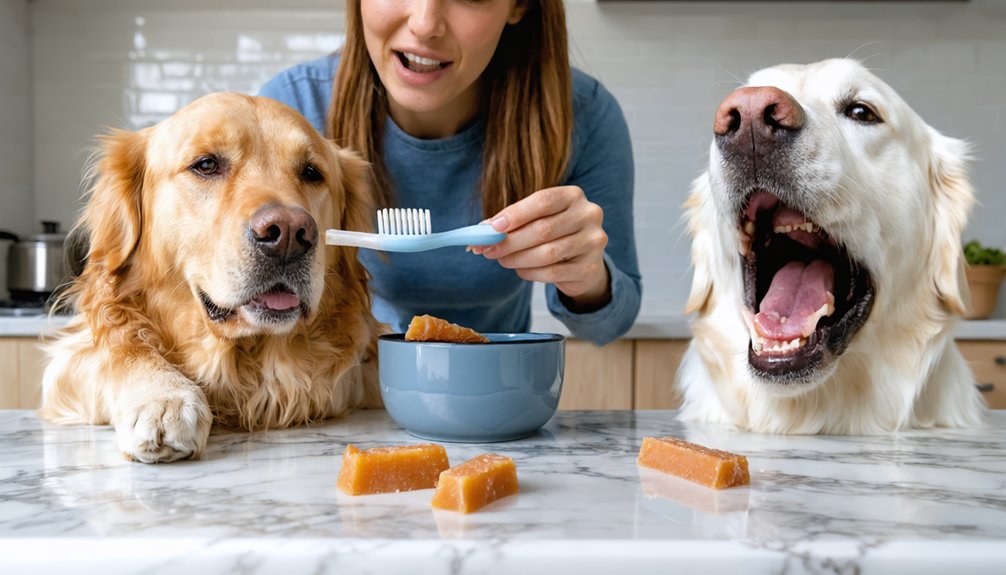

Effective pet dental care at home centers on daily brushing, supported by safe dental chews and close attention to warning signs. Brushing with pet-specific toothpaste removes plaque before it hardens into tartar, while VOHC-endorsed chews can help reduce buildup between sessions. Owners should watch for bad breath, red or bleeding gums, yellow tartar, drooling, chewing changes, or loose teeth. Because home care cannot treat disease below the gumline, the guidance ahead explains what works best.
Highlights
- Daily brushing with pet-safe toothpaste is the most effective home method to remove plaque before it hardens into tartar.
- Brush at least three times weekly using gentle circular motions at a 45° angle along the gumline.
- VOHC-approved dental chews can reduce plaque and tartar, but they supplement brushing rather than replace it.
- Watch for bad breath, red or bleeding gums, tartar buildup, drooling, chewing difficulty, or loose teeth.
- Professional veterinary dental cleanings are essential because home care cannot remove tartar below the gumline.
Why Pet Dental Health Matters at Home
Although dental problems often begin quietly, home dental care matters because plaque and bacteria can progress from bad breath to gum disease, tooth loss, and infections that affect the heart, liver, and kidneys.
In pets, neglected oral health allows plaque to harden into tartar, creating discomfort, chronic pain, and difficulty eating. Many companions hide tooth pain, so warning signs may appear only after disease is advanced. Early detection is essential because pets often cannot verbalize tooth pain.
Evidence shows dental‑ disease is extremely common: by age three, signs appear in about 80% of dogs and 70% of cats. That prevalence helps explain why veterinary hospitals report heavy demand for treatment. Professional cleanings can remove stubborn tartar and lower the risk of periodontal disease. Home brushing cannot fully clean below the gumline, which is why professional cleanings remain important.
Consistent home care and routine checkups support belonging by helping pets stay comfortable, active, and able to share daily routines. Preventive attention can improve well-being and may even extend life by several years.
Why Brushing Is the Best Dental Care
Daily brushing is considered the most effective form of at-home dental care because it removes plaque and bacteria before they harden into tartar, which can occur within 24 to 48 hours.
This makes brushing the only reliable way to prevent buildup rather than react to it later. Once tartar forms, professional cleaning is required to remove it.
For households committed to protecting a pet’s health, daily care offers the strongest defense against dental disease. More than 80% of dogs over age three develop periodontal disease.
Evidence shows that brushing also helps reduce risks linked to poor oral health, including effects on the heart, kidneys, and liver.
At least three sessions weekly may help, while once-weekly brushing offers fundamentally no benefit.
Fluoride alternatives made for pets and products highlighting Enzyme benefits can support this routine, but they do not replace brushing. A veterinary exam before brushing can identify gingivitis, plaque, tartar and determine whether professional cleaning is needed first.
Consistent home care still works best alongside annual professional dental cleaning.
How to Brush Your Pet’s Teeth Daily
Because most pets accept brushing more readily when it is introduced gradually, the process works best by starting with brief handling of the muzzle several times a day, then allowing the pet to taste toothpaste from a finger before any brushing begins.
Early sessions can include rubbing toothpaste on the gums and canines, then letting the pet investigate the brush. Using flient techniques, brushing is approached like a game, with praise throughout and rewards afterward. Be sure to use pet-specific toothpaste, since human toothpaste is unsafe for swallowing.
If your pet resists the toothbrush, go back to earlier steps and rebuild comfort slowly before trying again.
The brush is held at a 45-degree angle to the gum line, using gentle circular motions on outer surfaces, where tartar forms most often.
Sessions begin with canines and back molars, lasting 15 to 30 seconds, then progress toward 2 minutes daily. Consistent timing matters more than calorie calculation for success.
Which Toothpaste and Brush Should You Use?
Once a pet is comfortable with the brushing routine, the next step is choosing products that clean effectively and are safe to swallow.
Pet toothpastes should be fluoride-free, non-foaming, and xylitol-free. Enzyme selection matters: formulas such as Virbac C.E.T., Vetoquinol Enzadent, and Petrodex support plaque control, while Petsmile and Maxi/Guard offer recognized credibility through ADA or VOHC acceptance. Flavor can improve cooperation, with poultry, seafood, beef, or vanilla-mint often preferred. Enzymatic options can also support bacterial control by helping break down plaque naturally. Because periodontal disease is extremely common in adult dogs, daily home care can play an important role in preventing gum disease. Human toothpaste should never be used because it may contain toxic ingredients for pets.
Brush choice should stay gentle and practical. Brush material should be soft-bristled with a flat head to reduce gum irritation while reaching the gumline. Some pets accept finger application or gel formulas better than standard brushes. Matching the toothpaste texture, flavor, and brush style to the pet’s comfort helps families maintain a routine they can trust.
Where Dental Chews Help Pet Dental Health
How much can dental chews really add to a home care routine? Evidence suggests they can meaningfully support oral hygiene between professional cleanings.
Through mechanical chewing, effective products reduce plaque buildup, and some formulations lower plaque by nearly 70 percent.
Chew texture matters because abrasion helps limit tartar, while ingredients such as polyphosphates further reduce deposits. Ridged surfaces provide plaque control by scraping teeth as pets chew from different angles.
Daily use is linked with less visible plaque, improved gingival indices, and lower oral malodor. Choosing the correct size helps ensure safer chewing and more effective cleaning.
Dental chews also stimulate saliva, which helps wash away bacteria, neutralize acids, and support enamel remineralization.
This gum massage may lower gingivitis risk as plaque is kept from hardening.
Many pet families look for products endorsed by the Veterinary Oral Health Council, since consistent use of proven chews supports cleaner mouths and more comfortable breath for pets. Dental chews work best as a brushing complement, not a replacement for regular brushing and professional dental care.
Why Dental Chews Can’t Replace Brushing
Although dental chews can reduce surface plaque and support fresher breath, they cannot replace brushing as the foundation of at-home pet dental care. Chewing works mainly on exposed tooth surfaces, while the most serious disease develops below the gumline, where bacteria remain undisturbed. Brushing removes soft plaque before it hardens into tartar, something chewing alone cannot reliably accomplish. Treats should ideally be VOHC-approved to help ensure they are both safe and effective.
Results also vary by product quality, chew texture, flavor variety, and each pet’s breed, age, jaw shape, and oral history. Small dogs and pets with crowded teeth often retain plaque in tight spaces despite regular chewing. Veterinary guidance consistently places dental chews in a supporting role, not a leading one. A complete routine pairs brushing with chews and regular professional cleanings, helping pets stay healthier and helping caregivers feel confident they are doing enough.
How to Choose Safe Dental Chews
Because dental chews work best as a supporting tool rather than a substitute for brushing, choosing a safe and effective product matters.
Shoppers should look first for VOHC certification, which indicates tested plaque and tartar reduction under standards overseen by the American Veterinary Dental College.
Chews should match the dog’s size, age, and chewing strength, with softer options often better for seniors.
Texture also matters. A chew should be firm yet slightly yielding, not hard enough to risk tooth fractures; the fingernail indentation test offers a practical check.
Supervision remains important.
Ingredient transparency helps owners compare formulas, avoid allergens, and choose digestible options such as enzymatic chews, sweet potato, or fish skin.
Examples with established reputations include Greenies, Virbac Veggiedent, Whimzees, Purina Dentalife, and Milk-Bone Brushing Chews.
Which Pet Dental Health Red Flags Matter?
Several warning signs suggest that a pet’s dental problem has moved beyond routine plaque and requires closer attention. Persistent bad breath, yellow or brown tartar, red or bleeding gums, excessive drooling, and blood on chew toys are common red flags that disease is active rather than cosmetic.
Changes in eating also matter. Difficulty chewing on one side, dropping food, refusing crunchy kibble, longer meals, or weight loss often reflect oral pain. Pawing at the mouth, sensitivity to touch, loose teeth, or withdrawn behavior can signal worsening discomfort.
More serious findings include chronic sneezing, nasal or ocular discharge, facial swelling, or swelling beneath the eyes. These signs may indicate infection, a dental abscess, or broader systemic impact involving nearby tissues and overall health, especially in older pets and smaller breeds.
When Home Pet Dental Care Isn’t Enough
Home dental care plays an important preventive role, but it has clear limits. Brushing, chews, wipes, and water additives can reduce plaque, yet they cannot remove tartar below the gum line or replace scaling, polishing, and dental imaging.
That is why most pets, especially those over age three, need regular veterinary cleanings under anesthesia after appropriate risk assessment.
Professional care becomes necessary with halitosis, discolored teeth, visible tartar, red or bleeding gums, chewing difficulty, mouth pawing, irritability, or appetite loss.
Small breed dogs, senior pets, and animals on a wet food diet anesthesia plan often need more frequent cleanings.
Veterinarians may recommend annual visits, or every six to nine months, with professional referrals when disease is advanced.
Early treatment protects comfort, organ health, and longevity for pets everywhere.
Build a Pet Dental Health Routine That Works
A practical pet dental routine starts with consistency: daily brushing is the gold standard, brushing several times per week still reduces plaque and tartar markedly, and even once‑weekly brushing can help keep teeth cleaner when paired with regular veterinary care.
Routine timing matters: choosing the same time each day helps pets settle into a predictable pattern.
A gradual start improves success. The pet can first taste pet toothpaste, then accept a finger brush or gauze before a soft toothbrush.
Brushing one or two teeth at first, using gentle circular motions at a 45-degree angle along the gumline, builds tolerance.
Short sessions with praise, treats, or toys support Owner motivation.
Dental chews, rubber toys, crunchy diets, and veterinarian-guided additives can strengthen the routine and help every household feel capable together.
References
- https://www.pineridgepetclinic.com/dental-services/brushing-vs-dental-chews-choosing-the-right-pet-dental-care-routine/
- https://www.purina.com/articles/dog/feeding/guides/dog-teeth-cleaning-dental-chews-treats
- https://www.wellpets.com/blog/the-truth-about-pet-dental-treats/
- https://pmc.ncbi.nlm.nih.gov/articles/PMC7511057/
- https://houstonpetdentals.com/blog/dog-dental-chews/
- https://www.eastsacvet.com/blog/do-pet-dental-chews-really-work/
- https://www.aaha.org/newstat/publications/brush-chew-and-chomp-canine-and-feline-dental-home-care-tips-for-your-clients/
- https://www.smalldoorvet.com/learning-center/medical/pet-dental-health-myths
- https://northbayvetdentist.com/choosy-about-chews-how-to-pick-a-dental-chew-for-your-pet/
- https://www.fetchavet.com/blog/the-importance-of-pet-dental-cleanings-convenient-care-at-home