
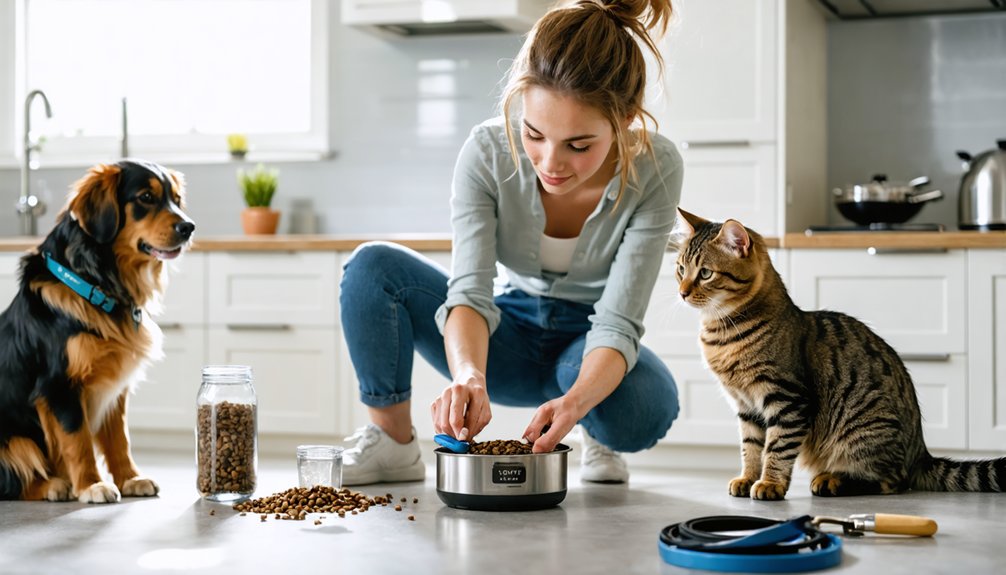

Vet-backed daily pet care routines start with a consistent wake-up, quick health check, fresh water, and a set breakfast. Predictable bathroom breaks and short morning exercise support digestion, house-training, and calmer behavior. Brief grooming, toothbrushing, and five-minute training sessions fit easily into busy schedules while improving hygiene and obedience. In the evening, a calm wind-down with light play, brushing, and quiet sleep cues helps pets settle well. More practical ways to make these habits stick follow.
Highlights
- Start each morning with a quick health check, immediate bathroom break, and fresh water to build routine and catch problems early.
- Feed pets on a consistent schedule, usually twice daily for adults, to support digestion, stable energy, and easier health monitoring.
- Add short daily exercise and enrichment sessions, like brisk walks, puzzle toys, or wand play, to reduce stress and improve behavior.
- Keep grooming, dental care, and five-minute training sessions consistent to prevent health issues and reinforce useful everyday behaviors.
- Use a predictable evening wind-down with calm play, gentle grooming, dim lights, and cozy resting spaces to promote better sleep.
Build a Simple Morning Pet Care Routine
How a pet starts the morning often shapes behavior and comfort for the rest of the day. A simple routine begins with a calm greeting, a quick visual health check, and an immediate bathroom opportunity. Dogs typically need a relaxed potty break or short walk after waking, while cats benefit from a predictable start that supports litter habits and lowers stress. Consistency helps pets feel secure and reduces whining, scratching, or accidents. Providing fresh water right away reinforces a healthy morning hydration habit. Checking the nose, eyes, and coat each morning supports an easy early health check. Waking pets at a consistent time each day helps set the tone for calmer behavior and a more predictable routine.
Morning movement adds structure and supports weight control, boredom prevention, and emotional balance. Dogs often do well with 10 to 30 minutes of walking or play, while cats respond to wand toys, climbing, or short interactive sessions. Brief enrichment after elimination can extend calm behavior. Morning hydration and Breakfast timing should stay consistent, helping households build reliable routines pets can trust daily.
Serve Fresh Water and the Right Breakfast
After the morning potty break or play session, the next step is fresh water and a meal that fits the pet’s age, size, and health needs.
Fresh, clean water should be offered daily, with bowls washed to remove debris, bacteria, and odors. Many households find pets drink better when water is changed often and served in clean stations.
Hydration supports digestion, temperature control, nutrient transport, and waste removal, making it central to breakfast planning. Dehydration can quickly become serious, and organ failure risk is one reason steady daily water intake matters so much. Dry-food diets can raise water requirement, especially for cats. Because water makes up about 70% of the body and powers every chemical process, it is essential to overall pet health.
Dogs generally need about one ounce per pound daily, while cats need less, especially on wet food.
Filtered water can help if tap water is refused, and room-temperature water often suits cats best.
Bowl placement also matters: multiple bowls, fountains, or moisture-rich food can encourage steady intake.
Unusual drinking changes warrant veterinary attention promptly.
Make Bathroom Breaks Part of Pet Care
Regularly scheduled bathroom breaks are a core part of daily pet care because they support comfort, house-training, and early detection of health concerns.
Effective Pee timing often starts with a post‑breakfast walk, ideally allowing 20‑30 minutes before work. Begin with a 5 minutes of walking warm-up so the outing feels comfortable and encourages easier elimination. Keep departures calm and low-emotion so pets do not associate bathroom breaks or your exit with added stress. Before regular outings, make sure dogs have proper vaccination and heartworm protection in place for safe outdoor activity.
Most dogs need 3‑5 breaks daily, while puppies and senior pets need more frequent outings based on bladder control and age.
Structured routines also help guardians notice Potty cues and physical changes.
During breaks, it is useful to observe urine color, volume, stool consistency, straining, or blood, which may signal dehydration or digestive issues and warrant veterinary guidance.
Consistent verbal cues such as “go potty,” paired with rewards after elimination, reinforce success.
For cats, litter access remains primary, though some benefit from prompted outdoor access where safe, supervised, and appropriate.
Add Quick Pet Exercise Before Work
Before the workday begins, a short exercise session can improve a pet’s physical comfort, focus, and behavior by releasing pent‑up energy and providing mental stimulation.
A Morning stretch followed by a brisk five‑minute walk suits most dogs, with pace adjusted gradually and outings reserved for pets current on vaccinations and parasite prevention. Keep water available and watch for fatigue cues like excessive panting or lagging behind.
When outdoor time is limited, brief indoor options remain effective. Interactive feeder toys add mental work by requiring dogs to manipulate them to retrieve food.
Soft, low‑bounce toys support fetch in small spaces, and a Playful sprint up stairs can raise heart rate safely for athletic dogs.
Tug sessions with clear “drop it” rules add obedience practice, while joint circuits pair human squats or lunges with pet tricks in efficient 45‑second rounds.
Flirt pole drills can also tire dogs quickly, though veterinarians should guide new routines or physical limitations.
Use a Consistent Daily Pet Feeding Schedule
Establishing a consistent daily feeding schedule helps support digestive health, body weight, and behavior in pets.
Regular meal timing aligns with circadian rhythms, improves digestion, and helps prevent gas, bloating, diarrhea, constipation, and irregular bowel movements. It also makes bathroom patterns more predictable, which supports household routines and potty training. This routine is especially helpful for pets that benefit from stable blood sugar.
Schedule consistency also reduces grazing and overfeeding by making portion control easier. Predictable mealtimes can lower anxiety, begging, and food-related stress while reinforcing a sense of security many pet households value. Consistent feeding also supports healthy weight by making daily intake easier to manage. In dogs, large survey data from the Dog Aging Project found that once-daily feeding was associated with lower odds of some health problems, though this link remains correlational.
For health monitoring, skipped meals are easier to notice when feeding occurs on schedule.
Veterinarians commonly recommend twice-daily feeding for average adult dogs and cats, while puppies usually need three to four meals daily to support growth and stable energy.
Fit Dog and Cat Play Into Busy Days
A predictable feeding schedule pairs well with short, consistent play sessions that support physical health, mental stimulation, and household behavior.
Even five minutes daily can improve energy, reinforce bonds, and reduce restlessness in both dogs and cats. Short play sessions still provide meaningful enrichment and support overall behavioral health.
Busy households often succeed by attaching play to existing routines.
Morning fetch in a hallway, a brief tug session during television time, or a short walk paired with a coffee run can help dogs release energy.
Cats often respond well to evening laser sessions, wand toys tossed between tasks, or puzzle toys during conference calls.
Independent options also extend activity when people are unavailable.
Automatic ball launchers, food puzzles, tunnels, window perches, and rotating toys help maintain interest.
Consistency matters most, because pets learn the rhythm and feel included daily.
Keep Pet Grooming Routines Easy and Clean
Keep grooming simple by matching tools and frequency to the pet’s coat and keeping sessions brief and consistent. Brushing removes dead hair, dirt, grease, and skin flakes, helps prevent mats and irritation, reduces household shedding, and spreads natural oils for a healthier coat. Long-haired dogs usually need daily brushing, while short-haired dogs may need weekly or monthly care. Cats often benefit from once- or twice-weekly combing, especially seniors.
For quick grooming, brushing before bathing helps avoid tangles. Dogs do best with quality dog shampoo and lukewarm water; cats rarely need baths unless especially dirty or sticky and require cat shampoo. Nails should be trimmed before baths and kept from touching the ground when standing. During each session, caregivers can check paws, ears, and skin, then finish with towel drying and a tidy cleanup.
Protect Pet Dental Health in Minutes
Why can a task that takes only a minute matter so much? Veterinary guidance identifies daily brushing as the strongest defense against plaque, tartar, and gum disease in dogs and cats. For busy households, a quick dental routine works best when it stays short, gentle, and consistent. Using pet friendly toothpaste is essential, since human formulas may contain harmful ingredients.
Most pets adjust more easily when brushing begins gradually: first tasting toothpaste, then accepting a finger brush, then a toothbrush. Even several sessions each week can provide benefits when daily care is unrealistic. Linking brushing to morning walks or evening wind-downs helps it become part of shared household rhythm. VOHC-approved chews, water additives, and annual professional cleanings can support, but not replace, brushing. Regular veterinary checks remain important too.
Use Short Daily Pet Training Sessions
Build training into the day with short, focused sessions that ask for just one skill at a time. Evidence supports five‑minute daily practice as an efficient way to teach behaviors without boredom or frustration.
A single session can target sit‑stay for five seconds, leave‑it, or loose‑leash walking, but not all at once. That narrow focus helps pets learn clearly and helps caregivers feel consistent.
Short sessions also fit real schedules. Micro‑training can happen during breakfast, morning prep, work breaks, walks, play, or bath routines.
Daily repetition generally produces faster results than occasional long lessons, with many dogs improving basic cues within seven to ten days. Positive reinforcement matters: sessions should stay upbeat, use praise, play, or micro reinforcement, and end after a success.
Small wins help families feel capable, connected, and included together.
End the Day With a Calming Pet Routine
As evening approaches, a predictable calming routine can help pets shift from activity to rest more smoothly. Brief food puzzles, Kong toys, indoor fetch, or quick training can reduce leftover energy and meet natural enhance needs before sleep.
After stimulation, calming activities support decompression. Gentle brushing, a slow sniff walk for dogs, or vigorous cat play followed by rest can lower arousal and build structure that reduces anxiety. Evening aromatherapy using pet-safe pheromone diffusers, lavender, or chamomile may further encourage relaxation.
Environmental cues also matter. Dim lighting, closed blinds, cozy beds or covered crates, favorite blankets, and access to water create a secure space. Bedtime music or white noise can calm nerves. Quietly rewarding relaxed postures with small treats reinforces calm without encouraging barking, whining, or attention‑seeking.
References
- https://www.fpcvets.com/the-ultimate-pet-wellness-routine/
- https://www.watsonsfriends.com/creating-a-healthy-daily-routine-for-your-pet/
- https://www.zoetispetcare.com/blog/article/importance-routine-cat-dog
- https://www.splootvets.com/post/routine-care-for-dogs-your-complete-guide-to-amazing-dog-care
- https://www.bartonheights.com/site/blog/2022/12/09/checklist-routine-pet-care
- https://veterinary.rossu.edu/about/blog/guide-for-taking-care-of-animals
- https://busypetparent.com/daily-care-and-routines/
- https://www.onlynaturalpet.com/blogs/holistic-healthcare-library/the-fundamentals-of-natural-pet-care
- https://www.youtube.com/watch?v=Yzv0gXqoCkc
- https://thepetdoctorinc.com/daily-habits-to-keep-your-pet-happy-and-thriving/