
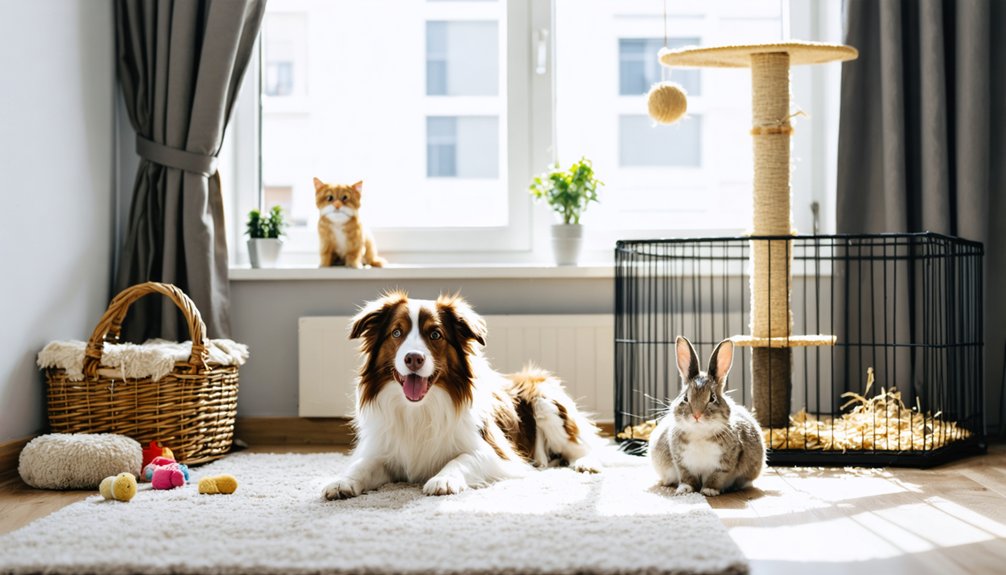

Apartment pet care works best when each pet has clear zones for rest, feeding, play, and quiet retreat. Safe beds, crates, and hideouts should fit properly and be easy to clean. Cats need vertical space like shelves or window perches, while dogs benefit from cozy open beds and routine exercise. Calm feeding areas, puzzle toys, and short training sessions support good behavior. Strong pet-proofing, regular grooming, and simple cleaning habits make indoor life healthier and more manageable overall.
Highlights
- Create separate zones for sleeping, feeding, play, and movement to reduce stress, prevent conflicts, and build a predictable indoor routine.
- Add species-appropriate retreats like cat shelves, window perches, cozy dog beds, and enclosed hideouts for safety, comfort, and confidence.
- Place food and water in quiet, low-traffic areas, and keep feeding, grooming, litter care, and bedtime on a consistent schedule.
- Provide daily exercise and mental enrichment with walks, training, puzzle feeders, scent games, rotating toys, and short calm-settle sessions.
- Pet-proof each room and maintain cleanliness with secured cords, locked hazards, washable bedding, regular grooming, and frequent vacuuming.
Set Up Pet Zones in Your Apartment
Effective apartment pet care begins by assigning clear zones for rest, feeding, play, and daily movement. Pet zoning reduces conflict, supports routine, and helps every animal feel secure within a shared home. Cats need raised or secluded resting areas, while dogs do better with cozy, open spaces. Separate species-specific retreats lower anxiety and competition. Recognizing species differences helps shape apartment layouts that feel safe and natural for both cats and dogs. Dedicated sleeping nooks with coordinated bedding create secure retreats that reduce anxiety and blend neatly with apartment décor.
Feeding stations should be distinct, clean, and consistent. Lifted cat bowls, non-slip mats, and multiple water points reinforce boundaries and calm mealtimes. For cats, vertical shelves or trees create safe observation routes and expand usable space without crowding rooms. Play areas work best when rugs or furniture define activity limits, with puzzles and interactive toys supporting indoor wellness. Decorative gates, secure windows, and simple Noise buffering measures further strengthen safety, comfort, and peaceful cohabitation for all pets. Consistent schedules around each zone help pets adjust faster and thrive through daily routines.
Choose Safe Beds, Crates, and Hideouts
Three qualities matter most when choosing apartment pet beds, crates, and hideouts: safety, fit, and emotional comfort. Covered beds, cave designs, and enclosed crates do more than save space; they give pets clear boundaries and a secure place to settle. For anxious, shy, or burrowing animals, cozy hideaways reduce visual stimulation and support calmer behavior indoors. Some options also feature machine-washable design, making it easier to keep small indoor spaces clean and fresh. Cave-style beds can support natural burrowing instinct while creating a warm, private retreat for rest.
Proper sizing matters across cats, dogs, and small pets. Beds should allow easy entry, turning, and resting without excess open space that can feel exposing. Hut styles, blanket attachments, and refuge beds create trusted privacy nooks that help pets decompress on their own. Convertible igloo or nest beds add flexibility, while foldable kennels simplify storage. Reliable retailers and specialized makers offer options that blend apartment practicality with a pet’s need for shelter. Budget-friendly options like the Nebwoak Cozy Cat Cave Bed House also offer a self-warming hideaway for small to medium pets.
Add Vertical Space for Indoor Cats
Once indoor cats have a secure bed or hideout, the next priority is using vertical space to support daily movement and emotional stability. Vertical enhancement helps indoor cats exercise, stay agile, and maintain healthy weight, which matters because obesity affects many domestic cats and raises disease risks. Raised perches also offer security during noise, visitors, or conflict with other pets, reducing stress and defensive behavior. Elevated resting areas also satisfy cats’ instinct for territorial control, helping them feel safer and more in command of their surroundings. Perching at different heights also provides mental stimulation, which helps reduce boredom and keeps indoor cats more engaged throughout the day. Research in group-housed cats found that adding shelving reduced unfriendly behaviours, especially in multi-cat settings.
Effective apartment setups use climbing pathways such as wall shelves, cat trees, bridges, ramps, window perches, and stable bookcases adapted for access. Multiple levels create exploration routes, strengthen core muscles, improve coordination, and support aging cats with gentler movement options. In multi-cat homes, vertical territory reduces tension by giving each cat personal space. Sturdy materials, soft surfaces, and safe landings help sustain confidence and consistent daily use.
Create Feeding Stations Pets Can Trust
Create feeding stations in calm, predictable areas where pets can eat without interruption or anxiety.
Low-traffic placement supports Trusted feeding by reducing stress and guarding against startling encounters. Feed at a consistent daily time and leave food out briefly to build predictable routines. Consistent schedules help regulate digestion and reduce meal-related anxiety through structured feeding.
Stations work best near convenient household access points while remaining discreet, with Hidden bowls or low-profile setups that blend into the apartment and avoid unwanted attention. Houzz search results highlight easy cleaning as a key feature of effective pet feeding station design.
Design should stay open and approachable, never creating single-entry traps.
Multiple small entrances reduce conflict in multi-pet homes, while raised platforms can support larger dogs and built-in water areas encourage hydration.
Pet-safe, durable materials and heavy construction improve security and stability.
Containing food, water, and storage in one organized zone simplifies cleanup and keeps essentials together.
Fresh food and water should be replaced daily, and easy-clean surfaces help maintain hygiene, order, and confidence for every pet.
Build an Apartment Pet Care Routine
A well-planned feeding area works best when it fits into a dependable daily routine. Predictable timing for meals, quiet rest, grooming, litter care, and bedtime helps apartment pets feel secure and settled indoors. Consistency also supports house training, reduces accidents, and encourages calmer behavior between changes. Use positive reinforcement with treats or praise to build calm behavior during transitions and daily care. Keep windows secured with screens and remove exposed cords or unsafe items as part of pet-proofing basics.
A practical routine includes designated zones for beds, bowls, toys, and crates, giving pets clear territory without adding clutter. In multi-pet homes, separate spaces help limit tension. A daily‑care pocket for puzzle feeders, treats, and wipes keeps essentials organized and easy to reach. Regular indoor‑play enhancement using tunnels, treat toys, window perches, or climbing shelves prevents boredom and supports cognitive health. Clean bedding, refreshed toy rotations, and tidy litter or meal areas reinforce comfort, hygiene, and a sense of belonging for every pet. For dogs especially, a predictable schedule for walks and play adds essential daily exercise that supports health and reduces boredom indoors.
Plan Dog Walks and Indoor Exercise
Three well-timed activity periods each day help apartment dogs stay balanced, engaged, and easier to manage indoors. Reliable energy walk schedules create predictability, which supports calmer behavior and smoother household routines.
Most dogs do well with 30 to 60 minutes of daily walking split between morning, midday, and evening, while high-energy dogs often need at least 60 minutes across two or three outings.
Morning sessions may combine a walk, brief training, and play. Midday outings help release tension and maintain habits. Evening exercise can run slightly longer, with route changes, command practice, or ball play.
On bad-weather days, indoor exercise games such as tug, hallway fetch, stair work, or simple obstacle courses preserve fitness in limited space. Consistency helps apartment communities feel orderly, considerate, and welcoming for everyone.
Keep Indoor Pets Mentally Stimulated
Daily mental enhancement is essential for indoor pets because it channels natural instincts into appropriate activities and helps prevent boredom, anxiety, and destructive behavior.
In apartments, structured enhancement helps pets feel secure, engaged, and included in daily home life.
Puzzle feeders turn meals into problem-solving opportunities, while treat-dispensing balls, snuffle mats, Kongs, and slow feeders encourage foraging, slower eating, and longer focus.
Rotating toys preserves novelty and supports healthy dopamine release.
Scent games add another layer of stimulation by inviting pets to sniff, search, and uncover hidden treats, kibble trails, or food bowls placed around rooms.
Simple obstacle courses made from pillows, boxes, and chairs also challenge body awareness and attention.
Safe layout changes and varied activities keep indoor dogs, cats, and small pets mentally active throughout the week.
Train Apartment Pets for Calm Behavior
Mental stimulation supports apartment pets during active hours, but calm behavior must also be taught and reinforced so they can rest quietly in a shared building.
Calm reinforcement works best when quiet moments are rewarded consistently, including calmly offering treats while passing by. Pets learn that settling, lying down, and remaining relaxed near people brings positive results.
A short settle exercise helps build this skill. Five- to ten-minute sessions in one spot, then another, teach pets to relax anywhere at home. Rewards should be spaced out gradually as success grows.
A calming environment also matters: dim lights, closed blinds, white noise, and routine nap periods support rest.
The Quiet command should use one word, one calm tone, and immediate praise.
Gradual sound exposure, play, and comfort items reduce apartment noise anxiety.
Pet-Proof Your Apartment Room by Room
Because apartment hazards differ by space, effective pet-proofing should be done room by room with attention to both safety and daily function.
In kitchens, locked cabinets, stove knob covers, pet-proof trash lids, and secured pantry storage reduce common risks.
Bathrooms need closed toilet lids, raised medication storage, and childproof latches on toxic products.
Living rooms benefit from chew-proof cord covers, covered outlets, secure screens, balcony barriers, and fireplace guards.
Bedrooms should keep shoes, jewelry, lotions, and medications enclosed, while under-bed areas stay clear of swallowable items.
Entryways work best with safety gates and fewer breakables.
A designated retreat supports confidence and routine.
Pet friendly lighting helps visibility without overstimulation, while Noise reducing rugs soften sound, improve footing, and create a calmer shared indoor environment for pets.
Keep Apartment Pet Care Clean and Simple
How can apartment pet care stay manageable without becoming a constant chore? A simple system keeps shared spaces welcoming for pets and people.
Weekly vacuuming with a HEPA model controls hair on carpets, upholstery, and favorite lounging spots, while a microfiber mop catches what vacuums miss. Lint rollers, washable covers, and absorbent mats make quick work of furniture, bowls, and entryways. Clean messes immediately and wipe paws after walks to stop dirt from spreading.
Pet odor control depends on routine, not heavy effort. Bedding, toys, litter boxes, and cages need regular washing or disinfecting with pet-safe products. A consistent grooming schedule reduces shedding, hairballs, and tracked debris through brushing, nail clipping, face wiping, and occasional baths. HEPA purifiers, baking soda, and frequent filter changes keep indoor air fresher daily.
References
- https://www.dominionvalleyvets.com/pet-lifestyle-tips-for-apartment-dwellers/
- https://www.thepinesliving.com/six-tips-and-tricks-for-apartment-living-with-pets
- https://www.dupontvet.com/blog/how-to-create-a-pet-friendly-space-in-small-apartments/
- https://thepetdoctorinc.com/apartment-friendly-cats-dogs-new-owners-guide/
- https://fullwoodanimalhospital.com/apartment-care-for-kitties/
- https://www.westparcatbethany.com/blog/2024/08/15/the-5-apartment-maintenance-tips-pet-owners-need/
- https://www.rentcafe.com/blog/apartmentliving/renting-with-pets/pet-maintenance-apartment-tips/
- https://designforpets.co/blogs/news/the-best-multi-pet-household-setup-creating-spaces-for-cats-and-dogs-to-coexist
- https://northforkanimalwelfareleague.org/blog/how-to-design-stylish-amp-safe-pet-spaces
- https://outwardhound.com/furtropolis/product/enclosed-dog-bed