Pet water fountains, HEPA air purifiers, and easy-clean surfaces help shared homes stay cleaner, drier, and more comfortable. Fountains encourage more frequent drinking, reduce stagnant water, and limit splashes when they have stable bases and filtration. Air purifiers with true HEPA and carbon filters capture dander, fur, and odors, especially in busy bedrooms and living areas. Vinyl, tile, mats, and raised feeding stations simplify cleanup and protect floors. The most effective setup depends on room needs.
Highlights
- Pet water fountains encourage more frequent drinking, helping cats stay hydrated and reducing urinary and kidney risks in shared homes.
- Choose fountains with stable, anti-splash designs, quiet pumps, and stainless steel or ceramic surfaces for cleaner, calmer communal spaces.
- Clean fountains regularly and replace filters on schedule, since neglected pumps and reservoirs can harbor mold, slime, and bacteria.
- Air purifiers with true HEPA and activated carbon reduce pet dander, odors, and VOCs, especially when sized for at least 5 ACH.
- Upgrade shared areas with water-resistant flooring, absorbent nonslip mats, and splash-proof feeding stations to control mess and simplify cleanup.
Why Pet Water Fountains Help Shared Spaces
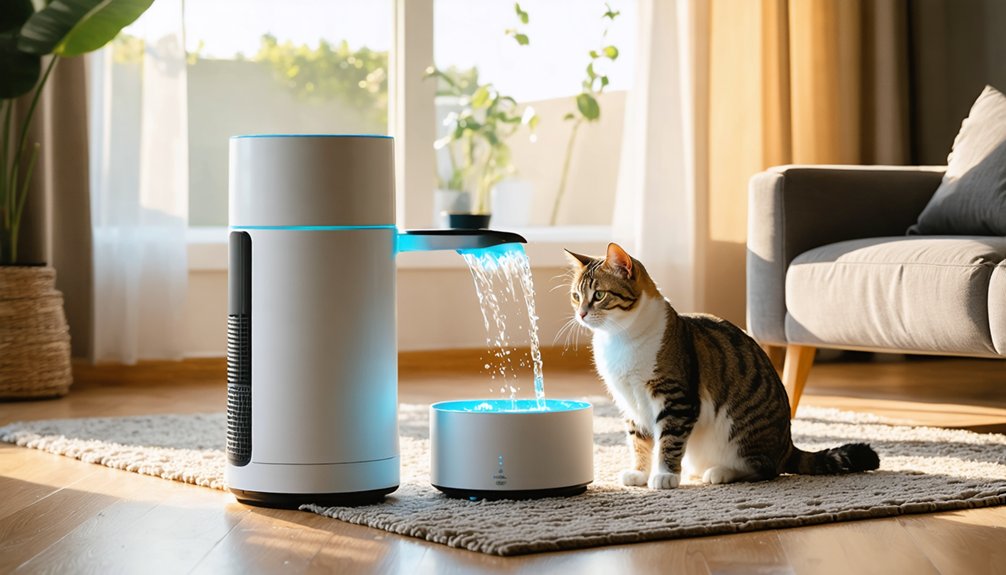
In shared homes with both cats and dogs, pet water fountains improve daily routines by providing one reliable, neutral drinking station that supports access for multiple animals at once. This setup reduces clutter from separate bowls, offering practical space saving in kitchens, laundry rooms, and other communal areas. Shared fountains work best when cleaned regularly to keep water safe and appealing for both pets. In multi-pet households, advanced multi-stage filtration helps manage the extra hair, drool, food particles, dust, and bacteria that build up in shared water sources. Many pets are more likely to drink from fountains because running water feels fresher than still water.
Well-designed fountains support pet bonding by lowering tension around shared resources. Multi-level drinking points help cats and dogs approach comfortably without crowding, while neutral placement makes the station feel equally available to both. Heavy, stable bases withstand busy movement and prevent tipping in active households. Anti-splash construction keeps floors drier and walkways safer, which helps shared spaces stay welcoming and orderly. Large-capacity reservoirs reduce refill frequency, and easy-clean designs simplify upkeep, supporting a cleaner, more cooperative home environment for everyone, every day.
How Pet Water Fountains Improve Hydration
Why do pet water fountains so often lead to better hydration?
Flowing water resembles a natural stream, so many pets approach it more readily than a still bowl. The sound, motion, and oxygenated freshness can prompt more frequent sips, with some pets drinking substantially more overall. Studies show up to 70% higher water intake with fountains because running water naturally attracts pets and encourages more frequent drinking. That added intake helps hydrate taste health by supporting digestion, temperature regulation, and daily comfort. For cats in particular, urinary tract health can benefit when increased water intake helps reduce the risk of dehydration-related issues. Adequate hydration can also lower the risk of kidney stones and other urinary problems over time.
Filtration also plays a direct role. Activated carbon reduces chlorine and odors, mesh screens trap hair and debris, and continuous circulation limits slime and bacterial buildup. Strong filtration efficiency keeps water cleaner and more appealing, which can raise voluntary consumption. Over time, better hydration supports kidney waste removal, fluid balance, and urinary tract wellness, especially in cats and older pets. Larger reservoirs also maintain reliable access between refills daily.
Which Pet Water Fountain Features Matter Most?
Better hydration often depends on choosing a fountain built with the right features, not just adding moving water to a room.
Effective filtration matters first: multi-stage systems capture hair, dust, food particles, and debris, while charcoal, foam, or carbon media improve taste and odor. In hard-water areas, resin filters can help reduce mineral buildup and support smoother long-term operation. Replaceable filters help control bacteria, so filter lifespan should be checked alongside refill and cleaning routines.
Material durability also shapes long-term performance. Stainless steel and glazed ceramic resist bacteria, odors, and wear better than porous plastics, while remaining easier to clean. Scratched plastic surfaces can trap bacteria in porous plastic, making thorough cleaning more difficult over time.
Stability is equally important; wide bases, non-slip feet, and heavier bodies reduce spills in active households.
Quiet pumps, low-vibration construction, and adjustable flow settings support comfortable drinking, especially for skittish cats. Running water can encourage cats to drink more by appealing to their natural drinking instinct.
Larger capacities suit multi-pet homes and reduce daily maintenance burdens overall.
When Pet Water Fountains Aren’t Worth It
Consider the tradeoffs before assuming a pet water fountain is the best upgrade for every home. For some households, the Noise impact alone outweighs the benefit. Budget fountains often hum or trickle loudly, which can unsettle skittish cats, fearful dogs, and owners who value calm shared spaces. Placement also matters, since electric models can feel intrusive in kitchens or entertaining areas. Cats often prefer running water, which can make fountains more appealing than still bowls in some homes.
The Maintenance hassle is equally important. Fountains need frequent cleaning, filter changes, and pump checks to avoid mold, bacteria, and mineral buildup. Plastic versions can trap growth, while ceramic units demand scrubbing for hard water deposits. Filters also need monthly replacement because they mainly catch large debris, not bacteria. Costs also rise quickly through replacement filters and shorter-lived cheap models. Because fountains depend on electricity and space, many homes may be better served by reliable, easy-to-clean bowls instead. For dogs, there is limited evidence that fountains reliably increase intake, since preference for moving water has not been clearly established.
Why Air Purifiers Help With Pet Dander
For homes where a water fountain offers limited value, air purification often makes a more direct difference in shared spaces affected by pet dander. Pet dander includes tiny skin flakes, hair, and debris that become airborne and circulate through rooms, where they can trigger reactions and linger in fabrics. To work well for pet households, a purifier should deliver enough airflow for at least 5 ACH in the room it serves.
Air purifiers help because true HEPA filters capture 99.97% of particles as small as 0.3 microns, while most pet dander measures 5 to 10 microns. That level of HEPA efficiency supports meaningful Allergy reduction for many households, especially in bedrooms and other shared areas. Pre-filters also catch larger fur before it reaches the main filter, improving maintenance and performance. Models with washable pre-filters can be especially helpful for pet owners because they capture pet hair and simplify routine maintenance. Many pet-focused models also include activated charcoal filters to reduce odors from fur, bedding, and litter boxes.
Used alongside weekly vacuuming and sensible room placement, purifiers can create a cleaner, more comfortable environment where everyone feels more at home.
Which Air Purifier Features Cut Odors Fast?
Target the filters first: the air purifiers that cut odors fastest combine substantial activated carbon with strong airflow. Carbon filtration is the key feature because it captures VOCs and smell molecules from pets, cooking, and smoke. Heavier carbon loads, especially pelleted or bonded media, generally outperform thin carbon sheets when rooms need noticeable odor control quickly.
A CADR boost matters next. Higher CADR means more room air cycles each hour, so odors disperse and get treated faster. The most effective designs pair carbon with true HEPA in multi-stage systems, letting HEPA trap particles while carbon absorbs gases. Buyers seeking a home that feels fresh and welcoming should also look for quiet, efficient operation, since continuous use is what keeps shared spaces consistently comfortable for everyone, every day.
How Water Fountains and Air Purifiers Work Together
Pairing a pet water fountain or decorative indoor fountain with an air purifier can improve shared spaces by addressing air quality from two angles at once. HEPA filtration can capture 99.97% of 0.3-micron particles, while water-based stages use centrifugal action to trap dust, pollen, fungi, bacteria, and light odors.
This combined approach creates clear collaboration: the purifier removes particulate contaminants, and the fountain supports humidity control as air moves across water and returns cooler, more humid. Indoor fountains may also generate negative ions, while wall-mounted and floor models extend humidification according to room size.
Together, these systems can reduce respiratory irritation, support hydration, and help households feel healthier and more comfortable. Real-time air quality monitoring adds practical reassurance, giving shared homes a dependable, wellness-focused routine for everyone indoors daily.
Upgrade Floors and Surfaces for Easier Cleanup
A smart flooring upgrade can make pet-related cleanup faster, more thorough, and less stressful in shared spaces. The right Floor material helps households stay welcoming while reducing daily mess.
Laminate offers scratch and stain resistance with affordable wood-look style.
Vinyl provides strong water resistance, simple maintenance, and reliable durability for busy rooms.
Ceramic tile handles moisture well, resists stains, and supports allergy-conscious homes, though grout needs regular care.
Hardwood remains attractive and durable when spills are removed quickly and moisture is kept minimal.
Routine care matters as much as material choice. Sweeping or vacuuming before mopping removes debris that can grind into surfaces. Manufacturer-approved cleaners, microfiber tools, felt pads, and protective Surface sealants help preserve finish, reduce scratching, and support cleaner, more comfortable living for everyone.
Choose Better Bowls, Mats, and Feeding Stations
Mess often starts at the feeding area, so better bowls, mats, and feeding stations can noticeably improve cleanliness in shared spaces.
Splash-proof options such as the Slopper Stopper, Road Refresher, PET WEIGHTER, and Ray bowl design help contain water and reduce floor spills from enthusiastic drinkers and eaters.
A smart mat bowl setup adds another layer of protection.
Premium vinyl and absorbent mats with nonslip backing stay in place, catch drips, and simplify washing.
WaterHog styles absorb moisture, use side channels for quick drainage, and resist mold and mildew.
Careful mat selection also supports low-profile placement under bowls or crates without disrupting shared rooms.
For a more organized look, raised feeding stations with hidden storage keep supplies tidy, protect floors, and create a cleaner, more welcoming routine for everyone at home.
Build a Cleaner Pet-Friendly Room-by-Room Plan
Start with a simple room-by-room plan to keep pet mess from spreading and routine cleaning manageable.
In kitchens, daily sweeping, pet-safe counter wiping, frequent trash removal, and weekly mopping control hair, crumbs, and odors. Enzyme cleaners handle accidents fast.
In living rooms, HEPA vacuuming twice weekly, robot vacuum schedules, baking soda deodorizing, lint rolling, and washable covers keep shared seating fresh.
Bedrooms benefit from weekly brushing, washable entry rugs, monthly vent cleaning, and pet-safe laundering of bedding.
Bathrooms need vacuuming before mopping, vinegar-based surface cleaning, thorough rinsing, ventilation, and paw wipes near entrances.
Whole-home consistency comes from nightly 10-minute resets, HEPA air purifiers, labeled supply bins, and monthly deep cleaning.
Pet friendly lighting and Noise reducing flooring further support calm, clean, welcoming spaces for everyone together.
References
- https://www.wiredwhisker.com/blog/the-pros-and-cons-of-pet-water-fountains
- https://petcube.com/blog/benefits-of-using-a-pet-water-fountain/
- https://siriusvets.com/why-a-cat-water-fountain-is-the-best-investment-for-your-feline-companion/
- https://www.petassure.com/maxscorner/pros-and-cons-pet-water-fountain/
- https://www.zoetispetcare.com/blog/article/buying-cat-water-fountain
- https://www.petmate.com/blogs/petmate-academy/why-your-cat-needs-a-water-fountain
- https://cheerble.com/blogs/cheerble-blog/cat-water-fountain-benefits-guide
- https://www.akc.org/expert-advice/lifestyle/dog-water-fountain/
- https://www.uahpet.com/blogs/post/can-cats-and-dogs-share-water-fountain-exploring-the-possibilities
- https://petcareshed.com.au/blogs/pet-supplies/best-water-fountains-for-multi-pet-homes