Scoop and pack out every pile when trash cans, vehicles, or dump points are within reach—it’s the cleanest choice and keeps spots legally open. Use thick, unscented bags and an odor-control container like a poop tube. In remote backcountry, bury waste in a 6–8 inch cathole (4–6 inches in desert), staying 200 feet from water. Never burn or hang bags. Want the full system for staying compliant? Keep going below.
TLDR Key Takeaways
- Pack out dog waste in thick, puncture-resistant, unscented bags whenever trash cans, vehicles, or dump points are within reach.
- Bury waste in a 6–8 inch cathole (4–6 inches in arid desert soils) only when remote and packing out is impractical.
- Keep dog waste at least 200 feet (about 70 steps) from lakes, rivers, streams, springs, and wetlands.
- Never burn waste or bags, and avoid hanging bags on branches, as both create pollution and count as littering.
- Check posted rules from BLM, USFS, or local managers, since fines for violations range from $50 to $500.
Why Dog Waste Harms Public Land and Water
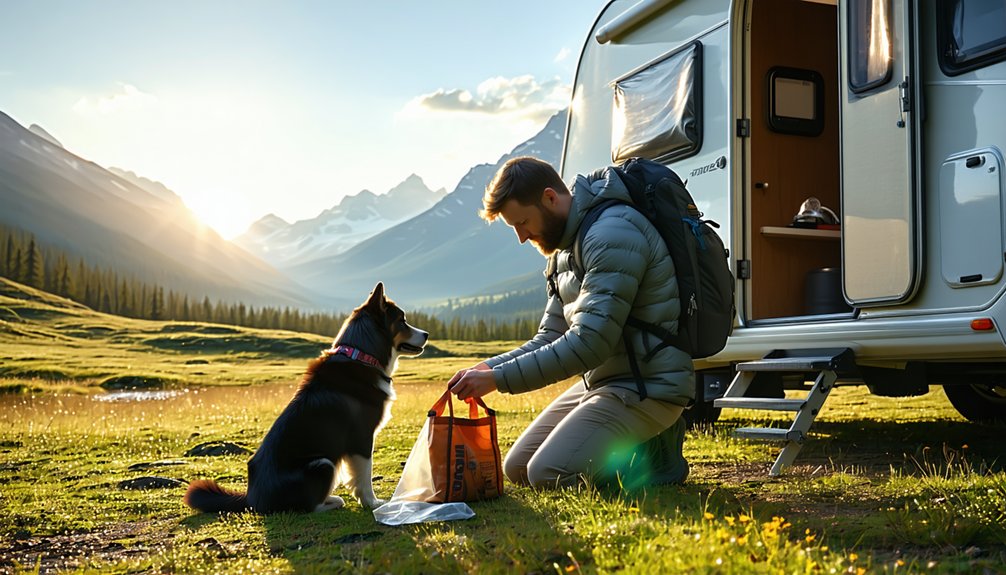
Out on public land, that small pile your dog leaves behind isn’t harmless—it’s a pollution source with real consequences.
It’s loaded with E. coli, fecal coliforms, Giardia, and roundworms that survive in soil for months, fueling wildlife disease among ground-feeding animals and scavengers that contact it.
When rain or snowmelt washes that waste into streams and ponds, it degrades water quality, spiking fecal bacteria and threatening the swimming, fishing, and drinking sources we all share.
The nitrogen and phosphorus act like fertilizer, triggering algal blooms that choke oxygen and kill fish.
EPA estimates two days of waste from 100 dogs can close a watershed.
As responsible boondockers, we protect these places—and each other—by taking that threat seriously.
What the Rules Say About Dog Waste Disposal
Because there’s no single federal “dog waste law,” the rules you’ll answer to depend entirely on who manages the land and what’s posted on-site.
On BLM land, “Pack It In, Pack It Out” often covers pet waste where local orders require it.
The USFS and National Park Service frequently extend sanitation standards to animal waste, treating violations as littering.
Pet Waste Compliance gets stricter once you near roads, parking areas, and access points, where state and municipal “pooper scooper” ordinances kick in.
Because of Local Ordinance Variance, you might face $50–$500 fines—and as a visiting boondocker, walker, or caretaker, you’re still on the hook.
Always read posted signs and check local rules before you settle in, so you stay welcome wherever you roam.
Pack It Out or Bury It: How to Decide
Once you know the rules for your specific patch of public land, you still have to make a practical call: pack the waste out or bury it. Pack-out is the cleaner choice whenever a trash can, vehicle, or dump point sits within reach—and it spares high-use or sensitive areas.
Burial is your fallback in remote backcountry where carrying out isn’t practical and conditions allow a proper cathole.
Weigh these factors:
- Remote practicality — Can you reach a receptacle soon, or are you truly far out?
- Bin sealing, odor control — A sealed bag keeps smells down until disposal.
- Wildlife risk — Shallow burial invites animals to dig.
When you’re unsure, pack it out. It protects shared land and fellow boondockers.
The Dog Waste Kit You Need for Boondocking
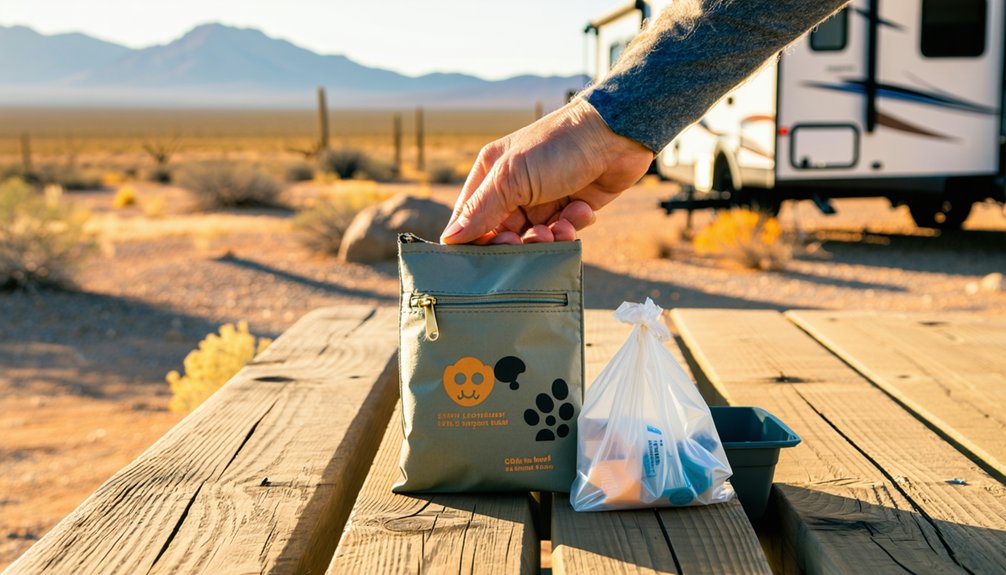
Whether you’re packing out or burying, the right kit makes dog waste management on public land far simpler. Start with the essentials fellow boondockers rely on.
For bag durability, choose thick, puncture-resistant bags that won’t tear on rocks, desert scrub, or frozen ground. Pack unscented bags for wildlife safety—artificial fragrances can attract animals to your camp or rig.
Address odor control with a smell-proof waste container, a rigid PVC “poop tube,” or a repurposed screw-top food tub. Double-bagging inside these holders adds redundancy against punctures and reduces wildlife attraction.
For packable storage, carry standard roll-format bags in a high-capacity, secure-closing dispenser that won’t unspool in your pack. Clip-on or leash-mounted holders keep bags accessible, so you’re never caught unprepared on remote trails.
Bag Poop With the “Bag as Glove” Trick
When you turn a bag inside out over your hand, you’ve created a disposable glove that keeps a barrier between your skin and your dog’s feces. This glove technique practice protects you from roundworms, hookworms, and Giardia.
Position yourself slightly to the side of the waste for better traction, then scoop—don’t pinch—to capture the whole pile in one motion.
- Grasp the stool firmly through the bag so nothing drops.
- Pull the bag back from your wrist with your free hand, inverting it right-side-out around the waste.
- Tie a tight knot to seal in odor and prevent leaks.
Solid bag storage tips matter here: keep bags in an accessible pocket so you’re always ready. Sanitize your hands afterward.
The 200-Foot Rule for Protecting Water Sources
Because pathogens travel fast through soil and water, you’ll want to keep at least 200 feet—roughly 70 adult paces, or two-thirds of a football field—between your dog’s waste and any lake, river, stream, spring, or wetland.
This distance gives soil and vegetation room to filter out pathogens like E. coli, Giardia, and roundworms before they reach drinking and recreation waters.
That buffer matters for pathogen prevention and riparian protection alike.
Dog waste also loads streams with nitrogen and phosphorus, fueling algae and degrading water quality during rain events.
Born from Leave No Trace principles in the 1990s, the 200-foot rule is now standard guidance across Forest Service and BLM lands.
When you follow it, you’re joining a community that keeps wild waters clean.
How to Dig a Proper Cathole in the Backcountry
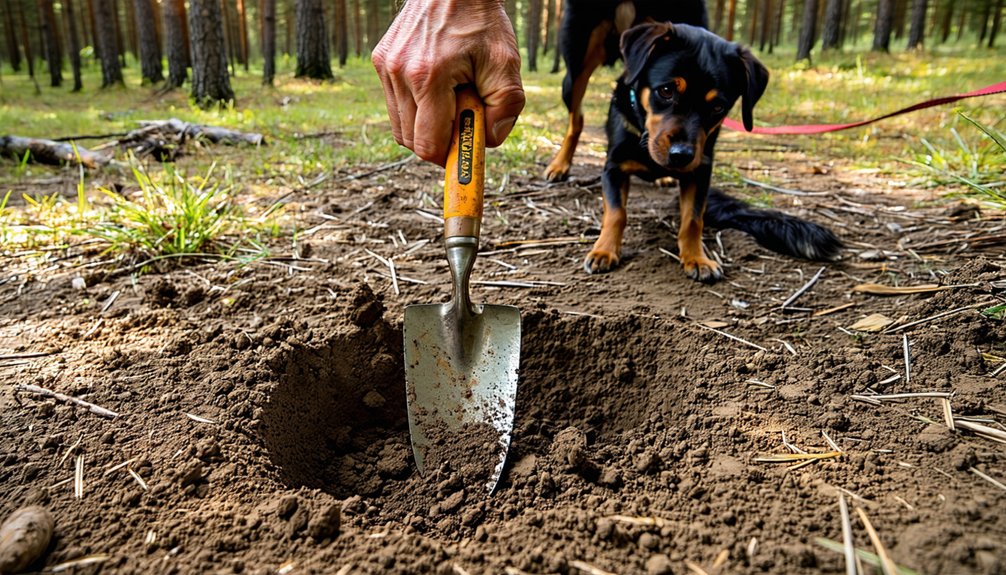
Since dog waste carries the same pathogens whether it comes from your pet or you, burying it in a proper cathole is one of the most reliable disposal methods on public land.
Choose a spot with deep, dark, organic soil and good sun exposure to enhance microbial breakdown.
Tool selection matters: pack a backpacking trowel, or use a sturdy stick or tent stake for compacted, rooty ground.
Follow this depth guidance, rooted in Leave No Trace standards:
- Dig 6–8 inches deep in most environments.
- Reduce to 4–6 inches in arid desert soils.
- Keep the diameter around 4–6 inches.
Set excavated soil on a flat rock or to one side.
Backfill completely, tamp gently, and disguise the site with natural duff.
Where to Store Dog Waste Without a Trash Can
A cathole isn’t always an option, so you’ll often need to pack out dog waste until you reach a proper disposal site. Start with a rigid, hard-sided container—a PooVault-style case, wide-mouth Nalgene, or small dry box—with an airtight, gasketed lid. Double-bag waste in thick bags to prevent punctures, then add absorbent materials like kitty litter or sawdust to capture liquids. For odor control, toss in baking soda or activated charcoal packets. Designate this single, clearly marked container, keeping it separate from food, cookware, and water.
For wildlife deterrence, store it downwind, 200+ feet from camp, in raised or enclosed spots like cargo racks or bear boxes where allowed. Inspect bags daily, re-bagging any leaks immediately, and you’ll keep your camp clean and welcoming.
Off-Loading Dog Waste on Longer Trips
Storing waste safely solves only half the problem—eventually you’ve got to off-load it. On longer trips, hold tied bags until you reach a legal disposal point, then drop them in a designated bin.
Smart route planning makes this easy.
Before heading remote, identify likely trash access points along your way:
- Gas stations and rest areas often have public bins that accept tied animal-waste bags where local rules permit.
- Campgrounds typically provide receptacles for registered guests.
- Public trash cans in towns work too—just confirm local regulations first.
Keep bags secured in your vehicle or exterior storage until then, checking for leaks.
Solid leakage prevention reduces wildlife attraction and water contamination, keeping you aligned with leave-no-trace practices and the community that values them.
Mistakes to Avoid: Burning and Hanging Bags
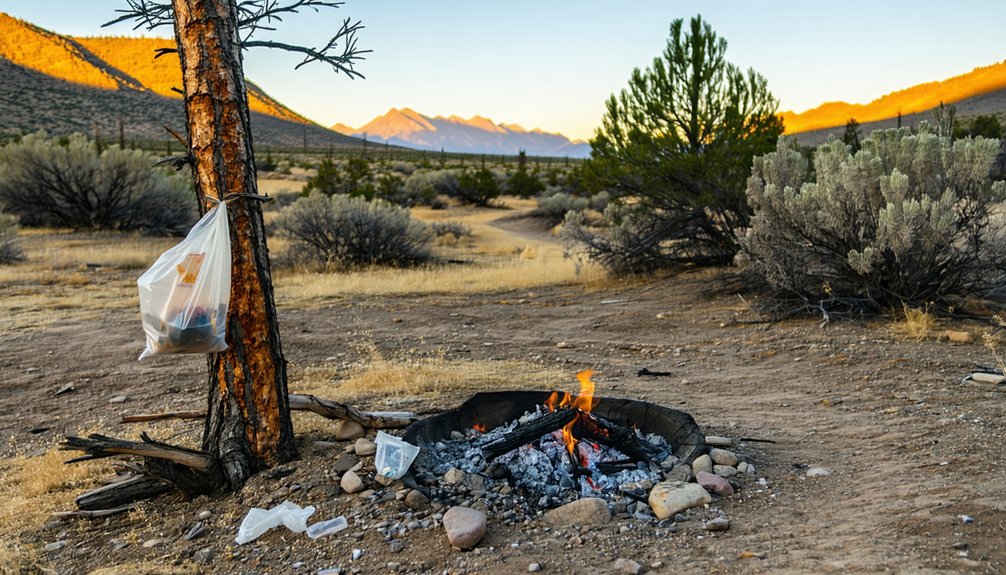
When you’re tempted to burn dog waste to make it disappear, don’t—it creates more problems than it solves.
Burning releases particulate matter, dioxins, furans, and PAHs, and the high moisture in fresh feces causes incomplete combustion, producing heavy, foul smoke instead of clean ash.
Pathogens like Salmonella, Giardia, and roundworms can survive in partially burned waste, and low-temperature fires aerosolize fecal particles you’ll breathe in.
Burning plastic bags adds toxic smoke and microplastic ash.
You’ll also risk wildfires and violate agency rules—the Forest Service says plainly, “Do not burn or bury trash.”
Hanging bags on branches isn’t better; it’s littering.
Protect your fellow campers through smoke avoidance and proper hygiene: scoop, bag, and pack it out every time.
That’s how responsible boondockers belong.
Keeping Your Campsite and Dog Routes Clean
Because a clean campsite starts long before you scoop, smart route planning keeps waste contained and your boondocking footprint minimal. Map walk loops that stay 200 feet (about 70 steps) from any water, favoring durable surfaces like roads, gravel, or rock. With downwind routing, you’ll designate a consistent bathroom zone slightly downhill from camp but clear of natural runnels.
Keep a steady cleanup cadence with these daily habits:
- Sweep systematically in a grid or clockwise loop around your rig, cooking area, and seating zone.
- Combine waste checks with micro-trash and food-scrap policing to deter wildlife.
- Do a final white-glove pass of all routes and the perimeter before you leave.
You’ll protect sensitive soils, fellow campers, and our shared boondocking reputation.
How “Scoop Every Time” Keeps Spots Open
Every pile you pick up does more than tidy your campsite—it keeps these spots legally open.
When you scoop every time, land managers can document low waste impact in their monitoring reports, which supports keeping dog-friendly camping corridors open instead of imposing closures.
Your diligence is Spill Prevention at its core: dog waste carries E. coli, Giardia, and roundworms that pollute streams and trigger area restrictions when bacteria levels spike.
Consistent cleanup helps agencies meet water-quality targets tied to continued access.
It’s also Visitor Courtesy—nobody wants to step in a mess, and visible piles spark complaints that pressure managers toward bans.
Education campaigns have cut unscooped waste by up to 80%, proving you belong here.
Scoop every time, and these spaces stay yours.
Frequently Asked Questions
Can I Flush Dog Waste Down an RV or Campground Toilet?
Yes, but only flush the waste—never bags—into sewer-connected toilets. Choose portable waste management, adopt pack it in options, consider dog-safe hygiene routines, and follow local regs checks. Avoid septic systems, joining fellow boondockers in protecting shared lands.
Do Biodegradable Poop Bags Actually Break Down in Catholes?
No, they won’t. Catholes lack the heat and oxygen needed for compost compatibility, so you’ll find bags persisting for years, fragmenting into microplastics. Skip the bag for odor control and burial—bury waste alone instead.
Is Dog Urine Harmful to Public Land Like Feces?
Yes, but differently. Urine impacts soil safety chemically, not microbiologically like feces—it overloads nitrogen, killing vegetation. Your risk management should spread out pee spots, preventing hotspots and water contamination. We’re all protecting these lands together.
How Do I Handle Dog Waste During Winter or Snow Conditions?
You’ll pick up waste immediately, using cold-flexible bags and metal scoopers for bagging techniques. Check local rules, keep sanitation by marking spots with flags, and remember our carry-out reminder—pack everything out. We’re all protecting these lands together.
Are There Apps or Maps Showing Nearby Dog-Waste Disposal Stations?
Yes, you’ve got options like DogStations, Dog Bins, and Pooper Snooper. But remember, fellow boondockers: coverage fades on remote land. Download an offline map beforehand and rely on trail markers, since cellular signals often vanish out there.
Conclusion
You’ve got everything you need to manage your dog’s waste responsibly out there. Pack the right kit, decide whether to bag or bury based on the rules and conditions, and never burn or hang bags. Scoop every time, keep your campsite and trails clean, and off-load waste properly on longer trips. Your diligence protects water sources, wildlife, and public health—and it keeps these boondocking spots open for the next dog-loving traveler.
References
- https://www.gov.uk/government/publications/managing-visitors-with-dogs-in-your-woodland/managing-dog-fouling-in-your-woodland
- https://go.campendium.com/ultimate-guide-boondocking-with-pets/
- https://tahoebmp.org/Documents/BMPHandbook/Chapter 4/4.2/p_PetWast.pdf
- https://www.youtube.com/watch?v=vFqlh-KxAas
- https://lnt.org/pet-principles-the-leave-no-trace-guide-to-including-your-pets/
- https://www.boondockerswelcome.com/blog/5-tips-for-boondocking-with-dogs/
- https://www.youtube.com/watch?v=3xvEhrrXydI
- https://theconservationfoundation.org/resources/outreach-materials/pet-waste-2/
- https://www.nctcog.org/envir/watershed-management/stormwater/pet-waste
- https://parks.sonomacounty.ca.gov/learn/blog/how-to-pack-out-your-pets-poop