If your A/C fails with your dog in the car, pull over immediately and find shade—trees or buildings work best. Get your dog out of the cabin fast; that beats any in-car cooling trick. Watch for heavy panting, wobbly legs, or glassy eyes, and call your vet the moment you suspect heatstroke. Check ambient temps before driving on. The steps below walk you through exactly how to handle each stage.
TLDR Key Takeaways
- Pull over immediately and prioritize finding shade for the vehicle instead of relying on failed A/C.
- Remove the dog from the car into physical shade, since cabin cooling won’t work fast enough.
- Watch for heatstroke signs like frantic panting, wobbly legs, glassy eyes, or sudden collapse.
- Cool the dog using wet cloths on the neck, armpits, and groin, plus wiping paws and belly.
- Call a vet or emergency clinic immediately and monitor temperature until it stabilizes near 103°F.
Pull Over and Get to Shade Immediately
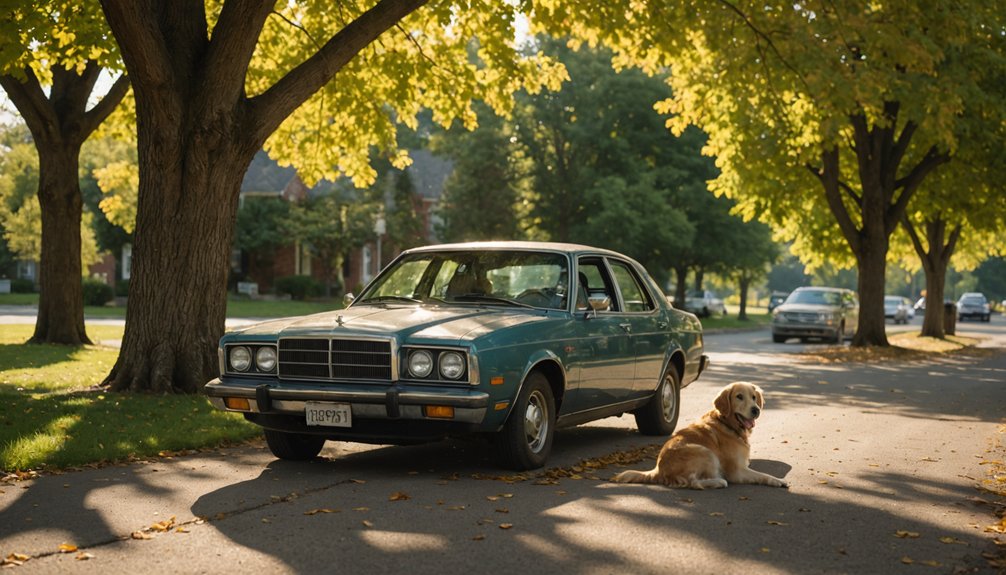
When your A/C fails in summer heat with a dog in the car, don’t wait to see if it starts working again—pull over immediately. Every second on the road adds heat load from the engine and pavement. Get off the road safely, then focus on shade strategies right away.
Scan for trees, buildings, or covered structures, and position your vehicle so the sun doesn’t hit your dog’s side. Once parked, get your dog out of the car and into physical shade—this breaks the heat exposure faster than anything you can do inside the cabin. Grass or shaded concrete beats hot vehicle surfaces every time. Be careful where you let your dog walk, since hot pavement can be 10-20 degrees hotter than the surrounding air temperature.
Check for panting, drooling, or disorientation immediately. Shade isn’t optional here; it’s your first real cooling technique, and it buys you time to act. Even with the windows cracked and the car parked in shade, temperatures inside can climb to dangerous levels within minutes, so never leave your dog alone in the car while you assess the situation. On a 90-degree day, a parked car’s interior can reach 109 degrees in just 10 minutes, underscoring how quickly the situation can turn dangerous.
Why Cabin Temperatures Spike So Fast
Your car’s glass acts like a greenhouse, letting sunlight stream in while trapping the heat it creates. This greenhouse effect pushes interior temps 40-50°F above the outside air, even on mild days.
Your dashboard, seats, and steering wheel soak up solar energy fast, then release it as thermal radiation your windows can’t let escape. That’s why 80% of your cabin’s total heat gain hits within the first 30 minutes—on a 90°F day, you’re looking at 110°F in half an hour.
Dark surfaces and metal panels make it worse, absorbing and conducting heat straight into the cabin. Cracking a window barely helps—you’re only cutting peak temps by 2-5°F. Interior surfaces can climb past 180°F, radiating intense heat straight into the air your dog breathes. Once trapped, that heat doesn’t quit. It builds persistently, turning your vehicle into a life-threatening space within minutes. There is currently no regulatory standard governing safe cabin temperatures for parked vehicles, much like the gap seen in airplane cabin temperature rules.
Get Your Dog Out of the Hot Car
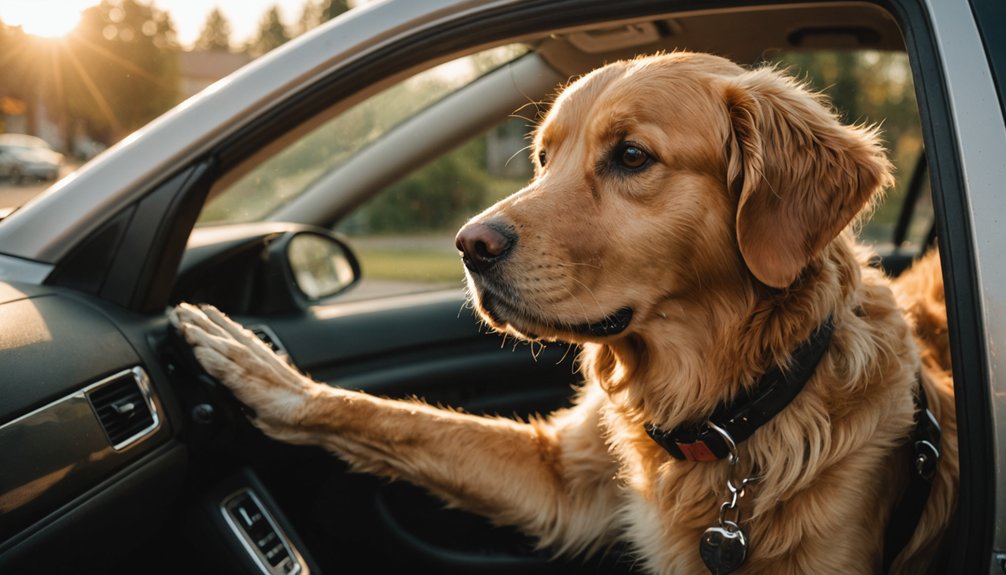
Seconds count once you spot a dog in distress inside a hot car. Assess the dog’s condition fast, then check for unsecured doors or open windows before considering forced entry.
Note the make, model, color, and plate number, and call police or animal control immediately—Hot Vehicles turn deadly within minutes, so don’t wait for permission if the dog’s life hangs in the balance. On a 70-degree day, a car’s interior can reach 99 degrees in just 20 minutes. Keep in mind that rolling down windows does almost nothing to cool the interior of a parked car.
If you must break a window, tell authorities first, grab a witness or video, and strike the corner farthest from the dog.
Protect your hands and eyes with a cloth or jacket. Once you’ve gained access, this Dog Rescue isn’t finished—move fast, stay calm, and get that dog out to safety immediately. Watch closely for signs like excessive panting or disorientation, which indicate the dog may already be suffering from heatstroke.
Recognize the Signs of Canine Heatstroke
Heatstroke moves fast, and you need to spot it before it turns fatal.
Your dog can’t tell you he’s dying—you have to read his body.
Canine symptoms escalate quickly once the A/C fails, so watch closely and act the moment something looks wrong. A dog’s normal body temperature can spike above 42°C during severe heatstroke. Effects can become severe in as little as 15 minutes.
- Heavy, frantic panting with a tongue stretched to its limit, gums flashing bright red or fading to a sickly blue-gray
- Wobbly legs, glassy eyes, a dog who suddenly can’t walk straight or focus on you
- Sudden collapse, seizures, or a body that goes limp and unresponsive
- Vomiting, bloody diarrhea, dark urine—organs shutting down in real time, with untreated cases risking kidney damage and coagulation problems
Heatstroke prevention starts with recognition.
Don’t wait for certainty.
Act on suspicion, because hesitation costs lives.
Call Your Vet the Moment You Suspect Heatstroke
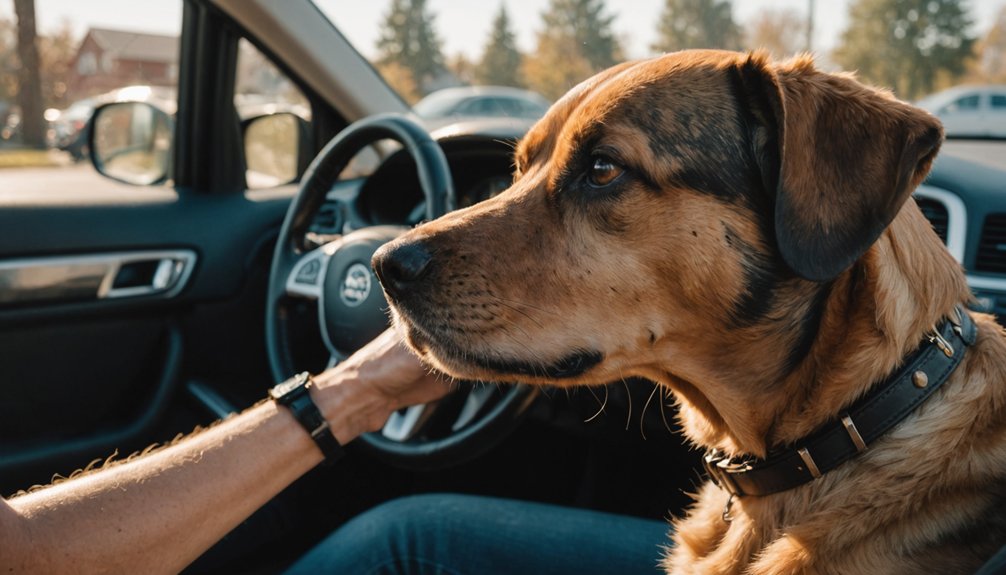
Grab your phone the instant you notice trouble—don’t wait to see if he “bounces back” on his own. Heatstroke is a medical emergency, and every minute you delay raises his risk of shock, organ failure, seizures, or death. Keep in mind that heatstroke can result in death in under an hour, so acting fast truly matters.
Call your vet or the nearest emergency clinic immediately, even if symptoms seem mild.
Give them a clear image: his temperature if you’ve got it, symptoms you’re seeing, how long he’s been exposed to heat, and any cooling steps you’ve already taken.
Mention his breed, age, and health history too—this shapes their vet advice on what to do next. Be sure to note if he shows signs of confusion or disorientation, since this can indicate dangerous dehydration affecting his balance and awareness. Even if he seems to perk up once cooled off, the vet will likely want to run bloodwork and urinalysis to check for underlying organ damage.
Don’t waste time guessing.
A quick call gets you real-time triage instructions and tells you whether you’re driving straight to the ER.
Cool Your Dog Down the Right Way
Speed matters, but technique matters just as much—cool him down wrong and you’ll do more harm than good.
Effective dog cooling targets high-blood-flow zones without shocking his system. Skip the ice bath instinct; icy water constricts vessels and traps heat inside where it counts.
- Soak a bandana in cool water, wring it out, and drape it across his neck—watch him relax as relief hits his bloodstream.
- Press a cloth-wrapped cold pack to his armpits and groin for short intervals, checking skin every few minutes.
- Wipe his paws and belly with tepid water to open surface vessels and release trapped heat.
- Never wrap him tightly—airflow is his lifeline. Fanning him afterward speeds up evaporation and enhances the cooling effect.
Pet safety means precision, not panic.
Use Airflow and Evaporation to Beat the Heat
Compresses and cold packs only handle part of the problem—air has to move for real cooling to happen.
Crack two opposite windows to create cross ventilation across the back seat, and position your vehicle so the wind hits the more open side.
Skip fans that just recirculate hot air; instead, aim them to push heat out and pull in cooler air from shaded openings.
Pair airflow with evaporative cooling for maximum effect.
Dampen towels or mist your dog’s paws and belly, then let moving air carry the heat away as the moisture evaporates.
This same principle drives panting, your dog’s built-in cooling system—so keep air fresh and water available to support it fully.
Confirm Your Dog Has Fully Cooled Down
A rectal thermometer, not guesswork, tells you whether your dog’s actually out of danger. Don’t trust calmer behavior alone—heat recovery isn’t real until the numbers confirm it.
Stop cooling once you hit 103°F, then run temperature checks every few minutes until your dog stabilizes near 101–103°F. Anything lingering above 103–104°F means you need a vet, even if your dog seems fine.
Watch for these signs before you trust the recovery:
- Panting that’s shifted from frantic gasping to calm, steady breaths
- Gums back to healthy pink, not red, purple, or pale
- Steady, confident steps instead of stumbling or confusion
- No vomiting, drooling, or collapse threatening a false sense of security
Your dog’s freedom to keep traveling depends on getting this right—don’t rush it.
Driving On After Your A/C Fails
Once your dog’s temperature has stabilized, don’t assume you’re in the clear—your A/C failure means every mile ahead carries risk.
Check the ambient temperature and humidity before you commit to driving further. If conditions are extreme, especially with a brachycephalic, senior, or overweight dog, delay the trip until cooler hours.
Take modified routes that favor shade and steady airflow over congested, sun-baked highways. Maintain safe speeds—fast enough to pull air through open windows, slow enough to avoid stop-and-go heat buildup.
Break the drive into short segments with frequent stops in shaded, breezy spots.
Keep windows open on multiple sides, block direct sun with shades or blankets, and position your dog away from hot surfaces. Every decision now determines whether the rest of the trip stays safe.
Prevent A/C Failures Before Summer Trips
Before you ever load your dog into the car, put your A/C through a full test run 1–4 weeks ahead of departure—this gives you a real window to diagnose and fix problems instead of uncovering them at a highway rest stop.
Run it on max cold, check every vent, and use a thermometer to confirm 38–48°F airflow. Don’t dismiss warm air, odd smells, or new noises as nothing—they’re warnings that demand attention now, not on the road.
Back your A/C maintenance with a real vehicle inspection before summer hits:
- Freedom to drive anywhere without fearing a breakdown in the heat
- Peace of mind knowing your dog won’t suffer in a hot cabin
- Confidence that your compressor, belts, and fans won’t quit on you
- Control over your trip instead of being controlled by an emergency
Pack a Heat-Emergency Kit for Your Dog
Even a perfectly serviced A/C system can still fail without warning, so you need a backup plan that doesn’t depend on the compressor holding up.
A dedicated heat kit gives you control when the road doesn’t cooperate. Pack multiple liters of water, a collapsible bowl, and an ice-filled cooler for rapid cooling. Add a cooling mat, evaporative vest, sunshades, and a clip-on fan to fight radiant heat.
Stock a rectal thermometer, alcohol for paw pads, and basic first-aid supplies for emergency stops. Keep a heat-stroke protocol card outlining cooling steps and the 103°F target. Round it out with ID tags, vet records, and emergency clinic contacts.
Summer safety means owning your dog’s survival odds, not gambling on machinery.
What to Do if You Own the Overheating Car
When your A/C dies mid-drive, don’t panic and don’t push through traffic hoping it’s temporary.
Pull over immediately, away from traffic, and check your temperature gauge. This is where car maintenance matters—engines running hot compound the danger for your dog. Kill unnecessary electrical systems and open every window fully. Vehicle preparation means you already know your car’s quirks; use that knowledge now.
- Your dog trusts you completely—don’t let mechanical failure become a tragedy
- Every minute in a hot cabin steals precious safety margin
- Freedom to drive means freedom to act fast when things break
- A cooled-down engine now prevents a heartbreaking emergency later
Don’t restart the engine until it’s fully cooled—forcing it risks more damage and more heat.
Frequently Asked Questions
Can Certain Dog Breeds Overheat Faster Than Others in Hot Cars?
Yes—certain dog breeds overheat faster. Brachycephalic breeds like pugs and bulldogs can’t cool efficiently, while thick-coated or overweight dogs retain heat longer. You’ll face amplified summer risks with these breeds, so never gamble on brief stops.
Is It Safe to Use Ice Cubes to Cool Down an Overheated Dog?
No, don’t use ice cubes—you’ll risk vasoconstriction that traps heat inside. Skip aggressive ice therapy; instead, apply cool (not cold) compresses to your dog’s neck and paws, then get veterinary help immediately.
What Should I Do if My Dog Refuses Water After Heatstroke?
Move your dog to shade, cool them gently with water on paws and belly, then dampen their gums—don’t force water. This is first aid only; get vet advice immediately, since refusing water after heatstroke signals a real emergency.
Are There Pet-Friendly Roadside Assistance Services for A/C Emergencies?
Yes—you’ll find pet-friendly roadside assistance, but coverage varies. Tell dispatch your dog’s aboard immediately. For real A/C emergencies, check if your pet insurance or premium travel plans cover boarding and emergency transport before you’re stranded.
Can Heatstroke Cause Long-Term Health Effects in Dogs After Recovery?
Yes, heatstroke can leave lasting damage. You’ll want to watch for kidney, liver, heart, or neurological issues after heat treatment. Don’t skip follow-up veterinary care—early detection gives your dog the best shot at full recovery.
Conclusion
Your dog can’t tell you when they’re overheating—you have to watch for them. If your A/C fails, don’t gamble on “just a few more miles.” Pull over, get shade, cool your dog down, and call your vet if anything seems off. Pack that heat-emergency kit before you hit the road, and get your A/C inspected every spring. A few minutes of prevention beats an emergency vet visit every time.
References
- https://es.statefarm.com/simple-insights/familia/mascotas-encerradas-en-carros-cuando-hace-calor
- https://www.animanaturalis.org/p/1655/los-peligros-del-coche-para-el-perro-en-verano
- https://www.race.es/aire-acondicionado-no-enfria
- https://www.woofz.com/es/blog/se-puede-dejar-un-perro-en-el-coche/
- https://www.escueladeconductores.es/ver/2612/que-pasa-si-dejo-al-perro-en-el-coche-en-verano-.html
- https://tvaryny.com/es/animal-dejado-en-el-coche-que-tan-rapido-se-calienta-el-interior-del-vehiculo
- https://advancedfleetmanagementconsulting.com/blog/2025/07/27/aire-acondicionado-11/
- https://www.motormontesinos.com/blog/como-actuar-si-el-aire-acondicionado-del-coche-no-funciona-en-verano/
- https://wanwanmedia.com/inu-shanai-houchi/
- https://detail.chiebukuro.yahoo.co.jp/qa/question_detail/q13177439088