Start shifting your dog’s mealtimes 14-21 days before departure, moving them 15-30 minutes every few days until you match your destination’s time zone. Keep total daily food volume steady and maintain a consistent 12-hour gap between meals. Use morning sunlight walks and a steady wake-walk-eat-rest routine to reset your dog’s internal clock. Watch stool and energy levels along the way. The details below will show you exactly how to time each shift.
TLDR Key Takeaways
- Start shifting feeding times 14-21 days before departure in 15-30 minute increments to sync with destination time zone.
- Map all time zones crossed and shift meals 15-60 minutes per day, holding each schedule steady for a day or two.
- Bridge time changes with a small snack (5-10% of daily intake) at old mealtime, phased out within 4-7 days.
- Feed only during stationary breaks, allowing 30-60 minutes to digest before resuming driving.
- Maintain consistent 8-12 hour spacing between meals and use sunlight exposure to reset the dog’s internal clock.
Why Sudden Time Changes Upset Your Dog’s Stomach
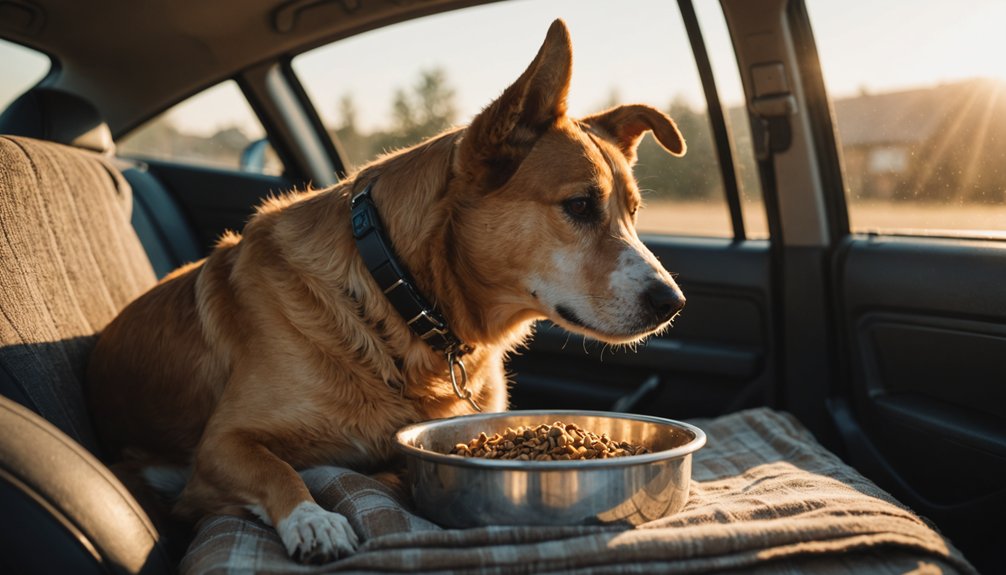
Because your dog’s body runs on an internal clock, any sudden shift in feeding time throws off far more than just meal schedules.
Circadian disruption affects gastric motility, hormone release, and enzyme secretion—all timed to your dog’s usual routine.
When you cross time zones fast, your dog’s brain and gut clocks fall out of sync, causing digestive issues like nausea, irregular bowel movements, or acid irritation.
Your dog’s stomach even prepares for food based on habit, releasing acid and triggering motility before the usual mealtime.
Feed too early or too late, and that conditioning backfires—leaving your dog uncomfortable or uninterested in eating.
Add travel stress to the mix, and you’ve got a gut-brain axis reacting to unfamiliar surroundings, amplifying digestive upset even further on the road. Some dogs are naturally more sensitive to changes in their routine than others, making gradual adjustments especially important during long trips. Puppies and senior dogs are particularly susceptible to these disruptions, so extra care should be taken when adjusting their feeding times during a road trip. Gradually shifting feeding times by small increments in the days leading up to a time zone change can help ease this gradual adjustment and prevent stomach upset.
Start Shifting Feeding Times Before You Hit the Road
If your trip crosses time zones, don’t wait until departure day to adjust your dog’s schedule. Pre trip planning matters—start shifting mealtimes in 15–30 minute increments every few days, beginning weeks before departure. Keep total daily food volume the same; you’re changing the clock, not the quantity. Anchor new meal times to walks or bedtime so your dog’s internal rhythm adjusts naturally.
| Days Before Trip | Action | Goal |
|---|---|---|
| 14–21 days out | Begin 15-min shifts | Start syncing to destination time |
| 7–10 days out | Continue shifting, monitor stool/energy | Confirm tolerance |
| 1–3 days out | Finalize new schedule | Lock in routine for travel preparations |
Small, steady changes now mean smoother days ahead on the road. Throughout this transition period, stick with your dog’s familiar food rather than introducing anything new, since altering mealtimes is already enough change for their digestive system to handle. Consistency in diet during this shift also supports a stable digestion pattern, which helps your dog feel more secure as their schedule gradually changes. It’s also wise to schedule a vet consultation before departure so you can anticipate any issues tied to the shifting routine.
Sample Schedules for Shifting Meals by an Hour
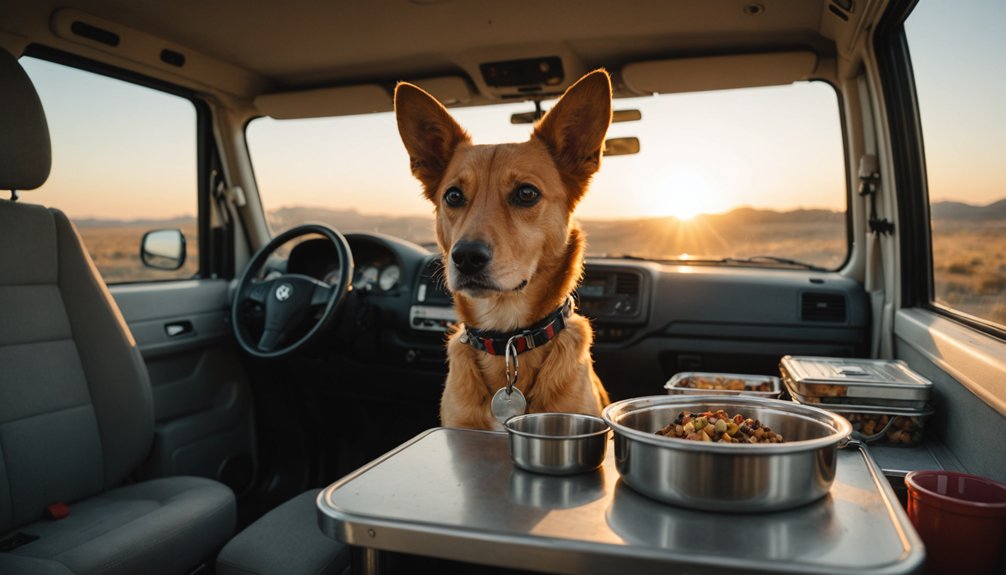
Numbers make these shifts easier to visualize. If you’re eastbound and need meals an hour earlier, start two days out: shift breakfast and dinner from 8:00 to 7:45, then 7:30, holding steady through travel day, and landing at 7:00 once you’re settled.
Westbound trips run the reverse—7:00 baseline eases to 7:15, then 7:30, before reaching 8:00 in your new zone.
These feeding strategies work because they respect your dog’s gut rhythm while giving you the freedom to move fast when your itinerary demands it. An automated feeder can make it much easier to stick to these precise 15-minute adjustments while you’re focused on driving. Keeping morning and evening feedings steady even while shifting times supports digestive health, weight, and energy throughout the trip. Sticking to a consistent schedule also matters because a dog’s stomach typically empties within a few hours, making it more sensitive to delayed or shifted meal timing.
Small, 15-minute increments prevent digestive stress without locking you into a rigid timeline.
Whether you’re adjusting over four days or stretching it to eight, this kind of meal planning keeps your dog steady while you stay flexible on the road.
How Long Does a Dog’s Feeding Schedule Take to Adjust?
A dog’s feeding schedule typically stabilizes within 1–2 weeks, though the exact timeline depends on how the change is handled and how sensitive your dog’s digestion is.
For a road trip across time zones, gradual daily shifts of 15–30 minutes work best, with most dogs syncing behaviorally within 7–14 days.
Digestive systems need similar time—7–10 days for gut microbiota to adjust, with sensitive dogs needing 14–21 days.
The first 7–10 days carry the highest risk for GI upset, so watch closely and slow down if needed.
Smart feeding strategies—consistent portions, gradual timing shifts, and predictable cues—speed adaptation and reduce stress. Most dogs adjust to a new feeding routine within 2-4 weeks, so patience during a road trip transition is essential.
Build schedule flexibility into your trip plans; dogs adjust faster when routines stay structured but you’re not rigidly locked to exact minute-by-minute timing. Keeping a food journal during the trip can help you track portions, timing, and any reactions so you can spot patterns early. If adjustment issues persist despite a gradual approach, it’s best to consult a veterinarian for further guidance.
Keep the 12-Hour Meal Gap No Matter Where You Are
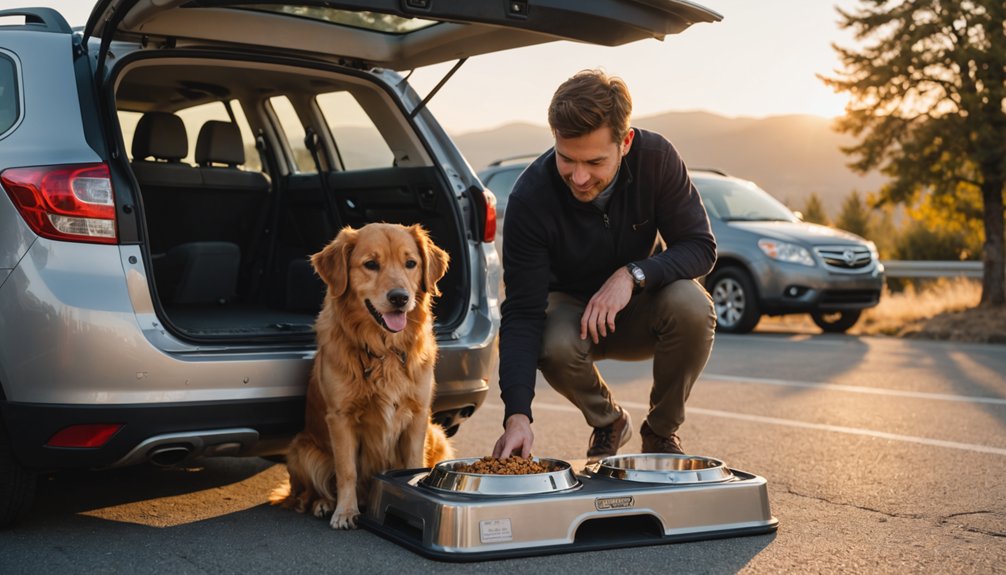
The 12-hour gap between meals matters more than the clock time itself. Your dog’s stomach empties in 5-10 hours, so exceeding 12 hours invites hyperacidity, nausea, and whining that disrupts your travel flow.
Smart meal planning means anchoring feedings to local morning and evening windows—7-8 a.m. and 5-7 p.m.—while keeping that critical interval locked in. Time management on the road doesn’t mean rigid clock-watching; it means shifting both meals by the same increment, whether that’s 15 minutes daily or 30 minutes over a few days. This flexibility gives you freedom to chase new routes and time zones without sacrificing your dog’s digestive rhythm. Stable spacing means steady energy, fewer bathroom surprises, and a calmer co-pilot for every mile ahead. Just like adjusting for daylight saving time at home, a gradual time change approach works best when shifting your dog’s meals across time zones. If your travel schedule stretches feeding times too far apart, watch for vomiting yellow or greenish fluid in the morning, a telltale sign the overnight gap ran too long.
Split Meals Into Smaller Portions on Long Drives
Long stretches of highway put your dog’s stomach to the test, and one heavy meal before hitting the road invites trouble. Instead of feeding one large portion, split the daily ration into smaller meals offered at rest stops. This keeps calories consistent while easing the mechanical load on your dog’s stomach, directly cutting Motion Sickness risk.
Pre-portion meals into labeled containers so you’re not guessing amounts at every stop—organization is one of the smartest Travel Tips for long-distance drives. A dog feeding calculator can help you determine the correct daily feeding baseline before dividing it into these smaller portions.
Feed only during stationary breaks, never in a moving vehicle, and give your dog 30-60 minutes to digest before driving again. Offer water first, then food if your dog seems settled. Watch stool and appetite daily, adjusting portions as needed to keep digestion steady.
Bridge Old Mealtimes With Snacks, Not Extra Meals
Crossing time zones throws your dog’s internal clock out of sync with mealtime, and adding a whole extra meal to cope only invites weight gain and digestive upset.
Instead, bridge the gap with a small snack at the old mealtime. Snack timing matters: offer a treat midway between the old and new schedule, then pair it with a short walk to distract from anticipatory hunger. Stick to lean protein bites, freeze-dried meat, or a portion of your dog’s regular kibble—single-ingredient options work best for sensitive stomachs.
Calorie control keeps you on track: cap each bridge snack at 5-10% of daily intake, subtracted from meals. Hold your twice-daily feeding structure, and phase out snacks within four to seven days once your dog settles into local time.
Pack the Right Feeding Gear for a Multi-Day Trip
Multi-day travel demands more than tossing a bag of kibble in the trunk. Your feeding essentials should fit your rig, not fight it. Grab collapsible travel bowls for food and water—they pack flat and clean up fast. Airtight food containers keep kibble fresh, while a portable fridge handles wet or fresh diets safely. Spill proof dispensers and water bottles keep hydration controlled, even on rough roads.
| Gear | Purpose | Road Tip |
|---|---|---|
| Collapsible mats | Contain spills | Wipe clean daily |
| Dog crates | Stable feeding zone | Attach bowls inside |
| Cleanup supplies | Sanitation | Stock wipes, bags, soap |
Set up feeding stations at each stop, and you’ll keep your dog’s routine tight—no matter how many time zones you cross.
Use Daylight and Routine to Reset Your Dog’s Clock
Because clocks lie but sunlight doesn’t, use it to reset your dog’s internal schedule. Get outside within an hour or two of sunrise—bright light and a brisk walk sync natural rhythms faster than any clock ever could.
That morning exposure makes an earlier or later breakfast feel normal, not forced.
As evening approaches, dim the lights and skip the overhead glare. Lower stimulation triggers melatonin, easing your dog into a later dinner and bedtime without a fight. Let sunset light—not screens or lamps—guide the wind-down.
Beyond light, lean on order: wake, walk, eat, play, rest. Canine habits track sequence more than specific times, so keeping that rhythm intact steadies your dog even when the clock on the dashboard keeps changing.
Handling Multiple Time Zones on Extended Road Trips
A road trip spanning several time zones asks more of your dog’s internal clock than a single sunrise reset can fix.
Good travel planning starts before you leave: map every zone you’ll cross and anticipate the total shift ahead.
Time management matters here—shift feeding times by 15-60 minutes per local day instead of jumping hours at once.
For short stopovers of a day or two, keep your dog on the previous zone’s schedule rather than forcing a second adjustment.
When crossing 4-5 hours of difference, move meals an hour earlier or later daily until you match local time.
Hold each new schedule steady for a day or two before adjusting again—this steadies digestion and keeps stress low across the whole trip.
Adjusting Feeding for Senior or Sensitive Dogs
Since senior and sensitive dogs can’t absorb sudden change the way younger, hardier dogs sometimes can, you’ll want to slow every adjustment down.
Shift meal times by 15-minute increments over 4 to 7 days rather than jumping straight to a new zone’s clock. If your schedule allows it, start this shift before you even hit the road.
Senior care often means splitting food into two or three smaller meals instead of two large ones, since older digestive systems slow down and calorie needs can drop by 12 to 13 percent.
Keep spacing consistent—roughly 12 hours apart—even as the clock time moves. Watch appetite closely during phases; changes signal you’re moving too fast.
These feeding strategies keep road life flexible without sacrificing your dog’s comfort or routine.
What to Do When You Can’t Adjust in Advance
Sometimes life doesn’t give you a week to ease into a new time zone.
Flight delays, sudden route changes, or a last-minute border crossing mean abrupt changes are your reality.
Your dog doesn’t need a perfect shift—it needs stability within the chaos.
When immediate adjustments are unavoidable, focus on what you can control:
- Keep portions and formula identical. Don’t change what’s in the bowl, only when it arrives.
- Feed after rest, not on arrival. Let stress hormones settle before offering food.
- Hold the 8–12 hour spacing starting from the first new-time-zone meal, then stay consistent.
Skip catch-up meals.
Watch for refusal or GI upset.
Your dog adapts faster than you think when the basics stay steady.
Frequently Asked Questions
Can I Feed My Dog in a Moving Car Without Causing Motion Sickness?
No—don’t feed full meals while you’re driving. Instead, save car snacks for rest stops, use travel bowls for small sips of water, and feed light meals 3-4 hours before departure to prevent nausea.
Should I Adjust Water Schedules the Same Way as Feeding Times?
No—don’t gradually shift water like meals. You’ll want frequent access regardless of time zone, since dehydration risks climb fast with travel stress and heat. Skip rigid schedules; offer water often and let your dog’s water intake follow need, not clocks.
What if My Dog Refuses to Eat at the New Mealtime?
Don’t force it. Shift meals gradually, 10-30 minutes daily, and respect your dog’s food preferences. Try smaller portions or light exercise first. If refusal persists beyond 24-48 hours, adjust your plan—consistent eating habits matter more than rigid timing.
Are Automated Feeders Reliable Enough for Use in Hotels or Campsites?
Not always—reliability varies widely. Check feeder reviews before you buy, choose battery-backed, mechanical models over Wi-Fi units, and test yours beforehand. Follow smart travel tips: place it on stable, level surfaces at hotels or campsites for consistent results.
Can Medications Timed With Meals Be Adjusted the Same Way?
Not always. You can shift meal-linked meds gradually if they’re flexible, but strict-interval drugs need medication timing anchored to original hours—don’t let time zone adjustments compress or stretch critical dosing gaps.
Conclusion
Your dog’s stomach doesn’t care about state lines, but it does care about consistency. Shift meal times gradually, protect that 12-hour gap, and lean on daylight and routine to reset your pup’s internal clock. If you’re crossing multiple zones or traveling with a senior dog, adjust slower and stay alert to their cues. Even if you can’t plan ahead, small tweaks now will keep your dog’s tummy—and your road trip—running smoothly.
References
- https://ontariospca.ca/blog/top-3-daylight-savings-tips-you-need-to-know-as-a-pet-parent/
- https://www.reddit.com/r/Petlibro/comments/1f8oang/dry_feeder_using_phones_local_time/
- https://animalbehaviorist.us/adjustingpetfeedingtimes.html
- https://www.petairuk.com/blog/how-to-help-your-pet-adjust-to-a-new-time-zone/
- https://www.facebook.com/AAH9491/posts/adjusting-your-pets-feeding-schedule-to-accommodate-time-changesestablishing-a-c/1510469231086444/
- https://wisteriagoldens.com/2015/09/time-change-feeding-adjustment-q-a/
- https://www.animalbehaviorist.us/adjustingpetfeedingtimes.html
- https://www.whole-dog-journal.com/food/do-i-need-a-dog-feeding-schedule/
- https://www.vitalessentials.com/raw-guide/a-guide-to-adjusting-your-pets-schedule-for-daylight-saving-time
- https://www.veterinaridelclinic.com/cambio-hora-en-perros/