TLDR: The Fast Answer
There is no single official certification for an “airline-approved dog carrier.” It’s a marketing phrase used to describe a carrier that meets one or more airlines’ published under-seat size limits — and since those limits vary by airline and even by aircraft, a carrier that’s fine on Delta might get rejected at a Southwest gate. Most US carriers cap in-cabin pets around 20 pounds (combined dog + carrier weight, though enforcement varies) and require the carrier to fit fully under the seat with the dog able to stand, turn, and lie down comfortably. The safest strategy: measure your dog properly, check your specific airline’s current policy before you buy, choose a carrier with a little give (mesh expansion panels help), and book your pet’s cabin spot as early as possible because airlines cap the number allowed per flight.
Is “Airline-Approved” a Real Certification, or Just Marketing?
Here’s the truth most product listings won’t tell you: there is no government agency, aviation authority, or independent body that certifies a dog carrier as “airline-approved.” The FAA doesn’t do it. The Department of Transportation doesn’t do it. No airline hands out a seal of approval to carrier manufacturers.
What actually happens is that each airline publishes its own maximum carrier dimensions, weight guidance, and design requirements (zippered closure, ventilation, leak-proof bottom) on its pet travel policy page. Carrier brands then design products that fit within the tightest common range of those numbers and slap “airline approved” on the label because it fits several major airlines’ stated limits — not because any airline formally endorsed the product.
This matters because a carrier can legitimately say “airline approved” and still get rejected at your specific gate if that airline’s limits are stricter than the ones the manufacturer used, or if your dog’s weight pushes the combined total over the limit. Treat “airline approved” as a helpful starting filter, not a guarantee.
TSA-Approved vs. Airline-Approved: What’s the Difference?
These two phrases get mixed up constantly, and they refer to completely different things:
- TSA-approved refers to how a carrier moves through airport security screening. TSA doesn’t certify specific products either, but it does have a documented process: your dog must come out of the carrier at the checkpoint, walk through the metal detector (or be carried through) with you, while the empty carrier goes through the X-ray belt separately. A carrier is “TSA-friendly” if it’s easy to open fully, doesn’t have a lot of metal hardware, and lets you remove your dog quickly and calmly.
- Airline-approved refers to whether the carrier meets that specific airline’s under-seat dimension and weight guidance for in-cabin travel.
A carrier can be great for TSA screening but still too big for a particular airline’s under-seat space, and vice versa. You need to check both.
How to Measure Your Dog Before You Buy Anything
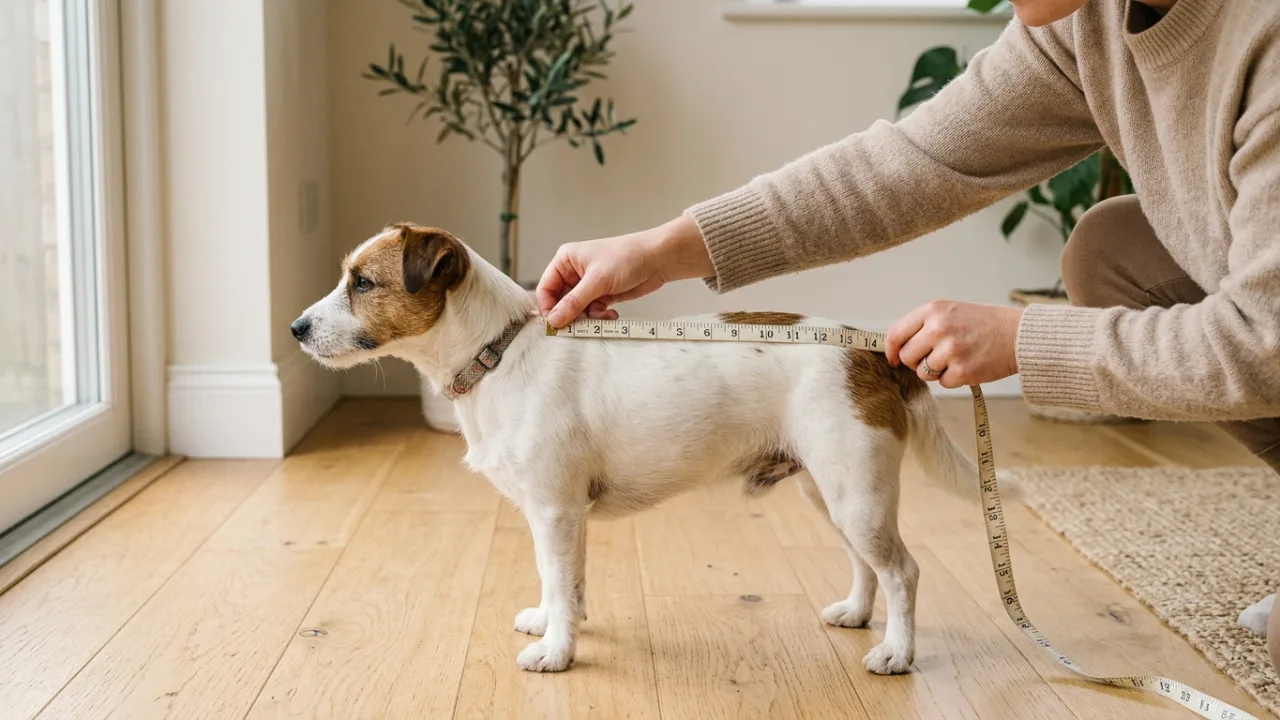
Most carrier-fit complaints trace back to skipping this step. Before you look at a single product listing, measure your dog in three ways: (see: measure your dog precisely)
- Length: Nose to base of tail (not including the tail itself), while your dog is standing naturally.
- Height: Floor to the top of the shoulders or head while sitting — whichever is taller.
- Weight: Use a bathroom scale; weigh yourself holding your dog, then subtract your own weight.
Add roughly 1-2 inches of buffer to length and height so your dog can comfortably stand, turn around, and lie down — the standard airlines use to judge “adequate space,” even though none of them give an exact inch-for-inch formula. If your dog’s true measurements land within an inch of your target carrier’s interior dimensions, size up rather than down. A carrier that’s technically compliant but leaves your dog hunching for three hours is a welfare problem, not just a comfort one.
Example: Measuring Three Common Breeds
| Breed | Typical Length (nose to tail base) | Typical Height (sitting) | Typical Weight | Fits Standard 18x11x11 Carrier? |
|---|---|---|---|---|
| Yorkshire Terrier | 9-10 in | 8-9 in | 4-7 lbs | Yes, with room to spare |
| Dachshund (standard) | 14-16 in | 8-9 in | 16-32 lbs | Often too heavy; check weight limit closely |
| French Bulldog | 13-15 in | 11-12 in | 16-28 lbs | Frequently borderline on both size and weight — measure carefully |
Notice that a Frenchie can be shorter than a Dachshund but still be harder to fit because of a broader chest and shorter, sturdier build. Don’t assume breed size stereotypes will tell you the answer — measure your individual dog.
Rigid vs. Collapsible: How Carriers Are Actually Measured
This is one of the most common sources of gate confusion. Soft-sided carriers with expandable mesh panels or slightly flexible walls can be measured two different ways:
- Compressed/collapsed dimensions — the carrier pushed flat under a seat, sides tucked in.
- Full expansion dimensions — the carrier with side panels unzipped or bowed out for maximum interior room.
Airlines generally judge compliance based on how the carrier fits when compressed under the seat in front of you — not its maximum expanded size. Manufacturers often advertise the expanded measurements because they look roomier on the product page, which can mislead buyers into thinking a carrier is bigger than what actually needs to slide under the seat. When you shop, look specifically for the collapsed or under-seat dimensions, not just the headline number.
Airline-by-Airline Carrier Size, Weight & Fee Comparison
Airline pet policies change fairly often, so always double-check directly on the airline’s official pet travel page (see: airline rules and travel options) before booking. That said, here’s a general snapshot of common published guidance to help you compare:
| Airline | Approx. Max Carrier Size (L x W x H, inches) | Stated Weight Guidance | Typical In-Cabin Pet Fee | Pet Slots per Flight |
|---|---|---|---|---|
| Delta | ~18 x 11 x 11 (soft-sided) | Dog + carrier must fit under seat; no strict published weight cutoff | ~$95-125 | Limited, varies by aircraft |
| United | ~18 x 11 x 11 | Fit-under-seat standard; no strict weight cutoff stated | ~$125-150 | Capped, first-come basis |
| American | ~18 x 11 x 11 | Fit-under-seat standard; no strict weight cutoff stated | ~$125-150 | Capped per cabin |
| Southwest | ~18.5 x 8.5 x 13.5 | Carrier + pet must fit fully under seat | ~$125 | Limited, first-come, first-served |
| Alaska | ~17 x 11 x 9.5 (soft-sided) | Fit-under-seat standard | ~$100 | Capped per flight |
| JetBlue | ~17 x 12.5 x 8.5 | Combined pet + carrier weight guidance around 20 lbs commonly cited | ~$125 | Limited slots |
| Spirit | ~18 x 14 x 9 | Fit-under-seat standard | ~$110-135 | Capped per flight |
Important: These figures are general guidance, not guarantees. Airlines revise pet policies, fees, and caps regularly, and international partner carriers on codeshare routes may follow entirely different rules. Always pull up the airline’s current official pet travel page within a day or two of booking, and again a few days before departure.
Can I Use the Same Carrier for Multiple Airlines?
Sometimes, but don’t assume it. If you fly different airlines regularly, choose the carrier with the smallest dimensions among the airlines you use most, or pick one with collapsible side panels so you can compress it down to the strictest airline’s requirement when needed. A carrier rated for Southwest’s tighter width, for example, will usually also clear Delta’s or United’s slightly larger allowance — but the reverse isn’t guaranteed.
Domestic vs. International Flights
International flights often add extra layers: some countries require health certificates issued within a specific window before departure, some ban brachycephalic breeds from cargo entirely, and some codeshare or partner airlines apply the operating carrier’s rules rather than the one you booked with. Always confirm pet policy with the airline actually operating the aircraft, not just the one on your ticket.
Under-Seat Space by Aircraft Type
Even within the same airline, under-seat space can differ by aircraft. Regional jets and older narrow-body planes typically have less legroom-adjacent storage than newer wide-body aircraft.
| Aircraft Type | General Under-Seat Space | Notes |
|---|---|---|
| Regional jet (e.g., CRJ, Embraer) | Tightest of all cabin types | Bulkhead and exit rows often prohibited for pet carriers |
| Narrow-body (Boeing 737, Airbus A320 family) | Moderate, standard under-seat pockets | Most common aircraft for domestic pet travel |
| Wide-body (Boeing 777, Airbus A350) | Generally more generous, though still seat-dependent | Common on international long-haul routes |
Bulkhead seats and exit rows typically don’t allow any items, including pet carriers, stowed in front of you — so avoid selecting those seats when traveling with a pet.
Soft-Sided vs. Hard-Sided vs. Backpack Carriers
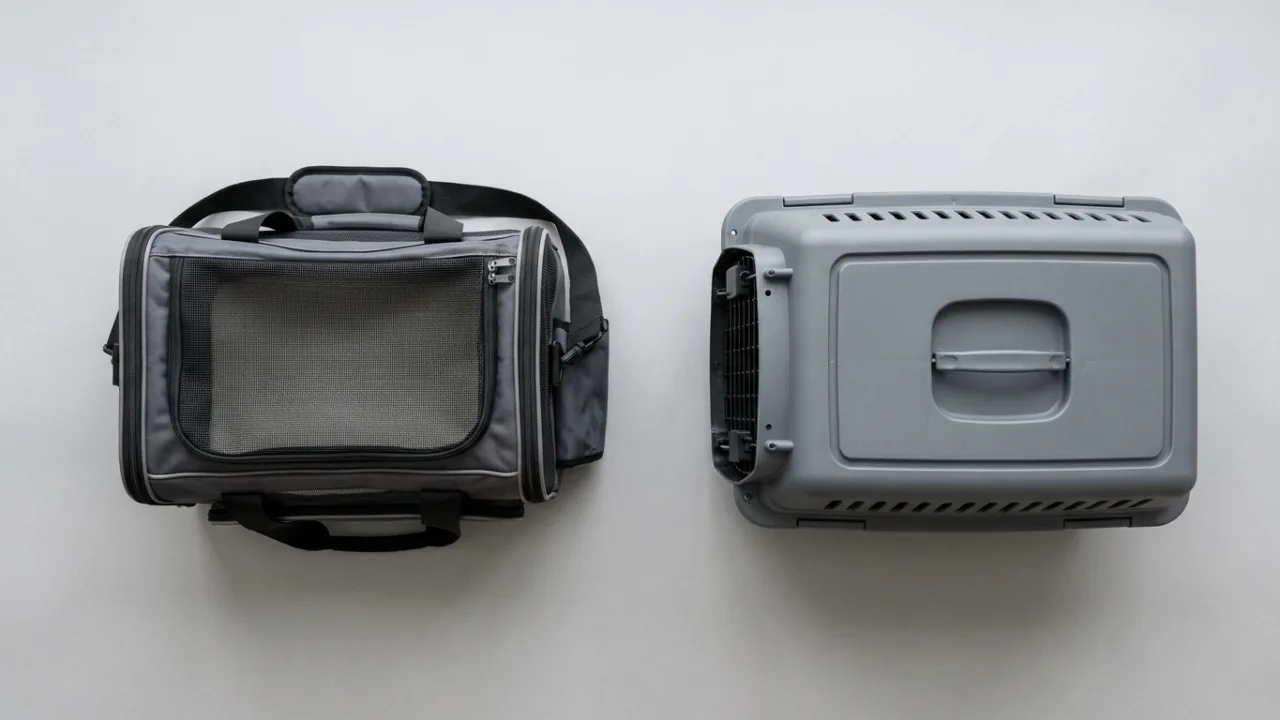
| Feature | Soft-Sided | Hard-Sided | Backpack-Style |
|---|---|---|---|
| Weight | Lightest | Heaviest | Light to moderate |
| Flexibility for tight fit | High — can compress slightly | None — fixed dimensions | Moderate |
| Durability | Moderate; seams can wear | Very durable | Moderate |
| Ventilation | Usually excellent (mesh panels) | Good, but vents are fixed | Good if mesh-heavy |
| Best for | Most in-cabin air travel | Dogs who chew or scratch to escape | Hands-free airport navigation |
| Price range | $$ | $$-$$$ | $$-$$$ |
For most in-cabin flights, soft-sided carriers win because they compress slightly to squeeze under tighter seats and weigh less, which matters once you add your dog’s weight. Hard-sided carriers make sense for anxious dogs prone to scratching through mesh, but their fixed shape means zero wiggle room if your measurements are borderline.
Can a Dog Carrier Have Wheels and Still Be Airline Compliant?
Yes, many airlines allow wheeled pet carriers as long as the overall dimensions (wheels included) still fit within the under-seat limit. The catch: wheels and retractable handles add bulk, which eats into your usable interior space and can push the exterior dimensions over the line. If you want a wheeled carrier for easier airport navigation, look for models where wheels detach or tuck flush against the base, and double-check the exterior measurement with wheels attached — not just the manufacturer’s “carrier only” spec.
Top Carrier Brands Compared
| Brand | Known For | Typical Interior Size Range | Price Tier | Best For |
|---|---|---|---|---|
| Sherpa | Long-standing airline partnerships, widely recognized soft-sided design | Small to medium | $$ | First-time flyers wanting a well-tested option |
| Mr. Peanut’s | Budget-friendly soft-sided carriers with expandable panels | Small to medium | $ | Occasional flyers on a budget |
| Roverlund | Premium materials, structured base, stylish design | Small to medium | $$$ | Frequent flyers wanting durability and aesthetics |
| Sturdi | Rigid frame with soft exterior, strong under-seat compliance record | Small to medium-large | $$$ | Larger dogs near the size cutoff |
| Diggs | Modern collapsible design, easy-clean liner | Small to medium | $$$ | Dogs prone to accidents or anxiety chewing |
| Generic/Amazon budget brands | Low price, inconsistent quality control | Varies widely, often mislabeled | $ | Only for very occasional, low-stakes use |
Budget vs. Premium: When Is It Worth Paying More?
A $30 generic carrier and a $150 premium carrier can look nearly identical in photos, but real-world differences show up in zipper strength, seam durability, and whether the stated dimensions actually match reality once you unbox it. If you fly rarely, a reputable budget brand with clear return policies is fine. If you fly several times a year, invest in a premium carrier — the stronger zippers and reinforced seams matter most during the exact moment you don’t want a failure: mid-flight or at a crowded gate.
Red flag to watch for: product listings that say “GUARANTEED to fit” or “100% airline approved” without naming which specific airlines and which specific dimensions they tested against. Since no universal certification exists, any listing making blanket guarantees should be verified independently against your airline’s actual published policy before you buy.
Breed Restrictions and Health Considerations
Most airlines allow any breed to fly in-cabin as a carry-on pet, since in-cabin travel doesn’t involve the pressurization and temperature risks associated with cargo hold transport. The bigger restrictions around brachycephalic (flat-faced) breeds — French Bulldogs, Pugs, Boston Terriers, English Bulldogs — typically apply to cargo hold travel, which many airlines restrict or ban for these breeds due to breathing-related risks in that environment (see: snub-nosed breeds banned from cargo).
In-cabin travel is generally the safer and more commonly permitted option for brachycephalic breeds precisely because they stay with you in climate-controlled, pressurized cabin air rather than the cargo hold. That said, always confirm directly with the airline, since a few carriers apply extra scrutiny or documentation requirements for these breeds even in-cabin.
Service animals are a separate category with different legal standards under the Air Carrier Access Act — they aren’t required to be confined to a carrier and aren’t subject to the same size/fee rules as pets traveling for companionship. If your dog is a trained service animal, the airline’s disability services desk (not general pet policy) is the correct resource.
In-Cabin vs. Cargo Crate vs. Checked Baggage
| Option | Pros | Cons | Typical Cost |
|---|---|---|---|
| In-cabin carrier | Dog stays with you; lowest risk; climate controlled | Strict size/weight limits; limited slots per flight | ~$95-150 |
| Cargo hold (as manifest cargo) | Accommodates larger dogs | Temperature/pressure risk; breed restrictions; more incidents reported industry-wide | Often $200-500+, weight-dependent |
| Checked baggage (rare, limited airlines) | May be cheaper than cargo shipping | Very few airlines still offer this; same environmental risks as cargo | Varies by airline |
For most pet owners, in-cabin travel is strongly preferred whenever the dog’s size allows it. Cargo remains an option for larger dogs but carries meaningfully higher risk and cost, and many airlines have scaled back or eliminated live cargo pet shipping in recent years.
Booking, Fees, and Reserving Your Pet’s Cabin Spot
Because airlines cap the number of pets allowed in the cabin per flight (often a small handful per aircraft), you cannot simply show up and add your dog at the gate. Steps to follow:
- Call or use the airline’s website to add your pet to the reservation at the time of booking or as soon as possible afterward — many airlines require advance notice ranging from 24-48 hours to as much as a week for international routes.
- Pay the pet fee at booking or check-in, depending on airline policy.
- Confirm your seat isn’t in a bulkhead or exit row, since those rows don’t allow under-seat storage.
- Arrive early and check in your pet travel in person at the counter rather than relying solely on an online add-on, especially for first-time flights — agents can verify the carrier fits their specific under-seat space before you’re at the gate.
Because slots fill quickly — especially around holidays — booking your pet’s cabin spot as far in advance as your airline allows is one of the single most effective things you can do to avoid being turned away.
Do I Need to Buy a Seat for My Dog’s Carrier?
No. An in-cabin pet carrier counts as your one personal item or carry-on (airline-dependent), not an extra seat. You cannot use a separate seat to hold the carrier upright or place your dog directly in a seat — the carrier must stay stowed under the seat in front of you for the duration of taxi, takeoff, and landing.
International Pet Travel Documentation
International trips add a documentation layer that domestic flights don’t require. A typical checklist includes:
- Health certificate issued by an accredited veterinarian, usually within 10 days of travel (exact window varies by destination country).
- Up-to-date vaccination records, particularly rabies.
- Country-specific import permits — some destinations require these weeks in advance.
- Microchip confirmation, required by many countries under ISO standards.
- Return-trip requirements if you’re bringing your dog back into the US or your home country, which can differ from outbound requirements.
Because these rules are set by individual countries and can change with little notice, pet travel consultants generally recommend starting the documentation process at least 4-6 weeks before an international flight, and confirming requirements with both the airline and the destination country’s official government agriculture or customs site rather than relying on secondhand blog information.
TSA Security Screening With a Dog
At the checkpoint, expect this general process: you’ll carry your dog through the metal detector (see: clear a TSA checkpoint smoothly) (or through the accessibility gate) while the empty carrier goes through the X-ray machine on the belt. Practice this at home if you can — hold your dog securely, keep a leash on for the walk between the carrier and the scanner, and have the carrier easy to unzip one-handed. If your dog panics at being suddenly removed in an unfamiliar, loud environment, ask the TSA officer if you can step slightly aside to a calmer area for the transfer; officers handle this request often and most are accommodating when asked politely.
Acclimating Your Dog to the Carrier

Don’t wait until travel day for your dog’s first time inside the carrier. Veterinary behaviorists commonly recommend a gradual, positive-reinforcement approach over two to four weeks (see: acclimate your dog to the carrier):
- Week 1: Leave the carrier open in a common area with treats and a favorite blanket inside. Let your dog explore at their own pace.
- Week 2: Feed meals inside the carrier with the door open, gradually closing it for short periods while you stay nearby.
- Week 3: Practice short trips — a walk around the block or a car ride — with your dog zipped inside.
- Week 4: Simulate airport conditions: background noise, movement, brief periods of being carried.
This kind of gradual desensitization reduces the odds of a stressed, vocal, or escape-attempting dog at the airport — which is exactly the scenario that leads to gate agents flagging a carrier as a problem, even if the dimensions are technically fine.
Sample Packing Checklist for Travel Day (see: what to pack in a carry-on)
- Absorbent pee pads lining the carrier base
- Collapsible silicone water bowl
- Small bag of familiar treats and a bit of regular food if it’s a long travel day
- Copy of health certificate and vaccination records (physical and photo backup)
- ID tag with current phone number, plus microchip confirmation
- A worn t-shirt or small blanket with your scent for comfort
- Extra collapsible bag for waste cleanup
- Backup leash clipped inside your carry-on bag
Pre-Flight Carrier Compliance Checklist
- [ ] Carrier’s compressed (not expanded) dimensions match or beat your airline’s stated under-seat limit
- [ ] Combined dog + carrier weight checked against your airline’s guidance
- [ ] Zipper closes fully and securely with no gaps at corners
- [ ] Ventilation on at least three sides
- [ ] Leak-proof, washable base with a pad inside
- [ ] Dog can stand, turn around, and lie down without hunching
- [ ] Carrier confirmed directly against your airline’s current official pet policy page, checked within the last few days
Troubleshooting: What to Do When Things Go Wrong
Gate Staff Say the Carrier Is Too Big Despite Meeting Listed Dimensions
Ask to see the carrier physically test-fit under the specific seat you’re assigned, since under-seat space can vary by row and aircraft even within the same plane. If it genuinely doesn’t fit, ask about rebooking options or a different seat before assuming you’ll be denied boarding — gate agents can sometimes move you to a row with different under-seat clearance.
Your Dog Won’t Stay Calm During Boarding
Cover part of the carrier with a light blanket to reduce visual stimulation, speak in a calm low voice, and avoid opening the carrier to soothe them mid-boarding, which can trigger an escape attempt in a crowded space.
Your Dog Has an Accident Mid-Flight
This is exactly why absorbent pads matter. If it happens, wait for a safe, calm moment (not during turbulence or seatbelt sign) to quietly swap the pad using a spare you packed, and use waste bags to seal the soiled one.
Your Pet-in-Cabin Reservation Gets Bumped Due to Airline Caps
This can happen if the airline oversells pet slots or swaps to a smaller aircraft. Ask about rebooking on the next available flight with an open pet slot, and ask whether the airline will refund the pet fee or apply it to the new flight.
Zipper or Seam Failure Mid-Travel
Carry a few small binder clips or safety pins in your travel bag as an emergency backup to reinforce a failing zipper until you can address it properly after the flight.
TSA Screening Requires Removing Your Dog and They Panic
Keep the leash attached before opening the carrier, hold your dog securely against your body rather than letting them stand on the belt area, and ask the officer for a moment to steady your dog before walking through.
Expert Insights
Veterinary Guidance on Sedation
Veterinarians generally advise against sedating dogs for air travel. Sedatives can affect a dog’s ability to regulate body temperature and balance, which becomes riskier at altitude and in an unfamiliar, confined space. If your dog struggles significantly with anxiety, talk to your vet well before the flight about non-sedating options, such as anxiety wraps, pheromone sprays, or behavior-based calming strategies, rather than reaching for medication as a first step.
Behaviorist Tips for Reducing Carrier Stress
Positive association built over weeks (not days) is the most effective tool available to pet owners. Pairing the carrier with high-value treats, calm praise, and short, low-stakes outings before the actual travel day does more to reduce in-flight stress than any single product feature.
Gate Agent Perspective: Why Carriers Actually Get Rejected
The most common real-world rejection reasons aren’t wildly oversized carriers — they’re carriers that are an inch or two over the limit once fully loaded with a dog inside, carriers measured at full expansion instead of compressed, and last-minute pet add-ons that were never confirmed on the reservation. Confirming your booking and testing your loaded carrier’s compressed size at home solves the majority of these situations before you ever reach the airport.
Pet Travel Consultant Advice for International Trips
Professional pet travel consultants consistently emphasize starting documentation early and verifying requirements directly with the destination country’s official agriculture or customs authority, since third-party blogs and even some airline call center reps can give outdated information on fast-changing import rules.
Common Mistakes to Avoid
- Buying based on expanded dimensions instead of the compressed, under-seat measurement.
- Assuming breed size stereotypes instead of measuring your individual dog.
- Booking a pet spot the night before a flight, when caps may already be filled.
- Skipping a trial run — first-time carrier use should never happen on travel day.
- Ignoring seat selection and ending up in a bulkhead or exit row with no under-seat storage.
- Trusting a listing’s “100% guaranteed to fit” claim without checking it against your specific airline’s current policy.
Final Thoughts
An airline-approved dog carrier isn’t a product you can buy blindly off a bestseller list — it’s a decision that depends on your dog’s exact measurements, your specific airline’s current published policy, and the realistic conditions of travel day. The good news is that once you’ve measured your dog correctly, cross-checked a carrier’s compressed dimensions against your airline’s under-seat limit, and spent a few weeks building positive associations with the carrier, most of the stress around flying with a dog disappears. Double-check policies close to your travel date, arrive early, and pack for comfort as much as compliance — your dog will thank you for it, even if they can’t say so in words.
Ready to book your pet’s cabin spot? Pull up your airline’s official pet travel page today, measure your dog this weekend, and start carrier acclimation now so travel day feels routine instead of stressful.
Frequently Asked Questions
What size dog carrier is allowed on Delta, United, American, or Southwest?
Most of these airlines publish an under-seat maximum around 18 x 11 x 11 inches for soft-sided carriers, though Southwest’s width limit runs slightly narrower. These numbers change periodically, so always confirm the current figure on the airline’s official pet travel page before buying a carrier or booking your flight.
Do airlines actually enforce carrier size at the gate or check-in counter?
Yes, enforcement typically happens at check-in and again at the gate, where staff may do a visual or physical test-fit under the seat. Enforcement can vary by individual staff member and how busy the flight is, but relying on inconsistent enforcement is risky — always aim for genuine compliance rather than hoping it won’t be checked.
Can I get a refund or rebook if my carrier is rejected at the airport?
Policies vary by airline. Some will offer rebooking on a later flight with an available pet slot, while pet fee refund policies differ. Ask the gate or counter agent directly about your options, and consider keeping a backup collapsible carrier or plan in case your primary one is rejected.
Is a hard-sided or soft-sided carrier better for airline travel?
Soft-sided carriers are generally preferred for in-cabin flights because they’re lighter and can compress slightly to fit tighter under-seat spaces. Hard-sided carriers offer more structure and are better for dogs that scratch or chew, but their fixed dimensions leave no flexibility if your carrier is borderline on size.
Do all airlines require the dog to fit fully inside the carrier with it zipped closed?
Yes, virtually all airlines require the carrier to be fully closed and secured for taxi, takeoff, and landing, with your dog entirely inside — no heads or paws sticking out. This is both a safety requirement and part of what airline staff check during boarding.
How much do airlines charge for an in-cabin pet carrier fee?
In-cabin pet fees on major US airlines commonly range from roughly $95 to $150 each way, though exact pricing changes and can differ by route or whether it’s domestic versus international travel. Always confirm the current fee when you add your pet to the reservation.
Can service dogs use a different carrier standard than pets?
Yes. Trained service animals are governed by different rules under disability access regulations and generally are not required to travel inside a carrier or pay a pet fee. If your dog is a service animal, contact the airline’s disability services team rather than the general pet travel department.
What’s the largest dog that can legally fly in-cabin?
There’s no single universal weight cutoff, but many airlines use a practical guidance point around 20 pounds combined dog and carrier weight, simply because that’s what typically fits under a standard airline seat. The real limiting factor is whether your dog fits comfortably inside the compressed carrier under your specific seat, not a fixed legal number.
Can brachycephalic breeds like French Bulldogs and Pugs fly in the cabin?
Generally yes. Most airlines’ brachycephalic restrictions apply specifically to cargo hold travel due to breathing-related risks in that environment, not in-cabin travel where the dog stays with you in a climate-controlled space. Always confirm directly with your airline, since some apply extra documentation steps even for in-cabin brachycephalic travel.
How many pet carriers can one passenger bring per flight?
Most airlines limit each passenger to one pet carrier per person, counted as your personal item or carry-on allowance. Traveling with more than one pet typically requires an additional passenger seat with a ticketed adult, since a single traveler generally cannot bring two pet carriers in most airline policies.