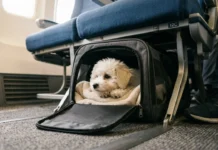
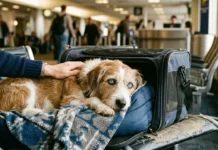
To clear TSA smoothly with your dog, arrive early, use the special services counter, and fit a metal-free restraint and leash before screening. Empty your dog’s carrier, send it through the X-ray alone, and carry small dogs through the metal detector while larger dogs heel beside you. Move steadily, wait for the officer’s signal, and request a private room if your dog’s anxious. There’s more to know before you reach your gate.
TLDR Key Takeaways
- Arrive 2–2.5 hours early for domestic flights, or 3 hours for international, to allow unhurried screening.
- Use a non-metallic harness and leash, removing metal collars and tags before the metal detector.
- Empty the carrier fully, place it on the belt like luggage, and keep it unzipped for inspection.
- Notify the TSA officer early that you’re traveling with a pet to streamline the process.
- Carry small dogs through the detector in arms; let larger dogs heel beside you on leash.
Know the Airline’s Pet Policy Before You Book
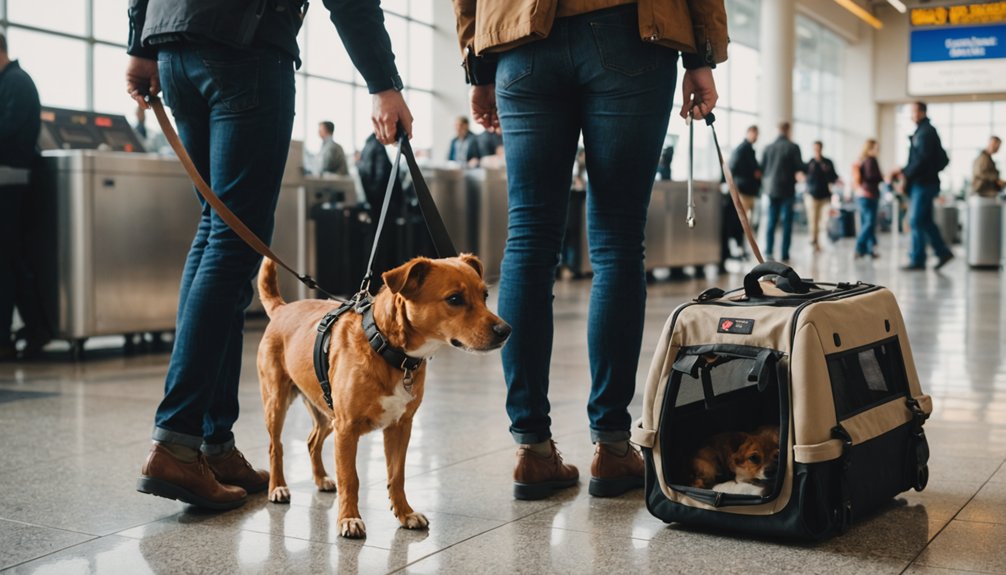
Before you book, dig into your airline’s pet policy—it’ll dictate whether your dog flies in the cabin, in checked baggage, or as cargo, each with its own set of rules.
Airline policies vary widely: most major U.S. carriers allow small dogs under the seat, but weight limits, carrier dimensions, and pet restrictions differ from one airline to the next. Some international routes ban in-cabin pets entirely, and premium cabins on certain aircraft can’t accommodate under-seat carriers at all. For example, most airlines cap fees between $35 and $150 per pet, per flight, so budgeting matters as much as logistics.
Don’t assume your last flight’s rules apply here—check age requirements, breed restrictions, and per-flight pet caps before you commit. Some carriers, like Alaska Airlines, even allow you to purchase an extra seat for a second pet if you’re traveling with more than one dog. Keep in mind that service dogs are exempt from these pet fees and size restrictions since airlines must accommodate them regardless of size. Freedom to travel with your dog starts with research, not assumptions. Confirm everything directly on the airline’s website, then book with confidence, knowing exactly what to expect at the gate.
Gather Your Dog’s Health Certificate and Vaccination Records
Paperwork makes or breaks your trip through security and beyond, so get your dog’s health certificate squared away early.
Health certificates must come from a licensed, USDA-accredited veterinarian and confirm your dog’s free of infectious disease.
Airlines typically demand a date within 10 days of travel, even though USDA allows 30 — don’t rely on the longer window.
Your certificate needs species, breed, weight, age, and vet contact details, with an original signature. If your dog is 100 lbs. or larger, including the weight of the carrier, expect to be charged as cargo even if traveling on the same flight as you.
Vaccination records matter just as much.
Carry proof of rabies vaccination with your dog’s ID (microchip or tattoo), plus core vaccines like distemper and parvovirus.
Crossing state or international lines?
Expect extra scrutiny — pull both documents together now, so nothing stalls you at the checkpoint. A USDA-accredited veterinarian can also help you determine the specific entry requirements of your destination country ahead of time. It’s wise to bring two copies of the health certificate, an original plus an extra, in case one is requested for retention.
Choose a TSA-Friendly Carrier That Fits Under the Seat
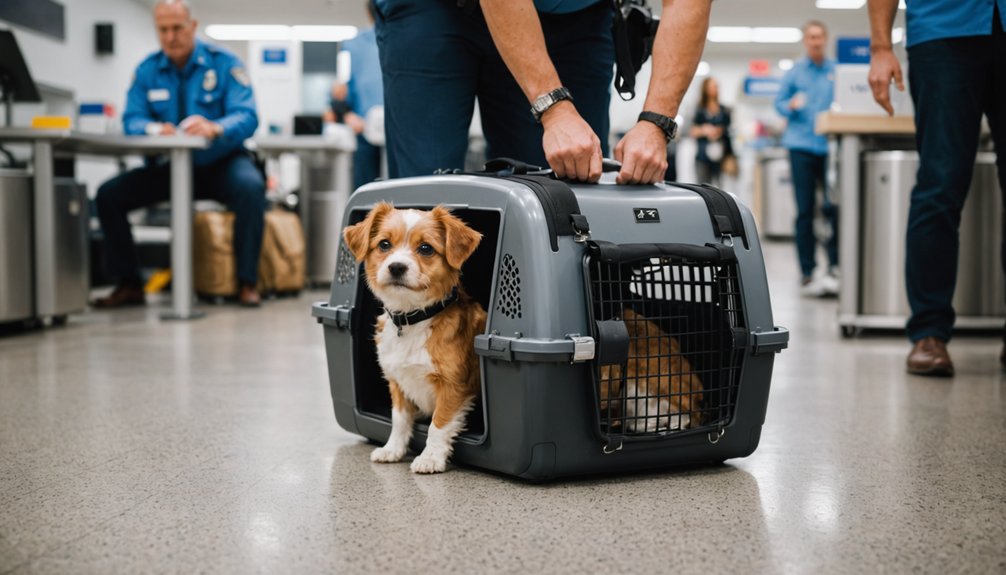
Your carrier choice determines whether you breeze through the checkpoint or get stuck arguing with a gate agent.
Airline dimensions vary, so check them before you buy.
JetBlue caps out at 17″ x 12.5″ x 8.5″, Southwest allows 18.5″ x 13.5″ x 8.5″, and Alaska limits carriers to 17″ x 11″ x 9.5″.
Most pet carriers run around 18″ x 11″ x 11″, but confirm specs against your exact airline and aircraft.
Choose soft-sided, flexible construction that compresses under the seat without a fight.
Look for mesh panels on multiple sides for airflow and visibility.
Your dog needs room to stand, turn around, and lie down comfortably.
Recommended options like Sherpa brand carriers and the Amazon Basics Airline Pet Carrier are built with these checkpoint-friendly dimensions in mind.
For upgrade seekers, the Sleepypod Air In-Cabin Pet Carrier is designed specifically to fit under an airplane seat.
Keep it lightweight and stable for easy handling through the airport—freedom starts with the right gear.
Get Your Dog Comfortable With the Carrier Beforehand
Comfort doesn’t happen overnight—start acclimating your dog to the carrier at least 2-3 weeks before your flight. Begin the carrier introduction in a familiar, low-traffic area where your dog already feels at ease. Toss in high-value treats, feed full meals inside, and add favorite bedding or a worn t-shirt for scent familiarity.
Keep the carrier open at first, letting your dog investigate freely without pressure. Gradually close the door for a few seconds, extending duration as calmness holds. Build from 1-2 minutes to 30+ minutes before introducing movement—lifting, carrying, then short car rides. Once your dog handles car rides calmly, introduce travel-related noises like doors closing to further prepare them for the airport environment.
This acclimation process pays off at security: a dog who’s relaxed entering, exiting, and settling on cue moves through checkpoints with far less stress for both of you.
Fit a Secure Harness and Non-Metallic Leash
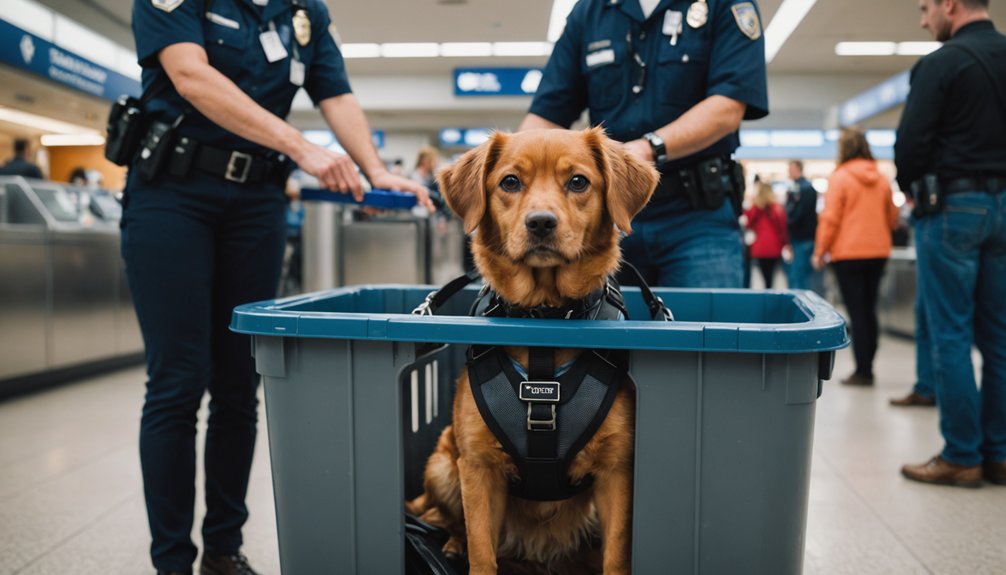
Security screening runs smoother when your dog’s gear won’t set off alarms. Before you travel, measure your dog’s neck and chest girth, then select a saddle that fits snugly without restricting movement. Saddle fitting matters most behind the armpits—apply the two-finger rule and confirm buckles sit centered with straps lying flat. A step-in vest style simplifies checkpoint removal, while a front-clip design reinforces leash control by steering your dog back toward you. Chest measurements between 16.5 and 18.5 inches typically fit a large size harness comfortably. Keep in mind that products run small, so checking the size chart beforehand can prevent an ill-fitting harness at the checkpoint. Many owners find that tools like the TSA Fast Pass make the entire screening process easier, safer, and more enjoyable when traveling with pets.
| Gear Feature | Purpose | Checkpoint Benefit |
|---|---|---|
| Metal-free saddle | Avoids detector triggers | Fewer pat-downs |
| Metal-free leash | Simplifies screening | Faster clearance |
| Front-clip design | Discourages pulling | Better leash control |
| Two-finger fit | Prevents rubbing | Comfort and security |
Choose gear that keeps your dog calm, secure, and ready to move freely.
Complete Airline Check-In With Your Dog
Check-in starts long before you reach the airport counter.
Pet verification confirms your dog’s spot in the cabin, so reconfirm that airline confirmation 24-72 hours before departure—phone calls are often required, since online check-in gets disabled once a pet’s on the reservation.
Arrive early: 30 minutes ahead of standard guidance for domestic flights, up to three hours for international routes.
Head straight to the special services counter, not general check-in.
Your carrier replaces one carry-on item, so pack accordingly.
Skip exit rows and bulkhead seats when selecting your seat—airlines prohibit under-seat pet stowage there. Most in-cabin policies also cap your dog’s weight at around 9 kg to qualify for cabin travel at all.
Bring health certificates and vaccination records in case the agent asks.
This groundwork keeps your dog’s trip through security and boarding fast, predictable, and stress-free.
Arrive at the TSA Checkpoint With Confidence
The checkpoint experience sets the tone for everything that follows, so timing matters as much as temperament. Smart TSA preparation starts with arriving 2–2.5 hours early for domestic flights and 3 hours for international ones, giving you room to traverse the screening process without rushing your dog.
Study the airport layout beforehand so you know where pet relief areas sit relative to checkpoints—this lets you fit in a bathroom break before joining the line. Your checkpoint strategy should factor in crowd levels, too. Choose calmer lanes when possible, and stay alert for working K9 teams, requesting an alternate lane if needed. Remember that your dog will need to be removed from its carrier during the screening process, so keep a leash handy for that moment.
Confident travel planning means prioritizing dog calming techniques and pet safety over speed. Flight readiness and airline compliance start with your composure at security measures—your dog reads your energy first.
Take Your Dog Out of the Carrier for Screening
Once you reach the front of the line, timing your dog’s exit from the carrier becomes critical.
The carrier must be empty before it enters the X-ray tunnel—live animals aren’t permitted inside.
Before dog removal, clear your shoes, belt, and personal items onto the conveyor first.
This cuts down on juggling and keeps your hands free for your dog.
Once you’re set, lift your dog out and present them to the TSA officer to start the animal screening process.
Notify the officer early that you’re traveling with a pet—this helps them prepare and may open up a pet-friendly lane. Unlike service dogs, a pet in the cabin does not walk through the metal detector with you, since only service dogs are permitted to clear screening alongside their handler.
Handle carrier screening efficiently: empty it fully, secure the zipper or door, and place it on the belt like standard luggage.
Get Your Dog Through TSA’s Metal Detector
After the officer clears your carrier and gear, your dog’s walk through the metal detector needs its own prep.
Strip off metal collars, tags, and buckles first—toss them in the X-ray bin with your belongings.
Your leash options matter here: choose nylon or fabric over chains, prong collars, or retractable models with metal casings.
These trigger false alarms and cost you time.
Small dogs ride through in your arms; larger dogs heel beside you on that non-metal leash.
Wait for the officer’s signal before stepping into the lane, then move at a controlled, steady pace—no bolting, no hesitation.
If the metal detector alarms, expect a pat-down or trace swab.
Stay calm, keep the leash, and let officers finish their check.
You’ll be through in minutes.
Request a Private Screening Room If Your Dog Is Anxious
Frantic scratching at the mesh, lunging at the zipper, full-body trembling—these are your cues to skip the public lane entirely.
TSA guidance treats these signs as valid grounds for a private screening request, especially for skittish or escape-prone dogs.
Ask before your items hit the X-ray belt.
Approach the officer at the divestment table or metal detector and state your need directly: “Anxious pet, request private screening room for pet inspection.”
Expect a few extra minutes—typically around five—while TSA arranges two officers and secures a room.
You can also confirm availability ahead of time through AskTSA.
For anxious pets, private screening means calmer handling, fewer distractions, and less risk of bolting into a crowded terminal.
Repack Your Dog and Head to the Gate
The moment screening wraps up, move to the recomposure area—a spot away from the conveyor and metal detector—before you do anything else.
Run through your repack checklist: inspect the carrier for damage or loose hardware, replace bedding, and re-add only low-profile comfort items.
Secure zippers and latches fully, clipping them together if possible to prevent self-opening.
Move quickly—your dog doesn’t need extra exposure to checkpoint noise and crowds.
Once repacked, shift into gate preparation mode.
Confirm your pet kit—water bowl, treats, waste bags, documents—is accessible in your carry-on, not buried.
Skip a full meal, but offer small water sips en route.
Reserve high-value treats for settling in at the gate, and keep your dog’s carrier compliant for under-seat stowage.
Locate Pet Relief Areas Before You Board
Bladders don’t wait for boarding calls, so scout your dog’s relief options before you ever reach the checkpoint.
Federal law requires airports serving 10,000+ passengers yearly to provide relief areas in every terminal, so your options exist—you just need to find them.
- Check airport maps first. Most airport and airline websites publish terminal-by-terminal layouts pinpointing pet stations near specific gates, doors, or levels.
- Cross-check third-party guides. Independent compilations often catch relief areas that official maps miss, listing exact doors and concourses.
- Call ahead if unclear. Not every airport labels locations online—airport customer service can confirm before you commit to a route.
Post-security pet stations keep you airside, cutting security re-entry risk and protecting your boarding window.
Frequently Asked Questions
What Happens if My Dog Escapes the Carrier at the Checkpoint?
You’ll stay calm and let TSA officers contain your dog—don’t chase. They’ll pause your lane, treat it like a lost pet situation, and secure the area. Afterward, airline policy may reassess your dog’s cabin fitness.
Will TSA Officers Touch or Handle My Dog Directly?
No—TSA officers won’t directly touch your dog during standard pet screening. You’ll carry or walk your dog through the detector yourself. Dog handling stays with you, unless secondary screening’s required for safety or alarm resolution.
Can I Bring Dog Treats Through Security Screening?
Yes, you can bring dog treats through security. Pet owners can pack solid dog snacks freely, but pastes or gravy-based options must follow the 3.4 oz liquids rule—pack smart, travel confidently.
What if a TSA K9 Unit Is Working My Checkpoint Lane?
Tell the officer immediately—you’ll get rerouted or paused per K9 protocols. Keep your dog leashed, close, and calm; don’t let it approach the working canine. Standard canine procedures still require metal detector screening and carrier X-ray for your pet.
Does the Explosive Trace Swab Hurt or Affect My Dog?
No, it won’t hurt your dog. The swab procedure only collects surface residue—it’s not invasive. Dog safety isn’t compromised; sources confirm trace amounts are too small to harm your pet. You’re free to stay calm.
Conclusion
You’ve got everything you need to move through a TSA checkpoint without stress. Do your research on airline rules, prep your dog’s documents, and get that carrier comfortable well before travel day. When you reach security, stay calm—your dog picks up on your energy. TSA officers handle pet screenings daily, so trust the process. Follow these steps, and you’ll clear the checkpoint smoothly, with time to spare before boarding.
References
- https://www.tsa.gov/travel/frequently-asked-questions/can-i-take-my-pet-through-security-checkpoint
- https://www.tsa.gov/news/press/releases/2022/12/14/tsa-offers-tips-traveling-small-pets-through-security-checkpoint
- https://www.aa.com/web/i18n/travel-info/special-assistance/pets.html
- https://www.delta.com/us/en/pet-travel/overview
- https://aeronauticsmagazine.com/air-travel/flying-with-a-dog-in-the-cabin-everything-you-need-to-know-before-booking
- https://www.reddit.com/r/TravelWithPets/comments/1es8uc3/tsa_w_dog/
- https://blog.pettravel.com/index.php/pet-travel-how-to-clear-airport-security-with-a-pet/
- https://www.faa.gov/travelers/fly_pets
- https://www.portseattle.org/services-amenities/traveling-pets
- https://www.akc.org/expert-advice/travel/dog-airline-travel/