To prevent car sickness on winding mountain roads, feed your dog a light meal 3-4 hours before departure, secure them in a forward-facing restraint, and keep the cabin cool with steady airflow. Pack familiar scents and take breaks every 2-4 hours for short walks. Choose smoother routes when possible. If symptoms persist despite these steps, your vet can prescribe Cerenia or Trazodone. Below, you’ll find exactly when medication becomes necessary and how to build lasting tolerance.
TLDR Key Takeaways
- Feed a light, reduced-volume meal 3–4 hours before departure to prevent nausea on winding roads.
- Secure dogs in forward-facing, anchored crates or restraints to reduce vestibular sensory mismatch.
- Ensure steady cabin airflow, use sunshades, and avoid strong scents to keep dogs calm.
- Plan smoother routes with pullout stops, breaking mountain drives into 2–4 hour legs.
- Consult a vet for persistent symptoms; consider Cerenia or Trazodone for severe car sickness.
What Causes Car Sickness in Dogs on Winding Roads?

Because winding roads demand constant, rapid turns, they intensify stimulation of the vestibular apparatus in your dog’s inner ear, driving nausea risk higher than on straight highways.
Your dog’s eyes, joints, and paw receptors send conflicting signals to the brain—this sensory mismatch activates the emetic center, triggering vomiting.
Mountain drives compound the problem: sharp curves, braking, and elevation shifts create unpredictable vehicle motion your dog’s inner ear balance system struggles to process.
Physiological factors matter too.
Puppies have immature vestibular systems, while some dogs carry genetic sensitivity or underlying ear conditions that lower their threshold for motion triggers. Younger dogs are more prone to motion sickness than adults, making mountain drives especially risky for them.
Emotional responses compound physical ones—anxiety and past association with sickness amplify symptoms. Certain breeds, such as Boxers and Border Collies, are also more prone to motion sickness, adding another layer of risk on winding mountain routes.
Road conditions, heat, and restraint issues add further strain, making winding routes uniquely challenging for vulnerable dogs. Larger dogs may struggle even more to stabilize themselves through repeated turns, stops, and winding roads, compounding the physical strain of mountain travel.
Spot Early Signs of Dog Motion Sickness
Winding roads push your dog’s system toward its breaking point, but you don’t have to wait for vomiting to know something’s wrong.
Motion detection starts with the small stuff: excessive drooling, lip licking, and yawning often show up first.
Whining and pacing signal rising discomfort before nausea takes over completely.
Watch for lethargy, trembling, or reluctance to move—these behavior shifts often precede obvious GI symptoms like vomiting, diarrhea, or retching.
Timing matters.
Signs that start as the car begins moving point to motion sickness; symptoms before you even load up suggest anxiety instead. Even when the vehicle stops moving, some dogs continue showing distress, since fear of the vehicle itself can be a contributing factor.
Sickness prevention depends on catching these cues early, so you can pull over, calm your dog, and stop the episode before it escalates on those mountain curves. Puppies and young dogs are especially prone to these episodes because of their underdeveloped inner ear.
Get Feeding and Water Timing Right Before Travel
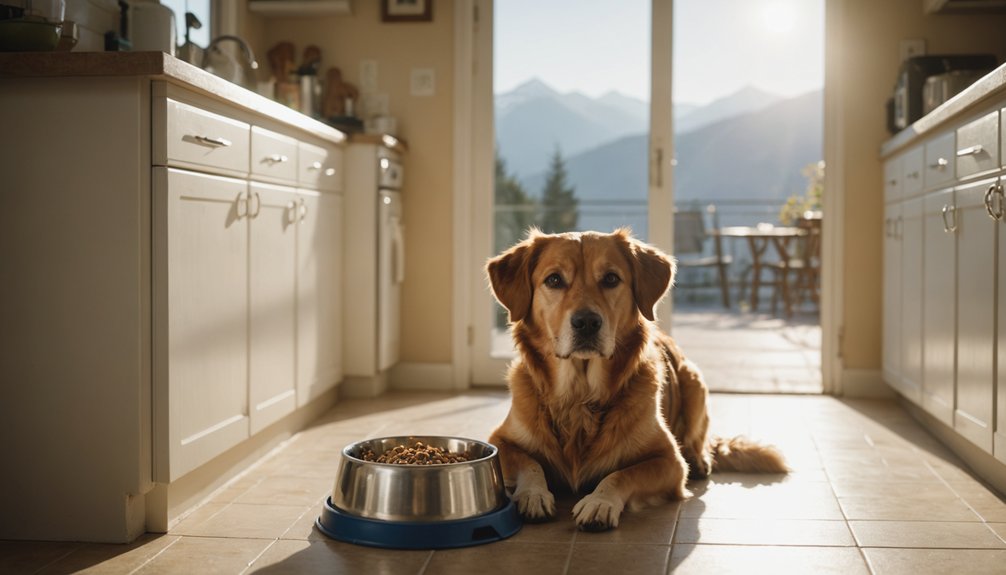
A full stomach and a curvy road don’t mix. Before you hit those mountain switchbacks, get your pre travel meals timed right.
Withhold large meals 3–4 hours before departure, and for dogs prone to sickness, stretch that window to 6–8 hours. Skip rich or unfamiliar foods—stick to your dog’s regular diet in smaller portions. This matters because a dog’s metabolism takes about 20 to 24 hours to fully digest a meal, so a big meal right before travel is still sitting heavy in their stomach during those winding roads.
Your feeding schedules matter as much as the food itself:
- Offer a light, reduced-volume meal 3–4 hours pre-trip
- Save the rest of the daily ration for after arrival
- Never feed while the vehicle’s moving
- Give 30–60 minutes between eating and activity
- Allow water access, but skip one big gulp before loading up
If your dog has a history of digestive sensitivity, splitting meals into smaller portions before and after travel can help reduce the risk of an upset stomach, similar to how you might manage digestion issues before a long hike. A fiber supplement can also help keep diarrhea and other digestive troubles at bay during the trip.
Small, smart choices now mean more freedom on the road later.
Choose Forward-Facing Seats and Secure Restraints
Where your dog sits matters just as much as when they last ate.
Forward seats limit exposure to the lateral and backward visual cues that trigger vestibular conflict on winding roads.
Facing forward lets your dog’s eyes match what their inner ear already senses, cutting down on sensory mismatch.
Secure restraints matter just as much as positioning.
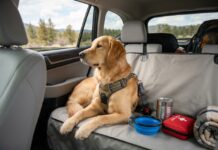
CPS-certified carriers and straps belong in the back seat, never up front near airbags.
Anchor them tightly to seat belts or LATCH systems so they won’t tip on sharp curves.
Choose a snug, multiple-point strap with a short tether to stop twisting, swinging, or excessive head movement.
Elevator seats work too, as long as they don’t invite side-window sightseeing that can make nausea worse. A properly sized seat should have tall, firm sides that let your dog snuggle down rather than be tempted to peer out at passing scenery. Since the pet industry remains largely unregulated, looking for independent testing like CPS certification is the best way to confirm a restraint’s real-world safety performance. Many seats also feature removable washable covers, making it easy to keep the seat clean if car sickness does occur.
Use Airflow, Shade, and Quiet to Calm the Cabin
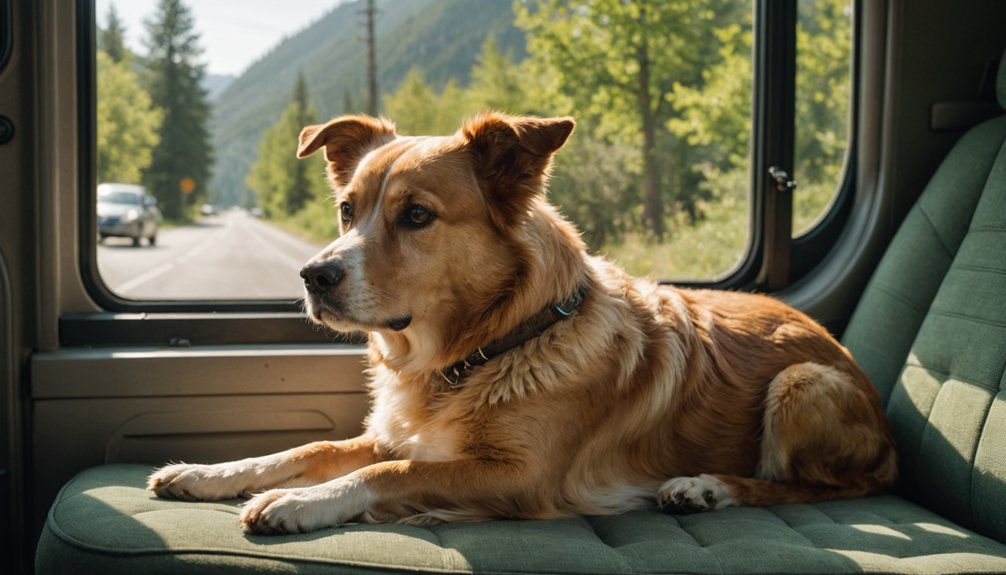
Once your dog’s seated and secured, the cabin environment around them deserves equal attention.
Cabin ventilation is key vehicle preparation for winding mountain roads, where nausea and heat build quickly. Direct vents or auxiliary fans toward your dog’s space, and crack windows just enough for airflow without risking escape. Sunshades cut glare and heat gain, keeping temperatures stable on long climbs. Lowering the windows a few inches at the start of the ride can also help equalize air pressure in the cabin.
Sound matters too—loud radios or engine noise ramp up anxiety, while quiet or soft classical music keeps arousal low.
- Keep airflow steady and cool, never stagnant
- Use sunshades to block direct heat
- Avoid strong perfumes or fresheners
- Choose calm, low-volume sound over noise
- Pair pheromone sprays with quiet conditions
Stable air, shade, and quiet give your dog real freedom from discomfort.
Block Views With Crate Placement and Shades
Mismatched signals between eyes and inner ear drive most car sickness, so cutting visual motion matters as much as securing your dog. Crate placement makes the biggest difference: put the crate on the floor of the middle rear seat, where motion is lowest and your dog faces forward toward the windshield instead of blurring side windows.
This alignment keeps visual and vestibular signals in sync, especially on switchbacks. Anchor the crate securely so it doesn’t slide or tilt through hairpin turns.
Pair this with window shades to block peripheral views of passing terrain. Opaque or mesh shades cut flickering light on tree-lined roads without sealing off airflow. Combined with smart crate placement, shades create layered visual protection that keeps your dog calm and gives you the freedom to keep driving. Many dog owners have shared their own experience or insight on whether crating or window access makes car sickness better or worse. Watch closely for vomiting, since it is a definite sign that motion sickness is affecting your dog despite these precautions. Positioning your dog to face the direction of travel further reduces the mismatch between what the eyes see and what the inner ear senses.
Build Car Sickness Tolerance With Practice Rides
Since car sickness often stems from learned anxiety as much as inner-ear confusion, you can rebuild your dog’s tolerance through gradual desensitization.
Start small, and let your dog’s confidence—not the calendar—dictate your pace.
- Sit in the parked car, engine off, for a few minutes daily, using treats to build a calm environment
- Once relaxed, start the engine and idle without driving
- Take ultra-short trips—up the street and back—before adding minutes
- End rides at parks or a friend’s yard, so travel predicts fun
- Retreat to the last successful stage if nausea or stress appears
This gradual exposure protects the freedom you’re working toward: a dog who rides confidently, wherever the road leads.
Plan Smoother Routes and Drive More Gently
Practice rides build your dog’s confidence, but the route and your driving habits still shape how their stomach handles the trip.
Route planning matters most: pick straighter highways over twisty backroads, and use satellite views and elevation trackers to spot switchbacks before you hit them. Break mountain drives into 2–4 hour legs with pullout stops for short walks, giving their vestibular system time to reset. Skip meals within 2–3 hours of winding stretches.
Gentle driving finishes the job—hold steady speeds, decelerate smoothly before curves, and accelerate gently out of them. Use lower gears on descents instead of hard braking, keep extra following distance, and avoid sudden lane changes. Check road conditions and traffic reports beforehand so surprises don’t force jerky corrections.
Pack Familiar Scents and Toys to Ease Anxiety
Scent works like a security blanket for anxious travelers, and your dog’s nose is no exception.
Bring a blanket or T-shirt carrying your home’s scent—it builds a “safe base” against unfamiliar road smells that spike stress and nausea.
Pair this with calming scents like diluted lavender on a cotton ball, avoiding stimulating oils like peppermint.
Pheromone sprays on bedding, applied 15-20 minutes pre-drive, reinforce the “this smell means safety” signal your dog craves for true road freedom.
Round it out with strategic travel toys:
- Reserve special toys exclusively for car rides to build positive association
- Choose soft chews or puzzle toys safe for restrained use
- Rotate a small set of favorites instead of introducing novelty
- Let toys carry home scent for double comfort
- Skip overwhelming, unfamiliar items that add stress
Take Breaks on Long Mountain Trips
Mountain roads test even the toughest travel routine, so plan to stop every 1-2 hours and let your dog reset before symptoms escalate.
Break timing matters most on winding stretches, where constant turning and braking intensify nausea.
Watch for drooling or lip-licking—these signal it’s time to pull over before things get worse.
Use each stop for fresh air, letting your dog step onto solid ground and stretch out stiffness from sitting still.
Keep walks calm rather than excited, so your dog re-enters the car settled, not amped up.
Offer water in small amounts—enough to stay hydrated without upsetting the stomach.
Good travel pacing turns a grueling drive into manageable segments, keeping your dog comfortable mile after mile through the curves.
When Should You Call the Vet About Medication?
Even with perfect break timing and a calm walk on every stop, some dogs still vomit, drool, or retch on nearly every car trip.
That pattern signals persistent sickness, and it’s crossed the medication thresholds that call for a vet consultation instead of more trial and error.
Watch for these red flags before your next mountain drive:
- Symptoms that worsen over time or never improve
- Nausea on short, low-speed drives
- Vomiting or distress that continues after the car stops
- Blood, weakness, or pale gums—signs demanding emergency care
- Panic behaviors like frantic escape attempts or loss of bladder control
You deserve the freedom to travel without guessing.
Severe symptoms deserve real answers, not another home remedy—get your vet involved before hitting winding roads again.
Cerenia, Trazodone, and Other Vet-Approved Travel Aids
Once your vet confirms medication makes sense for your dog, Cerenia stands out as the go-to option. This NK-1 receptor antagonist blocks substance P, kicking in within 1-2 hours and lasting up to 24 hours. Cerenia benefits include a 93% success rate against motion sickness, versus 48% with placebo. Give 8 mg/kg once daily, for no more than 2 consecutive days, in dogs 4 months or older—with a small meal beforehand.
For anxious dogs, Trazodone usage tackles the stress Cerenia doesn’t touch. It’s not an antiemetic, so vets often pair it with Cerenia for winding mountain roads. Dosing is individualized, typically given 1-2 hours before travel. Together, these tools give you—and your dog—real freedom to hit the road confidently.
Frequently Asked Questions
Can Puppies Outgrow Car Sickness as They Get Older?
Yes, you’ll likely see improvement—puppy development plays a huge role, with most pups outgrowing car sickness by 1 year as their vestibular system matures. Breed tendencies matter too: larger breeds may need until 18-24 months.
Is It Safe to Travel With a Dog That Vomited Earlier That Day?
Not automatically. If your dog vomited today, you should hold off on travel plans until you’re sure it’s mild—no lethargy, blood, or repeat episodes. Get vet advice first, then decide based on hydration and alertness, not convenience.
Does Car Sickness Differ Between Small and Large Dog Breeds?
Yes, breed differences matter—you’ll notice size factors shape symptoms distinctly. Your small dog’s anxious, faster metabolism triggers quicker nausea; your large dog’s joint stress and calmer nature often masks sickness until vomiting hits (Subpoints 1-3).
Can Car Sickness Medication Be Combined With Anti-Anxiety Medication?
Yes, you can combine them—but don’t wing it. Get veterinary guidance first, since medication interactions like excessive sedation or hypotension can occur. Your vet tailors dosing so you and your dog travel safely.
How Long Before a Mountain Trip Should I Start Tolerance Training?
Start weeks ahead, not days. You’ll want time for real desensitization techniques—car off, engine on, short drives—using gradual exposure to curves and distance. This builds your dog’s confidence, giving you both freedom to roam mountain roads stress-free.
Conclusion
You don’t have to dread mountain drives with a sick, drooling pup anymore. Time meals right, secure your dog facing forward, keep the cabin cool and calm, and pack familiar comforts. Watch for early signs, and stop for breaks on long routes. If symptoms persist, talk to your vet about Cerenia or trazodone—both proven options for canine motion sickness (AVMA, 2023). With preparation, you’ll turn winding roads into stress-free trips.
References
- https://www.goodrx.com/pet-health/dog/dog-car-motion-sickness
- https://vcahospitals.com/know-your-pet/motion-sickness-in-dogs
- https://www.wedgewood.com/blog/motion-sickness-in-dogs-signs-and-how-to-help/
- https://www.petmd.com/dog/conditions/digestive/dog-motion-sickness-what-it-and-how-help-your-dog
- https://www.webmd.com/pets/dogs/dogs-and-motion-sickness
- https://cooperstownveterinaryclinic.com/articles/general/503474-how-to-prevent-motion-sickness-in-pets
- https://vetster.com/en/wellness/can-dogs-get-carsick
- https://www.biltonvets.co.uk/advice-travelsickness
- https://www.smalldoorvet.com/learning-center/wellness/carsickness-dogs/
- https://www.reddit.com/r/DogAdvice/comments/1criis1/tips_for_dogs_who_get_car_sick/