Start with a thorough pre-flight vet exam to confirm your dog’s fitness and record baseline health markers. Confirm your airline’s in-cabin policy, then gather any required health certificates and vaccination records. Pick a soft-sided carrier, and train your dog to relax inside it. Test calming aids well ahead of time. On flight day, stay calm through security, keep your dog settled in-flight, and decompress after landing. Each step below makes the trip smoother.
TLDR Key Takeaways
- Schedule a pre-flight vet exam to confirm fitness, record baseline vitals, and trial any prescribed calming medications at home beforehand.
- Confirm in-cabin eligibility, breed and size limits, required health certificates, and vaccination timing on the airline’s pet policy page.
- Choose a soft-sided, under-seat carrier and train carrier comfort gradually using brief door closures and long-lasting chews.
- Desensitize your dog to airport noise with low-volume recordings paired with high-value treats over several weeks before travel.
- Keep your dog calm in-flight using familiar bedding, pheromone spray, a partial carrier cover, and a low, steady voice.
Start With a Vet Visit and Fitness Check
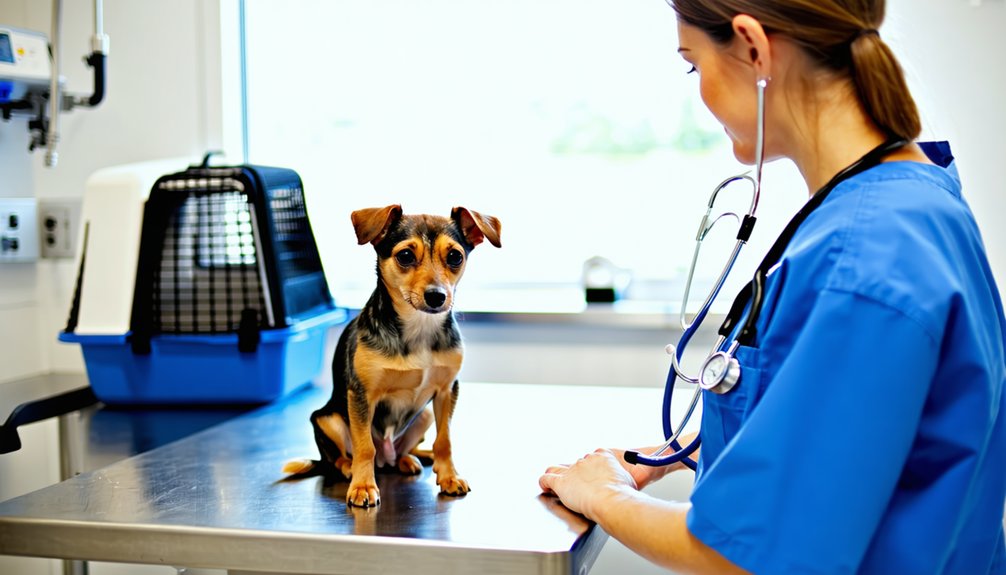
Before you book a single flight, schedule a thorough pre-flight exam so your vet can confirm your dog is physically fit to travel.
Your vet will assess cardiovascular, respiratory, and musculoskeletal health, screening for illness and recording baseline weight, temperature, heart rate, and respiratory rate.
Senior dogs and brachycephalic breeds need extra caution, so share these concerns openly.
This visit is also when you discuss behavior triggers like confinement and airport noise, plus carrier comfort to ease your dog’s stress.
If your vet prescribes anxiety or motion-sickness medication, run a medication trial at home first to monitor effectiveness and side effects.
You’re not alone in wanting your companion safe—this evidence-based foundation guarantees you both travel with confidence, knowing your dog’s truly ready for the cabin.
Confirm Your Airline’s In-Cabin Pet Policy
Where you fly determines whether your dog rides in the cabin at all, so confirm the airline’s in-cabin pet policy before you commit to a route.
Start by reviewing the pet policy page to confirm dogs are accepted in cabin, since some routes—especially international and long-haul segments—prohibit them.
Check country-specific restrictions, aircraft-level limits, and any seasonal or temperature embargoes that could ground your plans.
Next, verify eligibility checks: species, age minimums (8 weeks domestic, often 15 weeks for EU), size and weight limits, and breed rules that may bar snub-nosed dogs.
Then confirm seat constraints, because bulkhead, exit, and certain premium rows won’t accommodate a carrier underseat.
If in-cabin travel isn’t allowed, identify cargo or accompanied-baggage alternatives so you’re never caught off guard.
Gather Health Certificates and Vaccination Records
Although most U.S. airlines don’t require a health certificate for in-cabin pets on domestic routes, you still need to verify this for your specific carrier, since Alaska and Hawaiian Airlines are notable exceptions.
Don’t forget that your destination state or country may mandate certificates or vaccination proof even when your airline doesn’t, so check both.
A pet health certificate confirms your dog’s been examined, is disease-free, and is current on vaccinations.
For interstate or international travel, a USDA-accredited veterinarian must issue it, and international certificates need USDA APHIS endorsement.
Mind your rabies vaccine timeline—many destinations require vaccination 21–30 days before travel.
Certificates are time-limited, often valid 10–30 days, so schedule within the strictest window.
Gather your carrier comfort documentation early to travel confidently alongside fellow prepared pet owners.
Pick a Carrier Your Anxious Dog Will Like
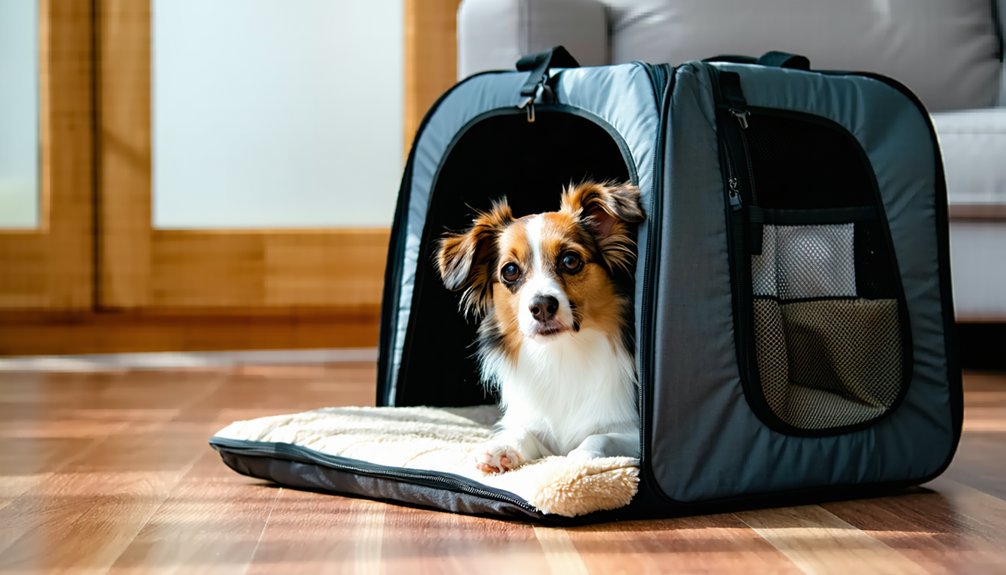
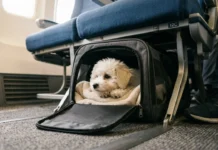
With your paperwork sorted, your next decision shapes how calm your dog stays at altitude: the carrier. Choose a soft-sided model that slides under the seat—it’s flexible, portable, and the den-like feel reassures anxious dogs. Skip slings and backpacks; they suit short trips, not cabin flights.
Size matters. Measure your dog’s length from nose to tail base and height to the head, then aim for snug, not cramped. A too-large carrier weakens that calming den-like fit testing many anxious pups need to settle.
Prioritize safety: locking zippers, internal leash clips, and reinforced seams prevent escapes. For comfort, focus on carrier ventilation planning—two or three mesh sides keep airflow steady—plus padding and a home-scented blanket. Pick something lightweight, washable, and airline-compliant.
Train Your Dog to Love the Carrier
A great carrier means nothing if your dog dreads climbing inside it.
Building crate comfort takes patience, but you’ll get there together.
Place the carrier in a quiet, familiar spot and let your dog investigate without pressure.
Move meals gradually from the entrance to fully inside, pairing the space with calm signals like a soft voice and low activity.
Use treat scheduling to reinforce stillness—deliver small rewards at predictable intervals while your dog stays settled.
- Start with the door open until voluntary entry happens
- Close the door briefly (30 seconds), then reopen before stress appears
- Increase closed time by 30–60 seconds per session
- Add long-lasting chews to encourage lying down
Step back whenever panting, pacing, or whining surfaces.
Desensitize Your Dog to Airport and Flight Noise
Because airports overwhelm dogs with sudden booms, screeches, and roaring engines, you’ll want to introduce these sounds long before travel day. Start by playing high-quality recordings of airport ambience and cabin noise at very low volume during meals, play, and training.
Manage sound intensity carefully, keeping it below your dog’s fear threshold—no panting, trembling, or refusing food. Build positive associations by pairing each noise burst with high-value treats, chews, or calm massage, shifting your dog’s emotional response from fear to expectation of reward.
Gradually increase volume and duration in 3-10 minute blocks, but only when your dog stays relaxed. Vary your soundtracks—boarding calls, rolling suitcases, PA announcements, engine hum, takeoff and landing roars.
Train several times weekly over many weeks; gradual programs consistently outperform rushed flooding.
Book Direct Flights at the Right Time
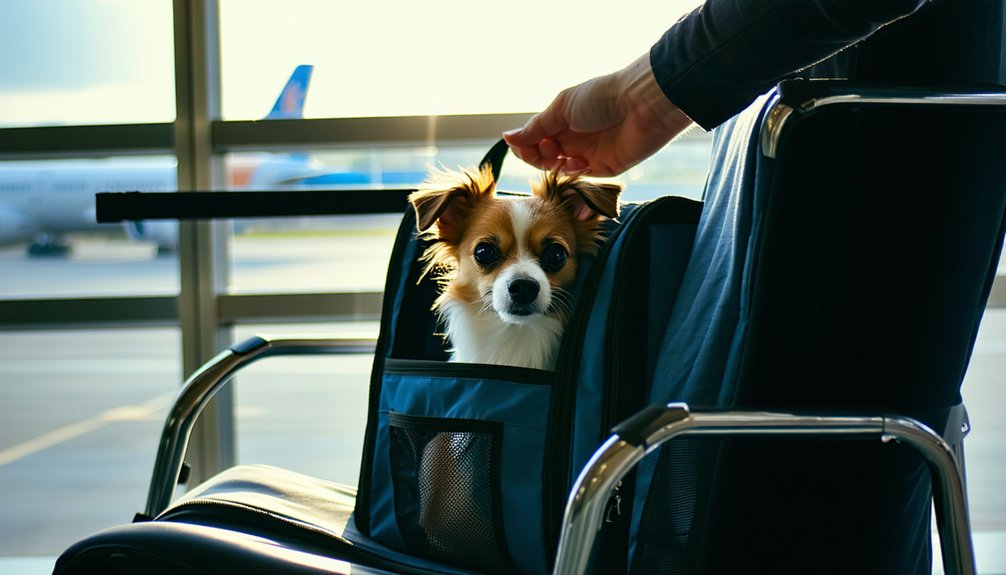
Since every layover multiplies the stressors your dog faces, booking nonstop flights is one of the smartest decisions you can make for an anxious traveler. Direct itineraries mean fewer airport exposures, eliminating crowded terminals, extra security checks, and the risk of missed connections that prolong carrier confinement. Joining the many guardians who follow veterinary recommendations, you’ll give your companion a calmer trip.
Timing matters just as much, since it reduces stress triggers:
- Choose early-morning or late-evening summer departures to dodge peak heat
- Pick midday winter flights to avoid extreme cold at the gate
- Select off-peak times for quieter airports and shorter lines
- Align departures with your dog’s usual nap times
Book early, too, since airlines cap in-cabin pet slots per flight.
Pack the In-Flight Essentials You’ll Need
Once you’ve locked in the right flight, turn your attention to what goes inside the carrier. Pack the items that keep your dog calm, fed, and secure throughout the trip.
Start with carrier comfort: line the airline-approved soft-sided carrier with a familiar blanket carrying home’s scent, add a favorite chew toy, and consider a calming wrap or pheromone spray.
For hydration and stomach management, bring collapsible bowls, a leak-proof water bottle, and pre-portioned snacks for rewards.
Don’t overlook travel hygiene—absorbent liners, pet-safe wipes, paper towels, waste bags, and hand sanitizer keep confined cabin spaces clean.
Pack backup supplies like a second toy or spare blanket in case of contamination.
Finally, carry health certificates, medications, and emergency contacts, including your dog’s microchip number and recent photo.
Test Calming Aids and Meds Before Flight Day
Before you ever zip your dog into the carrier on flight day, test every calming aid and medication well in advance. A proper home trial—days to weeks ahead, in a low-stress environment—lets you observe baseline effects without compounding variables.
Start with your vet’s guidance, then practice dosing timing so the calming peak (typically 1–3 hours after administration) aligns with your boarding window.
Keep an observation log to give your vet concrete data for adjustments:
- Start time and dose administered at flight-day clock time and feeding conditions
- Visible behavior changes, calming or paradoxical agitation
- Adverse side effects, like excessive sedation affecting swallowing
- Synergy with non-drug aids during short carrier or car sessions
You’ll arrive confident, knowing exactly what works for your companion.
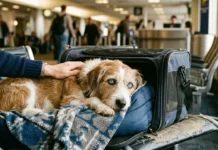
Navigate the Airport and Security Calmly
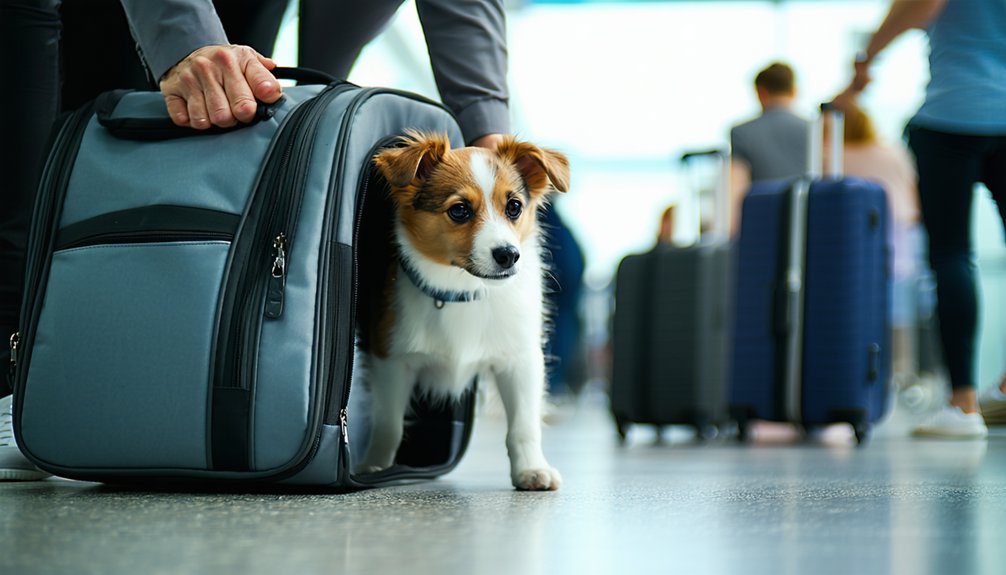
With your calming protocol dialed in at home, the airport becomes your next test—and how you move through it shapes your dog’s stress more than any single aid.
Arrive at least two hours early so you’re not rushing, and confirm your airline’s in-cabin check-in process beforehand.
Keep your dog in the carrier while moving at a calm, steady pace, choosing quieter waiting areas to limit sensory overload.
At security, expect to remove your dog from the carrier, so keep a leash or strap ready and secure your dog before loading bins.
Lean on reward based cues like “wait,” “touch,” and “leave it,” practiced in advance.
Maintain calm bodylanguage—a low, even voice, no abrupt movements—since your dog reads your tension instantly.
Step aside if congestion rises.
Keep Your Anxious Dog Settled During the Flight
Although the flight itself feels like the biggest hurdle, you can shape your dog’s experience by controlling the one thing within reach: the carrier environment.
Slide the carrier under the seat to maintain proximity, then line it with familiar bedding so reassuring scent cues lower stress.
Pack comfort items your dog already trusts, and partially cover the carrier with light cloth to reduce visual stimulation.
To keep your companion settled, manage cabin noise and arousal with these evidence-based steps:
- Apply dog-appeasing pheromone spray to the bedding
- Speak in a consistent, low, calm tone during turbulence
- Offer long-lasting chews to encourage self-soothing
- Use slow, rhythmic stroking when permitted
Limit carrier opening to necessary moments, preserving the calm, secure den you’ve created.
Help Your Dog Decompress After Landing
Once you’ve landed, your dog’s nervous system still needs time to recover from the cumulative stress of travel. Keep the first hours quiet, and avoid additional stressors for at least 48 hours, since minor triggers can spark new hormonal spikes.
Set up a cool, dark, low-noise retreat where your dog can rest without crowding from visitors or children. Let your dog choose rest, and use slow movements, a low voice, and side approaches rather than head-on contact.
Support a calming decompression routine with sniffing, licking, and chewing through food puzzles or stuffed chews. Watch for stress signals, and move your dog somewhere quieter if they appear.
When anxiety persists across many triggers, seek veterinary guidance. You’re giving your companion the safety they need to settle.
Frequently Asked Questions
What if My Dog Has an Accident Mid-Flight Despite Preparation?
Stay calm—you’ve got this. Follow emergency cleanup steps: blot soiled pads, wipe residue, and seal everything in airtight bags. For cabin odor control, swap fresh padding and notify crew. Then monitor your dog for further distress.
Can I Bring Two Anxious Dogs in One Carrier?
You can, but only if airline policies allow two small, similar-sized dogs per carrier. Confirm directly first. For anxious dogs, separate carriers often reduce stress—pair them with acclimation training so they’ll feel safe alongside you.
Are Emotional Support Dogs Still Allowed in the Cabin?
No, not as service animals anymore. Since 2021, you’ll travel under standard airline policies, paying pet fees. Complete eligibility verification for your dog’s size and carrier fit. You’re not alone—small dogs still fly cabin-side with you.
What Happens if My Dog Barks Uncontrollably During the Flight?
Crew will ask you to apply calming techniques and cabin strategies—keeping the carrier closed, soothing your dog quietly. If barking continues, you might be reseated, and in extreme cases, denied boarding or removal.
How Do International Flights Differ for Traveling With Anxious Dogs?
International flights demand stricter arrival documentation, health certificates, and microchip ID, plus longer confinement times that intensify anxiety. You’ll prioritize stress reduction through crate acclimation, non-stop routing, and non-sedation guidance—joining countless owners who’ve maneuvered this successfully together.
Conclusion
You’ve now got everything you need to fly confidently with your anxious dog. Follow this checklist step by step, and you’ll minimize stress for both of you. Start early—vet visits, carrier training, and calming aid trials all take time. Don’t skip the preparation; it’s what separates a smooth flight from a chaotic one. Stay calm, because your dog reads your energy. With solid planning, you’ll both land relaxed, healthy, and ready for what’s next.
References
- https://www.youtube.com/watch?v=WJ7Azr_Aj8A
- https://www.dogster.com/dog-health-care/flying-with-an-anxious-dog
- https://www.purplepup.net/post/flying-with-anxious-dogs-in-the-cabin
- https://wetnoseescapades.com/fly-anxious-dog/
- https://www.facebook.com/groups/1180884898968404/posts/2714450385611840/
- https://www.signaturepettransport.com/blog/how-to-prepare-your-dog-for-a-flight-in-cabin-the-complete-guide-to-stress-free-air-travel
- https://www.smalldoorvet.com/learning-center/wellness/fly-with-dog/
- https://www.youtube.com/watch?v=qVQ6FGfFVB8
- https://westievibes.com/complete-guide-flying-with-dog-cabin/
- https://www.petsthattravel.com/flying-with-anxious-dog/