Scout at least 100 meters upstream and downstream, choosing a straight, wide, shallow stretch where the current slows. Check downstream for rapids and strainers, and plan your exit before entering. Fit your dog with an ASTM F3137 life jacket, and carry her if water plus air falls below 100°F. Wade facing upstream, keeping your dog downstream. Watch for shivering or refusal, and turn back at any doubt. There’s more you’ll want to know.
TLDR Key Takeaways
- Scout 100 meters upstream and downstream to find a straight, wide, shallow crossing, avoiding bends, rapids, and strainers.
- Calm your nervous dog using barrier blocking, sound buffering, and increased distance whenever stress signs like panting or tucked tail appear.
- Fit an ASTM F3137 life jacket with high-buoyancy foam, full chest/belly panels, reflective visibility, and a reinforced grab handle.
- Carry the dog if combined water and air temperatures fall below 100°F, or air is at or below 45°F.
- Turn back immediately if water outpaces walking speed, exceeds knee depth, drops below 10°C, or footing becomes uncertain.
How to Read the River Before You Cross
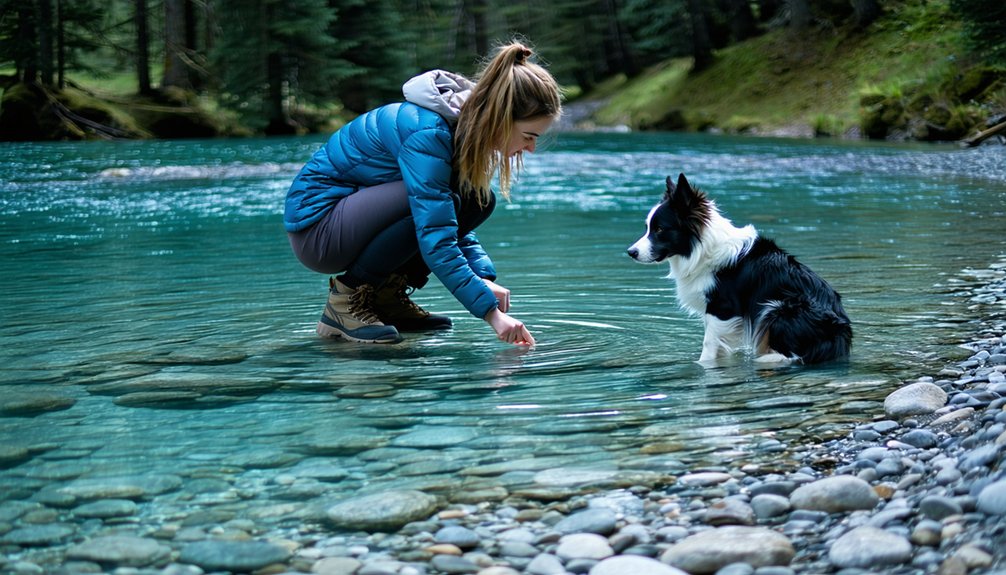
Before you commit to any crossing, read the river like a map of risk and reward.
Don’t settle for the first bank access you find—walk at least 100 meters upstream and downstream to compare sites.
Look for wider, shallower sections where current spreads and slows, and avoid glassy water hiding deep, powerful channels.
For current assessment, toss in a stick: if you can’t match its pace walking alongside, the flow’s too fast for you and your dog.
Use depth probing with a trekking pole to confirm bottom conditions and detect sudden drop-offs.
Favor firm gravel over algae-slick rock.
Finish with hazard scanning—inspect 150–200 yards downstream for logjams, strainers, and rapids.
We cross smart, together, only when the river truly invites us.
Is Your Dog Healthy Enough for a Cold Crossing?
Once you’ve judged the river safe, turn that same scrutiny toward your dog, because not every healthy-looking companion can handle cold-water exertion.
Veterinary precheck planning matters: a thorough exam assesses cardiovascular, respiratory, and musculoskeletal health before you ever wade in.
Take extra care with senior dogs, puppies, and dogs carrying chronic conditions—heart, respiratory, kidney, or endocrine disease—since they regulate temperature and tolerate effort poorly.
Arthritis, hip dysplasia, neurologic weakness, or past injuries raise the odds of slipping in moving water, while low body fat and poor nutrition speed hypothermia.
Age fitness considerations count too: puppies cool fast and tire quickly, and unfit dogs fatigue sooner under cold stress.
When you honestly weigh these factors, you protect the teammate who trusts you completely.
Pick the Safest Crossing Spot for Both of You
With your dog’s fitness confirmed, you can shift your focus to the river itself and where you’ll cross it.
Look for straight, wide, shallow sections where the current spreads out and slows.
Avoid bends, where faster flow concentrates on the outside edge and footing turns unstable.
Watch for clues: closely spaced ripples suggest a smoother, shallower bottom, while standing waves warn of boulders or swift water.
Toss a stick—if it outpaces you, the current’s too fast for you and your dog.
Assess downstream hazards before entering, identifying exit points and never crossing above rapids or falls.
Islands and sandbars can ease the current and offer a midstream rest.
Plan retreat options so you can both turn back if conditions worsen.
Choose a spot that protects your whole team.
Calm a Nervous Dog Near Rushing Water
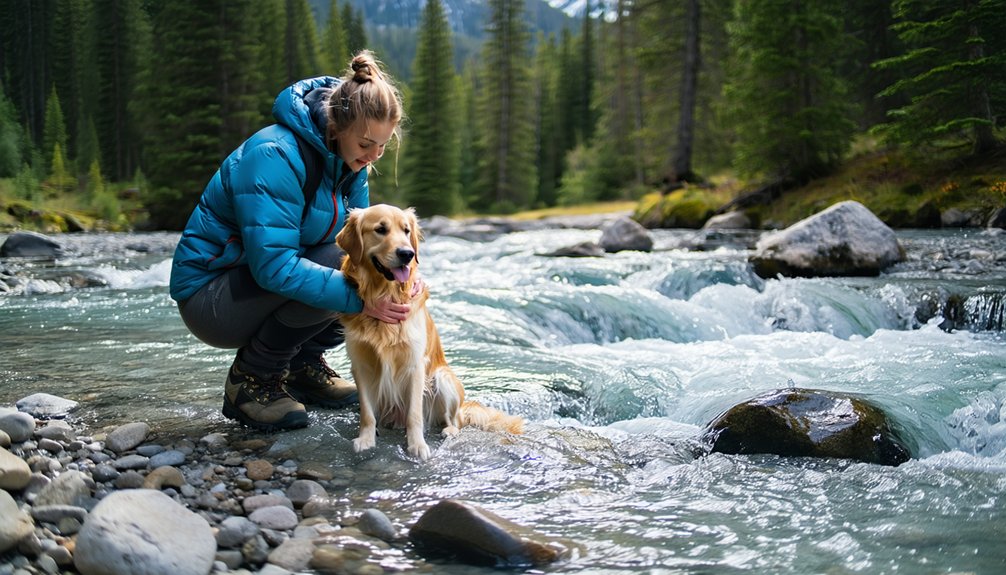
Even though you’ve found the safest crossing spot, your dog’s nervous system can still spiral if rushing water overwhelms it.
Start by keeping distance from the river’s edge, lowering the intensity of visual and sound stimuli that drive arousal.
Use barrier blocking—position boulders, bushes, or the riverbank’s contour to break the direct view of fast current and splashing.
Add sound buffering with white noise, soft music, or ambient audio from a portable speaker, masking harsh rushing-water noise.
Choose quieter routes that avoid echoing canyon walls or narrow banks that amplify sound.
Watch for early stress signs—panting, tucked tail, pinned ears, lip licking, yawning—and increase distance when you spot them.
Offer calm rewards, reinforcing relaxed posture, quiet body language, and steady eye contact with food.
Build River Confidence With Gradual Training
Calming techniques manage your dog’s stress in the moment, but lasting change comes from gradual training that rewires how your dog feels about water.
Start in shallow, calm environments where your dog’s paws touch bottom, keeping sessions short and positive.
Pair every tolerable exposure with high-value rewards to build confidence rehearsal that transfers to real rivers.
- Begin shallow: Use kiddie pools or quiet stream edges, increasing depth only as footing stays secure.
- Treat and pause: Reward each calm approach, then let your dog rest before progressing.
- Play confidence games: Retrieve toys from shallow water, advancing slowly to deeper sections.
- Rehearse crossings: Practice straight-line entries and exits in narrow, low-current spots.
You’ll watch your dog’s trust grow with each successful step.
Gear That Keeps Your Dog Safe in the Current
In fast, cold current, the right gear protects your dog when training alone isn’t enough.
Choose a life jacket with high-buoyancy closed-cell foam, which keeps your dog’s head and back higher in turbulent water while resisting weight gain in frigid rivers.
Look for full-coverage chest and belly panels that reduce roll and stabilize posture.
Reflective visibility—bright orange or yellow with reflective trim—helps you locate your dog fast in choppy, low-light conditions.
A reinforced 2-inch grab handle, stitched into the foam core, lets you lift safely over boulders.
Prioritize quick release buckles for emergencies and a secure leash attachment via a durable D-ring.
Use weight- and girth-based sizing so the jacket won’t twist or restrict shoulders.
ASTM F3137 certification confirms tested reliability you can trust.
Should You Carry Your Dog or Let Them Wade?
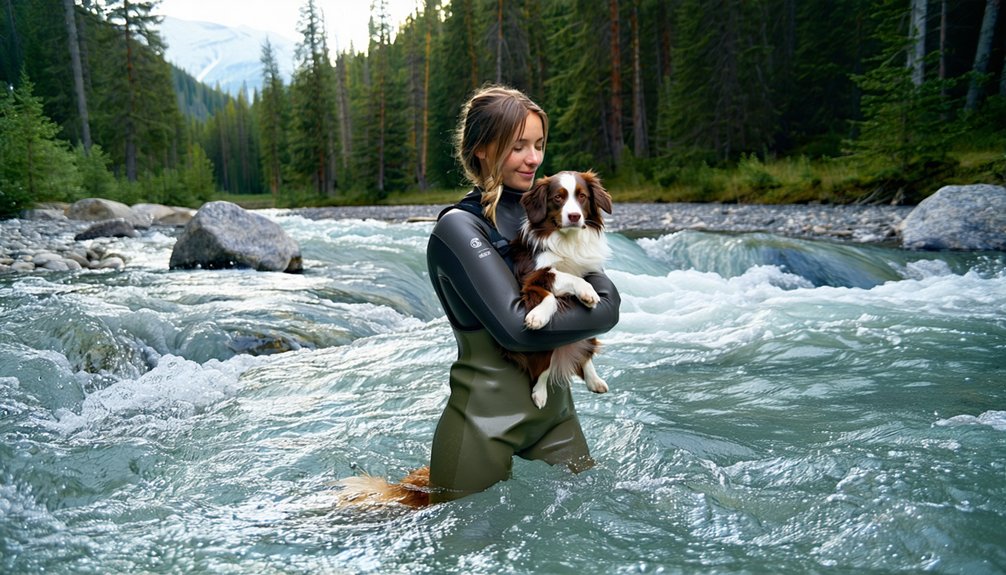
Before you step into the water, decide whether your dog wades or rides in your arms—and base that call on temperature, current, and your dog’s condition, not convenience. We’ve learned that cold rivers punish hesitation, so let the evidence guide you.
- Check the 100°F rule: If water °F plus air °F falls below 100, or air sits at or below 45°F, carry your dog to limit immersion.
- Assess your dog: Small, short-coated, elderly, or arthritic dogs lose heat fast—carry them.
- Read the current: Strong flow, deep channels, or unknown footing means no independent wading.
- Train ahead: Use shallow confidence training and anxiety desensitization tips so calm, obedient dogs can manage guided, paws-only crossings.
When in doubt, carry them.
Wade Across Safely by Facing Upstream
Once you’ve decided your dog can wade, face upstream—it’s the single most important habit for a safe crossing.
Facing into the flow lets you read current strength, direction, and obstacles continuously, sharpening your river obstacles assessment and route choice.
You’ll spot floating debris and logjams before they strike your legs or tangle the leash.
Presenting your feet and shins into the current—rather than side-on—keeps your knees from buckling.
This upstream balance technique works best with a slight forward lean, bent knees, and a low center of gravity.
Fix your eyes on the far bank, not the swirling water, to avoid dizziness.
Keep your dog downstream, where your body blocks the current, and you’ll both move together with confidence.
Keep Your Dog Steady Beside You in the Current
With your dog positioned slightly downstream and beside you—roughly arm’s length away—you’ll shield her from the current’s full force while keeping her clear of your legs if either of you slips.
Safe positioning like this keeps her away from deeper channels, strainers, and submerged obstacles, while you follow the least turbulent flow together.
- Lead handling: Keep a short, fixed-length lead held close to her gear, controlling lateral movement and preventing sudden lunges against the current.
- Safe positioning: Stay in the shallower margin, avoiding fast tongues where her balance falters.
- Keeping balance: Use her life jacket’s top handle to support and steady her body.
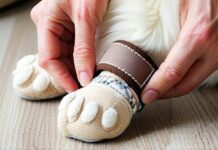
- Non slip traction: Fit booties on slick rock or algae to improve footing.
Move calmly, together.
When to Turn Back Instead of Crossing
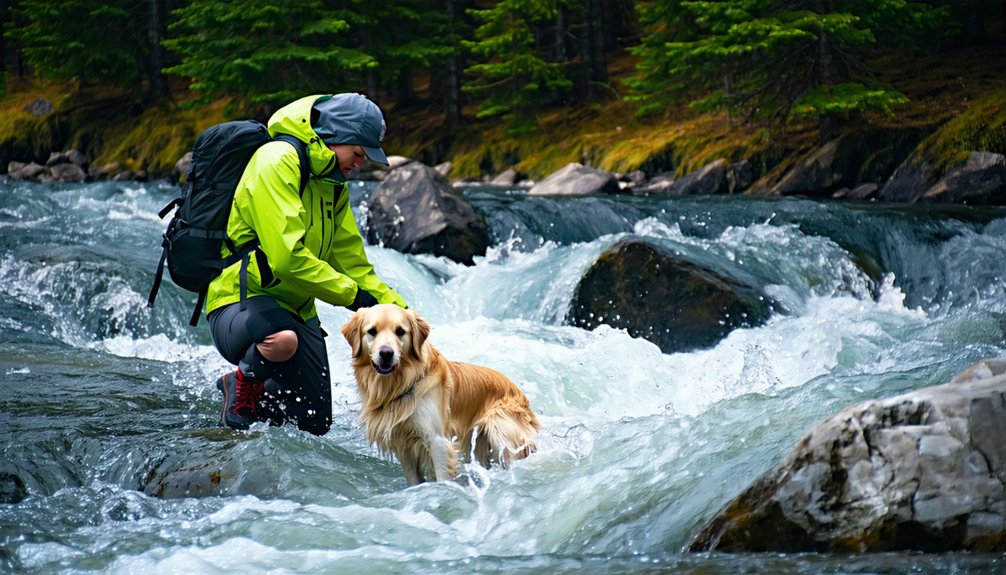
Even when you’ve prepared carefully, sometimes the safest crossing is the one you don’t attempt.
Run the stick test: if the water outpaces your walking speed, turn back.
Depth beyond your knee, water colder than 10°C, muddy flow hiding obstacles, or the sound of rocks rolling underwater all signal you’ve reached a no-go threshold.
Scan downstream for waterfalls, rapids, or strainers, and check whether the banks offer any exit.
Sound exit planning matters as much as entry.
Watch your dog, too—a tucked tail, refusal, or leaning away means stress that compounds risk.
Adopt a safety mindset: any doubt about your footing, your pack, or your dog is reason enough to stop.
Strong hikers who belong on the trail know that retreating isn’t failure.
Spot Cold-Stress Warning Signs in Your Dog
Because cold water saps body heat fast, you’ve got to read your dog’s signals before mild discomfort becomes a medical emergency. Watch for shivering, a stiff gait, frequent paw lifting, and a hunched posture with a tucked tail—each points to early cold stress. Listen, too, for whining or anxious barking that signals discomfort.
- Movement: Note reluctance to walk, slow movement, or reduced coordination.
- Energy: Flag lethargy, quietness, or less interest in activity.
- Posture: Spot stiffness, shivering, and shelter-seeking behavior.
- Intake: Use hydration monitoring tips to catch appetite or water-intake changes.
Puppies, seniors, and small, short-haired breeds chill faster, so act sooner. Keep an indoor warming plan ready, and seek immediate veterinary care if signs escalate beyond mild shivering.
Warm Up and Check Your Dog After the Crossing
Once your dog’s out of the river, move fast to restore body heat before cold stress sets in. Get into a warm, dry space, then start towel drying the coat, tail, legs, and paws to restore your dog’s natural insulation. Wrap your buddy in pre-warmed blankets above and below, and place fabric-wrapped warm water bottles near the abdomen.
Practice gradual rewarming—skip hot baths, which stress the heart. Offer lukewarm water if your dog’s alert, then small, energy-dense meals once warm and calm.
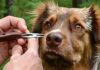
Check temperature with a rectal thermometer if you can; below 101–102.2°F signals risk, and below 95°F demands urgent care. Even when your dog seems fine, schedule a vet followup, since hypothermia’s effects can surface later.
We protect our companions together.
Frequently Asked Questions
Can I Cross a Cold River With Multiple Dogs at Once?
Yes, you can, but join the ranks of careful handlers: master multi dog leashwork with individual harnesses, never tether dogs together, and respect temperature considerations. Cross quickly, keep depth below your smallest dog’s chest, and warm everyone immediately.
What Should I Do if My Dog Gets Swept Downstream?
Don’t enter the water—stay safe and call your emergency contact or 911 immediately. Report the location and direction. Throw an unattached float; never use leash safety tethers that could pull you in. We’re here helping together.
Are There Leash Laws or Permits for River Crossings in Parks?
Yes, you’ll face Local Regulations and Park Rules. Most parks require leashes near rivers, and some demand Permit Requirements or ban dogs outright. Check signage first—following River Safety guidelines keeps you and fellow dog-lovers welcome.
How Do I Cross With a Dog While Carrying a Child?
Carry your child high in a front carrier, keeping your center of gravity stable. Hold the dog’s short leash downstream, face upstream, and shuffle slowly to manage slipping. Keep child secure—we cross deliberately, never rushing.
What Food and Water Should I Pack for Crossing Trips?
Pack dry kibble (24–28% protein), clean water, and a collapsible bowl. Add 10–25% extra calories plus an emergency ration. Don’t forget your first aid kit and paw protection—you’re keeping your trusted companion safe together.
Conclusion
Crossing a cold river with a nervous dog isn’t about bravery—it’s about preparation. You’ve learned to read the current, pick safe spots, and recognize when turning back is the smarter call. Trust your training, watch your dog for cold-stress signs, and never rush the process. After every crossing, dry and warm your dog thoroughly. Stay patient, stay observant, and you’ll both reach the other side safely, building confidence with each successful step forward.
Disclaimer: This article is for informational purposes only. Always consult a licensed veterinarian before making medical decisions for your dog.
References
- https://www.welcomehomevetsofnj.org/textbook-ga-24-1-30/problem-solving-strategies-crossing-the-river-with-dogs.pdf
- https://www.guidedogs.org.uk/blog/how-to-keep-dogs-safe-in-the-cold-snap
- https://www.youtube.com/watch?v=WAumSIK-MSQ
- https://rnli.org/magazine/magazine-featured-list/2019/july/how-to-keep-your-dog-safe-by-the-water
- https://www.nps.gov/articles/safe-river-crossings.htm
- https://www.theretrievercoach.com/blog/cold-water
- https://www.reddit.com/r/BackpackingDogs/comments/aycsae/how_do_you_do_stream_crossings_with_a_dog/
- https://caninepaddlesports.co.uk/remember-how-to-react-to-reduce-the-risk-to-you-and-your-dog-around-water/
- https://www.brainzilla.com/brain-teasers/riddles/4MnXJlOJ/how-does-a-dog-cross-a-river-without-getting-wet/
- https://www.themeateater.com/hunt/dog/how-to-help-your-dog-overcome-a-fear-of-water