First, check whether it’s a split nail (cracked but attached) or a torn dewclaw (hanging loose, exposed nailbed, often bleeding). Apply firm, constant direct pressure and lift the paw to slow bleeding. Once it’s controlled, clean gently with lukewarm water and pet-safe antiseptic, then pad and wrap the paw for protection. Watch closely for swelling, odor, or refusal to bear weight. What you do next determines whether this trip ends early or continues safely.
TLDR Key Takeaways
- Identify the injury type: split nails stay attached, while torn dewclaws hang loose with exposed nailbeds and bleeding.
- Stop bleeding immediately with firm, constant direct pressure and elevate the paw above heart level.
- Clean the wound with lukewarm water or saline, inspect for debris, and pat dry gently.
- Bandage using a clean pad, stretchy wrap, and moisture barrier like a snack wrapper or sock.
- Head to a vet within 24 hours if bleeding won’t stop, tissue is exposed, or the dog refuses to bear weight.
Check the Damage First: Split Nail vs. Torn Dewclaw
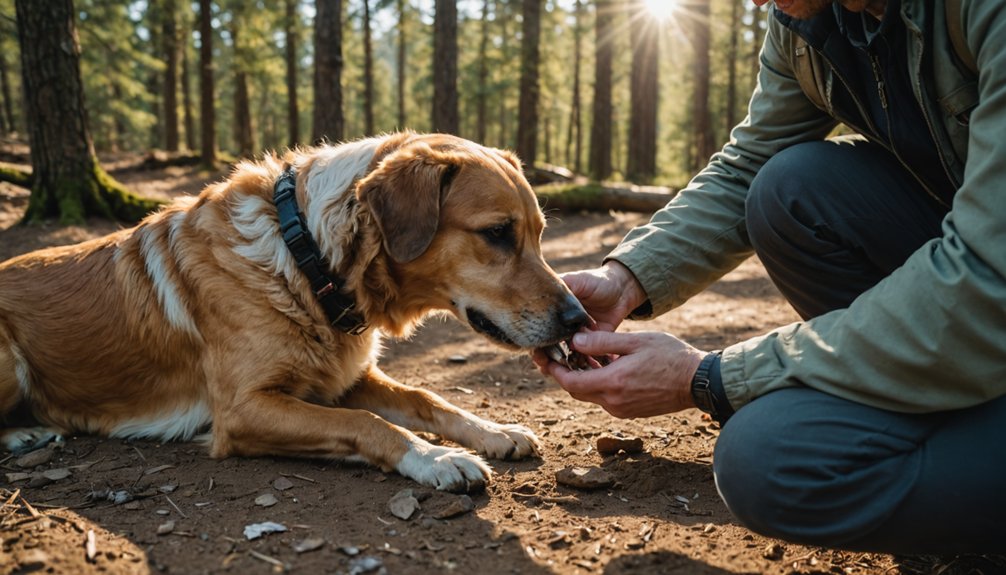
Before you treat anything, take thirty seconds to figure out exactly what you’re dealing with. Understanding nail anatomy matters here: the dewclaw sits higher on the inside of the leg, separate from weight-bearing toes, and its dewclaw function differs from a regular nail’s job of ground contact.
Check the location first. A split nail cracks vertically but stays firmly attached, moving as one piece with the toe. A torn dewclaw hangs loose, looks half-removed, or shows a fully exposed nailbed. Look for blood—split nails often show none, while torn dewclaws bleed actively from vessel damage. Gently touch the tip: rigid means intact, wiggling means torn. Keep in mind that breed tendencies, such as longer or looser dewclaws, can make some dogs more prone to this kind of injury. Front dewclaws are fully formed toes attached by bone, while rear dewclaws are often held on by just skin or a small tendon, making them more prone to tearing loose. Since a torn dewclaw is more serious than it looks and can lead to infection, veterinary treatment is necessary rather than at-home care alone. This quick check determines everything about your next move.
Stop the Bleeding Before You Do Anything Else
Once you’ve identified a torn dewclaw or split nail, grab clean gauze or a cloth and press it firmly against the site—don’t dab or peek every few seconds, just hold steady pressure. Direct pressure is your first line of bleeding control, and it works best when you stay committed to it rather than checking every ten seconds.
Pair it with elevation techniques—raise the paw above heart level to slow blood flow further.
For effective wound management on the trail, remember these fundamentals:
- Apply pressure—firm, constant, no crushing.
- Elevate the limb—gravity helps reduce flow.
- Keep your dog calm—less movement means less pumping. If the bleeding won’t stop, you can use first aid tape to help maintain pressure on the wound.
- Wait it out—don’t rush the process; give it several minutes.
Stay patient. Bleeding control takes time, not panic.
No Styptic Powder? Try This Instead
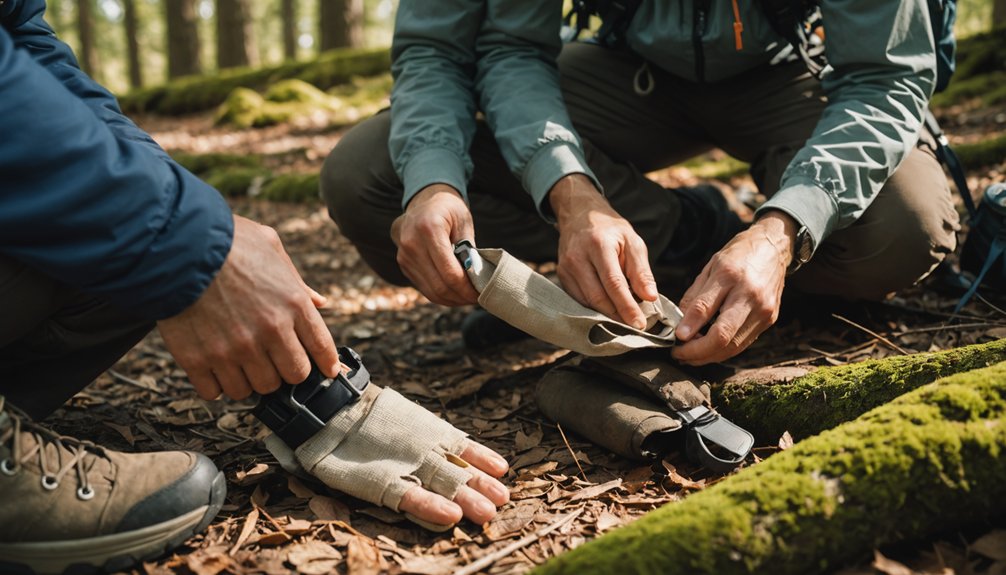
No styptic powder in your first-aid kit? Don’t turn back—your pantry’s got styptic alternatives that work when you’re miles from the trailhead.
Cornstarch is your best bet: blot the nail, press it into a shallow pile, and hold steady pressure for 60-90 seconds to 2-3 minutes. No cornstarch? Baking flour or regular flour works as a backup—cover the break and compress with clean cloth. Baking soda‘s another option; press the nail in and hold for about 2 minutes.
These household remedies rely on pressure, not magic powder. Don’t peek—checking early restarts bleeding. Once home, clean the area gently with warm water and a clean cloth to remove dirt and debris and help prevent infection. If blood soaks through repeatedly or keeps oozing after several minutes, you’re past home fixes. That’s your signal to head for real veterinary care, since a vet visit may raise concern about vet ripping off the dewclaw if the injury looks severe enough.
Clean the Wound Without Making It Worse
With the bleeding under control, resist the urge to just wipe things down and move on—how you handle your dog and your tools matters as much as what you clean with.
A calm environment and gentle restraint keep your dog steady and reduce the odds of reopening the wound. Wash your hands first; basic hygiene isn’t optional out here. Remember that dewclaws vary between breeds, with some attached firmly to bone while others are more loosely connected with skin and tissue, so handle the area accordingly.
Then follow this process:
- Irrigate the wound with lukewarm water or saline—flush, don’t scrub.
- Inspect for grit or plant debris; remove loose bits with clean tweezers.
- Leave embedded material alone if it’s deep or firmly attached.
- Dry with gentle patting using clean gauze or cloth.
Wound irrigation and a light touch protect the quick, the clot, and your dog’s trust in you.
Should You Remove a Hanging Nail Fragment?
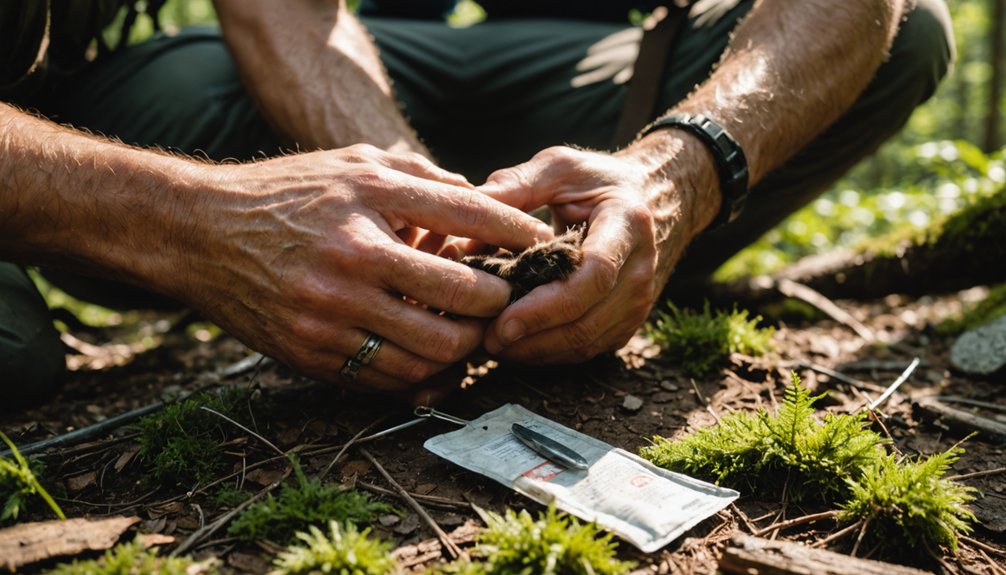
A cleaned wound still leaves you facing a tricky call: what to do with that dangling piece of nail.
Nail removal isn’t always the right move.
If the fragment is thin, barely attached, and doesn’t bleed when you gently move it, trimming it away with clean clippers can stop it from snagging on gear or brush for the rest of your hike.
But if it’s firmly rooted, bleeding heavily, or your dog yelps when you touch it, leave it alone.
Forcing removal risks tearing the quick and causing pain that’s hard to manage on trail.
In that case, fragment care means padding it, wrapping it, and getting to a vet who can remove it properly, with anesthesia if needed.
Pad the Paw and Decide How Much Walking Is Safe
Once you’ve controlled the bleeding, pad the paw before you decide whether to keep moving.
Paw protection buys you time and keeps dirt out while you finish your injury assessment.
Wrap gauze and a flexible bandage snug, not tight—circulation matters more than a tidy wrap job.
Then check these four signals before taking another step:
- Bleeding: Stopped completely, or still soaking through?
- Weight-bearing: Walking normally, or refusing to touch the paw down?
- Behavior: Calm, or licking and chewing at the wound?
- Bandage condition: Dry and secure, or already loosening?
If all four check out, short, controlled steps toward the trailhead are reasonable.
If any one fails, stop, confine the dog, and treat this as a get-to-the-vet situation—not a hike-it-out one.
Bandage the Nail With Gear You Already Have
Three items from your pack can turn into a functional bandage: something clean to pad the nail, something stretchy to hold it, and something tough to keep it protected.
Start with gauze, a bandana, or a sock strip wrapped in a spiral from the toes upward, overlapping each turn by half. Secure it with prestretched vet wrap or athletic tape, spiraling up past the dewclaw with mild tension—not a full stretch. Anchor tape stirrups above the carpus to stop slippage.
For trail bandages built from what you’re carrying, a sock over gauze or a plastic snack wrapper adds a moisture barrier. These emergency wraps aren’t permanent fixes, but they’ll shield the torn nail from dirt and snagging until you’re back at the trailhead.
Keep the Bandage Dry on Rough Terrain
Getting the wrap on right solves only half the problem—keeping it dry on the trail solves the other half.
A dry bandage resists bacteria and infection; a wet one invites both, sometimes fast.
Rough terrain adds mud, puddles, and dew to the equation, so you need a barrier before you keep moving.
- Slip on a plastic bag or foot bag before heading outside—it blocks water and dirt.
- Pull the cover off indoors—sweat trapped underneath causes its own problems.
- Check for a finger-width of slack at the toes—too tight worsens swelling.
- Swap out any soaked wrap immediately—don’t wait for it to dry on its own.
- Watch the bandage daily for swelling, discharge, or loosening—any of these signs means it’s time to call the clinic.
Stay dry, stay mobile, stay ahead of infection.
Signs Your Dog’s Nail Injury Is Getting Worse
A wrapped paw buys you time, not immunity—you still need to watch for signs that the injury is deteriorating instead of healing. Your pain management and wound care efforts should show progress within 48-72 hours. If they don’t, something’s wrong. Discharge or crusting around the base of the nail can indicate an infection, which is another red flag to watch for. Breaks near the nail base or splits running vertically toward the toe are considered particularly concerning and warrant closer attention.
Check the paw at every rest stop. You’re looking for escalation, not just presence of symptoms. Since the dewclaw is the most frequently fractured nail, it deserves extra scrutiny during these checks.
| Category | Improving | Worsening |
|---|---|---|
| Mobility | Slight limp, weight-bearing | Refuses to walk or bear weight |
| Bleeding | Stopped, minor spotting | Soaks through bandage repeatedly |
| Swelling | Localized, mild | Spreads up the leg, red streaks |
| Behavior | Calm, resting | Restless, excessive licking |
Trust your gut—if the trend’s negative, head out.
When to End the Trip and Get to a Vet
Some injuries settle the question for you.
If you’re standing there watching blood soak through your third bandage, there’s no debate left—you’re heading out.
The trail can wait; your dog’s paw can’t.
Watch for these signs that mean it’s time for emergency care:
- Bleeding that won’t stop after several minutes of direct pressure
- A nail torn completely off, exposing raw tissue
- Refusal to walk or bear weight on the paw
- Swelling, pus, or a foul smell signaling infection
Even without these red flags, a torn dewclaw deserves a vet trip within 24 hours.
If your dog keeps lifting the paw, reopening the wound, or can’t tolerate a clean bandage on the trail, don’t push forward—turn back and get real treatment.
What Happens at the Vet After a Torn Dewclaw
Once you’re at the clinic, the vet won’t just glance at the paw and start bandaging. They’ll check crucial signs first, ruling out shock if the trail injury was severe. A pain assessment follows—watching how you’re weight-bearing, checking your reaction to touch. Then comes the decision on anesthesia options, based on how deep the damage runs.
| Injury Severity | Anesthesia Options | What Happens Next |
|---|---|---|
| Minor tear | Local anesthesia | Quick trim, bandage, home |
| Moderate damage | Sedation methods | Cleaning, nail bed check |
| Full avulsion | General anesthesia | Possible removal, sutures |
| Infected/recurrent | Sedation methods | Surgical dewclaw removal |
From there, they’ll clean the area, address the nail bed, and map out your recheck—so you’re back on trail sooner, not sidelined longer.
Caring for the Nail Once You’re Home
Home care starts the moment you walk in the door with your discharge instructions in hand.
Wound cleaning is your priority for the next several days.
Skip the peroxide and alcohol—they wreck healing tissue.
Stick to warm water and a pet-safe antiseptic instead.
Your daily routine:
- Rinse the nail bed gently, no scrubbing.
- Dry thoroughly with clean gauze before rebandaging.
- Apply a thin layer of vet-approved antibiotic ointment.
- Inspect for redness, swelling, discharge, or odor.
Keep the bandage snug, dry, and changed if it gets wet.
Confine your dog to dry, clean spaces—no mud, no off-leash runs.
Leash walks only for a week.
Watch for limping or guarding; that’s your cue to call the vet.
Frequently Asked Questions
Can I Give My Dog Aspirin or Ibuprofen for Nail Pain on the Trail?
No—don’t give aspirin or ibuprofen. Human medication can cause ulcers, bleeding, and kidney damage in dogs. Handle pain management on-trail with bleeding control and bandaging, then get vet-prescribed pain relief once you’re off the trail.
Will My Dog’s Nail Grow Back Normally After a Dewclaw Injury?
Yes, usually—if the matrix survives, you’ll see nail regrowth within weeks to months, though it may look thinner or ridged at first. Only dewclaw surgery removing the matrix prevents regrowth entirely. Protect the quick and keep hiking confidently.
How Can I Prevent Nail Injuries on Future Hikes?
Trim nails regularly, use paw protection like booties on rough terrain, and enhance nail reinforcement through biotin-rich diet. Choose stable routes, build conditioning gradually, and inspect paws often—you’ll hike freely with fewer surprises.
Is It Safe to Let My Dog Swim With a Bandaged Paw?
No, don’t let your dog swim with a bandaged paw. Water wrecks paw protection, soaks padding, and invites bacteria into the wound. For real water safety, skip swimming until the nail’s fully healed and unwrapped.
Should I Carry a First-Aid Kit Specifically for Paw Injuries?
Yes—carry one. Paw problems like torn nails need fast, clean care, not improvisation. You’ll control bleeding, protect the wound, and keep moving confidently until you get vet advice, no rushed evacuation required.
Conclusion
A torn dewclaw or split nail isn’t fun, but it’s rarely a trip-ender if you handle it right. Stop the bleeding, clean the area, protect it, and keep moving unless you spot swelling, spreading redness, or lingering pain. Pack styptic powder and vet wrap before your next hike—you’ll be glad you did. When in doubt, don’t push it: get your dog checked out once you’re back within reach of a vet.
References
- https://www.anicura.es/consejos-de-salud/perro/consejos-de-salud/una-rota-en-los-perros/
- https://tierarzt-karlsruhe-durlach.de/es/enfermedad-de-las-garras-en-perros/
- https://www.rover.com/es/blog/una-rota-en-los-perros/
- https://www.youtube.com/watch?v=lpdALtyB7F8
- https://urgenciesveterinaries.com/perro-esguinces-fracturas-fisuras-oseas/
- https://www.abc.com.py/mascotas/que-hacer-cuando-la-garra-de-la-mascota-se-rompe-1789227.html
- https://keepovin.com/es/lesiones-de-garras-de-rocío-para-perros-todo-lo-que-necesita-saber/
- https://www.santevet.es/articulo/limpiar-y-curar-heridas-del-perro
- https://www.msdvetmanual.com/es/sistema-musculoesquelético/cojeras-en-pequeños-animales/traumatismo-muscular-en-perros-y-gatos
- https://www.msdvetmanual.com/es/temas-especiales-para-mascotas/urgencias/tratamiento-de-heridas