Your dog can hike ten miles at sea level without breaking a sweat, but three nights above 10,000 feet is a completely different physiological challenge — for both of you. Thinner air, colder nights, sharper rock, and no cell service mean the margin for error shrinks fast. Most guides treat high-altitude camping with a dog like a longer day hike. It isn’t.
- Dogs can get altitude sickness, and risk rises noticeably above roughly 8,000-10,000 feet — watch for excessive panting, lethargy, vomiting, or stumbling.
- Plan 2-4 days of acclimatization before strenuous exertion above 9,000 feet, and bump your dog’s calories 20-50% per night depending on cold and exertion.
- Most national parks ban dogs on backcountry trails; national forests, BLM land, and many wilderness areas typically allow them, but always confirm permit rules first.
- A dog pack should carry no more than 10-15% of body weight, and paws need daily checks plus booties or wax on scree, snow, or granite.
- Below-freezing nights require an insulated pad, a rated dog sleeping bag or fleece-and-pad combo, and a tent spot out of the wind.
- Know the descent protocol: if your dog shows altitude sickness signs, move downhill immediately — don’t wait it out at elevation.
How Altitude Actually Affects Your Dog’s Body
Above about 8,000 feet, air pressure drops and there’s less oxygen available per breath. Dogs compensate the same way people do: faster breathing (tachypnea), a higher heart rate, and increased red blood cell production over time. The difference is your dog can’t tell you they’re struggling — they just get quiet, slow down, or seem “off.”
Dogs bred for cold, high-exertion work (huskies, malamutes, some herding breeds) generally tolerate elevation gain better than short-nosed or barrel-chested breeds. But even fit dogs need time for their bodies to adjust before you ask them to climb a pass with a loaded pack.
Elevation vs. Recommended Acclimatization Days
| Sleeping Elevation | Recommended Acclimatization Before Strenuous Activity | Notes |
|---|---|---|
| Below 7,000 ft | Not usually needed | Most healthy dogs adjust immediately |
| 7,000-9,000 ft | 1 day of light activity | Watch for early fatigue on day one |
| 9,000-11,000 ft | 2-3 days, easy hikes only | Increase respiration is normal; lethargy is not |
| 11,000-13,000 ft | 3-4 days, gradual elevation gain | Higher risk zone — build in a rest day |
| Above 13,000 ft | 4+ days plus a planned rest day above 10,000 ft | Consider whether the trip is appropriate at all for the dog |
Can Dogs Get Altitude Sickness? Recognizing the Signs
Yes. Canine altitude sickness (sometimes discussed alongside high-altitude pulmonary or cerebral concerns) shows up as a cluster of symptoms rather than one obvious sign. (see: signs of altitude sickness in dogs) Because dogs mask discomfort, subtle changes matter as much as dramatic ones.
- Early signs: heavy panting at rest, reluctance to keep moving, unusual clinginess or restlessness.
- Moderate signs: vomiting, loss of appetite, stumbling or uncoordinated gait, pale or bluish gums.
- Severe signs: collapse, disorientation, labored breathing even at rest, seizure-like activity.
General veterinary guidance points to increased risk starting around 8,000 feet, with the risk climbing meaningfully above 10,000-12,000 feet — especially if a dog gains elevation quickly without acclimatization days built in.
Symptom Checklist: Altitude Sickness vs. Dehydration vs. Exhaustion vs. Hypothermia
| Symptom | Altitude Sickness | Dehydration | Exhaustion | Hypothermia |
|---|---|---|---|---|
| Panting | Heavy, even at rest | Dry-mouth panting | Heavy during exertion, eases at rest | May stop panting; shivering instead |
| Gums | Pale/bluish | Tacky, dry | Normal to slightly pale | Pale, cold to touch |
| Behavior | Disoriented, wobbly | Lethargic, sunken eyes | Slower pace, wants to stop | Shivering, curling up, lethargy |
| Appetite | Vomiting, refuses food | Reduced | Normal or slightly reduced | Reduced |
| Best response | Descend immediately | Water + electrolytes, rest | Rest, shorten day | Insulate, warm gradually, shelter |
What to Do If Your Dog Shows Altitude Sickness Symptoms Mid-Trip
This is the scenario every guide skips over, and it’s the one that matters most. If you’re miles from the trailhead and your dog starts showing moderate-to-severe symptoms:
- Stop climbing immediately. Do not push to a planned campsite that’s higher than your current position.
- Begin descending — even 500-1,000 feet of elevation loss can bring noticeable relief.
- Offer water and remove the pack to reduce exertion load.
- Monitor gum color and breathing rate every 15-20 minutes while moving down.
- If symptoms don’t improve within an hour of descent, continue toward the trailhead and contact the nearest ranger station or emergency services once you have signal.
Search-and-rescue teams and backcountry rangers consistently note that the dogs who fare worst are the ones pushed to “just get to camp” instead of being turned around at the first sign of trouble. Trust the early symptoms over the itinerary.
Is Your Dog Ready? Breed, Age, and Fitness Suitability
Not every dog is a candidate for a multi-night high-altitude trip, and that’s okay — this isn’t a trip to push through for the sake of an itinerary.
- Brachycephalic breeds (bulldogs, pugs, boxers, some mastiffs) already struggle with oxygen efficiency at sea level and are poor candidates for sustained elevation gain.
- Senior dogs can often handle moderate elevations but need shorter days, more rest, and a vet check beforehand — arthritis and reduced cardiovascular reserve both matter more at altitude.
- Puppies under about 12-18 months (growth plates still closing in larger breeds) shouldn’t carry a loaded pack or handle sustained high-mileage days.
- Overweight or deconditioned dogs of any breed need a conditioning period before attempting anything above 9,000 feet for multiple nights.
Pre-Trip Conditioning: A 6-8 Week Timeline
Think of this the way you’d train for a demanding trip yourself — gradual mileage and elevation exposure, not a weekend cram session.
| Weeks Before Trip | Focus | Sample Activity |
|---|---|---|
| 6-8 weeks out | Base fitness | 3-4 walks/week, 2-4 miles, flat to rolling terrain |
| 4-6 weeks out | Elevation exposure | Hike at increasing elevations if accessible; add hills |
| 3-4 weeks out | Pack conditioning | Introduce empty pack, then light weight (5% body weight) |
| 2-3 weeks out | Full simulation | Overnight test trip with full pack weight and booties |
| 1 week out | Taper | Short, easy walks; rest the day before departure |
Permits and Land Agency Rules — Where Dogs Are Actually Allowed
This is the single biggest planning mistake people make: assuming a scenic high-elevation trail allows dogs because a nearby trail did. Rules vary dramatically by agency, and getting turned away at a permit desk after driving hours is a real risk.
| Land Agency | General Dog Policy on Backcountry Trails | Permit Notes |
|---|---|---|
| National Park Service (NPS) | Dogs are typically prohibited on backcountry trails and in wilderness areas within parks | Some parks allow dogs on a few specific paved or frontcountry trails only |
| U.S. Forest Service (USFS) | Dogs are generally allowed on trails, including in many designated Wilderness areas | Leash rules vary; some areas require permits for group size, not specifically for dogs |
| Bureau of Land Management (BLM) | Dogs are generally allowed | Fewer permit requirements overall, but check specific wilderness study areas |
| State Parks/Forests | Varies widely by state | Always check the specific unit’s regulations before you go |
As a rule of thumb: if a destination is a National Park, assume dogs are not allowed on the backcountry trail system until you verify otherwise. If it’s a National Forest, BLM land, or a Wilderness Area managed by USFS, dogs are usually welcome — but a small number of specific wilderness areas restrict dogs to protect sensitive wildlife, so a call to the local ranger district is worth the five minutes it takes.
Do You Need a Special Permit or Tag for Your Dog?
Most backcountry permits don’t require a separate tag specifically for a dog, but many do require you to declare the dog on your permit application, especially in areas with group-size or campsite-specific quotas. A few destinations cap the number of dogs per group or require proof of rabies vaccination if asked by a ranger. Always confirm this directly with the issuing office before your trip — rules change season to season.
Comparing High-Altitude Dog-Friendly Destinations
| Region | Typical Elevation Range | Dog Permit Ease | Notes |
|---|---|---|---|
| Colorado Rockies (National Forest zones) | 9,000-13,000+ ft | Generally easy; self-issue permits common | Many 12,000+ ft loops; watch afternoon storms |
| Sierra Nevada (National Forest wilderness) | 8,000-12,000+ ft | Moderate; quota permits in popular areas | Adjacent national parks (Yosemite, Sequoia) ban dogs on trails — plan carefully |
| Cascades (Washington/Oregon National Forest) | 5,000-9,000 ft | Generally easy in Forest Service land | Lower average elevation, less acclimatization needed |
| Wind River Range, Wyoming | 9,000-13,000 ft | Easy; Bridger-Teton and Shoshone National Forest are dog-friendly | Remote — plan for longer distances to help if something goes wrong |
Multi-Night Nutrition and Hydration Planning
A single day hike barely changes what you’d feed your dog. A three-night trip with cold nights and constant elevation gain is a different equation entirely — your dog is burning far more calories just to stay warm and move through thin air.
Caloric Needs by Weight and Activity Level (Adjusted for Cold/Altitude)
| Dog Weight | Normal Daily Calories (approx.) | Backcountry Multi-Night Calories (Cold + High Exertion) |
|---|---|---|
| 20 lbs | 500-600 kcal | 750-950 kcal |
| 40 lbs | 850-1,000 kcal | 1,300-1,600 kcal |
| 60 lbs | 1,200-1,400 kcal | 1,800-2,200 kcal |
| 80 lbs | 1,500-1,800 kcal | 2,300-2,800 kcal |
General veterinary and canine nutrition guidance suggests working or highly active dogs in cold conditions may need 20-50% more calories than their maintenance amount — and multi-night trips at altitude tend to land at the higher end of that range because dogs burn extra energy generating body heat overnight in addition to daytime exertion.
Freeze-Dried/Dehydrated Food vs. Regular Kibble
- Freeze-dried/dehydrated: Significantly lighter per calorie, rehydrates with water you’re already treating, but usually costs more per pound.
- Regular kibble: Cheaper and familiar (less GI risk), but heavier — a real consideration when every extra pound counts on a multi-night carry.
Many experienced backcountry dog owners split the difference: kibble for a short trip, freeze-dried or a calorie-dense topper for anything beyond two nights where weight matters more.
Water Sources and Treatment at Altitude
Alpine lakes and streams look pristine, but giardia and other pathogens don’t care about elevation. Treat your dog’s water the same way you treat your own — a filter or chemical treatment works for both of you, and there’s no need for a separate system. Letting your dog drink untreated water “just this once” at a gorgeous alpine tarn is one of the most common ways trips get cut short by sudden GI upset days from the trailhead.
Cold-Weather Sleep Systems for Dogs
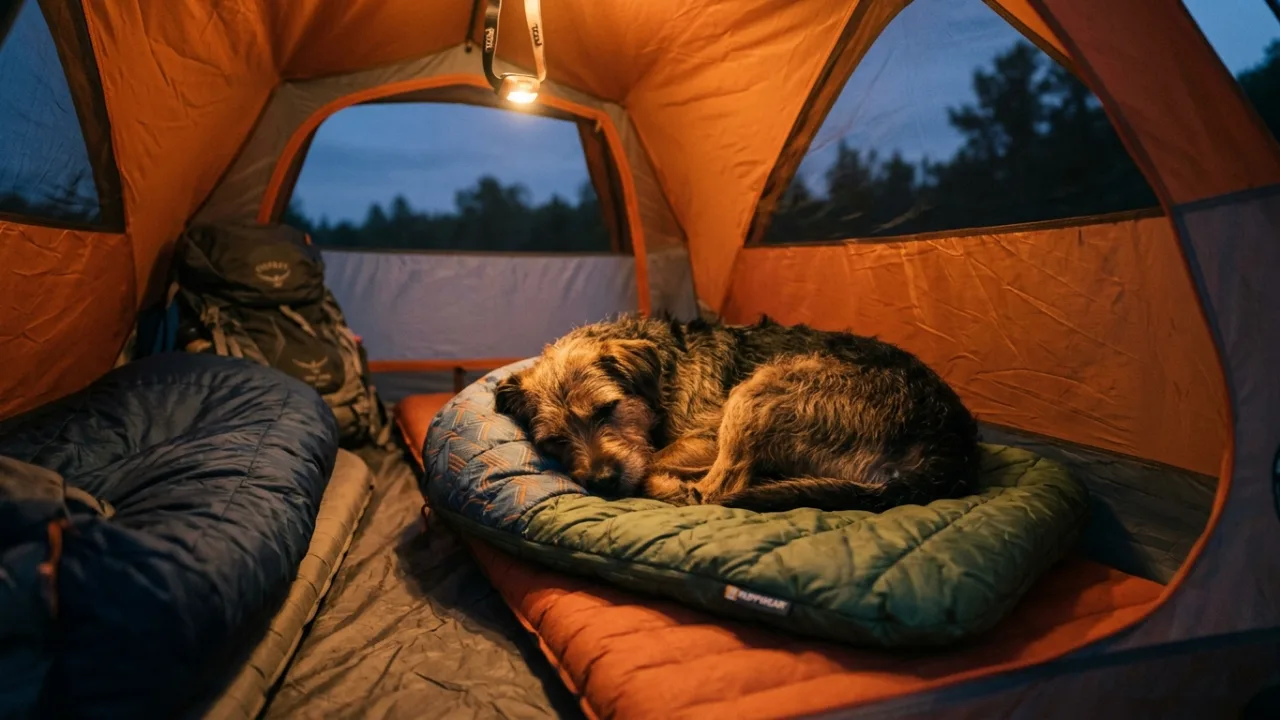
Nighttime temperatures at 10,000-12,000 feet regularly drop well below freezing even in summer. Your dog needs their own insulated setup — sharing your sleeping bag works for one night but isn’t a real plan for three.
Temperature Ranges and Gear Needed
| Overnight Low | Gear Needed |
|---|---|
| 50-60°F | Usually no extra gear for most breeds; a light pad is nice |
| 35-50°F | Insulated pad, light jacket for short-coated breeds |
| 20-35°F | Rated dog sleeping bag or fleece + insulated pad combo, jacket |
| Below 20°F | High R-value pad, insulated dog bag, jacket, sheltered tent spot; reconsider trip for small/thin-coated dogs |
Dog Sleeping Bags/Quilts vs. Improvised Insulation
- Purpose-built dog sleeping bag/quilt: Best insulation-to-weight ratio, designed for a dog’s shape, but an added cost and pack weight item.
- Fleece blanket + foam or inflatable pad: Budget-friendly and works fine down into the 30s, but loses effectiveness quickly below freezing without added insulation underneath.
Look for a pad with a stated R-value of at least 3-4 for sub-freezing nights — this insulation rating (originally a human backpacking spec) matters just as much for a dog lying on frozen ground. Set the sleep area against the tent wall farthest from the door draft, and put the pad down before your own gear so it doesn’t end up as an afterthought at 9pm in the cold.
Dog Backpacks: Fit, Weight Limits, and Comparison
A loaded pack that’s too heavy or poorly fitted is one of the fastest ways to cause joint strain, chafing, or pad damage over multiple days.
Weight Limits by Dog Size
| Dog Weight | Safe Pack Load (10-15% of body weight) |
|---|---|
| 20 lbs | 2-3 lbs total |
| 40 lbs | 4-6 lbs total |
| 60 lbs | 6-9 lbs total |
| 80 lbs | 8-12 lbs total |
That percentage should account for everything the dog carries — food, water, and gear combined. (see: calculate a dog's safe pack weight) Well-conditioned working breeds can sometimes handle closer to 15%, but a good rule for a first multi-night trip is to stay near the lower end and adjust after watching how your dog moves on day two.
Dog Backpack Comparison
| Pack | Best For | Trade-off |
|---|---|---|
| Ruffwear Approach-style packs | Multi-day loads, durability | Higher price point |
| Non-stop Dogwear-style packs | Working/athletic breeds, adjustability | Sizing runs athletic — measure carefully |
| Mountainsmith-style packs | Budget-conscious multi-night use | Slightly less refined harness padding |
Whatever pack you choose, test it on shorter trips first. Load it, hike a few miles, and check for rubbing behind the front legs and along the spine before committing to a multi-night trip where a bad fit has no easy fix.
Paw Protection: Booties vs. Wax vs. No Protection
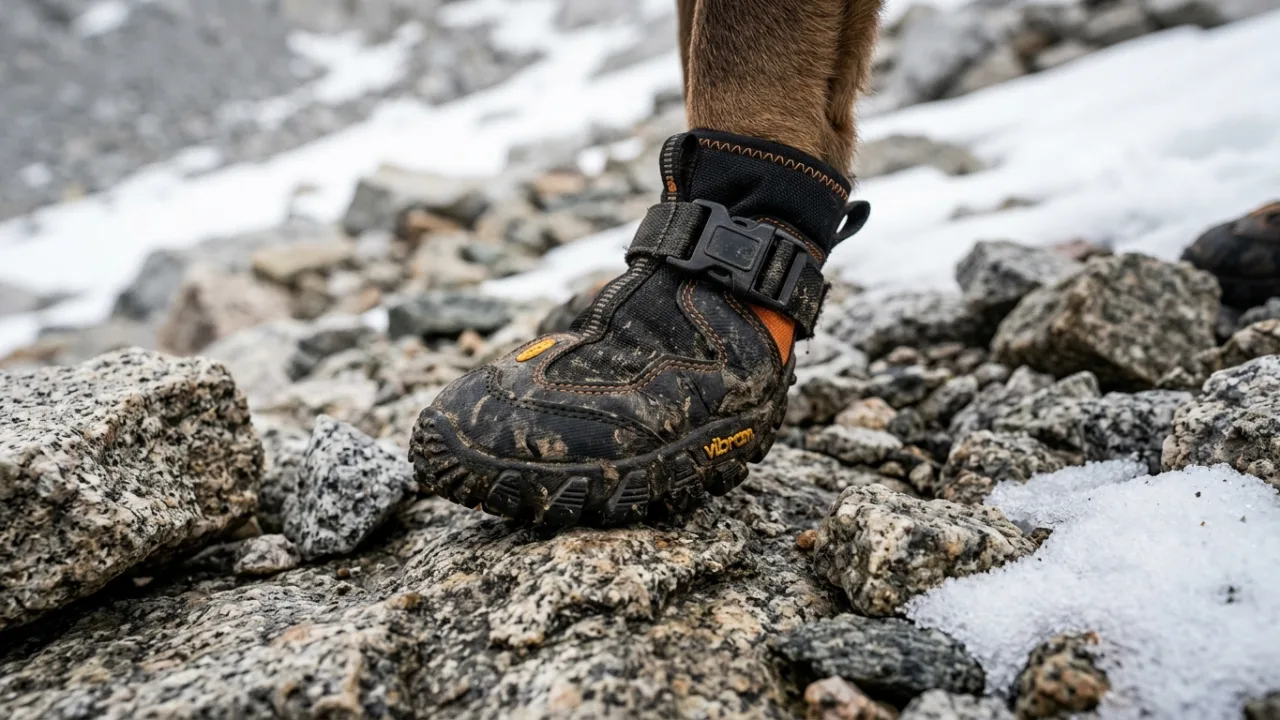
| Terrain | Booties | Paw Wax | No Protection |
|---|---|---|---|
| Granite/rock | Best protection, can cause hot spots if ill-fitted | Moderate help, needs reapplication | High risk of pad wear over multiple days |
| Scree | Strongly recommended | Limited protection against sharp edges | Not recommended |
| Snow/ice | Prevents snow balling and frostbite risk on pads | Helps prevent ice buildup between toes | Risky in freezing conditions |
Booties should come off during rest breaks to let paws breathe and to check for rubbing — wearing them nonstop for days without breaks is a common cause of the very hot spots they’re meant to prevent. If booties keep sliding off on technical terrain, check the strap tightness at the ankle joint (not just around the paw) and consider a bootie with a higher gaiter cuff for scrambling sections.
Leave No Trace With a Dog at Altitude
- Waste disposal: Pack it out or bury it well away from water sources and trails, following the same depth guidance you’d use for human waste in alpine zones where soil is thin.
- Tethering: Use a long-line or stake-out system at camp rather than leaving a dog fully off-leash near wildlife corridors or fragile alpine vegetation.
- Wildlife avoidance: Keep dogs leashed near dawn and dusk when wildlife is most active, and never let a dog chase marmots, pikas, or ground-nesting birds — it stresses wildlife and can trigger a dangerous encounter with something bigger.
Wildlife Encounters at Altitude With a Dog
- Bears: Keep your dog leashed and close; a loose dog can provoke a chase that brings a bear back toward you. Store all food, including dog food, in a bear canister or hung bag.
- Mountain lions: Keep dogs leashed, especially at dawn/dusk; make noise while hiking to avoid surprising one. (see: managing wildlife encounters with a dog)
- Moose: Give a wide berth — moose react aggressively to dogs specifically, more so than to people alone.
- Marmots and pikas: Low physical risk but can trigger chase instinct; keep leashed near talus fields.
Bear Canisters and Dog Food
Dog food needs the same storage discipline as your own food — many attractant-related backcountry incidents start with improperly stored pet food. If you’re required to carry a bear canister, size it up to include your dog’s meals, not just your own; a standard canister rated for one person’s multi-day food often has little spare room once you add several days of dog food. Consider a dedicated odor-proof bag inside the canister for kibble to help manage space.
Thunderstorm and Lightning Safety Above Treeline
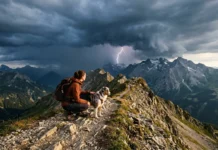
Afternoon storms are common in alpine terrain, and a dog on a metal-buckled harness or leash offers no special protection — the same rules apply to both of you. Get below treeline before early afternoon in storm-prone ranges, avoid exposed ridgelines and isolated tall features, and if caught above treeline, move to lower ground quickly rather than waiting it out near your dog’s favorite scenic overlook.
UV Exposure and Snow Blindness Risk
Reflected sunlight off snowfields is intense at altitude, and while snow blindness is primarily a human eye-injury risk, dogs with light-colored or thin fur (especially around the nose) can get sunburned. A pet-safe sunscreen on exposed skin and limiting midday travel across large snowfields helps both comfort and skin health.
Water Crossings and Snowfield Safety
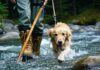
Fast-moving snowmelt streams are more dangerous than they look, and a loaded dog pack can throw off balance in current. Unclip the leash before a crossing so a struggling dog isn’t pulled by a handler who slips, and pick a wider, shallower crossing point over the most direct line. On snowfields, watch for post-holing risk and keep dogs away from the edges of cornices or suncups where footing is unpredictable.
Maximum Daily Mileage for a Dog at Altitude
There’s no single number that fits every dog, but a reasonable planning range for a conditioned dog on a multi-night high-altitude trip is 6-10 miles per day with meaningful elevation gain, built around rest breaks every hour. Twenty miles over multiple days is very achievable for a fit, acclimatized dog if split into moderate daily chunks (for example, 6-7-7 over three days) rather than attempted in a single push. Watch pace, not just distance — a dog that’s noticeably slower on day two than day one is telling you something before the numbers do.
Sample 3-Night High-Altitude Itinerary
| Day | Mileage | Elevation Gain | Notes |
|---|---|---|---|
| Day 1 | 5 miles | 1,200 ft | Camp at ~9,500 ft; light activity, hydration focus |
| Day 2 | 3 miles (rest/acclimatization day) | 500 ft | Short exploratory hike near camp; watch for early symptoms |
| Day 3 | 7 miles | 2,000 ft | Camp near 11,000 ft; check paws and pack fit closely |
| Day 4 | 6 miles | -3,700 ft (descent to trailhead) | Downhill day; monitor pad wear on descent |
Real Gear List With Weight Breakdown (3-Night Trip, 50 lb Dog)
| Item | Approx. Weight |
|---|---|
| Food (3.5 days, calorie-adjusted) | 2.5 lbs |
| Collapsible bowl | 0.2 lbs |
| Insulated sleeping pad (dog-sized) | 0.9 lbs |
| Dog sleeping bag/quilt | 1.1 lbs |
| Booties (set of 4, spare set) | 0.5 lbs |
| Jacket (cold-night use) | 0.4 lbs |
| First-aid kit (dog-specific) | 0.6 lbs |
| Waste bags | 0.1 lbs |
| Total in dog’s pack | ~6.3 lbs (within 10-15% of a 50 lb dog) |
First-Aid Kit for Multi-Day Backcountry Dog Emergencies
- Vet wrap and gauze for paw injuries
- Tweezers for splinters, cactus spines, or ticks
- Antiseptic wipes
- Styptic powder for torn nails
- Rectal thermometer (a fever or hypothermia both matter for decisions)
- Electrolyte powder safe for dogs
- Spare booties and extra straps
- A copy of vaccination records and your vet’s contact info
Handling a Vet Emergency Days From the Trailhead
Before you go, know the nearest ranger station, trailhead with cell signal, and the closest emergency vet to your entry point — write it down, don’t rely on a phone alone. If your dog is injured or acutely ill, stabilize what you can (splint, wrap, warm, hydrate), then move toward the trailhead at the fastest safe pace, alternating carrying weight if the injury affects mobility. A satellite communicator with SOS capability is worth carrying specifically for this scenario, since most high-altitude backcountry has no cell coverage.
GPS Tracking Collars and Bear Bells
A GPS or satellite-linked tracking collar is genuinely useful for off-leash or long-line dogs in dense timber or fog where visual contact is easy to lose. Bear bells are optional and somewhat debated — some hikers find them helpful for alerting wildlife at a distance, others feel they add unnecessary noise in a place dogs should stay leashed anyway. Bear spray is for you to carry and know how to use; it isn’t a substitute for keeping your dog close during a wildlife encounter.
Campsite Selection Criteria With a Dog
- At least 200 feet from water sources (same distance guideline that applies to your own camp kitchen and waste — see the FAQ below on the “200 rule”)
- A sheltered spot out of prevailing wind for the sleep area
- Room for a long-line or stake-out without the dog dragging gear or entering another camper’s site
- Good ventilation if using a smaller tent — condensation builds fast with two bodies breathing hard air overnight
Common Mistakes to Avoid
- Skipping acclimatization days because the itinerary looked fine on paper.
- Underestimating calories and running a dog on a maintenance-level ration through cold, high-exertion nights.
- Assuming national park rules match nearby national forest rules.
- Leaving booties on 24/7 without paw checks, causing the very injuries they’re meant to prevent.
- Continuing toward camp instead of descending at the first sign of altitude sickness.
- Letting a dog drink untreated alpine water and dealing with GI upset far from help.
Troubleshooting on the Trail
- Dog refuses to keep walking: Check paws and pack fit first, offer water and a short rest, and reassess mileage for the rest of the day — sometimes the answer is simply stopping short of the planned camp.
- Bootie keeps falling off: Tighten at the ankle cuff, not just the paw, or switch to a higher-cuff bootie style for scrambling terrain.
- GI upset from water or food: Rest, offer small amounts of water frequently, hold food for a few hours, and monitor for worsening symptoms that would require heading out early.
- Dog won’t settle at a cold camp: Add another insulating layer under the pad, bring the dog closer to your body heat, and check that the jacket isn’t damp from sweat or condensation.
- Sudden storm above treeline: Descend immediately rather than sheltering in place near exposed terrain.
Pre-Trip Checklists
Vet Checklist
- Vaccinations current (including rabies certificate if requested by land agency)
- Flea/tick prevention applied
- Microchip and ID tag information up to date
- Vet clearance for conditioning level, especially for senior dogs
Permit and Regulation Checklist
- Confirm land agency (NPS vs. USFS/BLM) and dog policy for the specific trail
- Check if dogs must be declared on the permit application
- Verify leash requirements and any group-size dog limits
- Note any seasonal wildlife closures that affect dog access
Daily On-Trail Checklist
- Paw check at each rest stop
- Hydration offered at least every hour
- Watch respiration rate and gum color periodically at higher camps
- Temperature check on gear (damp jacket, cold pad) before settling for the night
Conclusion
A multi-night high-altitude trip with your dog is one of the most rewarding things you can do together — but it rewards preparation, not optimism. Build in acclimatization days, respect the calorie math, test your gear before you need it, and know exactly what you’ll do the moment something looks wrong. Do that, and the biggest challenge of the trip will be convincing your dog it’s time to go home.
Before you head out, double-check the land agency’s current dog policy for your specific trail, and consider a short overnight shakedown trip closer to home to test your dog’s pack, booties, and sleep setup one more time.
Frequently Asked Questions
What is the 200 rule for camping, and does it apply differently with a dog?
The 200 rule means camping, cooking, and disposing of waste at least 200 feet from water sources and trails. It applies the same way with a dog — pick a campsite and tie-out area at least 200 feet from streams or lakes, and bury or pack out dog waste the same distance away to protect water quality and wildlife.
Where do dogs sleep when backpacking overnight in cold, high-elevation conditions?
Dogs sleep inside the tent on their own insulated pad, ideally with a rated dog sleeping bag or a fleece-and-pad combo underneath them. Position their sleep area against the tent wall farthest from the door draft, and avoid letting them sleep directly on cold tent floor fabric without insulation, even for one night.
How far is too far to hike with a dog per day at altitude?
For most conditioned dogs, 6-10 miles per day with moderate elevation gain is a reasonable ceiling at altitude, taken with hourly rest breaks. Beyond that, watch pace and behavior rather than sticking rigidly to a number — a dog slowing noticeably or panting heavily at rest needs a shorter day regardless of the plan.
Is 20 miles over multiple days too far for a dog, and how should mileage be split?
Twenty miles is generally manageable for a fit, acclimatized dog when spread over three or four days rather than attempted in one or two big pushes. A split like 6-7-7 miles with a rest or shorter day built in works better than front-loading the mileage early in the trip.
Can a dog get frostbite or hypothermia while camping overnight?
Yes. Dogs can get frostbite on ears, tails, and paw pads, and hypothermia from prolonged cold exposure, especially thin-coated or small breeds. Prevent this with an insulated sleeping pad, a jacket or dog sleeping bag on sub-freezing nights, and a sheltered tent spot out of the wind.
Do dogs need a vaccination or health certificate for backcountry permits?
Most backcountry permits don't require a health certificate upfront, but rangers can ask for proof of current rabies vaccination, and some land agencies require you to declare your dog on the permit application. Always confirm specific requirements with the issuing office before your trip.
What's the minimum age or fitness level for a dog to handle multi-night high-altitude trips?
Most dogs should be at least 12-18 months old, with growth plates closed, before carrying a loaded pack or handling sustained high-mileage days. Fitness matters more than age alone — a dog should complete a 6-8 week conditioning ramp-up, including a full overnight test trip, before attempting a strenuous multi-night high-altitude route.
Are e-collars, bear spray, or bells necessary for dogs at high elevation?
None are strictly required, but bear spray should be carried by the handler for wildlife encounters, and a GPS tracking collar is genuinely useful for off-leash or long-line dogs in dense terrain. Bear bells are optional and debated; keeping dogs leashed near wildlife corridors matters more than any single accessory.
Can dogs wear boots the entire multi-day trip, or do paws need breaks?
Paws need regular breaks from booties, even on multi-day trips. Remove them at rest stops to check for rubbing or hot spots, let paws air out, and reapply before continuing. Wearing booties nonstop without breaks is a common cause of the injuries they're meant to prevent.
How do I handle a vet emergency for my dog days from the nearest trailhead?
Stabilize the injury as best you can with your first-aid kit, then move toward the trailhead at the fastest safe pace. Carry a satellite communicator with SOS capability since cell service is rarely available, and know the location of the nearest ranger station and emergency vet before you depart.