Keep at least 25-50 yards from moose and elk, and even more distance from mountain lions. Watch for warning signs like laid-back ears, stomping, staring, or crouching, since these mean you’re already too close. Never approach for photos, keep dogs leashed, and stay alert during rut and calving seasons when animals turn aggressive. Back away slowly and give them a clear escape route. The specifics behind each animal’s behavior could make all the difference on your next hike.
TLDR Key Takeaways
- Keep 25–50 yards from moose and elk, and back away diagonally without blocking their escape route.
- Watch for warning signs like laid-back ears, raised hackles, stomping, or lowered heads before animals charge.
- For mountain lions, stay upright, hold eye contact, raise your arms, and back away slowly.
- Leash dogs at all times, since off-leash pets cause roughly 60% of wildlife attacks.
- Avoid dawn and dusk hikes during rut and calving seasons when animals turn aggressive.
Know the Safe Distances for Each Animal
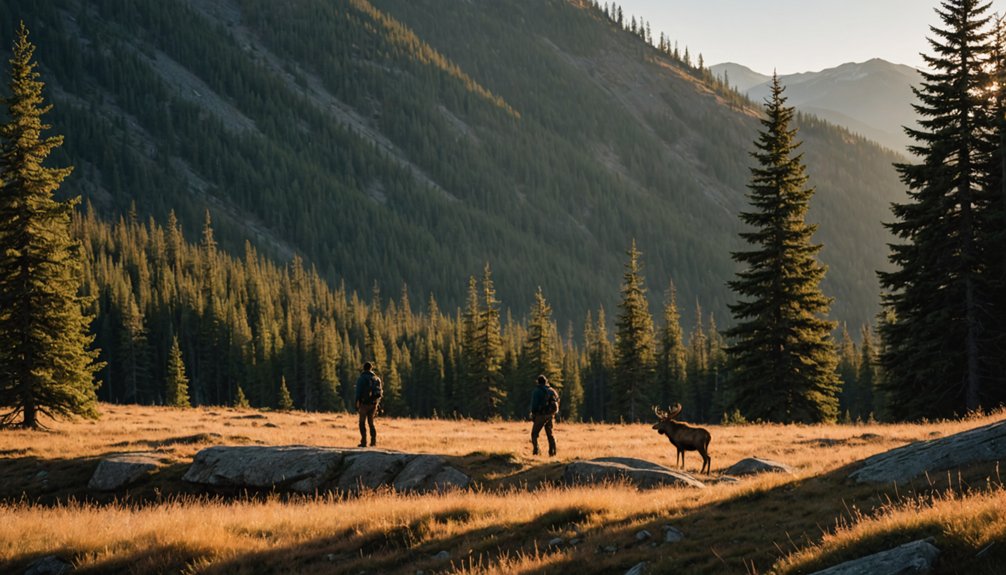
Distance is your best defense on the trail. Wildlife safety starts with knowing your numbers. Keep at least 25 yards from moose and elk—that’s roughly two bus-lengths—and push that to 50 yards when terrain limits visibility or calves are present.
For mountain lions and other predators, give even more room. These aren’t arbitrary rules; they’re your margin for reading animal behavior before a situation escalates. A simple rule of thumb is to hold your arm out with a thumbs up; if the animal isn’t covered by your thumb, you’re too close.
Watch for signals: staring, shifting position, or moving toward you means you’re already too close. Don’t wait for confrontation—back away immediately and keep the animal’s escape route open. During rut or calving season, elk and moose grow less predictable, so add extra buffer. A moose preparing to charge may smack its lips or show the whites of its eyes as a final warning. If a moose does charge, remember it is often just a bluff or warning to get back rather than a full attack.
Your freedom on the trail depends on respecting theirs. Distance isn’t restriction—it’s what keeps every encounter safe and every hike your own.
Spot the Warning Signs Before Trouble Starts
Numbers only tell half the story—you’ve got to read the animal in front of you. Moose behavior gives clear wildlife warnings if you know where to look. Ears laid back, raised hair on the neck or hump, and a lowered head all signal escalation.
Watch for lip smacking, head tossing, stomping, or slow deliberate walking toward you—these aren’t friendly gestures, they’re boundary alerts. Snorting, pawing the ground, or rolling eyes showing white confirm agitation. A bluff charge means the moose is already on edge; take it seriously. Keep in mind that each moose has a different tolerance level, so what triggers one animal may not bother another. Bulls are especially unpredictable during the breeding season in fall, when aggression toward people and animals increases sharply.
Multiple signals stacked together mean real danger, but don’t get comfortable without them—some moose charge with no warning at all. The moment you spot ear flattening, staring, or a lowered head, stop advancing and start backing away calmly toward cover.
How Rut and Calving Season Increase Attack Risk
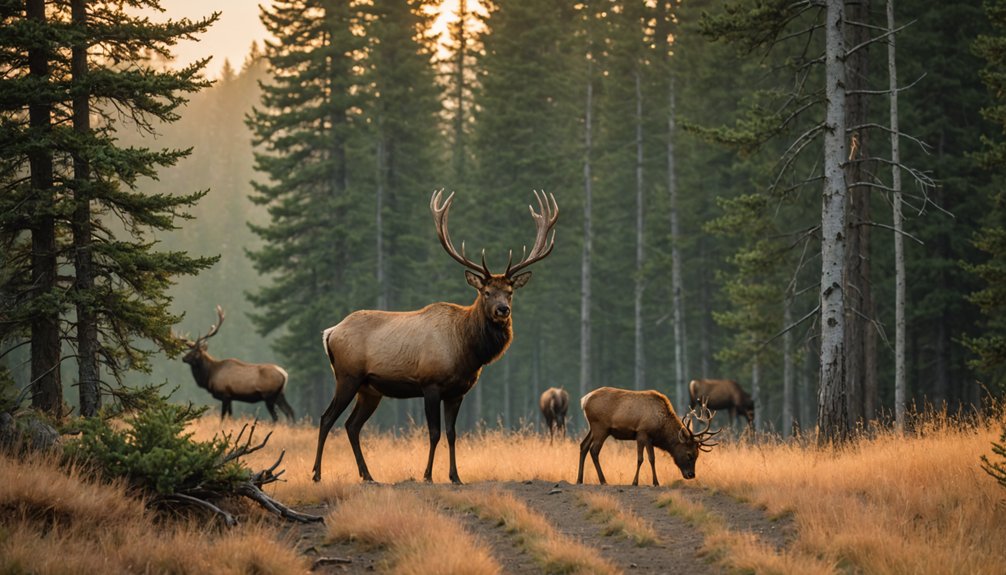
When the calendar hits late summer or spring, moose and elk behavior changes fast—and so should your trail habits.
Rut season—late August through October—turns bull moose and elk into hormone-driven threats ready to charge hikers, cyclists, and vehicles.
Calving season—May through June—flips cows and females into fierce protectors, attacking anything near hidden young. Elk calves are born scentless and remain motionless to avoid predators, but a cow will spring into action if you unknowingly walk near her hidden calf.
This isn’t random wildlife behavior; it’s predictable, seasonal, and tied directly to survival instinct. During the rut, males become increasingly aggressive and can be agitated by other wildlife, people, and pets.
Smart animal tracking means knowing these windows before you hit the trail.
Watch for lowered antlers, pawing, ear-pinning, or path-blocking—these signal an imminent charge, not idle curiosity.
Even mountain lions show increased localized risk during mating and denning periods. Most mountain lion attacks on humans actually occur during summer and fall, overlapping with these same high-risk seasonal windows for other wildlife.
Adjust your route, timing, and distance accordingly—your freedom on the trail depends on respecting theirs.
Keep Your Dog Leashed on Wildlife Trails
Your leash is a lifeline, not a formality. Roughly 60% of wildlife attacks happen when pets run off-leash, turning a peaceful hike into a crisis.
Dog safety on the trail means keeping your companion close enough to redirect the moment danger appears. A leashed dog can’t chase an elk, provoke a mountain lion, or vanish over a cliff edge chasing a scent. It’s actually the law to keep your dog on a leash of 3 metres or less in protected places, so staying compliant also keeps you on the right side of park regulations.
Picture these scenarios:
- A moose charges after your dog barks too close—your leash lets you retreat fast.
- A mountain lion watches from cover, unprovoked because your dog never crossed its path.
- Your dog stays found, never lost in unfamiliar terrain.
Good trail etiquette protects your freedom to discover—and keeps everyone safe. Even on a leash, wildlife such as deer, bobcat, roadrunners, hawks, and owls can still perceive your dog as a predator and alter their natural behavior. Beyond the moment of encounter, staying leashed also protects sensitive animals like marmots, which are especially vulnerable to dog attacks when raising their young.
What to Do When You Spot a Moose?
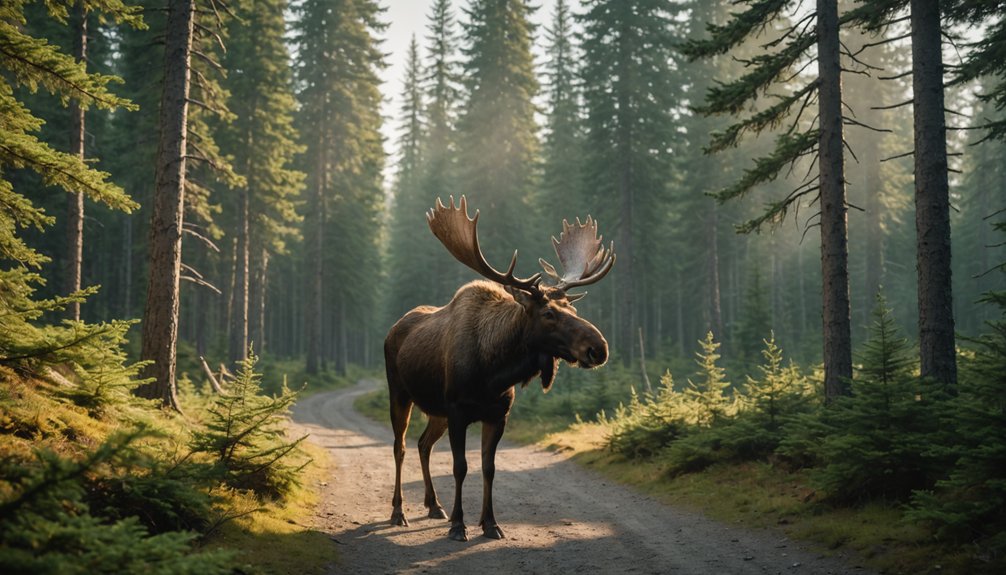
A leashed dog handles half the battle, but you still need to know what to do if a moose steps onto the trail ahead. Stop and hold at least 50–75 feet away—more in open terrain. Don’t approach for a photo; use binoculars instead.
Choose a different route or wait calmly for the moose to move off. Never surround or block its path. Keep in mind that moose are most active and likely to be encountered around dawn or dusk.
Stay calm, keep your voice soft, and skip sudden movements or loud noise. Scan for calves—a cow-and-calf pair raises the danger substantially. Reading moose behavior matters: watch for laid-back ears, raised hackles, grunting, or stomping. These signal agitation.
If you spot warning signs, retreat slowly. Wildlife safety means respecting the moose’s space, always.
How to Handle a Moose That Won’t Back Down
Sometimes a moose plants its feet and simply won’t yield, no matter how much space you give it.
This is where reading moose behavior matters most for trail safety. Watch for hackles rising, ears pinning back, or a lowered head swinging side to side—these signal the standoff is escalating. Each moose has a different tolerance level, but repeated harassment can lead to aggressive behavior.
- A stomping hoof or sharp grunt warns you’re too close.
- A short bluff charge that stops abruptly means the next one might not.
- A full charge demands you run, unlike bear encounters, and put a tree, boulder, or vehicle between you and the animal.
Back away diagonally, keep your dog leashed and shielded, and never let the moose’s only escape route point toward you.
Distance and barriers keep you free to move safely.
Staying Safe Around Elk Herds and Bulls
Elk herds look calm right up until they’re not, and that false sense of ease is exactly what gets hikers too close.
Keep 25–50 yards minimum, more during spring calving and fall rut, when elk protection instincts run highest.
Stay on open trails, detour wide around herds, and never cut between a cow and calf or a bull and his harem.
Learning elk behavior gives you the edge: ears back, lip curling, head lowering, or a fixed stare all mean back off now. Grinding teeth is another clear sign an elk feels nervous or on edge.
If elk react to you at all, you’re too close—open up space immediately.
Travel in groups, leash your dog, skip the earbuds, and keep kids within reach. During the fall rut, bull elk rely heavily on bugling to attract females, so a bugling bull nearby signals you should give even more room.
Awareness, not luck, keeps these encounters safe.
What to Do If an Elk Charges You?
That charge is happening now, and your next three seconds matter more than anything you read beforehand.
Don’t sprint blindly into open ground—elk behavior rewards a target, not a straight line. Scan for the nearest solid object and move toward it at an angle, keeping it between you and the animal.
- Spot a tree, boulder, or vehicle—that’s your shield, not a hiding spot.
- Angle away, don’t bolt straight—sprinting in the open invites the chase.
- Pivot behind cover, tracking the elk’s position as you retreat.
If nothing solid exists nearby, stay calm, walk at a steady angle, and head toward higher or denser terrain.
Wildlife safety depends on smart movement, not panic.
How to Read Mountain Lion Behavior
Elk telegraph their intentions through speed and direction; mountain lions communicate through distance and posture instead, and you need to read those signals correctly before you’re ever in striking range.
Distance dictates risk.
Beyond 100 yards, a lion moving slowly and calmly poses little threat.
Past 50 yards with changing positions and no hiding, you’re dealing with curiosity, not predation.
At 50 yards with ears up and focused attention, treat the situation as moderate risk.
Under 50 yards with staring, crouching, or creeping, that’s mountain lion behavior signaling a possible hunting assessment—high risk territory.
Watch for escalation: stalking, crouched posture, tail twitching, and locked-on stares mean an attack could be imminent.
Any lion sighting on a trail deserves heightened caution, since these animals are naturally elusive.
Read the posture, respect the distance, act decisively.
What to Do If You Spot a Mountain Lion?
The moment you spot a mountain lion, your first move isn’t physical—it’s mental.
Mountain lion encounters demand composure before action.
Stay upright, plant your feet, and lock eyes with the animal—no crouching, no turning away.
Slowly back away while facing it, giving it a clear exit path.
Then make yourself unmistakably human:
- Raise your arms or open your jacket wide, turning your silhouette into something too big to challenge.
- Shout in a firm, loud voice, asserting dominance instead of triggering a chase instinct.
- Gather your group close, lifting children onto shoulders without bending down.
If it doesn’t retreat, throw stones near its feet.
Once it’s gone, leave the area and report the sighting—your data protects future wildlife encounters on the trail.
Fighting Back During a Mountain Lion Attack
If a mountain lion actually attacks, everything changes—this isn’t the moment for stillness or submission. Playing dead invites fatal bites to your head and neck.
Fight back, hard. Mountain lions target the throat and face, so stay standing, chin down, elbows tight, and never turn your back. Use your backpack as a shield against claws and teeth.
Grab whatever’s available—rocks, sticks, trekking poles, knives—and strike the eyes, nose, and mouth without pausing. Bear spray aimed at the face stops most lion attacks cold. If you carry a firearm legally, target sensitive areas directly. Documented survivors have won fights with bare hands and improvised weapons alone. Mountain lions abandon attacks when the cost outweighs the reward—make yourself that cost.
Pre-Trip Steps to Avoid Wildlife Encounters
Before you ever set foot on a trail, smart planning cuts your risk of a dangerous encounter far more than any reaction you might muster in the moment.
Trail planning starts with research: check wildlife agency maps, recent sighting reports, and park advisories before you commit to a route.
Route selection matters just as much—steer clear of dense willow thickets, elk rutting grounds, and rocky lion terrain, especially during dawn and dusk.
Picture what you’re avoiding:
- Moose territory—shadowy willow stands where a startled bull can charge in seconds.
- Elk rutting zones—open meadows turned battlegrounds during autumn breeding season.
- Lion country—steep, brush-choked slopes where deer trails signal ambush points.
Time your hike outside these danger windows, and you’ve already won half the battle before your boots hit dirt.
Frequently Asked Questions
Is Bear Spray Effective Against Moose, Elk, or Mountain Lions?
Yes—bear spray works as an emergency defense against moose, elk, and mountain lions alike. As moose deterrents and elk repellents, it irritates eyes and lungs fast, but you’ll need close range and steady aim for success.
Can I Use a Drone to Check for Wildlife Before Hiking?
You can, but check drone regulations first—parks and wilderness areas often ban flights. Aerial scouting works best for open terrain, not guaranteed safety. Use it as a supplement, then trust your own eyes on the trail.
What Should I Do if I Encounter Wildlife While Camping Overnight?
Stay calm, don’t run, and keep distance—50-75 yards for moose/elk, standing tall for mountain lions. Your wildlife preparation determines the outcome, so trust your camping safety instincts, retreat slowly, and never approach or feed animals.
Are Certain Trails More Dangerous for Wildlife Encounters Than Others?
Yes—trail conditions vary widely in risk. You’ll face greater danger off-trail, near water, or through dense wildlife habitats. Stick to maintained paths, stay alert near brush and streams, and you’ll roam confidently while minimizing surprise encounters.
Should I Carry a Personal Locator Beacon for Wildlife Emergencies?
Yes, carry one. It’s smart emergency preparedness for remote trails where cell service fails. You’re free to roam confidently, knowing wilderness safety backup exists if a severe wildlife encounter leaves you injured or stranded.
Conclusion
You don’t need to fear moose, elk, or mountain lions—you need to respect them. Know the safe distances, watch for warning signs, and leash your dog before you hit the trail. Adjust your plans during rut and calving season, and stay alert in cougar country. If you encounter wildlife, keep calm, give space, and know your response. Prepare before you go, and you’ll turn potential danger into a safe, memorable hike.
References
- https://hikingnotebook.com/how-to-deal-with-wild-animals-on-the-trail/
- https://blog.silverlight.store/wildlife-safety/
- https://www.parkcitymag.com/travel-and-outdoors/2020/07/what-to-do-when-you-encounter-wildlife-on-the-trail
- https://mountainlion.org/prior-coexistence/on-the-trail/
- https://www.ymcarockies.org/safely-enjoy-wildlife/
- https://rickcrandallbooks.com/encountering-wild-animals/
- https://thenextsummit.org/what-to-do-when-you-encounter-wildlife/
- https://intermountainhealthcare.org/blogs/article/safety-tips-for-unexpected-wildlife-encounters
- https://www.youtube.com/watch?v=7jSKYYclf9g
- http://www.mountainenthusiast.com/2012/09/dealing-with-wild-in-wilderness.html