Crossing the US-Canada border with your dog requires direction-specific paperwork: Canada needs a current rabies certificate showing vaccine name, lot number, and vet signature, while US entry demands a completed CDC Dog Import Form plus a microchip. Dogs must be at least 3 months old for Canada and 6 months for US re-entry. Small errors—mismatched microchip numbers, incomplete certificates, unaccredited vets—cause real delays. Get the specifics right below, and you’ll avoid the mistakes that trigger secondary inspection.
TLDR Key Takeaways
- Dogs entering Canada need a valid rabies certificate with vaccine details, dog ID, and vet signature.
- US-bound dogs need a microchip, CDC Dog Import Form receipt, and must be at least 6 months old.
- Keep documents organized in a labeled folder, grouped by category, with printed and digital backups.
- Inconsistent names, mismatched microchips, or incomplete certificates can cause delays or turnarounds.
- Expect primary inspection, possible secondary checks, and a brief vehicle or dog inspection at the border.
Canada vs. US: What Documents You Need Each Direction
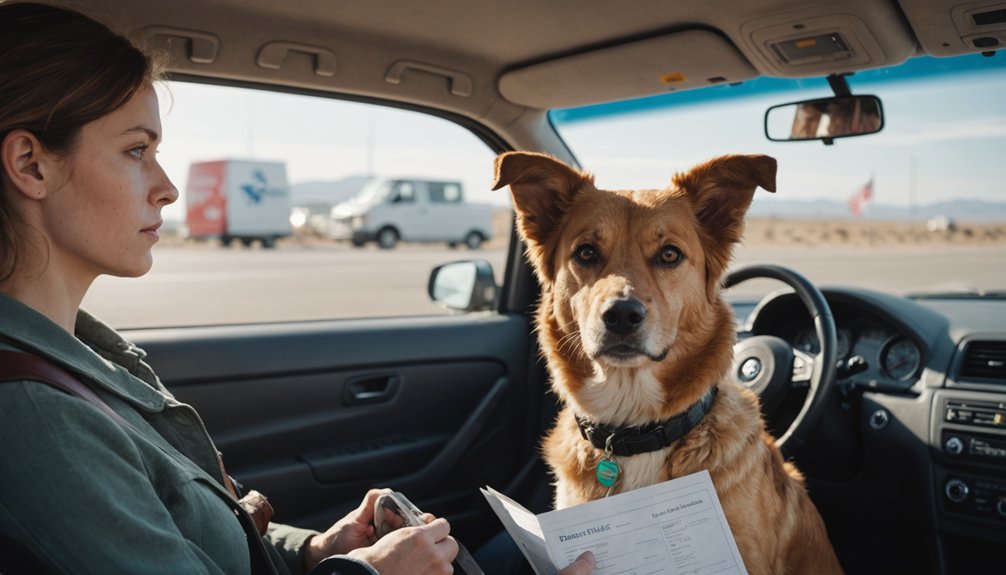
Border requirements shift depending on direction.
Heading into Canada, bring your passport—it’s the only universally accepted travel document.
US citizens can substitute a passport card, EDL, NEXUS card, or a birth certificate paired with a standard license.
Non-US nationals from visa-required countries need a passport plus visitor visa; an eTA won’t work for land crossings.
US permanent residents can enter with a valid Green Card alone.
Returning to the US, WHTI rules kick in: a US passport (book or card), NEXUS, or EDL all qualify.
Kids under 16 just need a birth certificate.
Keep your travel documents organized by direction, not assumption—requirements aren’t interchangeable. Note that a study or work permit is not a visa, so travelers with a dog crossing for work or school purposes will still need a separate visa or eTA. Travelers should also carry proof that their pet’s paperwork is in order, along with standard items like vehicle insurance and registration.
Rabies Vaccination Rules for Entering Canada
Rabies is the one non-negotiable when it comes to your dog crossing into Canada.
These Rabies Requirements apply regardless of breed, origin, or trip length.
If your dog’s 3 months or older, you need a current vaccination certificate—no exceptions, no shortcuts.
Skip it, and you’re risking refusal at the border or costly corrective measures on your dime.
Remember that dogs older than 3 months but less than 8 months have different requirements than older dogs.
Your puppy under 3 months?
You’re exempt, but bring proof of age.
First-time shot?
Wait 21-30 days before you hit the road.
No expiration listed?
Canada treats it as valid for just 1 year.
From a rabies-free country?
Vaccine Exemptions may apply with proper documentation.
Multi-year vaccines stay valid up to 3 years.
Know your dog’s status before you drive.
Your dog’s rabies vaccination certificate must be issued by a licensed vet to be accepted at the border.
Since requirements can vary, it’s wise to double check current rules on the Canada travel website before you depart.
What Counts as a Valid Rabies Certificate?
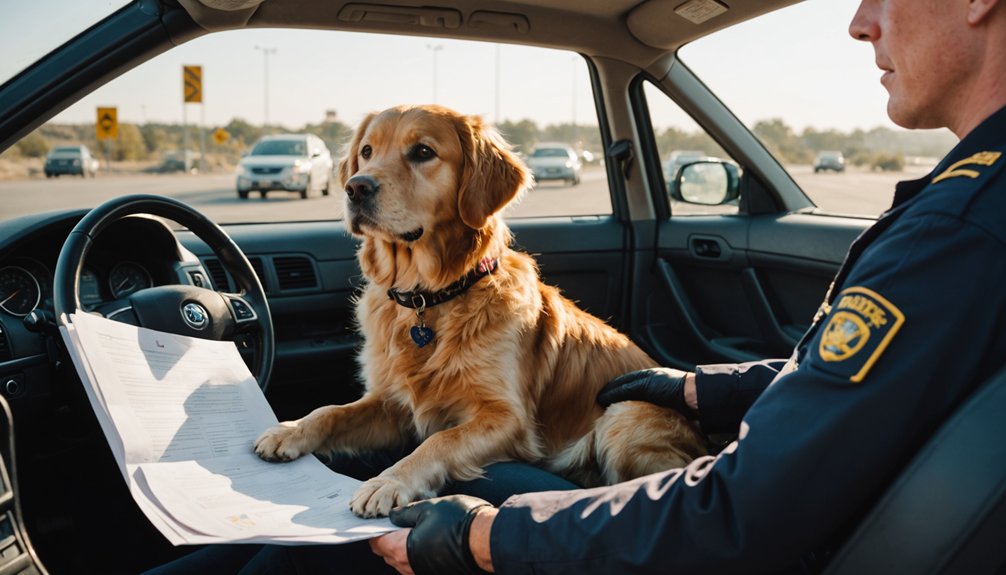
A piece of paper alone won’t get you across; that certificate needs specific details to count as valid. Border agents don’t accept vague pet passports—they want proof matching the dog in front of them. Rabies rules require your certificate to state the vaccine’s trade name, lot number, vaccination date, and duration of immunity. If duration isn’t listed, officials default to one year. The certificate must also confirm that at least 21 days have passed between the vaccination date and the date of travel.
| Requirement | Detail |
|---|---|
| Vaccination Age | Given at 3+ months old |
| Language | English or French |
| Signature | Licensed veterinarian |
| Identification | Breed, sex, age, owner info |
Skip any field, and you risk delays or rejection. Keep your certificate legible, complete, and current—your freedom to cross depends on it. If any certificate details are inaccurate or falsified, importers can face criminal penalties. Since August 1, 2024, the CDC has also required dogs entering from dog-rabies free or low-risk countries like Canada to meet updated entry requirements alongside a valid rabies certificate.
How Travel History Affects US Entry Rules
Your paperwork isn’t the only thing under review at the border—your own travel record matters just as much.
CBP keeps arrival and departure records for at least 10 years, linking them to your passport and reviewing them every time you cross with your dog.
Officers compare your stated purpose against your actual travel patterns, and mismatches can trigger secondary inspection.
Border security isn’t just about your rabies certificate—it’s about your history. New proposals could soon add social media history to the list of records scrutinized at the border. This new CBP proposal would require travelers to disclose five years of social media, phone numbers, and email addresses as part of their application. Under the current version of this proposal, travelers would also need to provide email addresses used over the past decade.
- Frequent border crossings that look like disguised residence
- Overstays or visa violations buried in old records
- Trips that don’t match your explanation at the window
- Years-old travel flagged again, right when you least expect it
Clean history means a quick wave-through.
Messy history means questions, delays, or worse.
When Do You Need the CDC Dog Import Form?
Since your travel history checks out at the border, don’t assume you’re free of paperwork—the CDC Dog Import Form still applies to every dog crossing into the U.S., regardless of how clean your record is.
This has been true since August 1, 2024, and it covers land, air, and sea entries alike.
If your dog’s only been in rabies-free or low-risk countries over the past six months, this form is your sole requirement under current CDC requirements. This receipt can be used for multiple entries into the U.S. for dogs coming from these countries.
You, the owner, importer, or shipper, complete it online in under five minutes—free of charge.
You’ll get a receipt by email, ready to show on your phone or in print. This receipt stays valid for six months from the date it’s issued.
Fill it out on travel day or up to six months ahead, giving you full control over import regulations before you hit the road. All dogs must also be at least six months old and have a microchip to meet current entry requirements.
Microchip and Age Rules for US Entry
Filling out that form doesn’t get your dog across the border on its own—two baseline requirements still have to be met first.
Microchip requirements and age restrictions apply to every dog, even on quick land-border crossings where you never leave the vehicle.
- Your dog needs an ISO-compatible microchip, implanted beforeany rabies shot—get the order wrong, and CDC may call the vaccine invalid.
- If the chip number doesn’t start with 9, confirm universal-scanner readability with your vet before you drive anywhere.
- Dogs must be at least 6 months old—no exceptions, no matter how short the trip.
- An unreadable chip from a high-risk country can mean turned away at the border, on your dime.
Handle these two rules first, and the rest of the paperwork falls into place.
Documents to Print Before Your Border Crossing
Paper beats pixels at nearly every border checkpoint, so print everything before you leave the driveway.
Your rabies certificate needs your dog’s name, breed, and vet’s signature—no exceptions.
For US re-entry, print your CDC Dog Import Form receipt plus one accepted rabies document, whether that’s a US-issued certificate, USDA-endorsed export health certificate, or foreign vaccination proof with microchip records.
Pet preparation doesn’t stop at vaccines: bring adoption papers, vet contact sheets, and an emergency contact list for your destination.
Add your passport copies and itinerary summary to cover travel logistics on both sides.
Pack extras of every document.
Officers can be unpredictable, and duplicates protect your freedom to cross without delay, hassle, or turning back.
How to Organize Your Pet’s Paperwork for Easy Access
A single transparent folder labeled “Dog Travel Documents” becomes your best friend at primary inspection—stash it right on top of your human passports so you’re not fumbling through a glovebox while an officer waits.
Real paperwork management means grouping documents the way agencies think: rabies and ID together, health and ownership together, CDC/USDA/CBSA forms together. Back up every ink-signed original with printed copies, then build a digital storage system on your phone and cloud drive so a lost folder never derails your trip.
- Imagine the freedom of driving through inspection without your heart racing
- Feel the relief of pulling up a scan instantly when paper goes missing
- Protect the bond with your dog by never risking a turnaround at the border
- Reclaim road-trip spontaneity knowing every document has its place
What Happens During Secondary Inspection?
Even with that folder perfectly organized, an officer can still wave you into secondary inspection—it’s not a red flag on your record, just a routine step at a dedicated area of the port of entry.
These border procedures let officers verify your passport, travel documents, and declarations, ask deeper questions about your trip, and inspect your vehicle inside and out.
Your dog may be asked out of the car for a brief visual check while officers search the interior, trunk, or engine compartment.
Standard inspection protocols keep animals safe from harm throughout the process—dogs might stay in the vehicle, get removed, or wait in a kennel.
If everything checks out, you’re released quickly; if not, expect further verification or, rarely, veterinary review.
Common Mistakes That Delay Dog Border Crossings
Because so much of a smooth crossing depends on paperwork you prepare weeks in advance, small errors made early tend to surface at the worst possible moment—right at the booth.
Border issues rarely come from malice—they come from rushing.
You check the rabies date but miss that it was given before the microchip.
You grab a health certificate from a vet who isn’t USDA-accredited.
You assume one CDC form covers every trip.
These pet problems compound fast when officers spot mismatched microchip numbers or inconsistent names across documents.
- Watching your dog get pulled into secondary inspection while you scramble for paperwork
- Facing a border turnaround after driving hours with your pet
- Realizing too late your vet wasn’t accredited
- Losing travel days to preventable clerical mistakes
How Long Do Border Crossings With Dogs Take?
How Long Do Border Crossings With Dogs Take?
Once your paperwork’s actually in order, the clock at the booth stops being the scary part.
Standard crossing times with a dog run 5–20 minutes at low-to-moderate traffic ports, mirroring regular car crossings.
Busy crossings push border wait to 10–60 minutes, but there’s no separate line for pets—your dog just rides along with everyone else’s wait.
A compliant rabies certificate and calm animal add mere minutes to the officer’s check.
US→Canada trips often clock in near “No Delay” to 10 minutes; Canada→US typically stays under 30 minutes when documents are clean.
The real time drain isn’t the booth—it’s what you didn’t prepare beforehand.
Province and State Rules to Check Before You Drive
Federal clearance gets your dog to the border; it doesn’t get you past provincial or state law waiting on the other side.
CFIA and CDC paperwork only satisfy the entry gatekeepers—your real border preparations start with what happens after you cross. Provincial regulations can override your travel plans entirely, and ignorance won’t save you at a roadside stop.
- Ontario’s pit bull ban means your dog could be turned away, seized, or worse—no exceptions for tourists passing through.
- A “dangerous dog” label in one province can strip your travel freedom instantly, regardless of your dog’s actual temperament.
- Municipal bylaws hiding behind provincial law can demand muzzles or permits you never knew existed.
- One wrong route choice could end your road trip before it starts.
Frequently Asked Questions
Can I Cross the Border With More Than One Dog at a Time?
Yes, you can cross with multiple dogs—no numerical cap exists (CDC FAQ). Guarantee humane dog transport, complete paperwork per dog, and secure pet insurance beforehand, so you travel freely without unexpected border delays or complications.
Do Service Animals Follow Different Border Crossing Rules Than Pets?
Yes—you’ll get simplified entry with proper service certification, since Canada exempts certified assistance dogs from rabies rules. Emotional support animals don’t qualify; they’re treated as pets, so you’re stuck with standard fees and restrictions.
What Happens if My Dog’s Rabies Vaccine Expires Mid-Trip?
Once vaccine expiration hits, you’re treated as unvaccinated—CDC and CBSA rules apply immediately, risking quarantine or forced re-vaccination. Don’t get stuck: build border preparation into your route, timing shots so you’re covered both ways, no exceptions.
Are There Breed-Specific Restrictions for Crossing the Us-Canada Border?
No federal border rules ban specific breeds—CFIA and CDC focus on travel papers, not breed. But you’ll hit provincial law: Ontario bans Pit Bulls outright, so check local restrictions before you cross.
Can I Bring My Dog’s Medication or Food Across the Border?
Yes—you can bring OTC meds and food in original packaging with labels intact. Prescription drugs need vet documentation. Pet passports aren’t required, but proper paperwork speeds dog transport and keeps your border crossing hassle-free (Health Canada guidance).
Conclusion
You’ve got what you need: a signed rabies certificate, your dog’s vaccination record, and CDC Form 6.1A if you’re crossing into the US and haven’t been rabies-free-country-only for six months. Don’t wing it at the booth—check APHIS.gov and CFIA’s guidelines before you drive, since officers can and will deny entry over missing paperwork. Keep documents printed, not just on your phone, and you’ll clear the border in minutes, not hours.
References
- http://inspection.canada.ca/en/importing-food-plants-animals/pets
- https://www.reddit.com/r/dogs/comments/1j0ebeo/traveling_from_usa_to_canada_and_back_with_a_dog/
- https://www.aphis.usda.gov/pet-travel/us-to-another-country-export/pet-travel-us-canada
- https://www.facebook.com/groups/usbarkrangers/posts/2046956909421871/
- https://www.petrelocation.com/blog/post/relocating-pets-from-the-us-to-canada-how-to-drive-across-the-border-with-a
- https://www.bordersolutionslaw.com/blog/crossing-the-us-canada-border-with-your-dog/
- https://www.reddit.com/r/vermont/comments/1d3lwh2/new_ridiculous_cdc_guidelines_for_crossing/
- https://www.instagram.com/reel/DA8eisoJdcX/
- https://www.facebook.com/groups/usbarkrangers/posts/2162517174532510/
- https://youdidwhatwithyourweiner.com/dog-friendly-road-trip-traveling-to-canada-from-the-us/