Your dog’s home country dictates the entire process. Category 1 (Australia) skips permits and quarantine. Category 2 rabies-free nations follow separate MPI rules. Category 3 countries like the US, UK, and EU require RNATT testing, heartworm and leptospirosis checks, and stricter quarantine. Not on the approved list? You’ll need a transit residency route through a Category 1 or 2 country first. Timelines vary widely, so knowing your category now shapes everything that follows.
TLDR Key Takeaways
- Countries fall into Category 1 (rabies-free like Australia), Category 2 (rabies-free like Japan), or Category 3 (rabies-controlled like US/UK).
- Category 3 dogs need a Rabies Neutralising Antibody Titre Test via FAVN or RFFIT before entry.
- Quarantine is waived for Category 1 dogs but required for at least 10 days for Categories 2 and 3.
- Start import permit applications 3 to 6 months ahead since MPI needs 30 working days to process.
- Dogs from non-approved countries can qualify by residing at least 180 days in a Category 1 or 2 country.
Is Your Country Approved for New Zealand Dog Import?

Relocate your dog to an approved country, establish residency there for at least six months, then export from that country instead.
This transit residency route works if your home country isn’t on MPI’s list.
New Zealand only accepts pet travel from countries grouped into Categories 1–3, based on rabies status.
Check section 5.3 of the Import Health Standard to confirm where you stand.
Most of Latin America, Africa, and Asia aren’t approved—direct import isn’t an option there, with exceptions like Argentina, Chile, and Uruguay. Regardless of the country of origin, only dogs classified as domestic pets are eligible, as wolf hybrids cannot be imported under these regulations.
Don’t let a non-approved origin stop your plans.
MPI’s transit pathway respects your freedom to move: relocate, wait six months, then export legally.
This approach protects animal welfare while giving you a clear, workable path forward. Note that a downloadable guidance document lists all approved countries for reference when planning your relocation strategy. Once your export is ready, you’ll also need an import permit issued by MPI before your dog can travel.
Category 1 Countries: the Easiest Path From Australia
If Australia’s your starting point, you’re already on the easiest track available.
Category 1 covers Australia, Norfolk Island, and Cocos (Keeling) Islands—territories recognized as rabies-free under WOAH standards.
You won’t need an import permit, and quarantine isn’t required once you clear inspection.
Skip the rabies testing altogether; your vet just confirms your dog’s shown no clinical signs of rabies in the two days before shipment.
Your dog must be at least 8 weeks old and travel directly from Australia—no transiting through other countries.
Your import paperwork stays simple: one official veterinary certificate confirming health status, parasite-free condition, and rabies-free clinical signs.
That’s it.
No lengthy permit process, no mandatory 10-day quarantine.
This route gets your dog into New Zealand faster than any other pathway. Certain breeds, however, remain banned regardless of origin, including the Dogo Argentino.
Category 2 Countries: Rabies-Free Nations and Their Rules

Beyond Australia, Category 2 opens up a solid roster of rabies-free destinations: Japan, Singapore, Hawaii, Iceland, Fiji, and several other Pacific islands, plus territories like Guam and American Samoa.
These rabies free countries give you a genuine alternative path, but freedom comes with conditions. Your dog must reside in an approved Category 1 or 2 country for at least six months straight before import, counted from arrival in that first approved location—not from when you left home. All rabies-related prep and testing has to happen inside a categorised country. Because these are true rabies-free zones, you generally skip the antibody titer test required for Category 3 origins. Still, meet MPI’s export requirements: proper vaccination, health certification, and a pre-export microchip scan by an official vet. This official vet check must occur no earlier than six months prior to shipment. For dogs coming specifically from Category 2 countries, additional health checks such as a heartworm blood test must also be completed within 30 days before travel.
Category 3 Countries: Extra Testing for the US, UK, and EU
Since your dog’s coming from the US, UK, or an EU country, you’re dealing with Category 3—MPI’s classification for nations where rabies exists but stays under control. This group also includes Chile, Israel, South Korea, and South Africa.
Category rules here mean heavier pet testing than Category 2, with no shortcuts. Your dog needs a Rabies Neutralising Antibody Titre Test showing ≥0.5 IU/ml, drawn 3-12 months before shipment, followed by a 90-day wait. Microchip verification timing depends on when you pull that sample—expect one or two vet scans.
Beyond rabies, you’re covering Babesia gibsoni, Brucella canis, and Leptospirosis screens. Babesia gibsoni testing must happen within 16 days of travel, and a positive result blocks entry outright. Dogs six months or older also need heartworm testing within 30 days of shipment. Leptospirosis, if detected, can be treated with a therapeutic dose of doxycycline administered for 14 consecutive days.
Non-Approved Country? Here’s Your Workaround
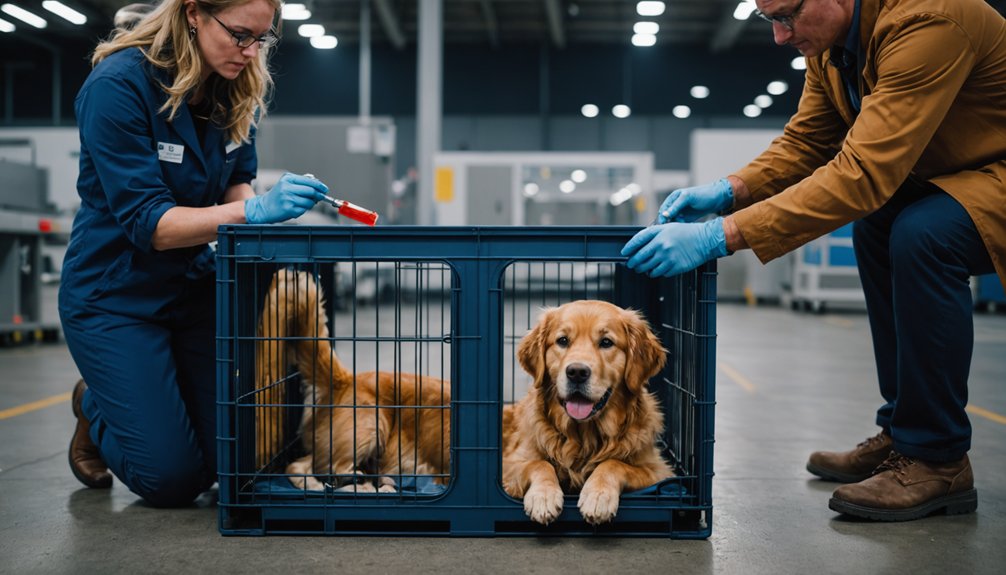
Because MPI won’t let you import a dog directly from a non-approved country, you’ll need to build a workaround around transit. You’ll relocate your dog to an approved Category 2 or 3 country, satisfy that country’s residency and testing rules, then export from there as if it’s the origin. This isn’t a shortcut—it’s a legitimate path through New Zealand’s transit rules, and it demands early planning: 6-12 months minimum. Working with an agent can simplify the process of coordinating paperwork and quarantine bookings across both the transit country and New Zealand. Note that spending at least 180 days in the approved transit country is required before export to New Zealand can proceed. Once your dog finally lands, remember that certain breeds face additional restrictions, as American Pit Bull Terriers are not allowed entry into New Zealand at all.
| Transit Country | Category | Why Choose It |
|---|---|---|
| USA | 3 | Strong infrastructure |
| Spain/UK | 3 | EU-aligned rules |
| Chile | 2 | Faster testing pathway |
| Australia | 2 | Regional proximity |
Your entire import process hinges on choosing the right transit country upfront.
How the 6-Month Residency Rule Actually Works
Once you’ve picked your transit country, the clock doesn’t start ticking until your dog actually sets paw in it. Residency requirements demand six full months of continuous residence in that approved country immediately before export—no gaps, no side trips to non-approved territory.
Step foot in an unapproved country during that window, and you reset to zero. This isn’t bureaucratic red tape for its own sake; export regulations exist to guarantee disease-free status before your dog crosses into New Zealand. Dogs coming from Australia are the sole exception to this rule, as they are not bound by the residency requirement.
Keep fastidious records: vet visits, lease agreements, entry stamps. MPI inspectors will want proof, not promises. If you’re moving between approved countries, only the final one counts—so plan your last six months there deliberately, syncing it with RNATT testing and permit timelines for a seamless, freedom-driven relocation. For dogs originating from Peru specifically, since it does not appear in Schedule 9, owners must relocate the animal to a listed country and complete the full MPI protocol from there.
Microchipping and Vaccination Requirements Before You Begin
Before you even think about residency clocks or transit countries, your dog needs a permanent ID: a microchip.
Microchip rules require ISO 11784 or Annex A of ISO 11785 compliance—non-ISO chips risk unreadable scans on arrival, and that’s on you to fix.
Sequencing matters most.
The chip must go in before or at the same time as the rabies vaccination, never after.
Get this backward, and you invalidate the vaccination for import purposes.
Vaccination protocols demand your dog be at least three months old at the time of the shot, with vaccination given 6-12 months before travel for first-timers or expired refreshers.
Every record—vaccination certificates, titre tests, exam notes—must show the matching microchip number.
Consistency across paperwork isn’t optional; it’s your ticket through customs.
What Is the RNATT and Does Your Dog Need It?
If your dog’s microchip and rabies vaccination are sorted, your next hurdle might be the RNATT—the Rabies Neutralising Antibody Titre Test.
This blood test confirms your dog’s antibody levels hit at least 0.5 IU/ml, proving real protection, not just a vaccine record. The RNATT process only counts when run through FAVN or RFFIT at an approved lab. The blood sample for this test may be collected up to 24 months prior to the date of shipment.
Whether you need it depends on where you’re coming from:
- Category 3 countries require RNATT before entry.
- Category 2 countries have conflicting guidance—check MPI directly.
- Australia skips this pathway entirely.
Since categories shift, confirm your country’s status before locking in travel dates. Rabies testing rules aren’t flexible, so get this step right early.
When to Apply for Your New Zealand Import Permit
Getting your rabies testing sorted only solves part of the puzzle—timing your import permit application right matters just as much. MPI requires 30 working days to process a correctly completed application, but that clock only starts once your documentation is flawless.
For a safer permit timeline, submit at least 8 weeks before travel—not the bare six-week minimum. Complex files deserve more room: start the broader application process 3 to 6 months out, especially if you’re handling endorsements or paperwork quirks. Holiday closures and peak periods can stall things further, so don’t cut it close.
Your permit isn’t a last-step formality—it’s an early milestone. Lock it in before booking flights or quarantine, and you’ll move through the rest of your import schedule with confidence.
How Do Quarantine Requirements Change by Category?
Since New Zealand splits countries into risk categories, your dog’s quarantine obligations hinge entirely on where it’s traveling from.
Import regulations tighten as rabies risk increases, and quarantine procedures reflect that scaling directly:
- Category 1 (Australia, Norfolk Island): No routine quarantine—just border inspection, provided your paperwork’s clean.
- Category 2 (rabies-free countries): A minimum 10-day stay at an MPI-approved facility, permit required beforehand.
- Category 3 (rabies-controlled countries): Same 10-day minimum, but with stricter monitoring, daily health checks, and lab report reviews.
If you’re transiting through an unapproved country, your dog’s quarantine follows the intermediate country’s category, not the origin. MPI maintains a list of approved quarantine facilities, and space and location can vary, so reviewing options early is worthwhile.
Incomplete documentation or health concerns can extend timelines at any level, so accuracy matters more than speed.
Choosing Your Port of Entry: Auckland vs Christchurch
Because MPI permits only two entry points for dogs and cats, you’ll need to choose between Auckland and Christchurch based on your final destination, not just flight availability. Your dog’s freedom starts with smart airport logistics: Auckland’s quarantine sits 15 minutes from the terminal, while Christchurch’s facility is mere minutes away. Flight routing considerations matter too—most international cargo carriers favor Auckland, but Christchurch shortens your path if the South Island is home.
| Factor | Choose This Port |
|---|---|
| North Island destination | Auckland |
| South Island destination | Christchurch |
| Extended inspection hours | Auckland (7:00–19:00) |
| Combined dog/cat housing | Auckland |
Match your port to your life, not just your layover—every hour apart from your dog counts.
Your Month-by-Month Timeline for a Stress-Free Import
Importing a dog to New Zealand isn’t a last-minute errand—it’s a project that spans roughly six to twelve months depending on your country’s category.
Treat it like any major dog transport operation: sequence matters, and skipping steps costs you time you can’t recover.
- Months 1-2: Confirm your category, check breed eligibility, microchip your dog, then start rabies vaccination and titer testing.
- Months 3-6: Serve the mandatory waiting period, gather medical records, apply for your import permit, and lock in quarantine space. The U.S. mainland falls under Category 3, meaning your dog must complete a minimum 10-day stay at an MPI-approved quarantine facility upon arrival.
- Final month: Complete last blood tests, treatments, and certifications before departure.
Pet relocation rewards planners—build your timeline backward from your target arrival date, and you’ll travel with confidence, not scrambling.
Frequently Asked Questions
What Happens if My Dog Fails Inspection on Arrival in New Zealand?
If your dog fails inspection, you’re facing an inspection failure that sends it straight into the quarantine process. It’ll stay there at least 10 days until vets clear it, at your expense.
Can Puppies or Senior Dogs Be Denied Entry Under MPI Rules?
Yes, you can face denial. Puppies under 16 weeks won’t clear entry, and senior dogs failing health checks won’t either. MPI doesn’t consider dog behavior or breed restrictions—only age, vaccination, and fitness for travel determine your dog’s eligibility.
What Are the Costs Involved in Importing a Dog to New Zealand?
You’ll pay vet exams, import fees, customs charges, airfreight, and possible quarantine—typically NZD 4,000–8,000 total. Budget for permits, inspections, and crate costs too. Plan ahead, control expenses, and you’ll bring your dog home freely.
Can I Travel on the Same Flight as My Dog?
You might, but it’s not guaranteed. In-flight pets travel as cargo, not cabin companions, and same-flight placement depends on direct flights and destination alignment. You’re free to request it, but routing decides.
What Happens if My Import Permit Expires Before Travel Dates Change?
Your permit becomes invalid, and you can’t legally import your dog until you secure permit renewal. Act fast—expired permits trigger import delays, disrupt quarantine bookings, and risk flight refusals. Don’t wait; reapply immediately to protect your travel freedom.
Conclusion
Importing your dog to New Zealand isn’t complicated once you know your country’s category. Confirm your classification, book your tests early, and apply for your permit within the required window. Don’t leave quarantine arrangements until the last minute—Auckland and Christchurch slots fill fast. Follow your month-by-month timeline, stay on top of paperwork, and you’ll avoid the delays that trip up unprepared owners. Get the sequence right, and your dog’s trip stays smooth from start to finish.
References
- https://www.mpi.govt.nz/bring-send-to-nz/pets-travelling-to-nz/bringing-cats-and-dogs-to-nz/bringing-cats-and-dogs-to-nz-using-the-2021-import-health-standard/step-by-step-guide-to-bringing-cats-and-dogs-to-nz-2021-process
- https://www.aphis.usda.gov/pet-travel/us-to-another-country-export/pet-travel-us-new-zealand
- https://www.pettravel.com/information/pet-passports/new-zealand-pet-import-requirements/
- https://tailwindglobalpet.com/pet-transport-new-zealand/
- https://www.govt.nz/browse/immigration-and-visas/visit-nz/what-you-can-and-cannot-bring-into-nz/
- https://www.customs.govt.nz/travel-to-and-from-new-zealand/move-to-new-zealand-permanently/import-pets-and-animals
- https://www.mpi.govt.nz/dmsdocument/33424/direct
- https://zoovettravel.com/atlas/nueva-zelanda-en.html
- https://worldcarepet.com/2026/01/07/moving-pets-to-new-zealand-2026/
- https://petraveller.com.au/blog/bringing-your-pet-dog-or-cat-to-new-zealand-what-you-need-to-know