To start early enough, microchip your dog before any rabies vaccination, then give two shots at least 30 days apart, with the first at 91+ days old. Draw blood for the titer test 30+ days after the second shot at a MAFF-approved lab. That draw date starts your 180-day countdown, so plan backward from your ideal arrival date. Get the timing wrong, and detention quarantine awaits—here’s exactly how to avoid it.
TLDR Key Takeaways
- Microchip first, then vaccinate—shots given before chipping don’t count toward Japan’s import requirements.
- Give two rabies vaccines 30+ days apart, starting at 91+ days old, before scheduling the titer test.
- Draw blood for the titer test at least 30 days after the first vaccine, at a MAFF-designated lab.
- The 180-day countdown starts on the blood draw date, so plan arrival at least six months out.
- Submit AQS notification 40 days before arrival, or your filing won’t be accepted for entry.
Why Japan’s 180-Day Rule Exists
Because Japan has stayed free of dog rabies since eradicating it in the 1950s, the country treats every imported dog or cat as a potential threat to that status. You’re not dealing with arbitrary bureaucracy—you’re facing a deliberate rabies prevention strategy built on public health priorities.
The Animal Quarantine Service enforces this system because rabies has a real incubation period, and 180 days gives officials confidence that your dog hasn’t been exposed before vaccination took hold. This waiting period isn’t punishment; it’s a buffer against undetected infection slipping through. The process actually begins even earlier, since dogs and cats must first be identified with a microchip before ever receiving their first rabies vaccination.
You should know the numbers back this up: research shows the current system cuts rabies-entry risk by 25 to 70 times compared to older rules. Any pet that arrives without meeting every requirement can face detention quarantine for up to 180 days. Japan’s Animal Quarantine Service even publishes these import procedures in multiple languages, including English, Chinese, and Korean, to help owners comply correctly. Understanding this reasoning helps you respect the process instead of resenting it—and plan your timeline accordingly.
How the 180-Day Countdown Works
Now that you understand why the 180-day rule exists, you need to know exactly how to count it.
Your Day calculation starts on the blood draw date for your dog’s rabies titer test—not the vaccination date, not the lab result date.
That draw is Day 0, and you can’t set foot in Japan before Day 180.
Key facts to lock in:
- The titer blood draw date is Day 0, period.
- You must stay outside Japan for the full wait periods before landing.
- Arriving even one day early triggers mandatory detention quarantine.
- Titer results stay valid for two years, giving you a travel window.
- The blood must be tested at a MAFF-approved designated laboratory for the result to count.
- You can find full details on this process on the MAFF website.
Miss this timing, and you’re paying for quarantine instead of enjoying your dog’s freedom in Japan.
Microchip Your Dog First

Everything starts with the chip. Before you touch vaccines, testing, or paperwork, get your dog microchipped—it’s the foundation everything else depends on.
Japan requires ISO 11784/11785-compatible chips with 15-digit numeric codes. Skip this step or get the order wrong, and you’re starting your timeline over.
Microchip benefits go beyond compliance: your dog’s identity locks in across every certificate, test, and notification you’ll file. Since the quarantine process alone can take up to six months, getting the chip right from the start prevents costly delays down the line.
Implantation procedures are simple, but timing matters. Any rabies shot given before the chip doesn’t count for Japan—you’ll redo the whole sequence.
Plan implantation around 8 weeks minimum, but don’t vaccinate until your dog’s 91 days old. Get the chip in early, verify it reads correctly, and you control your own timeline instead of restarting it.
Time Your Two Rabies Vaccinations Correctly
The clock on your dog’s rabies vaccinations starts once that microchip’s in place—anything given earlier simply doesn’t count.
Rabies timing isn’t guesswork—it’s math you control.
Get vaccine administration right, and you own your timeline instead of scrambling to fix it later.
- First shot at 91+ days old, after microchipping—no exceptions
- Second shot at least 30 days after the first, while that vaccine’s still valid
- Both shots must be inactivated or recombinant—no live or RNA vaccines accepted
- Documentation needs exact dates and validity periods for both vaccinations
Miss the window between shots, and the whole series resets.
Nail the timing, and you’ve built the foundation for RNATT testing, the 180-day wait, and a smooth arrival in Japan. The blood sample for this titer test can only be drawn after the second rabies vaccination, and must show a result of at least 0.5 IU/mL from a MAFF-designated laboratory. Puppies must also be at least 8 weeks of age before microchipping can even take place, so plan your earliest possible start date around that milestone.
Draw Blood for the RNATT Titer Test
Once your dog’s second rabies shot is in the books, don’t rush straight to the lab.
Blood draw timing matters: wait at least 30 days after rabies vaccination so the antibody response fully develops for accurate titer testing.
Fasting isn’t usually necessary for serum testing, though your vet may request it if lipemia’s a concern.
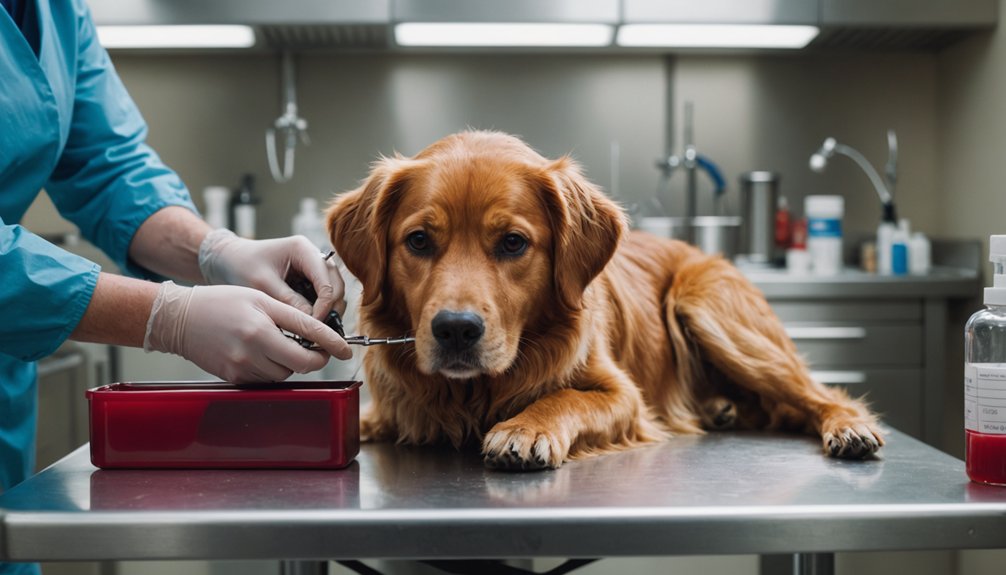
A veterinarian or trained phlebotomist should handle blood collection, using sterile venipuncture technique to draw serum into a separator tube with minimal stress on your dog.
Steady technique reduces hemolysis and protects specimen quality.
After the draw, gentle inversion—never shaking—keeps the sample intact for laboratory processing. Proper mixing after collection typically involves 3-10 gentle inversions to ensure the sample integrates correctly with any tube additives. The lab will measure the antibody level in the blood, and a result of 0.5 IU/ml or higher confirms sufficient immunity against rabies.
Record the collection date carefully.
Since Japan’s 180-day clock starts at testing, precise blood draw timing keeps your entire import schedule on track. If refrigeration isn’t immediately available, remember that serum storage should be no more than 7-10 days before shipment to the testing laboratory.
Pick a MAFF-Approved Titer Testing Lab
Not just any lab can run this test—Japan only accepts results from facilities on MAFF’s official roster of designated blood testing laboratories. In fact, Japan’s only MAFF-designated facility, RIAS, is the sole testing facility in Japan approved for this purpose.
Lab selection matters more than convenience. Before you commit, confirm the facility runs FAVN or RFFIT testing procedures and reports titers in IU/mL, showing clearly whether your dog hits the 0.5 IU/mL threshold.
Check these details before shipping any sample:
- Current MAFF designation with no lapsed approval dates
- Recognition by other bodies, like the EU’s non-EU lab list
- Direct certificate issuance—no third-party intermediaries
- Documentation of microchip number, species, and collection date
Domestic options like RIAS in Sagamihara offer faster logistics. Overseas labs work too, but confirm turnaround time, submission procedures, and fees before you send anything. Regardless of which lab you choose, the blood sample must be drawn a minimum of 30 days after your dog’s initial valid rabies vaccination. Remember that Japan’s 180-day waiting period officially begins on the sampling date, not on the date the lab receives the sample or issues results.
Map Out Your 7-to-10-Month Timeline
Choosing the right lab only matters if you build your schedule around it correctly. Your import timeline runs on sequence, not guesswork. Month one: implant the ISO microchip and give the first rabies vaccine, once your dog’s at least 91 days old. Month two: administer the second rabies vaccine, at least 30 days after the first.
Month three or four: draw blood for the antibody test at your approved lab—this date starts your 180-day clock. Months four through nine: wait out the countdown without leaving the export country. Forty days before arrival, submit your notification to Animal Quarantine. Ten days before departure, finalize your health certificate. If your titer result comes back below 0.5 IU/mL, you’ll need to re-vaccinate and re-test, resetting your countdown. Solid export planning means every milestone locks into place, giving you real control over your dog’s arrival date.
File Your Advance Notification With AQS
Forty days out, the countdown you’ve been tracking turns into paperwork you must file.
This is the notification process that turns your months of prep into official clearance.
File it with the AQS office covering your arrival airport or seaport—online through NACCS or by e-mail using the official form.
Miss the 40-day window, and AQS won’t accept your filing, grounding your travel plans entirely.
Your notification must include:
- Microchip number meeting ISO 11784/11785 standards
- Rabies vaccination dates, types, and batch details
- Titer test results confirming at least 0.5 IU/ml
- Owner, shipping, and destination address information
Don’t know your flight yet?
Enter “to be determined” and update later.
Meeting these import requirements now secures your Approval of Import Inspection—your ticket to actually board.
What Happens If You Miss a Deadline?
If you land in Japan before your dog’s 180-day waiting period since the titer blood draw has run its course, AQS won’t let you walk away with your pet. Your dog goes straight into detention quarantine for the remaining days, and you foot the bill for every day of boarding, feeding, and care. These are the real import risks of arriving early: costs stack up fast, and inspectors decide your dog’s fate based on health checks during confinement.
| Documentation Failure | Consequence |
|---|---|
| Missing/invalid microchip | Up to 180 days quarantine or return |
| Early vaccination (under 91 days) | Non-compliant, extended detention |
| Certificate mismatches | Refusal, reshipment, or euthanasia |
Skip the export challenges entirely—start your countdown early, and travel on your own terms.
Avoid Detention Quarantine on Arrival
Since AQS calculates everything from your dog’s blood draw date, not the vaccination or result date, you need to nail down that 180-day countdown before booking any flights.
Miss it, and you’re handing your freedom over to a detention kennel for up to 180 days. Avoiding that fate means becoming an expert in the import requirements before you ever touch a boarding pass.
- Confirm your microchip was implanted before vaccination and blood sampling
- Verify both rabies vaccinations stayed valid through arrival
- Check your FAVN result hit 0.5 IU/ml or higher
- Submit Advance Notification 40+ days before landing
Export regulations from your home country matter too—align them with Japan’s timeline so nothing conflicts.
Get this right, and you walk through AQS inspection in hours, not months.
Are You From a Rabies-Free Region?
Before you obsess over blood draw dates and FAVN thresholds, check whether you actually need to. Japan recognizes six designated rabies regions: Iceland, Australia, New Zealand, Fiji, Hawaii, and Guam. If your dog has lived exclusively in one of these regions (or Japan) for 180 days straight—or since birth—you skip vaccination and titer testing entirely. That’s the whole point of understanding rabies regions before diving into pet import paperwork.
But there’s a catch: continuous residence and direct transport are non-negotiable. Any stopover in a non-designated country breaks your eligibility instantly.
You’ll still need a microchip, health certificate, and advance AQS notification—but you’re free from the grueling standard timeline. Confirm your region status first; it changes everything downstream.
Plan Your Travel Window Before Titer Expires
The blood draw date, not the lab result date, kicks off your 180-day countdown—Day 0 starts the moment the needle leaves your dog’s vein.
From there, you’re racing two clocks: the mandatory 180-day wait and the titer’s 2-year expiration.
Miss either window and you’re stuck retesting or facing detention at the border.
Smart titer scheduling means working backward from your ideal arrival date, not forward from whenever you happen to get the test done.
Build your travel planning around these checkpoints:
- Confirm Day 180 has fully elapsed before booking flights
- Verify your titer result stays valid through arrival
- Avoid scheduling the blood draw too close to departure
- Track both timelines separately—they don’t sync automatically
Freedom to travel means respecting these deadlines first.
Frequently Asked Questions
Can I Bring More Than One Dog Through This Process at the Same Time?
Yes, you can bring multiple pets through this process simultaneously. As dog owners, you’ll submit separate notification forms for each animal, and every dog must independently satisfy microchip, vaccination, and 180-day waiting period requirements before entry.
Does My Dog’s Breed or Size Affect Any Import Requirements?
No. Japan’s national import law applies breed restrictions and size limitations nowhere—your dog’s breed and weight don’t change microchip, rabies, titer, or 180-day rules. You’re free to import any dog, regardless of type.
Will My Dog Need to Fly as Cargo or Can It Join Me In-Cabin?
Your dog will fly as cargo, not with you. Airlines flying to Japan ban in cabin pets entirely, even small breeds. You’ll book cargo transport through the airline’s terminal, ensuring climate-controlled hold conditions and proper AQS coordination.
What Happens if My Dog Fails the RNATT Test the First Time?
You’ll need Test Retraining—revaccinate your dog and redo Test Preparation before drawing blood again. Your 180-day countdown restarts from that new qualifying sample date, so act fast, plan ahead, and protect your travel timeline.
Are Puppies or Senior Dogs Subject to Different Import Rules?
No—you follow the same rules regardless of age. You’ll need dog vaccination at 91+ days, two doses, a titer test, and identical import paperwork. Don’t expect shortcuts for puppies or seniors; plan your timeline accordingly and start early.
Conclusion
You’ve got the roadmap—now execute it. Microchip first, time your rabies shots correctly, draw blood for the titer test, and submit your paperwork before that 180-day clock runs out. Miss a step, and you’re looking at costly quarantine on arrival. Don’t leave this to chance. Mark your calendar today, work backward from your travel date, and give yourself buffer time. Start early, stay organized, and your dog walks off that plane with you.
References
- https://www.maff.go.jp/aqs/english/animal/dog/import-other.html
- https://www.reddit.com/r/movingtojapan/comments/5d8l6j/bringing_pets_to_japan_a_basic_guide/
- https://www.pettravel.com/information/pet-passports/japan-pet-import-requirements/
- https://www.petrelocation.com/country/japan
- https://www.okinawa.usmc-mccs.org/modules/media/?do=inline&id=94e173a2-afe4-433d-9cf3-552c85145134
- https://ourpetcircle.com/jp/tokyo/travel/flying-to-tokyo-with-your-dog-japan-import-rules-quarantine-narita-haneda
- https://www.maff.go.jp/aqs/english/qanda/dogcata.html
- https://www.petrelocation.com/blog/post/japan-pet-import-180-day-wait
- https://zoovettravel.com/zoopedia/japon-en.html
- https://www.pets2fly.com/en/procedures/bringing-pets-to-japan/