Your dog needs to be at least 6 months old, microchipped, and clinically healthy to enter the US. You’ll complete a CDC Dog Import Form online and get a receipt, which is required at entry. Requirements vary based on your dog’s country of origin—dogs from high-risk countries face stricter rules, including approved airports and possible titer testing. Vaccination proof and timing matter too. Here’s what you need to know before you travel.
TLDR Key Takeaways
- Dogs must be at least 6 months old, healthy, and microchipped with a universal-scanner-readable chip before entry.
- Every dog needs a completed CDC Dog Import Form and receipt, valid six months from submission.
- High-risk country dogs get one entry only and must arrive via one of six approved ACF airports.
- Dogs from high-risk countries need a rabies serology titer to avoid quarantine upon arrival.
- Foreign-vaccinated dogs require a Certification of Foreign Rabies Vaccination and Microchip form for entry.
Does Your Dog Qualify for U.S. Entry?

Before you book a flight, check whether your dog actually qualifies to enter the U.S. Dog ownership doesn’t exempt you from CDC rules—every dog, including former U.S. residents and service animals, must meet baseline requirements.
Your dog needs to be at least 6 months old, clinically healthy, and microchipped with a readable chip matching your paperwork. You’ll need a completed CDC Dog Import Form and its receipt at entry, no matter where you’re arriving from. If you’re bringing in more than one dog, remember that you’ll need a separate form and receipt for each additional dog.
Your dog’s travel history over the last 6 months matters most. Where your dog’s been determines which pathway applies, and incomplete records can get your pet transport plans denied outright. Sick or injured dogs face extra scrutiny, exams, and testing—at your expense. Know your dog’s status before you travel, not after. Requirements also hinge on where your dog was vaccinated, since vaccination location factors into which entry rules apply. Dogs must also have received their first rabies vaccination on or after 12 weeks of age for it to be accepted.
What Age, Microchip, and Health Rules Apply?
Since age, microchip integrity, and health status form the backbone of CDC eligibility, you can’t fudge any of these three. Your dog must be at least 6 months old, whether you’re flying, driving, or arriving by sea—no exceptions based on origin. A universal-scanner-readable microchip is mandatory, and its number must match every document you present, from rabies certificates to export health papers. The microchip must also be implanted prior to any required vaccines or tests to be considered valid.
Mismatches or unreadable chips mean instant non-compliance. Health matters just as much. Dog behavior gets scrutinized on arrival—aggression, weakness, fever, or neurological symptoms can trigger denial even with perfect paperwork. Officials expect a clinically healthy, travel-resilient animal. Notably, microchips beginning with the numbers 1 or 8 may not be detectable by universal scanners, so confirming compatibility beforehand is essential. A separate CDC Dog Import Form receipt must also be obtained for each dog before arrival.
Airlines may add their own travel restrictions beyond CDC rules, so don’t assume federal compliance guarantees carrier approval too.
Why Microchip Timing Affects Your Rabies Vaccine
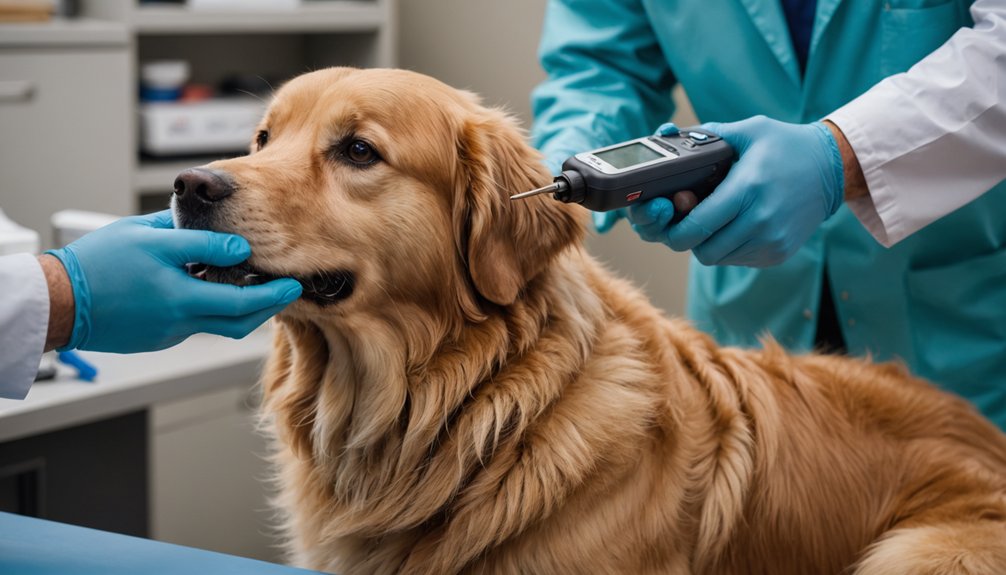
Because CDC rules link identity to immunization, the order in which you microchip and vaccinate your dog isn’t a technicality—it’s the whole ballgame.
Microchip rules demand the chip go in before or on the same day as the rabies shot.
Vaccinate first, chip second, and that vaccine becomes worthless for entry—no exceptions, no appeals.
Why so strict?
Vaccine timing creates a tamper-resistant link between your dog’s identity and its rabies status.
Border officials need to confirm the dog in front of them matches the paperwork.
Vaccinate before chipping, and you break that chain—the record can’t be trusted, so it’s rejected outright.
If the exact microchip date is unknown, owners can use the date of adoption instead.
Get the sequence wrong, and you’re not just risking a delay—you’re looking at a full revaccination, plus another 28-day wait.
This strict sequencing exists because officials are cracking down on a rise in dogs entering the country with falsified records.
Sequence first, freedom follows.
Completing the CDC Dog Import Form
Getting the microchip and vaccine sequence right only solves half the puzzle—you still need to document everything on the CDC Dog Import Form before you ever reach the border.
This entire import process happens online, and you—not your vet—own it. You’ll fill in Section A with your legal name and ID number matching your passport exactly, Section B with your dog’s details and a recent photo, Section C with your travel itinerary, and Section D with your signed certification. The form itself is free to complete and is available in English and Spanish.
Form submission triggers an email verification step; confirm it promptly to get your receipt within 15-20 minutes. That receipt covers one dog, one trip—no exceptions. Complete this before departure, since border agents won’t accept first-time submissions on arrival. Double-check your email address for accuracy before hitting submit, since that’s how your receipt gets delivered. If your dog is coming from a high-risk country, remember that this form is separate from the rabies serology titer requirement needed to avoid quarantine. Freedom to travel starts with paperwork done right.
Traveling From Canada, Mexico, and Low-Risk Countries
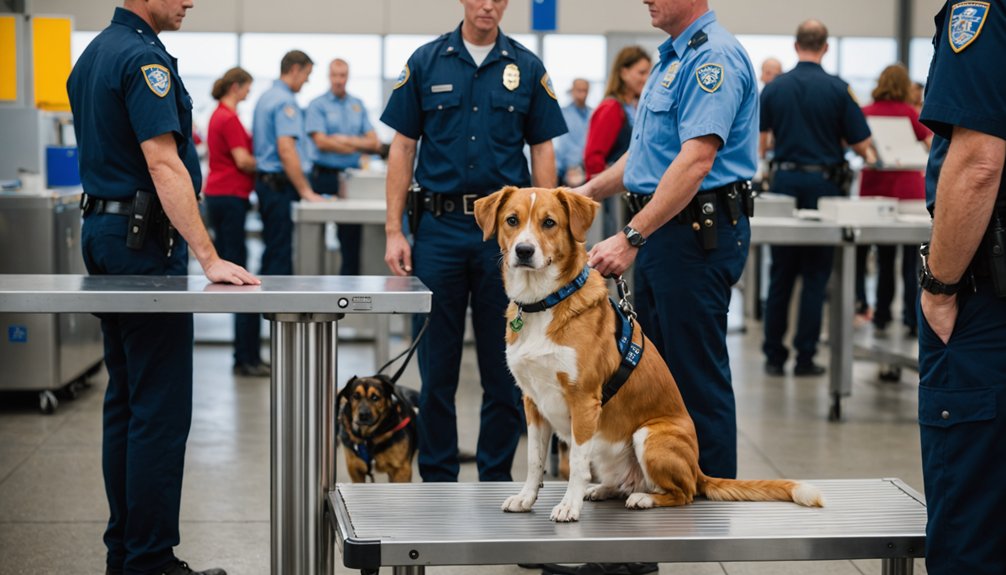
When your dog’s travels have stayed within the U.S., Canada, Mexico, or another CDC-listed low-risk country for the full six months before entry, you get access to the simplest path across the border. As of August 1, 2024, the CDC Dog Import Form is the only documentation required for these entries.
You can cross at any airport, seaport, or land crossing—no restrictions on where freedom takes you.
Before you go, confirm these essentials:
- Age: Your dog must be at least 6 months old.
- Health: Your dog must appear visibly healthy at entry.
- Microchip: An ISO-compatible microchip is non-negotiable for identification.
- Documentation: Canada requires a vet-signed export document; Mexico and other low-risk countries have their own country regulations.
CDC doesn’t demand rabies proof for low-risk entries, but states, airlines, and pet passports requirements often do. It’s ultimately up to the owner to make sure their dog meets all federal and state requirements before crossing. In 2006 alone, 287,000 dogs entered the United States through land border crossings, underscoring why clear documentation standards matter at every checkpoint.
Check ahead—don’t get stopped at the line.
How Long Your Import Form Receipt Stays Valid
Once you’ve confirmed your dog qualifies for entry, the paperwork itself comes with its own clock.
Form validity runs six months from the date you submit the CDC Dog Import Form—not from your travel date.
You can file early and generate a receipt up to six months ahead, giving you flexibility to plan without last-minute scrambling.
Receipt rules differ by origin: dogs coming only from rabies-free or low-risk countries get multiple entries within that window, provided the departure country stays consistent.
Dogs from high-risk countries get one entry only, tied to a specific arrival date. These dogs must also be at least six months old and microchipped before receiving their rabies vaccine.
The February 2026 update changed the receipt’s look, not these rules.
Once six months pass, you’ll need a fresh form and receipt before crossing again.
Which Countries Count as High-Risk for Rabies?
Not every country with rabies lands on the CDC’s radar for dog import purposes—the agency’s high-risk list targets dog-mediated rabies specifically, not overall rabies presence, which spans more than 150 countries and territories worldwide.
Your dog importation plans hinge on this precise classification, not general rabies geography.
Here’s what actually drives your risk assessment:
- Africa: Nearly the entire continent—Nigeria, Kenya, South Africa, Ethiopia, and dozens more—carries high-risk status.
- Asia: India, China, Vietnam, Pakistan, and most Southeast Asian nations top the list, with India alone driving 36% of global human rabies deaths.
- Latin America: Brazil, Colombia, Haiti, and several Caribbean nations remain flagged despite variable local burden.
- Rabies-free zones: New Zealand, Guam, and select European nations skip the list entirely.
Rabies classification isn’t guesswork—it’s specific, documented, and non-negotiable for travelers.
Extra Paperwork for Foreign-Vaccinated Dogs
Landing on that high-risk list triggers a whole separate paperwork chain if your dog’s rabies vaccine came from a foreign vet.
Foreign vaccinations require a Certification of Foreign Rabies Vaccination and Microchip form, completed by a licensed vet abroad and endorsed by a government veterinarian—usually within 30 days of travel.
The microchip number must link directly to the vaccination record, and you’ll still need the CDC Dog Import Form receipt alongside it.
Import restrictions don’t stop there.
You’ll need a reservation at a CDC-registered animal care facility, since entry only happens by air through ATL, LAX, MIA, JFK, PHL, or IAD.
A CDC-approved rabies titer test can help you skip quarantine; skip it, and your dog faces 28 days of confinement at your expense.
What U.S.-Vaccinated Dogs Need From High-Risk Countries
Even if your dog’s rabies shot came from a U.S. vet, a trip through a high-risk country still triggers extra paperwork.
Dog ownership doesn’t shield you from CDC scrutiny once your pet travel plans include risky territory. You’ll need to prove both the vaccination and its U.S. origin, with precise timing and documentation.
Here’s what you need to lock down:
- CDC Dog Import Form receipt, filed for the specific trip.
- Certification of U.S-Issued Rabies Vaccination form, completed pre-departure by a USDA-accredited vet.
- USDA endorsement on that certification—post-July 31, 2025 export certificates won’t cut it.
- Microchip implanted before vaccination, with the number matching every form.
Skip any of these, and you’re grounded at the border, no exceptions.
Choosing an Approved Port of Entry
Geography just got a lot less forgiving for dogs arriving from high-risk rabies countries. If your dog was foreign-vaccinated, you’re locked into six ACF airports: ATL, LAX, MIA, JFK, PHL, IAD. No land borders, no other airports—air travel only. That’s it.
If your dog holds a valid U.S.-issued rabies vaccination certificate, port restrictions loosen considerably. You can choose any airport, seaport, or land crossing, provided the port matches your CDC Dog Import Form receipt.
Airport logistics matter more than ever: your chosen airport must align with your ACF reservation, since airlines verify this before boarding and CBP checks again at arrival.
Not every carrier flies into all six approved airports, so confirm your airline’s routes and pet policies before booking. Mismatched reservations mean denied boarding—plan accordingly.
Booking a CDC-Registered Animal Care Facility
Paperwork alone won’t get your dog into the country—you’ll also need a confirmed reservation at a CDC-registered Animal Care Facility before you ever board that flight.
If your dog’s foreign-vaccinated and coming from a high-risk country, ACF Booking isn’t optional—it’s mandatory, and you’re footing the bill for every service rendered.
Here’s what the Reservation Process demands:
- Contact the ACF early—space fills fast, and CDC timelines don’t bend.
- Submit full documentation—microchip number, vaccination records, and your travel itinerary.
- Match your airport to your facility—JFK bookings mean JFK arrivals, no exceptions.
- Confirm exam and revaccination coverage—plus quarantine, if you lack a valid titer.
Lock this in before you fly, and your freedom to travel stays intact.
When Quarantine or a Rabies Titer Test Applies
Booking your ACF slot solves the logistics, but it doesn’t answer the bigger question: will your dog walk out same-day, or spend 28 days behind a kennel gate?
The answer hinges on your dog’s rabies vaccination history and travel record. If you vaccinated abroad and your dog’s been in a high-risk country within 6 months, CDC rabies rules trigger mandatory quarantine—unless you’ve got a valid titer test from a CDC-approved lab. That single document changes everything: exam, injection, and you’re out. No titer, expired titer, or results below threshold means 28 days at your expense, no exceptions, no home quarantine option. Dogs from low-risk or rabies-free countries skip this entirely. Know your dog’s history before you book.
Frequently Asked Questions
Can Service Animals Arriving by Seaport Skip Standard High-Risk Entry Rules?
No—you don’t get full import waivers. Seaport exemptions only skip the ACF airport and reservation rules; you still must provide vaccination proof, a valid rabies titer, and complete CDC documentation before you travel.
Who Pays for Veterinary Exams if My Dog Seems Sick at Arrival?
You pay. If your dog seems sick at arrival, you’re responsible for vet bills—exams, testing, treatment. CDC-registered facilities bill import costs directly to you, so contact them beforehand for estimates and stay prepared.
Does the February 5, 2026 Form System Update Change Past Receipts?
No. Form updates don’t touch your past receipts—receipt changes are cosmetic only. You keep your accepted receipt if it’s accurate and unexpired. You don’t need to redo paperwork just because the system’s look changed.
Are Multiple Dogs Allowed on One CDC Dog Import Form?
No—you can’t combine dogs on one form. As dog owners, you’ll need a separate CDC Dog Import Form and receipt for each dog. Plan your dog transport accordingly; there’s no cap on dogs, just one form per dog.
What Happens if My Dog Fails Inspection at the Port of Entry?
If your dog fails inspection, you’ll face denial of entry, forced return, or the quarantine process at a CDC-registered facility—all at your expense. You must meet requirements upfront to protect your travel freedom and avoid costly delays.
Conclusion
You’ve got the roadmap—now use it. Check your dog’s age, confirm the microchip’s in place before that rabies shot, and fill out the CDC form correctly. Know whether you’re coming from a low-risk or high-risk country, and pick your port of entry with quarantine rules in mind. Don’t leave these steps to chance; CDC officers won’t bend the rules. Prepare early, and you’ll walk through entry without delays or surprises.
References
- https://www.cdc.gov/importation/dogs/index.html
- https://www.cdc.gov/importation/dogs/faqs.html
- https://www.cdc.gov/importation/dogs/dog-import-form-instructions.html
- https://www.aphis.usda.gov/pet-travel/another-country-to-us-import/dogs
- https://www.cdc.gov/yellow-book/hcp/family-travel/traveling-with-pets-and-service-animals.html
- https://www.cdc.gov/importation/bringing-an-animal-into-the-us/index.html
- https://www.avma.org/resources-tools/animal-health-and-welfare/animal-travel-and-transport/cdc-dog-importation-requirements-faqs-veterinarians
- https://newsroom.tricare.mil/News/Defense-Health-Agency-News/Article/3866005/dha-veterinary-services-explains-updated-cdc-dog-importation-guidelines
- https://www.vetsaglik.com/en/post/cdc-dog-import-requirements-2026-dog-import-form-microchip-rabies-rules-high-risk-vs-low-risk-c
- https://www.21af.amc.af.mil/News/Article-Display/Article/3865007/cdc-updates-to-pet-travel/