Altitude sickness in dogs starts with subtle signs you’ll likely miss on the trail. Watch for unusual quietness, slow responses, refused treats, or mild stumbling and toe-dragging. Check your dog’s gums during breaks—pale, gray, or bluish tinges signal dangerous hypoxia. The biggest tell is persistent panting that doesn’t ease with rest. Signs typically begin around 8,000 feet, but at-risk dogs struggle lower. Knowing what comes next could save your dog’s life.
TLDR Key Takeaways
- Subtle behavioral changes like unusual quietness, slower cue responses, or refusing favorite treats can signal early altitude sickness.
- Mild gait problems such as stumbling, toe-dragging, crossing feet, or lagging behind are easily overlooked warning signs.
- Persistent panting during rest that doesn’t ease is an early red flag, unlike normal post-exercise panting.
- Pale, grayish, or bluish gums checked during breaks indicate dangerous hypoxia requiring urgent attention.
- A single vomiting episode, soft stool, or facial puffiness shouldn’t be dismissed as “something they ate.”
What Altitude Sickness in Dogs Actually Is
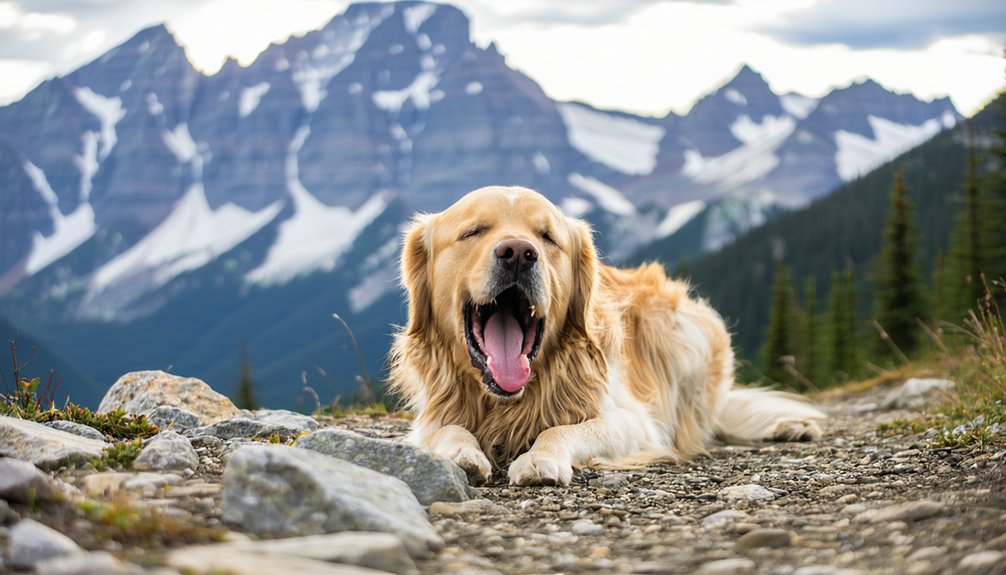
At its core, altitude sickness in dogs is a clinical syndrome driven by inadequate oxygenation, or hypoxia, that develops when reduced barometric pressure at high elevation lowers the oxygen available in each breath.
As you climb with your dog, that thinner air weakens oxygen diffusion from the lungs into the bloodstream, producing hypoxemia and triggering a hypoxia cascade that strains organs throughout the body.
Your dog’s cardiovascular and respiratory systems respond by raising heart rate and ventilation to compensate, increasing overall metabolic strain.
Veterinary literature calls this high-altitude illness or hypoxia-related illness, and it spans a range—from mild altitude intolerance to life-threatening pulmonary or cerebral complications.
Understanding what you’re actually facing helps you protect the trail companion who counts on you.
At What Elevation Does the Risk Start?
Now that you understand the oxygen-starved mechanics behind altitude sickness, you’re probably wondering where on the map the danger actually begins.
Most veterinarians cite 8,000 feet as the classic threshold, where significant signs typically start.
But risk variability matters: some dogs—especially those with pulmonary hypertension or cardiac compromise—show problems as low as 6,000 feet.
Above 10,000 feet, any dog can be affected, and beyond 12,000 feet, you should assume altitude is contributing to any concerning symptoms.
Don’t fixate on a single number.
Rapid ascent from sea level amplifies risk, even at moderate elevations.
That’s why acclimation timelines matter—your dog needs several days, up to a week, to adjust.
If yours is at-risk, start monitoring around 5,000–6,000 feet.
Which Dogs Face the Highest Altitude Risk
Beyond elevation thresholds, your dog’s individual profile largely determines how hard altitude hits.
If you own a brachycephalic breed—bulldogs, boxers, pugs, Boston terriers, or Pekingese—you’re in the highest-risk group.
Their breed airway, oxygen limitation problems stem from short nasal passages, narrowed nostrils, and elongated soft palates, leaving little reserve in thin, dry air.
Watch for labored breathing, fainting, vomiting, or anorexia.
Dogs with heart or lung disease need a pretrip vetcheck, exertion limits, since altitude can trigger dangerous decompensation.
Geriatric, very young, sedentary, and overweight dogs also struggle, tiring faster and panting heavily.
If your dog fits any of these profiles, you’re not alone—plan slower acclimatization, shorter hikes, frequent rest breaks, and close monitoring to keep them safe.
Subtle Altitude Sickness Signs Hikers Miss
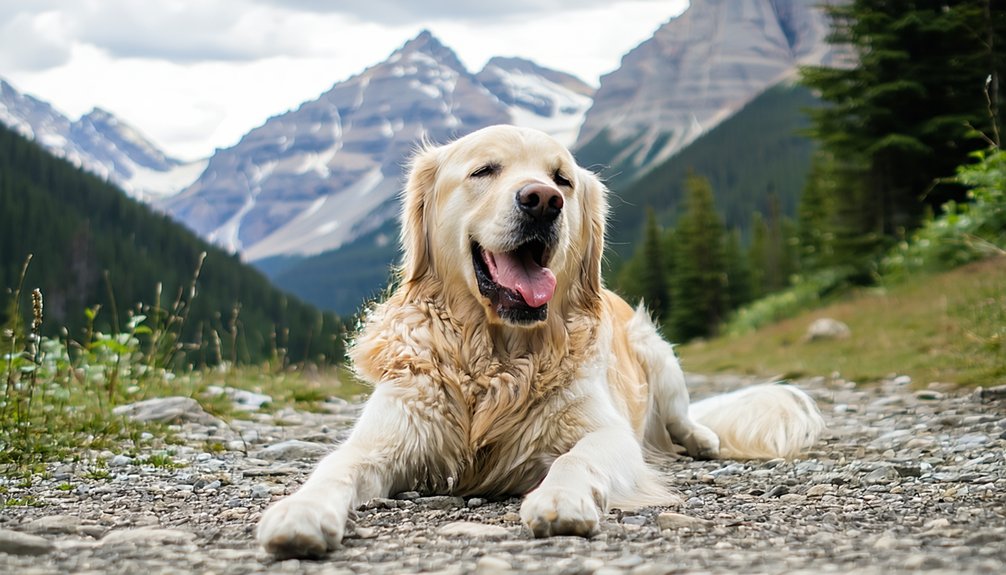
Because altitude sickness rarely announces itself with dramatic collapse, the earliest warning signs often hide in plain sight—disguised as ordinary trail behavior.
Watch for behavioral changes like unusual quietness, slower responses to cues, or refusal of favorite treats—subtle shifts you might mistake for good manners or trail fatigue.
Notice subtle gait problems too: mild stumbling, toe-dragging, crossing feet, or a dog that lags behind when she usually leads.
Check your dog’s gums during breaks; pale, grayish, or bluish tinges signal dangerous hypoxia, while dry, tacky gums reveal dehydration.
Don’t dismiss a single vomiting episode, soft stool, or facial puffiness as “something she ate.”
When you know what to look for, you’ll catch trouble early—protecting the hiking companion who trusts you completely.
Why Panting at Rest Is a Red Flag
Panting usually serves a simple purpose: it cools your dog down.
But when that panting stays high during rest, it’s an early warning sign of altitude sickness, not just exercise recovery.
At 8,000 feet and above, lower oxygen and reduced air pressure force your dog to work harder to breathe, even after the pace slows.
Normal post-exercise panting eases with rest; altitude-related panting doesn’t.
Watch for it alongside reduced stamina, a quieter attitude, or a soft cough.
Hydration timing matters too, because dry air increases fluid loss, while heat stress compounds the strain.
Fellow hikers know the rule: treat persistent resting panting as a red flag.
Stop, offer small sips of water, and prepare to descend before things progress toward weakness or collapse.
When Altitude Sickness Turns Serious
Resting panting that won’t quit is a warning, but it’s not the ceiling. When altitude symptom red flags multiply, you’re no longer managing mild discomfort—you’re facing an emergency.
Above 8,000–10,000 feet, especially after rapid ascent or hard exertion, watch for signs that oxygen deficit is overwhelming your dog’s body.
These urgent descent criteria demand action without delay:
- Repeated vomiting, collapse, or seizure activity that signals systemic crisis
- Sustained breathing distress or an inability to continue hiking
- Neurologic signs like disorientation, vacant stare, or staggering gait
Don’t wait. Take your dog down 1,000–2,000 feet immediately. If signs don’t improve promptly after descent and rest, you’re in medically serious territory—seek veterinary care, because your dog’s life depends on it.
Gum Color and Other Emergency Warning Signs

Inside your dog’s mouth lies one of the fastest emergency readouts you’ll find on the trail.
Healthy gums look salmon to light pink, moist and slick, with a capillary refill time under two seconds.
Once you know your dog’s baseline, gum assessment becomes your most reliable trail triage tool.
Pale or white gums warn of anemia, shock, or internal bleeding.
Bluish, gray, or purple gums signal dangerously low oxygen—a serious red flag at altitude.
Bright red gums point toward heatstroke or sepsis, while dry, tacky gums reveal dehydration.
Pair these with lethargy, labored breathing, weakness, or a weak, thready pulse, and you’re facing an emergency.
Trust what you see: when gum color shifts from healthy pink, you act fast together.
What to Do the Moment Symptoms Appear
When symptoms appear, stop everything—no more running, fetching, or pushing uphill.
Cutting oxygen demand immediately matters, so switch to slow, controlled walking only when you need to reach a safer spot.
Place your dog in a resting position on level ground, and use leash control to prevent sudden bursts triggered by wildlife or other hikers.
Don’t “test” recovery with short sprints or extra climbing.
Focus on three priorities:
- Hydration: Offer small, frequent sips of cool, fresh water to limit vomiting and aspiration.
- Environment: Move to shade, minimize noise, and keep your dog calm and uncompressed.
- Descent: Drop 1,000–2,000 feet via the safest route, using quiet restbreaks.
Throughout, breathing monitoring helps you catch worsening distress early.
When Descent Becomes Non-Negotiable
Although rest and hydration resolve many mild cases, certain symptoms cross a clinical “red line” that makes descent mandatory—not optional.
When your dog shows persistent respiratory distress at rest, pale, gray, or blue-tinged gums, or neurological signs like ataxia, collapse, or disorientation, you must descend immediately.
Repeated vomiting or refusal to move signals systemic decompensation, not simple fatigue.
If breathing, mentation, or willingness to move doesn’t improve after a short rest at the same altitude, don’t wait—begin first aid descent right away.
Aim for an immediate elevation loss of 1,000–2,000 ft, since symptoms typically appear above 8,000 ft.
If you carry a pulse oximeter, oxygen saturation monitoring confirms hypoxia, but never delay descent for readings.
Recurring signs with modest exertion mean you’ve exceeded safe tolerance.
How to Acclimate Your Dog Before the Climb
Because acclimation starts long before you reach the trailhead, your dog’s tolerance for altitude depends on the conditioning you build in the weeks prior. Start with gradual conditioning: moderate walks or jogs on rolling terrain 4–5 days weekly, building the cardiovascular efficiency your dog needs before thin air challenges those lungs.
- Light pack training with a backpack at 5–10% body weight, increasing slowly to mimic gear loads
- Hill repeats or stair sessions once or twice weekly, with rest days between harder efforts
- Veterinary screening for brachycephalic, senior, cardiac, or respiratory-compromised dogs before you begin
Then plan a staged re entry. Spend 1–3 days at moderate elevation, cap early outings below 9,000 ft, and change only one variable—distance or elevation—at a time.
Hydration and Pacing Targets at Altitude
Why does altitude demand more water than you’d expect? Thinner air raises your dog’s respiratory rate, driving fluid loss through panting even in cool weather.
That’s why you’ll want to target about 1.5× the sea-level baseline—roughly 1 to 1.5 oz per pound daily at elevation.
Hydration timing matters as much as volume: offer fresh water 30–60 minutes before you start, then every 15–20 minutes during exertion, shortening to 10–15 on steep climbs.
Smart water portioning means small, frequent drinks—a few swallows at a time—not large boluses that risk vomiting.
For pacing, slow your usual climb by 30–50%, favoring steady, conversational effort.
Use a “10 minutes moving, 5 minutes resting in shade” ceiling.
We hike smarter together, keeping our dogs safe.
Planning High-Altitude Trips Around Your Dog
Hydration and pacing keep your dog safe on the trail, but the smartest safeguards happen before you leave home.
Like every responsible hiker in our community, you’ll start with veterinary clearance, especially for senior, brachycephalic, or dogs with heart or lung conditions.
Short, lower-elevation trial outings reveal your dog’s tolerance before you commit to a full mountain itinerary.
Build your plan around three essentials:
- Emergency Vet Route planning that maps the nearest clinic and emergency hospital along your travel corridor
- Stepwise Exercise staging that returns out-of-condition dogs gradually rather than jumping straight to high elevation
- Flexible itineraries that leave room to turn around, descend early, or skip a summit
Stage your ascent, schedule rest days, and let your dog set the pace.
Frequently Asked Questions
Can Dogs Develop Long-Term Complications After Recovering From Altitude Sickness?
Yes, but rarely. Most dogs in our hiking community recover fully with prompt descent and care. Long Term Monitoring helps catch lingering cardiopulmonary or Neurological Effects, especially if your pup’s got underlying conditions or experienced severe hypoxia.
Are There Medications That Prevent Altitude Sickness in Dogs?
Yes, your vet might prescribe acetazolamide or dexamethasone off-label for high-risk pups. But you’ll find acclimatization strategies work best—prevention supplements aren’t proven, so don’t skip gradual ascent. We’re all keeping our companions safer together.
How Long Does Altitude Sickness Recovery Typically Take in Dogs?
Most mild cases improve within 24–48 hours once you’ve descended. You’ll see faster recovery with proper rest duration and smart hydration strategies—offering small water amounts. If symptoms persist beyond two days, you’ll want a vet’s evaluation.
Can Puppies Safely Travel to High-Altitude Destinations?
Yes, but you’ll need caution. Get vet clearance first, then follow puppy acclimation tips: ascend gradually, limit exercise, and hydrate often. With smart, safe travel planning, you and your pup can journey mountains together confidently.
Does Altitude Sickness in Dogs Ever Become Fatal?
Yes, it can. When you ignore emergency warning signs—severe dehydration, breathing distress, collapse risk—altitude sickness turns deadly through pulmonary edema. Descend immediately below 8,000 feet, hydrate your dog, and seek vet care. We’re protecting them together.
Conclusion
You know your dog better than any trail guide does, so trust what you’re seeing. Watch for the subtle signs—resting panting, lethargy, lost appetite—and don’t wait for a crisis to turn around. Acclimate gradually, hydrate consistently, and pace your climb to match your dog’s limits, not your summit goals. When symptoms escalate, descend immediately; altitude sickness can turn fatal fast. Plan smart, stay alert, and you’ll keep every climb safe and memorable.
References
- https://www.animalcareandwellnessinstitute.com/topic/wild-lesson-3-altitude-2/
- https://www.denverdog.co/canine-altitude-sickness-a-denver-hiker-s-guide
- https://rickcrandallbooks.com/dogs-and-altitude-sickness/
- https://www.petmd.com/dog/can-your-pet-suffer-altitude-sickness
- https://thepetspotco.com/altitude-considerations-for-pets-what-newcomers-to-colorado-should-know/
- https://pathsandpaws.com/blog/high-altitude-sickness-dogs/
- https://pawprintoxygen.com/blogs/healthy-paws/what-is-altitude-sickness-in-dogs
- https://puainta.com/blogs/dogs/dog-altitude-sickness-prevention
- https://www.brekkevet.com/blog/how-long-does-it-take-a-dog-to-adjust-to-high-altitude.html
- https://nazpetemergency.com/understanding-how-high-altitude-affects-your-pets-health-in-flagstaff/