Since January 2021, your GB-issued EU pet passport won’t get your dog, cat, or ferret into the EU or Northern Ireland. You’ll need an Animal Health Certificate (AHC) instead, issued by an Official Veterinarian within 10 days of travel. First, microchip your pet, then vaccinate against rabies and wait 21 days. Dogs also need tapeworm treatment. Each trip requires a fresh AHC. Below, you’ll find every step explained in detail.
TLDR Key Takeaways
- Since 1 January 2021, a GB-issued EU pet passport is invalid; an Animal Health Certificate (AHC) is now required for EU/NI travel.
- Your pet needs an ISO-compliant microchip implanted before the rabies vaccination, given at minimum 12 weeks, followed by a 21-day wait.
- An AHC must be issued by an APHA-authorised Official Veterinarian within 10 days of travel, requiring a physical check and microchip scan.
- Dogs only need praziquantel tapeworm treatment between 24 and 120 hours before arrival, recorded in the AHC, for certain destinations.
- Each AHC covers a single trip, allowing onward EU travel and GB re-entry for 4 months, and cannot be reused.
What Changed for UK Pet Travel After Brexit
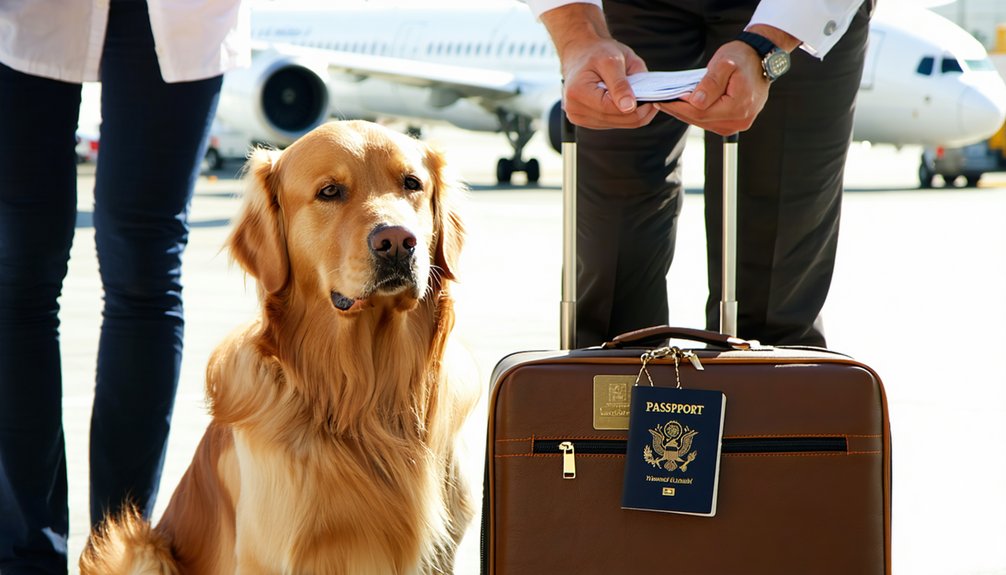
When Brexit took effect on 1 January 2021, the EU classified Great Britain as a “part 2 listed” third country, fundamentally changing how you travel with your pet.
Your GB-issued EU pet passport no longer works for entering EU countries or Northern Ireland. Instead, you now need an Animal Health Certificate (AHC), issued by an official veterinarian within 10 days of travel.
This Post Brexit paperwork covers a single trip, allows onward EU travel for four months, and permits re-entry to Great Britain within that window.
Defra confirmed these rules in December 2020.
One of the most common owner mistakes is reusing an old passport or bringing photocopies—officials only accept originals.
Understanding these changes keeps you and your companion travelling together with confidence.
Microchipping and Rabies Vaccination First
Before you book any travel or apply for an Animal Health Certificate, you’ll need to complete two foundational steps in the correct order: microchipping and rabies vaccination. The sequence matters—your pet must be identified before vaccination, or that rabies dose won’t count.
- Your dog, cat, or ferret needs an ISO 11784/11785-compliant microchip (HDX or FDX-B), implanted before any rabies vaccine.
- Rabies validity requirements demand the vaccine be given at 12 weeks minimum, followed by a 21-day wait before entry.
- Chip registration on an approved database links the 15-digit number to your contact details and vaccination records.
A qualified implanter scans your pet before and after implantation, confirming readability.
The microchip number must appear on the rabies vaccination entry, tying everything together properly.
How to Get Your Pet’s Animal Health Certificate
Every dog, cat, or ferret leaving Great Britain for the EU or Northern Ireland needs an Animal Health Certificate (AHC), unless you’re traveling on a valid EU- or NI-issued pet passport.
This document replaces the GB pet passport, and you’ll need a new one for each trip.
Only an Official Veterinarian (OV) authorised by APHA/DEFRA can sign it, so confirm OV availability before your APPOINTMENT BOOKING.
Demand spikes around holidays, so book weeks ahead.
Your AHC must be issued within 10 days of entry, usually 1–5 days before departure.
The OFFICIAL VETERINARY visit includes a REQUIRED EXAMINATION—the OV physically checks your pet, scans the microchip, and reviews original vaccination records.
The DOCUMENT LANGUAGE follows the EU model: English plus your first entry country’s language.
How Long Is Your AHC Actually Valid?
- Onward travel in the EU/NI: up to 4 months (older rule) or 6 months (post-April 2026 guidance), subject to rabies validity.
- Return to Great Britain: 4 to 6 months, again capped by current rabies cover.
- Effective window limits: the AHC stops working the moment rabies expires—whichever comes first.
Tapeworm Treatment and Approved Pet Routes
When you’re travelling with a dog to certain countries, you’ll need to factor in tapeworm treatment—a legal requirement that applies to dogs only, not cats or ferrets.
If you’re heading to Finland, Ireland, Malta, Norway, or Northern Ireland—or re-entering Great Britain from the EU—a vet must administer praziquantel within a strict timing window: not less than 24 hours and not more than 120 hours before entry.
Your vet paperwork matters here; treatment details must be recorded in your AHC or pet passport.
For cross border compliance, you’ll also need approved routes—specific ferry terminals, airports, rail services, and Eurotunnel LeShuttle.
Operators carry out route verification and may refuse carriage if your timing or documentation falls short.
These rules keep Britain free of Echinococcus multilocularis, protecting everyone.
Taking Your Pet From Great Britain to the EU
Although the rules have tightened since Brexit, taking your dog, cat, or ferret from Great Britain to the EU is straightforward once you know the requirements. The scheme covers pet dogs, cats, and ferrets, with a maximum of five pets per traveller unless you’re attending a competition, show, or sporting event with proof.
Your pet must be microchipped, vaccinated against rabies at 12 weeks or older, and you must wait 21 full days before travel. Smart export planning keeps your journey smooth and stress-free.
- TPE checklists: Enter the EU via an official travellers’ point of entry where documents and microchip status get verified.
- Passport alternatives: UK passports no longer work, so you’ll need an AHC per trip.
- Cross border fees: Budget accordingly.
Bringing Your Pet Back Into Great Britain
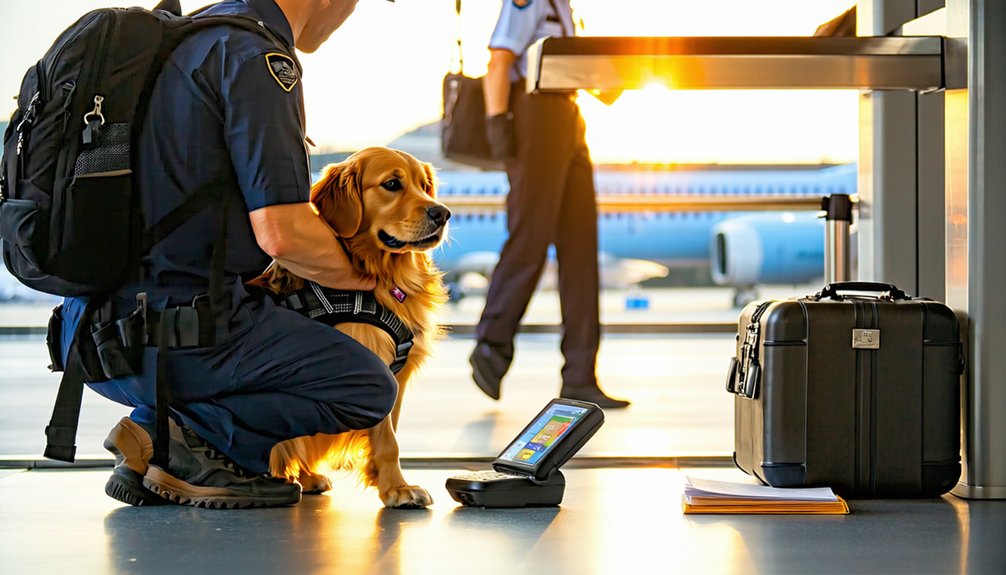
Returning to Great Britain comes with its own set of checks, and you’ll want to plan for them before you board. You must enter via approved routes and travellers’ points of entry, using authorised carriers who’ll handle document verification before boarding.
Arrival procedures require your pet’s microchip to be readable and matched to valid rabies vaccination details, given after 12 weeks of age with a 21-day wait. Border compliance also demands accepted documents—an EU pet passport, GB pet health certificate, or qualifying animal health certificate.
Dogs need tapeworm treatment containing praziquantel within the required window.
For non-commercial movements, you’ll sign a declaration confirming no sale or ownership transfer. Get this right, because missing or incorrect paperwork triggers quarantine risks, refusal of entry, or re-export at your expense.
Documents Accepted From Listed and Unlisted Countries
Because the document you carry depends entirely on where you’re travelling from, you’ll need to know how Great Britain sorts countries into three categories: part 1 listed, part 2 listed, and unlisted. Understanding these border document rules keeps you and your pet on the right side of entry requirements, so you can travel with confidence.
- Part 1 listed: You can use an EU pet passport, a pre-Brexit GB passport, another part 1 passport, or a GB pet health certificate.
- Part 2 listed: You’ll need a mandatory GB pet health certificate; passports alone won’t do.
- Unlisted: You’ll need a GB pet health certificate plus a rabies blood test.
Always complete passport validity checks before you set off to avoid refusal.
The New Northern Ireland Pet Travel Document
Since 4 June 2025, you’ve had a simpler way to move your pet from Great Britain to Northern Ireland. The Northern Ireland Pet Travel Document (PTD) replaces the Animal Health Certificate for GB→NI trips, provided you’re not travelling onward into the EU.
Introduced under EU Regulation (EU) 2023/1231 and Implementing Regulation (EU) 2025/1165, it joins our community of responsible owners moving pets non-commercially.
Apply online via GOV.UK, free of charge. Your PTD lasts your pet’s lifetime, making repeat trip planning effortless. Each dog, cat or ferret needs its own document. Smartphone app reuse lets you download and re-present it for subsequent journeys.
Check document accuracy carefully—the microchip code must match the chip read at port. Address change requirements mean reapplying whenever you relocate.
Who Qualifies for the PTD and What It Covers
Before you apply, you’ll want to confirm your pet qualifies under the scheme’s strict eligibility rules. The Northern Ireland Pet Travel Document (PTD) covers GB↔NI movements, so PTD eligibility depends on where you live and what you’re moving.
You’ll need to meet these core conditions:
- GB residency: You must live in England, Scotland, or Wales to access the PTD scheme.
- Eligible species: Only pet dogs, cats, and ferrets qualify—no other animals.
- Owner requirements: You must be 16 or over and travel as a private pet keeper, not a commercial trader.
The document scope is non-commercial only—no sale, rehoming, or ownership transfer allowed.
You’ll also need a valid physical UK address for issuance, plus microchipping that matches your paperwork.
Common Timing Mistakes That Derail Pet Travel
Although your paperwork might look complete, a single mis-timed step can derail your entire trip at the check-in desk.
Get your Countdown Day Counting right: your rabies vaccination must follow microchipping, and you’ll wait 21 full days before travel—not the departure day, not the “third weekend.”
Book your AHC within 10 days of EU entry, and don’t exceed its 4-month overall validity mid-trip.
For dogs, time tapeworm treatment 24–120 hours before *arrival* in your destination, not departure from GB.
Always check Border Check Validity against overnight crossings and time zones, since technical day-11 entries invalidate certificates.
Don’t reuse an old AHC, and verify your microchip number against documents well before travel day.
Joining fellow pet owners abroad starts with precise timing.
The Proposed New EU Pet Passport
If you’ve followed pet travel news, you’ll know the EU is overhauling its pet passport system, with new standardised models applying from 22 April 2026 and a handover period running until 1 January 2028.
These new passports tighten identification, with stronger data linkage between the animal, its microchip number and the owner’s habitual residence in the issuing Member State.
They’re aligned with the wider Animal Health Law, replacing Regulation (EU) No 576/2013.
- Residency rule: Only owners whose main home is in an EU Member State can hold one.
- GB exclusion: Passports issued to GB residents before 22 April 2026 no longer work for EU entry.
- Certificate phase-in: You’ll switch to Animal Health Certificates instead.
Frequently Asked Questions
Can I Travel With My Pet to Non-Eu European Countries?
Yes, you can! You’ll need an export health certificate (EHC) and export application form (EXA), not pet passport options. Meeting UK vet requirements means nominating an official vet to complete everything, plus checking destination-specific rules carefully.
What Happens if My Pet’s Microchip Fails at the Border?
If your microchip fails, you’re refused entry or sent to quarantine. Border microchip troubleshooting steps include multiple scanners; what to do next involves post entry verification options. For contact vet guidance, you’ll need rechipping and full re-preparation.
Are There Breed Restrictions for Pets Entering the EU?
No, EU entry rules don’t set breed limits—they focus on microchipping, rabies, and documents. But individual member states, like Denmark, can. So you’ll want to check your destination’s national breed rules before you travel.
Does Pet Insurance Cover Travel Under the Post-Brexit Scheme?
Yes, but you’ll need a travel add-on, since policy exclusions limit standard cover abroad. You’ll handle vet documentation like AHCs separately, as the claims process rarely includes reimbursed costs for routine paperwork. We’re guiding this together.
Can Someone Else Travel With My Pet on My Behalf?
Yes, you can! Just check authorization rules—provide written permission (or power of attorney) for your third party escort. They’ll need your pet’s vaccination records and a signed non-commercial declaration, with travel within five days.
Conclusion
You’ve now got the full roadmap for travelling with your pet after Brexit. Start with microchipping and rabies vaccination, secure your Animal Health Certificate within the validity window, and don’t overlook tapeworm treatment or approved routes. If you’re heading to Northern Ireland, sort out your Pet Travel Document. Avoid the timing mistakes that strand pets at borders, and keep an eye on the proposed EU pet passport—it could simplify everything down the line.
References
- https://www.bbc.com/news/articles/czx09ezxrp1o
- https://www.shoosmiths.com/insights/articles/pet-travel-post-brexit
- https://commonslibrary.parliament.uk/research-briefings/cbp-8667/
- https://www.gov.uk/bring-pet-to-great-britain
- https://www.gov.uk/government/publications/taking-your-pet-abroad-if-theres-no-brexit-deal/taking-your-pet-abroad-if-theres-no-brexit-deal
- https://www.heathvets.com/pet-travel-after-brexit/
- https://www.pets4homes.co.uk/pet-advice/is-brexit-going-to-make-it-harder-to-take-your-dog-abroad.html
- https://www.mypetsvetsltd.co.uk/images/content/pdfs/travelpostbrexit.pdf
- https://www.gov.uk/bring-pet-to-great-britain/pet-passport
- https://www.facebook.com/bbcbreakfast/videos/people-travelling-with-animals-to-anywhere-in-the-eu-will-be-required-to-get-a-c/974497535054374/