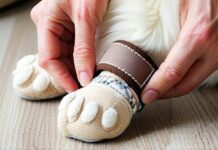
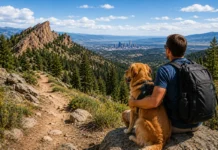
Start by assessing your dog accurately, then multiply its body weight by 10–15%. Lean toward 10% for beginners, seniors, or pups, and reserve 15% for healthy, conditioned dogs. Subtract the empty pack’s weight before adding gear. Remember, that range is based on lean, ideal weight—not surplus fat. Age, health, fitness, terrain, and heat all shift your real limit. Knowing how each factor changes the math helps you load your dog safely.
TLDR Key Takeaways
- Aim for a pack load of 10–15% of body weight, leaning toward 10% for beginners, seniors, or puppies building conditioning.
- Weigh your dog accurately, multiply by your chosen percentage, then subtract the empty pack’s weight before adding gear.
- Base calculations on lean, conditioned mass, since excess fat adds weight, strains joints, and increases overheating risk without strength.
- Adjust load for age, fitness, health, and pack fit, reducing or eliminating weight for puppies, seniors, and orthopedic conditions.
- Cut weight for terrain and heat—reduce 10–15% per 1,000 ft of gain and drop to ≤10% on technical ground.
The 10–15% Rule for Dog Pack Weight
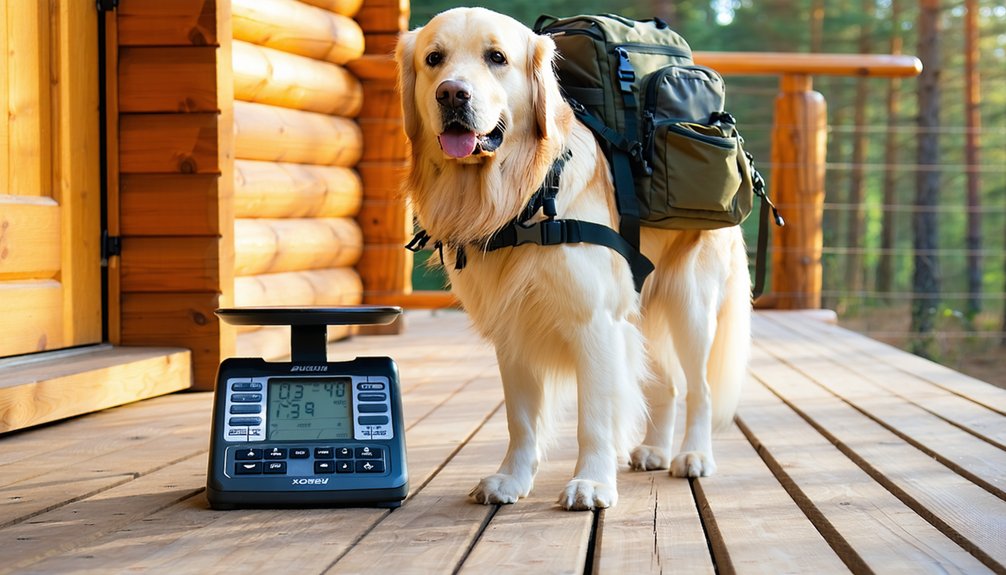
When you’re figuring out how much your dog can safely haul, start with the most widely cited benchmark: a pack load equal to 10–15% of your dog’s body weight.
This total includes all carried gear, and it’s the standard starting point fellow hikers rely on.
Lean toward 10% for beginner dogs, seniors, or pups still building conditioning, and reserve 15% for healthy, experienced dogs that have gradually adapted to a pack.
Treat this range as a guideline, not a guarantee—breed, age, fitness, and joint health all shift your dog’s real limit.
Just as calorie budgeting and recovery pacing keep you trail-ready, conservative loading keeps your dog comfortable and confident.
When in doubt, start light, watch closely, and consult your vet before pushing the upper end.
How to Calculate Your Dog’s Safe Load
Although the 10–15% rule gives you a solid starting point, calculating your dog’s safe load takes a few more steps to get right. You’ll want to ground every decision in your dog’s actual condition, not a rough estimate, so you and your trail companion stay safe together.
- Weigh your dog using a current vet or home scale—never guess—then multiply by your target percentage.
- Subtract the empty pack’s weight (harness, saddlebags, attachments) before adding gear, since hardware counts toward the total.
- Adjust for variables like steep terrain, heat, or your dog’s age, health, and experience, lowering the load accordingly.
- Condition gradually through stepwise distance increases and hydration planning, starting empty and building over several weeks.
Recalculate whenever conditions change.
Why Ideal Weight Beats Current Weight
If your dog’s carrying extra weight, calculating pack load from that current number sets you up for trouble. Safe load guidelines—that 10 to 25% range—are built on lean, conditioned mass.
Adipose tissue adds weight but almost no strength, so excess fat already acts like a built-in backpack, consuming your dog’s safe capacity before you’ve added gear.
Basing pack weight on ideal weight protects what matters. It limits joint stress on hips, stifles, and elbows already strained by surplus mass.
It eases the heat tolerance burden, since fat insulates and raises overheating risk.
And it sharpens load accuracy—body condition scoring lets you estimate target weight even when the scale reads high.
Smart handlers like you calculate from ideal, not current.
How Age Changes Safe Carrying Capacity
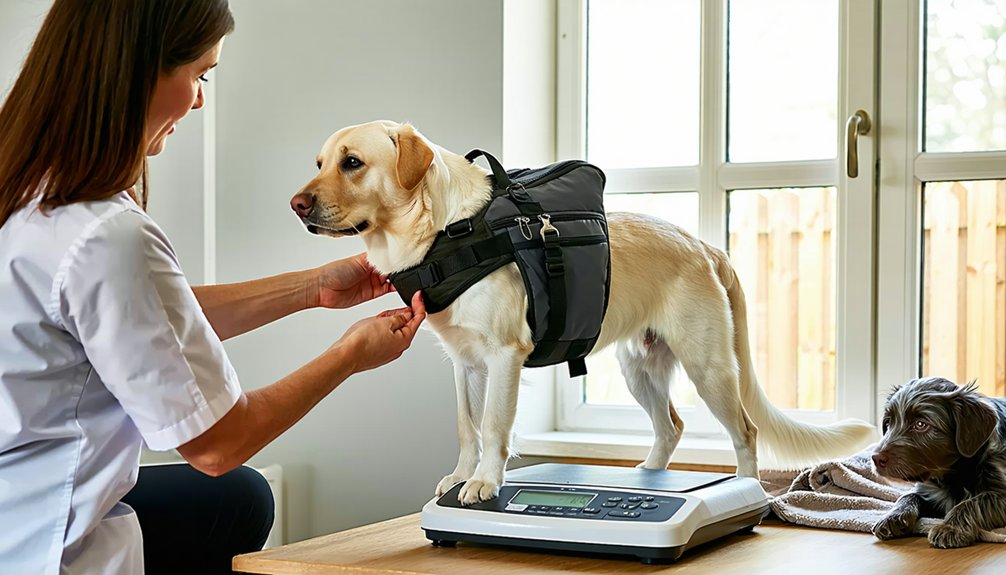
Just as ideal weight shapes your baseline, age sets a moving ceiling on what your dog can safely carry. Where your dog falls in life’s timeline determines a realistic, protective load—and getting this right means you’re giving your companion the longevity they deserve.
- Puppies (under 12–18 months): Carry no meaningful weight. Growth plate health depends on it, since early loading risks dysplasia, osteoarthritis, and lifelong lameness.
- Prime adults (2–6 years): Conditioned dogs handle the most—typically 10–15%, occasionally higher for very fit individuals.
- Midlife change (large breeds 6–8 years): Shift toward 10–15% or lower as muscle and cardiovascular reserve decline.
- Seniors: Account for senior mobility decline with lighter packs, shorter distances, and longer recovery breaks.
Match the load to their stage.
When Health Problems Cut the Load
Age sets one ceiling, but health conditions can lower it further—sometimes to zero.
If your dog has orthopedic disease—arthritis, hip or elbow dysplasia, or IVDD—added load accelerates cartilage wear and spinal compression, so many clinicians recommend no pack at all.
Severe pain limits what’s reasonable; loads should fall well below generic 10–15% guidelines, adjusted after orthopedic exam.
With heart disease or brachycephalic airway syndrome, veterinary clearance is needed before any loaded hike, and safe capacity often drops to essential gear or zero, especially in heat or altitude.
Congenital issues demand the same caution.
Overweight dogs carry their own excess, so cap loads at ≤10% of current weight, or less.
Build flare up management into every plan—when symptoms spike, lighten the pack immediately.
We’re all keeping our companions safe.
How Breed Affects Pack Weight
Breed shapes how much weight your dog can safely carry, because skeletal frame, chest depth, and overall durable sturdiness matter far more than the name on the pedigree.
Larger, heavier breeds like Labrador Retrievers tolerate bigger loads thanks to the musculature and structure that support controlled load-bearing.
Smaller, light-framed breeds reach their practical limit sooner, so scale your expectations to their build.
- Strong working breeds: Athletic, sturdy dogs handle higher pack loads with proper conditioning.
- Long-backed breeds: Corgis and Dachshunds need extra spine support and careful weight distribution.
- Small breeds: Lower body mass caps the absolute weight they can carry.
- Skeletal frame: Chest depth and robustness predict capacity better than weight alone.
Always confirm your dog’s limits with your veterinarian.
How Fitness Level Adjusts the Percentage
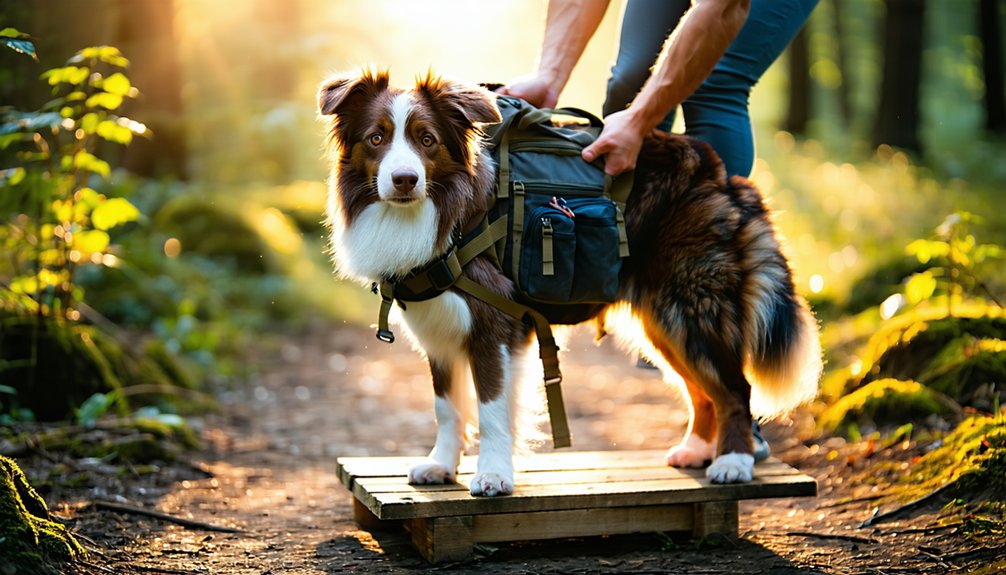
Frame and breed set the ceiling, but fitness determines where your dog actually lands beneath it. Higher overall fitness lets you progress from 5–10% toward 15–18%, with only exceptionally conditioned working dogs approaching the 25% absolute max.
If your dog’s sedentary or minimally active, stay at the low end (≤10%) until conditioning improves.
Fit dogs carry the same load at lower heart rate and perceived effort, reducing overexertion and overheating risk—that’s effort matching in practice.
Use conditioning benchmarks to guide load adjustment: dogs recovering quickly after exertion signal readiness, while slow recovery or heavy panting means you’re overloading.
Remember, fitness works alongside age and health.
Even high-activity dogs with musculoskeletal or cardiac issues need reduced percentages or no pack at all.
When Your Dog Can Carry 25
That 25% figure is a ceiling, not a target. You earn it only when your dog joins the small group of exceptionally fit, experienced trail dogs—and even then, you treat 25% as an absolute maximum reserved for brief timeframes.
Before you load up, secure veterinary clearance and honestly assess your dog’s conditioning history, building from roughly 10% with gradual increases.
Reach this level responsibly by following these guidelines:
- Veterinary clearance confirms no orthopedic, spinal, or systemic concerns.
- Conditioning history shows progressive increases without strain.
- Load averaging keeps you below 25% across the whole outing.
- Gear distribution balances weight evenly for comfort and stability.
Use 25% for short, heavier segments—then ease back. Your dog belongs on the trail, healthy and strong.
Fitting the Pack So Weight Sits Right
Even the perfect weight calculation falls apart if the pack doesn’t sit where it should. Center the pack body over your dog’s shoulders and rib cage, never the lumbar spine, and make sure it doesn’t extend past the last rib.
The pack should rest flat without rocking, allowing free neck movement and full spine flexion at walk and trot.
For strap comfort checks, adjust chest and girth straps snug but not tight—you should slip one pinkie underneath.
Keep straps flat, untwisted, and positioned over muscle and bone, not soft belly or throat.
Use these pack balance tips: load left and right panniers equally, pack heaviest items closest to the body, and confirm the pack sits level from front, rear, and side.
Terrain and Heat That Demand Lighter Loads
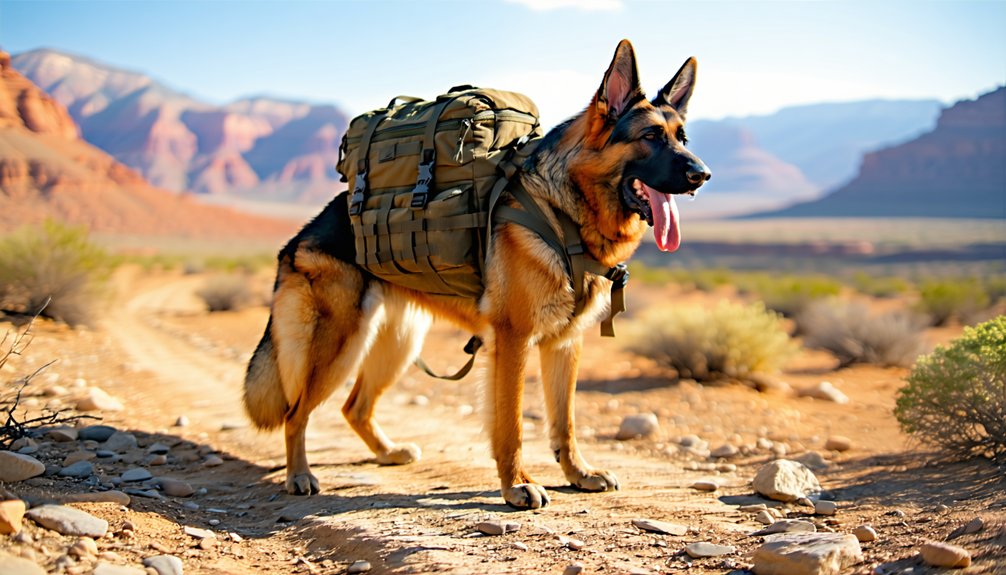
Because the perfectly fitted pack you just dialed in assumes ideal conditions, you’ll need to adjust your weight calculation the moment the trail or weather turns against you. Your dog’s safe load isn’t a fixed number—it shifts with every climb, rocky scramble, and degree of heat.
Here’s how to adapt with the rest of us who hike smart:
- Elevation: Cut weight 10–15% for every 1,000 ft of gain to offset oxygen demand and joint strain.
- Technical terrain: Drop to ≤10% body weight so balance control stays sharp on scree and ledges.
- Soft ground: Reduce loads in sand, snow, or mud, where caked debris adds hidden mass.
- Heat: Slash weight below guidelines, since paw impact and panting compound dangerous heat stress.
Building Up Load Over Weeks Safely
You’ll always start lighter than your dog’s target load, because rushing the buildup is how injuries happen.
Begin at 5–10% of ideal body weight, then add another 5–10% every one to two weeks—but only when gait, recovery, and paws stay normal.
Like others who train responsibly, you’ll progress just one variable at a time: weight, distance, or pace.
After any step-up, log 2–3 identical sessions before increasing again, holding each new load for at least a week.
Smart session spacing matters too; schedule 2–4 walks weekly, with rest days for passive recovery between them.
Make gait reassessment routine.
If you notice soreness, reluctance, or altered movement, drop back one step and maintain that lighter load for one to two weeks before retrying.
Warning Signs Your Dog Is Overloaded
Once you’ve started loading your dog’s pack, your job shifts to watching for the signals that say you’ve pushed too far. Your trail partner can’t tell you when the load hurts, so you read the body. Watch how your dog moves, breathes, and behaves under weight, and trust what you see.
- Gait changes: Shortened stride, lagging, lameness, or hind-end wobbliness signals strain or exhaustion.
- Respiratory red flags: Heavy panting that won’t normalize within 10–15 minutes, thick drooling, or pale gums demands rest and vet evaluation.
- Pain signs: Biting at straps, sore shoulders, or reluctance to climb points to poor fit or overload.
- Emergency warning: Collapse, stumbling, or refusal to move means stop immediately and seek help.
Frequently Asked Questions
How Do I Clean and Maintain My Dog’s Hiking Pack?
Hand-wash your pup’s pack in cool water with mild, unscented detergent, following the manufacturer’s washing instructions. Gently scrub the gear padding and straps, rinse until clear, then air-dry in shade. You’ll keep your trail companion comfortable.
Can My Dog Drink From Its Own Water Supply Mid-Hike?
Sometimes, depending on water bottle placement. Front-mounted holders let your dog sip mid-stride, but side pockets usually require your help. For safety, most experts recommend you control hydration timing through short, scheduled breaks together.
What’s the Best Dog Pack Brand for Backpacking?
Choose Ruffwear for trail-ready comfort and durable fit that fellow backpackers trust. You’ll love its adjustable pet carrier and off-trail durability. For value, OneTigris delivers rugged performance, helping you and your dog conquer multi-day journeys together confidently.
How Long Can My Dog Hike While Carrying a Pack?
There’s no fixed limit—duration depends on your dog’s fitness, terrain, heat, and load. Start with shorter, flatter hikes, then pace lengthen through gradual conditioning. Watch for fatigue together, and you’ll know when it’s time to stop.
Should Two Dogs Split Shared Gear Between Their Packs?
Yes, you should split shared gear between both dogs. Smart gear distribution keeps each pack lighter, improving weight balance and safety. Use shared packing strategies that match each dog’s conditioning, so neither carries a split load that’s too heavy.
Conclusion
You’ve got the formula: start at 10–15% of your dog’s ideal weight, then adjust down for age, health, heat, and rough terrain. Fit the pack so weight sits forward and balanced, and build up the load gradually over several weeks. Watch for lagging, heavy panting, or reluctance—those mean you’re carrying too much. When you respect these limits, you’ll keep your dog working comfortably and safely on every trail you tackle together.
References
- https://thekaspack.com/how-much-weight-should-a-dog-carry-in-a-backpack/
- https://www.facebook.com/groups/9003421258/posts/10161266169176259/
- https://www.backpacker.com/skills/how-to-safely-fit-load-dog-hiking-backpack/
- https://dogbackpacks.net/dog-carry-in-a-backpack/
- https://dogpak.com/blogs/articles/dog-backpack-safety-tips
- https://www.houndsy.com/blogs/modern-tails/how-much-weight-can-a-dog-carry-in-a-backpack
- https://dogpak.com/en-ch/blogs/articles/are-dog-backpacks-safe
- https://bendpetexpress.com/2020/07/max-weight-backpack/
- https://www.nonstopdogwear.com/blogs/our-blogs/backpack-dogs
- https://www.bonjourbecky.com/the-best-dog-backpack-tips-for-backpacking-with-dogs/