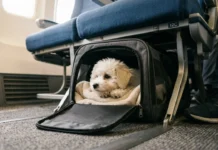
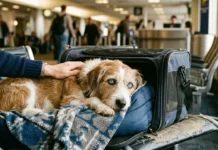
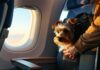
Pack your dog’s essential paperwork first: the rabies certificate, core vaccine proof, and a Certificate of Veterinary Inspection issued within 10 days of travel. Bring an airline-approved soft-sided carrier (around 18″ x 11″ x 11″) that slides under the seat. Add ID tags, microchip info, and a backup photo. Don’t forget 24 hours of food, pee pads, leak-proof poop bags, and a basic first aid kit. Below, you’ll find exactly what each category requires.
TLDR Key Takeaways
- Pack 24 hours of pre-measured food plus 25–50% extra, with spill-proof containers and collapsible bowls for layover hydration.
- Include quick-dry pee pads, leak-proof poop bags, and sealable zip-top bags for odor-controlled waste storage and disposal.
- Bring medications in original labeled containers with a written dosing list kept in a waterproof pouch.
- Carry vaccination records, the Certificate of Veterinary Inspection, microchip info, and a backup photo of your dog.
- Pack a basic first aid kit, comfort items like familiar bedding and pheromone wipes, plus a muzzle and emergency contacts.
The Documents Your Dog Can’t Fly Without
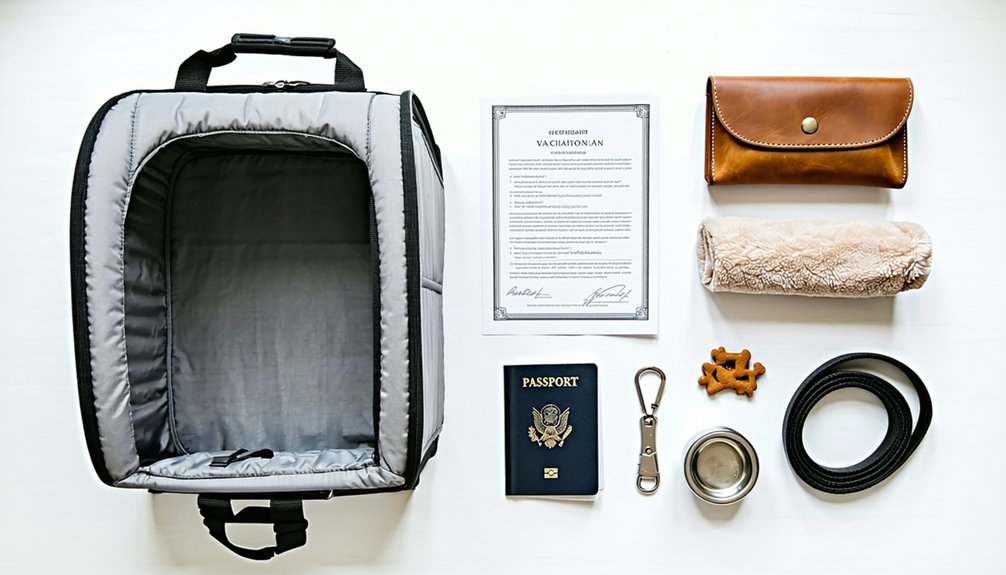
Before you zip up that carry-on, make sure you’ve packed the paperwork your dog legally can’t fly without.
Start with your rabies vaccination certificate, listing the manufacturer, lot number, vaccination date, and expiration.
Most countries and airlines require that shot administered 21–30 days before departure.
Carry proof of core vaccines too—distemper, parvovirus, parainfluenza, adenovirus—since airlines often request them.
Your dog’s ISO-compliant microchip number must appear on official vet paperwork, implanted before that rabies vaccination to meet entry requirements.
Confirm travel eligibility by checking destination-specific rabies rules, then pack any import permits, the CDC Dog Import Form, and USDA APHIS endorsements where applicable.
Keep your airline booking confirmation and pet fee receipt handy.
Store everything in both printed and digital formats—you’ll need both.
Health Certificates and Vet Records to Pack
Pack a Certificate of Veterinary Inspection (CVI) at the top of your folder—it’s the document airlines and travel authorities request most as proof your dog’s healthy enough to fly. A licensed or accredited vet issues it after an exam, and some airlines require it within 10 days of travel, so coordinate it with your reservation timing.
For international trips, you’ll often need USDA endorsements, import permits, or country-specific forms layered beneath it.
Round out your packet with these essentials:
- Rabies vaccination proof showing date given, expiration, and status—sometimes administered at least 28 days before boarding
- Other core vaccine records and any required blood tests
- Current medication and parasite treatment records for ongoing conditions
Bring copies and originals, since checks happen at multiple points.
Choosing an Airline-Approved In-Cabin Carrier
Because your carrier has to slide fully under the seat in front of you, size dictates your choice before anything else. Most major U.S. airlines cap soft-sided dimensions around 18″ x 11″ x 11″, so measure your dog nose-to-tail and floor-to-head, then add a few centimeters.
Your pup needs to stand, sit erect, turn around, and lie down naturally inside. Choose a structured soft-sided carrier that meets underseat compression fit requirements while keeping interior headroom and stability.
For your dog’s safety, prioritize IATA ventilation requirements—at least 16% of vertical sides as mesh openings, with airflow on multiple panels. Look for a leak-proof base, absorbent bedding, strong zippers, and a luggage passthrough.
When you pack right, you and your companion travel confidently together.
Collar, Leash, and Harness for Airport Control

While a flat collar might handle a backyard walk, it’s the wrong tool for crowded terminals and boarding lines. A strap distributes force across your dog’s chest and shoulders, reducing neck injury risk and giving you control through queues, jet bridges, and turbulence. It also lowers escape risk with multiple contact points and wider straps. Aviation guidance is clear: a collar alone shouldn’t be your primary cabin restraint—many assistance-dog policies require a strap clipped to a seatbelt.
- Pack a flat, metal-free, TSA-style set for fast, alarm-free screening.
- Run two finger fitchecks so straps stay snug without slipping.
- Prioritize chest strap comfort with padded mesh to prevent chafing on long days.
You belong here, and so does your well-equipped companion.
ID Tags, Microchip Info, and a Backup Photo
If your dog and you get separated in a crowded terminal, layered identification is what brings them back. Update your physical ID tags with current contact info—mobile number, email, and your destination address—engraved on durable, high-contrast material. Practice tag redundancy planning by attaching ID to the collar, strap, and carrier, so one failed attachment won’t leave your dog unidentifiable.
| ID Layer | What to Include |
|---|---|
| Microchip | ISO-compliant 15-digit, registered and verified |
| Backup photo | Full body, face, distinguishing markings |
Confirm your ISO-compliant microchip is readable with a pre-flight vet scan, and keep its number printed and digital. Carry a clear, recent photo to hand airline staff during lost and found procedures. Consistent naming across documents speeds every check.
How Much Dog Food and Water to Pack
When delays and missed connections strike, you’ll want food on hand—so pack at least one full day (24 hours) of your dog’s regular food in your carry-on, even for short flights.
Stick to your dog’s regular brand and recipe to avoid stomach upset, and master your travel food timing: feed a light meal 4–6 hours before takeoff, then offer small snacks instead of full feeds en route.
- Portion smart: Use pre-measured bags totaling normal daily intake plus 25–50% extra.
- Mind the rules: Dry food has no TSA limit; wet food follows the 3-1-1 liquids rule.
- Hydrate carefully: For carry on water portioning, offer a few small sips before crating—not a full bowl.
You’re prepared, just like fellow pet-traveling parents.
Medications and Calming Aids for the Flight

Food and water keep your dog comfortable, but anxiety, motion sickness, and stress-induced nausea call for a different kind of preparation.
Talk with your vet about prescription options like trazodone, benzodiazepines, or maropitant (Cerenia®) for motion sickness, and always run a medication trial at home days before you fly to watch for paradoxical excitement, sedation, or GI upset.
Avoid heavy sedation, which threatens airway safety through respiratory depression and impaired thermoregulation.
For milder cases, pack natural aids like calming pheromones (Adaptil®), L-theanine, melatonin, or SAMe.
Master your timing dosing—most meds and supplements need 30–120 minutes to peak, so administer before check-in.
Keep all medications in labeled originals with printed prescriptions and dosing schedules, giving you and any vet quick, reliable reference.
Comfort Items That Ease Your Dog’s Carrier Anxiety
Pack the right comfort items, and you’ll turn your dog’s carrier from a stressful enclosure into a familiar den. Soft bedding carrying your household scent—a worn T-shirt works well—makes the space feel safe rather than temporary.
Add dog-appeasing pheromone sprays or wipes to the bedding before departure for built-in reassurance. Introduce these items during crate conditioning, not on flight day, so your dog already links the carrier with calm rest.
- Food-stuffed and puzzle toys for distraction during longer stretches, supported by treat pacing.
- View-blocking covers that limit overstimulation while preserving ventilation.
- Familiar bedding that stays snug, aided by stable carrier placement.
Soft reassurance sounds can ease anxiety too. Together, these items help your traveling companion settle confidently, like they belong.
Treats That Keep Your Dog Calm In-Flight
Because timing and dosing make or break a calming treat’s effectiveness, you’ll want to choose your dog’s in-flight snacks long before you reach the gate.
L-theanine chews offer non sedating options that start working within 30–60 minutes, so give one shortly before boarding.
If you choose tryptophan or α-casozepine treats, follow label directions for advance loading, often starting 1–2 days pre-flight.
Melatonin treats can encourage rest during long flights, but match dosing to your dog’s weight with your vet.
For treat timing, herbal blends like chamomile and valerian usually work 30–60 minutes before stressors.
Pack soft, TSA friendly snacks for easy carrier dosing, and practice an airport behavior rehearsal at home.
Look for NASC-sealed brands you and fellow travelers can trust.
Poop Bags, Pee Pads, and Cleanup Gear
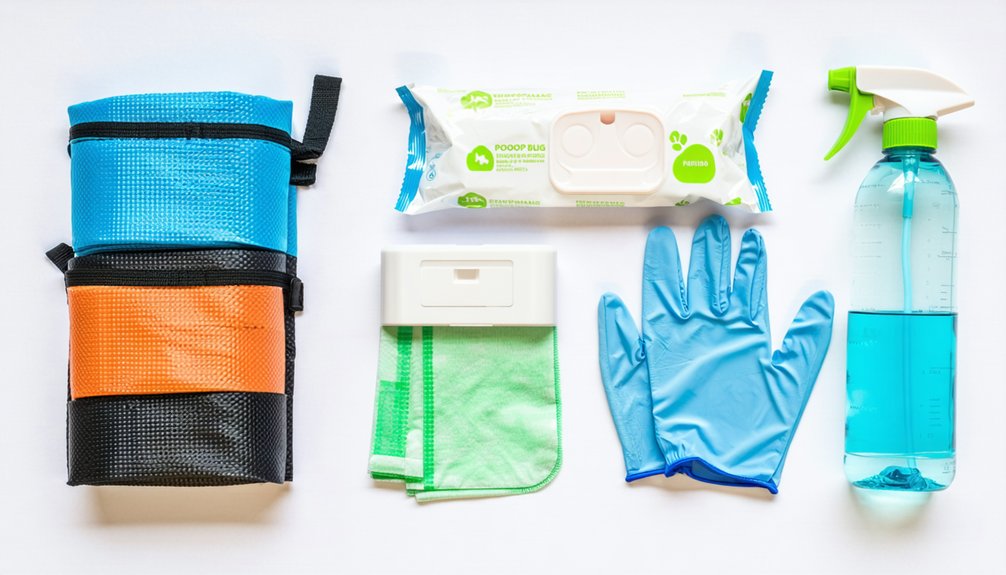
Since in-cabin pets must eliminate inside their carriers on most flights, you’ll want to line the carrier floor with quick-dry, polymer-core pee pads that absorb accidents instead of letting them pool. Pack several spares, since long travel days often mean multiple accidents.
Choose leak-proof plastic backing so urine won’t reach the cabin floor or your lap. Bring thick, leak-proof poop bags (15–20 microns) and more than you expect for multi-leg trips.
- Odor containment: Use sealable zip-top bags and double bagging methods for soiled pads, wipes, and bedding.
- Leak proof storage: Keep a dedicated waste pouch for easy access when attendants can’t collect trash immediately.
- Cleanup gear: Carry unscented wipes, paper towels, and hand sanitizer (≥60% alcohol).
Dispose of waste in regular trash, never lavatories.
A Pet First Aid Kit for Your Carry-On
Cleanup gear handles the messes you can predict, but a first aid kit prepares you for the ones you can’t.
Pack gauze pads and rolls, non-stick bandages, and medical tape or vet wrap for bandage securing.
Add antiseptic wipes, pet-safe ointment, and a syringe or eyedropper for saline irrigation and wound cleaning on minor scrapes.
Disposable gloves protect glove hygiene during care, while blunt-end scissors, tweezers, and a small flashlight help you inspect paws and remove debris.
Carry a digital thermometer; remember a dog’s normal range is 101–102.5°F, and contact a vet if it’s abnormal.
Include a muzzle, blanket, emergency contact list, and vaccination records.
Confirm any antihistamine dosage with your vet first.
Keep everything organized in an airline-friendly carrier for fast access.
Backup Supplies for Delays and Emergencies
While a first aid kit handles injuries, backup supplies keep your dog fed, medicated, and comfortable when flights get delayed, diverted, or canceled.
Smart travelers pack travel contingency supplies that cover at least one full meal in the carry-on, plus a 1–2 week buffer for diversions.
Use spill proof containers and sealed zip bags to prevent contamination, and bring collapsible bowls for emergency hydration during layovers.
Keep medications in original labeled containers with a written dosing list stored in a waterproof pouch.
- Emergency contact cards listing your primary vet, a 24/7 emergency vet, and destination clinic
- Spare leash, backup collar or replaceable gear, and an air-rated carrier labeled with your details
- Waste bags, puppy pads, pet-safe wipes, and a quick-dry towel for accidents
You belong prepared.
Frequently Asked Questions
Can I Sedate My Dog Before a Flight?
You shouldn’t sedate your dog routinely—experts advise against it. Instead, seek vet consultation for flight anxiety management, safe dosage guidance, and proper medication timing. Together, we’ll keep your beloved companion calm, comfortable, and safe throughout your trip.
How Do I Get My Dog Through TSA Security Screening?
Remove your dog from the carrier, send the empty carrier through X-ray, and carry your pup through the metal detector together. Meet carrier requirements, keep TSA documentation handy, and you’ll both breeze through smoothly.
Should I Let My Dog Out of the Carrier Mid-Flight?
No, don’t. Airlines require your dog stay fully inside the closed carrier throughout. Skip yes water breaks and bathroom planning mid-flight; instead, offer ice cubes and gentle touch through mesh. We’re all keeping cabins safe together.
How Do I Help My Dog Adjust to Cabin Pressure?
Start pre flight acclimation weeks ahead with brief, mild pressure exposures paired with treats. For managing ear comfort, offer chews or a stuffed Kong during ascent and descent—you’ll help your pup swallow and equalize comfortably alongside fellow travelers.
What if My Dog Barks or Whines During the Flight?
You’ll calm them quickly using your emergency calming plan: offer a familiar-scent blanket, high-value chew, and quiet cue. Like fellow pet-parents, you’ve practiced flight anxiety training beforehand, so you’ll redirect early signs before barking escalates.
Conclusion
You’ve now got everything you need to fly confidently with your dog in the cabin. Pack the documents, carrier, leash, ID, treats, cleanup gear, and first aid essentials, and you’ll handle security, boarding, and unexpected delays without scrambling. Don’t cut corners on backup supplies—they’re your safety net when flights run late. Double-check your airline’s specific requirements before you go, since policies vary. Prepare thoroughly, and you’ll both arrive calm, comfortable, and ready for whatever’s next.
References
- https://www.bustle.com/articles/145537-flying-with-your-dog-in-cabin-everything-you-need-to-know-before-you-board
- https://www.beaglesandbargains.com/ultimate-packing-list-flying-dog/
- https://eaglecreek.com/blogs/articles/ultimate-dog-packing-list-what-to-pack-for-your-pet
- https://www.goodhousekeeping.com/life/pets/a61997279/how-to-fly-with-a-dog/
- https://doggearreview.com/article/flyingwithapuppy/
- https://companionpettravel.com/how-to-take-your-dog-on-a-plane-tips-for-flying-with-your-pet/
- https://www.chewy.com/education/dog/general/how-to-travel-with-a-dog
- https://www.travelnuity.com/dog-travel-packing-list/
- https://www.youtube.com/watch?v=C-hryl734m4
- https://www.transportation.gov/airconsumer/flying_with_pet