Protect your dog’s eyes with well-fitted, wraparound goggles featuring polycarbonate lenses, full orbital coverage, and dual neoprene straps that won’t slip. Shield ears with foam muffs or snoods, and inspect them for debris after snow exposure. Route below crests and lee-side slopes to dodge gusts. Watch for squinting, bloodshot eyes, head tilt, or discharge. Flush eyes with sterile saline and never probe ear canals. Smart prep starts well before you reach the ridgeline.
TLDR Key Takeaways
- Fit polycarbonate-lens goggles with full orbital coverage and dual neoprene straps that stay secure during running and head shakes.
- Route below crests and ridgelines, hugging moraine shoulders, cliff bases, and tree lines to stay in wind shadow.
- Prevent fogging by clearing vents of fur and ice, using anti-fog drops, and drying lenses with microfiber only.
- Protect ears with foam-padded muffs for strong gusts or snoods for quieter comfort, then towel-dry and inspect afterward.
- Watch for early warning signs like squinting, bloodshot eyes, discharge, or blue-white corneal haze, and ear redness or odor.
How Wind and UV Threaten Your Dog’s Eyes
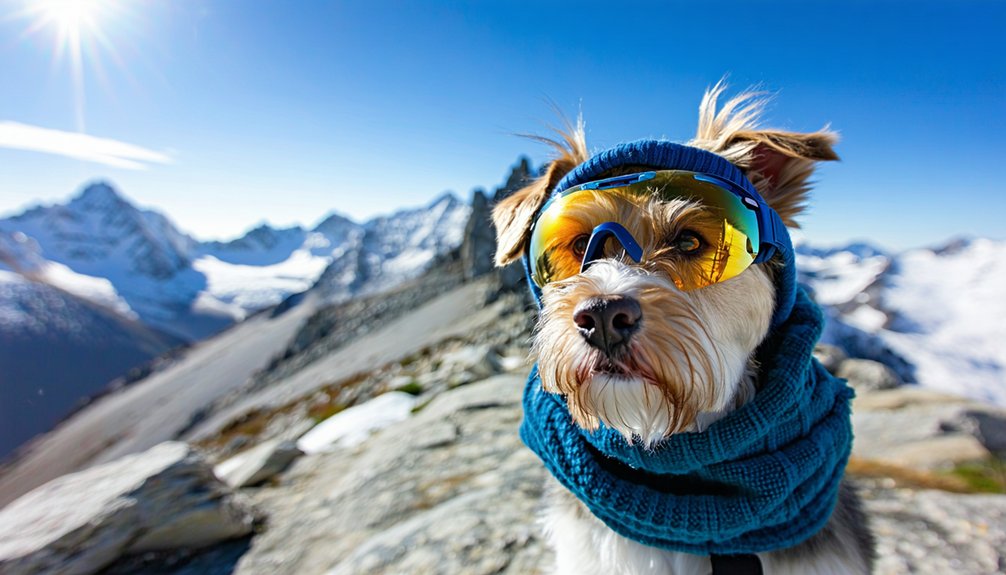
On exposed alpine terrain, wind hits your dog’s eyes harder than you’d expect. High winds carry sand, ice crystals, and dust that cause Debris Scratches—corneal abrasions, ulcers, and conjunctival inflammation that worsen at ridgeline speeds.
That same airflow, combined with Wind Chill, accelerates tear-film evaporation, drying the Tear Film and leaving the corneal surface vulnerable to microtrauma and infection.
UV Overexposure compounds the threat. UV intensity climbs roughly 10–12% per 1,000 meters, and snow glare amplifies the dose your dog absorbs.
That cumulative photochemical stress drives pannus, aggravates cataracts, and contributes to squamous cell carcinoma—especially in lightly pigmented dogs. If you’re hiking high country together, you’ll want to recognize these risks and protect the eyes you both depend on.
What to Look for in Dog Goggles
Now that you understand what wind and UV do to your dog’s eyes, you can shop for goggles that actually counter those threats.
Start with fit: look for full orbital coverage and a wraparound design that conforms to your dog’s facial contours. Use manufacturer sizing charts measuring head circumference and eye-corner distance, and check breed-specific notes for long muzzles or flat faces.
You’ll want internal depth that keeps lenses off the cornea during jolts.
Choose dual-strap systems with wide, adjustable neoprene straps that stay stable when running or shaking.
Prioritize flexible, impact-resistant frames and soft foam comfort around the orbital rim to prevent chafing on multi-hour outings.
Finally, demand ventilation ports, anti-fog and hydrophobic coatings, and easy cleaning to maintain lens clarity throughout your climb.
Why Polycarbonate Lenses Beat Acrylic
When you’re picking lenses for high-wind alpine routes, polycarbonate beats acrylic where it counts: impact resistance. Polycarbonate’s impact strength runs roughly 250× glass, versus acrylic’s 10×, so it resists cracking, chipping, and shattering from rock chips, ice pellets, and airborne debris. That toughness holds across temperature extremes, where acrylic turns brittle.
You also get better Heat Tolerance—polycarbonate handles around 240°F versus acrylic’s 190°F—plus superior thermal-shock and UV performance for sun-heated rock and dark tints. Its flexibility lets manufacturers form wraparound, close-fitting lenses that shrug off frame flex and strap tension without edge cracking.
Yes, acrylic transmits slightly more light (~92% vs ~88%), but polycarbonate’s coatings deliver dependable Scratch Resistance. For your dog’s safety on demanding routes, polycarbonate’s the choice fellow alpine handlers trust.
Fit and Size Dog Goggles Correctly
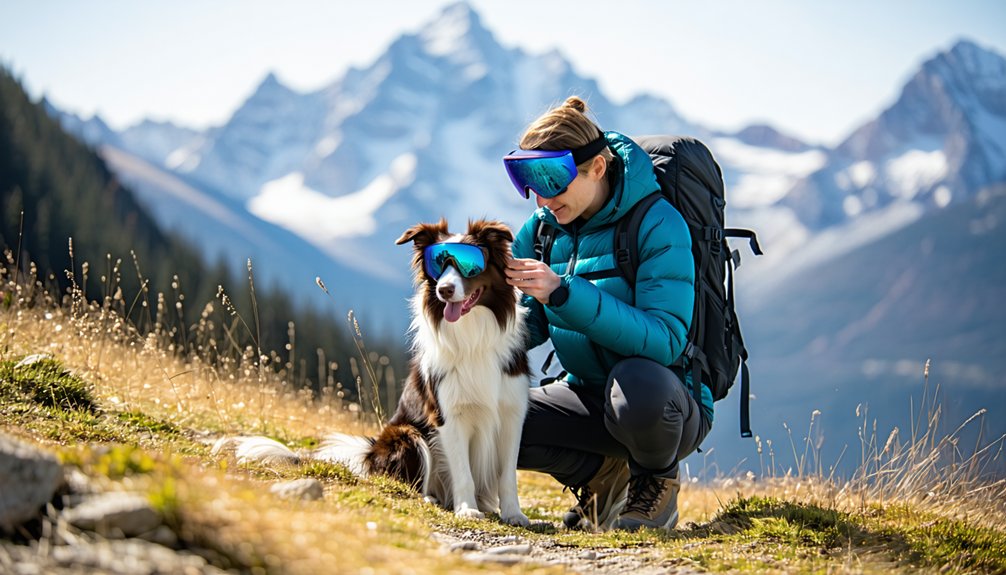
Because even the toughest polycarbonate lens won’t protect your dog if the goggles slip or pinch, fit comes first on high-wind routes.
Start by measuring head and muzzle circumference where the frame and nose bridge will sit, then compare both against the manufacturer’s chart.
Choose a size where both measurements land in the same range—don’t size up if only one fits.
Match the shape to your dog’s skull: longer bridges for long-nosed breeds, low-profile frames for brachycephalic faces.
For strap alignment, route the main strap below the ears, angle side straps slightly upward, and leave two fingers’ slack at the chin.
Finish with a comfort check: the goggles should stay put during head shakes while allowing full panting, yawning, and unrestricted jaw movement.
Helping Your Dog Get Used to Goggles
A perfectly fitted pair of goggles won’t do your dog any good if she paws them off the moment you fasten the straps. Build acceptance through gradual desensitization, much like crate acclimation: let her see and sniff the goggles first, then touch them to her face before fastening anything.
Start with the frame alone—remove the lenses if you can—then progress to clear lenses, saving tinted ones for last.
Keep sessions short so she ends while still successful, and rely on calm handling throughout.
Use sensory pairing by combining high-value treats and praise with every step.
Treat timing matters: reward during and immediately after calm wear.
Once she’s comfortable indoors, move to familiar outdoor spots, building toward a 10-minute walk across multiple practice days.
Stop Dog Goggles Fogging in Wind
Although your dog’s goggles fit perfectly, they’re useless the moment fog obscures her vision on an exposed ridgeline. You’ll keep her sighted by managing three factors fellow alpine handlers swear by: ventilation, coatings, and moisture control.
Start with goggle ventilation. Keep vents clear of fur, ice, and debris, and position any snood or helmet just below the frame edge so airflow equalizes humidity. Adjust straps secure but not overly tight, allowing some air exchange.
Treat the inner lens with pet-safe anti-fog drops, or choose double-lens goggles that stabilize inner-lens temperature. Avoid alcohol, ammonia, and paper towels, which destroy factory coatings.
Prioritize lens drying. Start dry, dab meltwater gently with microfiber, and air-dry goggles during breaks in a sheltered, ventilated spot.
Protect Your Dog’s Ears From Cold and Debris
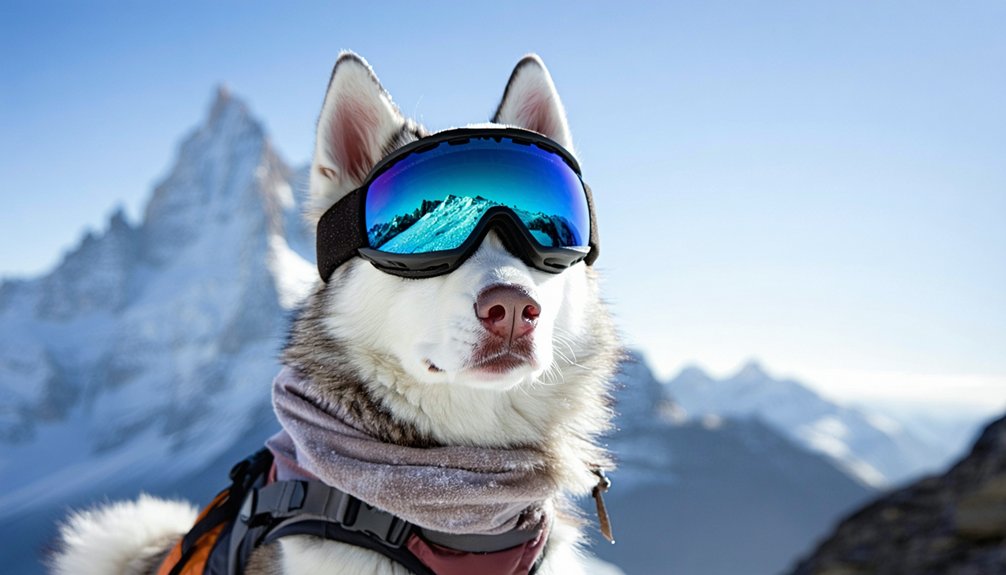
While your dog’s goggles guard her eyes, her ears stay dangerously exposed on high-wind alpine routes.
Ear tips lose heat fast and frostbite quickly because thin tissue, high surface area, and cold-driven vasoconstriction reduce blood flow.
Before you head out, check her ears for redness, discharge, or odor, and clean gently with a vet approved solution—never cotton swabs.
Trim excess canal hair professionally to limit snow and debris retention.
Apply thin pet-safe ear balms, like coconut or castor oil, to protect edges from cracking and windburn.
After snow or water exposure, towel-dry to keep ears dry promptly, preventing ice formation and otitis.
Inspect afterward for ice crystals, seeds, and road-salt residue, and don’t let her chew chemical-laden ice balls.
We protect our companions together.
Should You Use Ear Covers or Snoods?
Which option you choose depends on what you’re protecting against. If you’re tackling routes with strong gusts plus mechanical noise—think snowmobiles, machinery, or roaring alpine winds around rock faces—ear muffs with foam padding deliver better hearing safety. They muffle external sound, cover the pinna, and reduce airflow across the canal, helping prevent wind-related irritation and cold exposure.
Snoods and head wraps, though, hold your dog’s ears close, blocking wind and light debris while offering swaddling comfort. They lack noise-dampening foam, so they won’t shield against loud ambient noise.
For comfort and a reliable long distance fit, snoods slide on easily and suit dogs that dislike rigid structures. But if you’re prioritizing acoustic protection, choose ear muffs and desensitize your dog gradually beforehand.
Plan Routes Around High-Wind Forecasts
Before you commit to any alpine route, check the wind forecast at your actual route elevation—not the valley reading.
Prioritize mountain-specific forecasts, and cross-check at least three independent sources—national met service, mountain forecast site, and a specialized alpine tool—looking for consensus on wind timing and strength.
Examine wind at multiple elevations: start, key col, ridge, and summit.
Treat anything beyond 24–48 hours as trend guidance only.
Set explicit maximum wind limits and plan under 75–80% of them.
Use Wind Window Timing to schedule above-treeline travel during lulls, with early starts and firm turnaround times so you’re descending before conditions deteriorate.
When summit winds exceed your thresholds, choose Ridge Access Alternatives—valley approaches, cirques, or sub-ridges—that keep you and your dog off exposed crests.
Use Terrain to Shelter Your Dog From Gusts
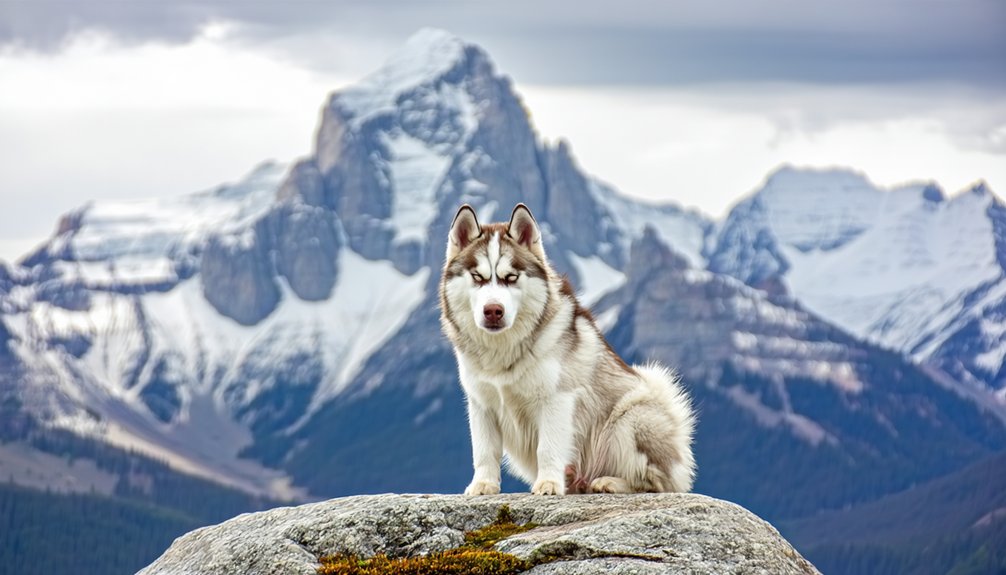
Because terrain shapes wind as much as the forecast does, you can cut your dog’s exposure dramatically by reading the topography and routing accordingly.
Route slightly below crests, where ridges and saddles amplify gusts, and favor sub-ridge benches, broad shoulders, and lee-side slopes that block the flow.
Hug moraine shoulders, cliff bases, and tree lines to stay in wind shadow, and contour below the skyline instead of walking exposed crests.
Use wind layering to your advantage: lower terrain holds calmer air at dog height.
For short pauses, tuck behind a rock baffle, boulder, or drift edge, and skip open bowls, cols, and exposed passes that funnel debris.
Keep your dog leashed during stops, and watch for early signs of eye and ear irritation.
Spot Eye and Ear Trouble Early
Even smart routing can’t block every gust, so you’ve got to read your dog as carefully as you read the terrain. Early symptom spotting keeps minor irritation from becoming an emergency mid-route. Watch for excessive squinting, a held-shut eye, bloodshot conjunctiva, watery or pus-like discharge, or a blue-white haze over the cornea—that cloudiness signals a possible ulcer and demands action now.
For ears, note head shaking, scratching, odor, discharge, or a hot, swollen canal. Treat balance changes as red flags: stumbling, nystagmus, circling, persistent head tilt, or nausea point to vestibular disease that makes exposed ridges dangerous.
Add lethargy or flinching when you approach the head, and you’ve got grounds for rapid vet escalation. Don’t push forward—your dog’s counting on you.
Field First Aid for Your Dog’s Eyes and Ears
The wind’s already worked debris into your dog’s eyes or ears, and now you’ve got to act.
Safe saline use comes first: flush eyes with sterile saline to wash out dust and sand, irrigating gently rather than rubbing, which can scratch the cornea or push debris deeper.
For ears, wipe loose material at the opening with gauze, never probing the canal with swabs.
- Recognize urgency when redness, swelling, discharge, squinting, cloudiness, head tilt, or persistent shaking appears.
- Avoid self injury by fitting an e-collar to stop pawing and rubbing after flushing.
- Skip human or steroid medications unless your vet prescribes them.
Photograph visible damage, then keep a follow ups schedule with your vet so persistent trouble gets proper care.
Frequently Asked Questions
How Much Do Quality Dog Goggles Typically Cost?
You’ll typically spend $20–$40 for solid budget pricing on quality goggles, while premium alpine models like Rex Specs run $70–$90. For serious excursions, that gear value justifies the durability range you and your dog deserve.
Can Puppies Safely Wear Goggles on Alpine Routes?
Yes, puppies can safely join you—with vet approval first. You’ll need proper puppy fit, windproof comfort, and weightless straps for growing muzzles. Prioritize fogging prevention, start with brief sessions, and you’ll build confident, trail-ready explorers together.
Are Prescription or Tinted Lenses Available for Dogs?
Yes, you’ll find both. Prescription tinted lenses can reduce glare, but they’re special-ordered through your vet ophthalmologist. Consider the prescription impact on fit and comfort—custom fitting keeps your dog protected and comfortable alongside fellow alpine companions.
How Do I Clean and Store Dog Goggles Properly?
Rinse first, then start lens cleaning with lukewarm water and mild soap. For goggle drying, blot gently with microfiber, ensuring odor prevention by drying fully. Like fellow alpine handlers, you’ll trust hard-shell storage cases between journeys.
Which Dog Breeds Need Eye Protection Most on Alpine Routes?
You’ll want goggles most for flat-faced breeds like Pugs and Bulldogs, dogs with eye disease, and active working breeds. They’re especially vulnerable to high altitude glare and wind driven debris, so protect them like family.
Conclusion
You’ve got the tools to keep your dog’s eyes and ears safe at altitude. Invest in well-fitted polycarbonate goggles, introduce them gradually, and time your routes around wind forecasts. Use terrain as your shield, and watch closely for early signs of trouble. When problems hit, act fast with the field first aid you’ve prepared. Do this consistently, and you’ll cut injury risk dramatically—letting your dog thrive on every high-wind alpine journey.
References
- https://hund.tours/en/experten-tipps/hundebrille-ja-oder-nein.php
- https://www.treelinereview.com/gearreviews/best-dog-goggles
- https://www.thedogwalksme.com/2021/02/26/10-unusual-and-practical-pieces-of-dog-gear/
- https://asnes-academy.com/en/mountain-and-safety/the-dogs-mountain-code/
- https://www.rexspecs.com/blogs/news/protecting-your-dog-s-eyes-from-impact-and-debris
- https://canicrossdog.com/dog-sunglasses-6-times-they-make-sense/
- https://www.akc.org/expert-advice/lifestyle/eye-protection-for-dogs/
- https://vivaessencepet.com/blogs/pet-wellness/dog-goggles-uv-hiking
- https://www.dhgate.com/goods/1032682941.html
- https://coloradosar.org/backcountry-adventuring-with-mans-best-friend/