To build a portable rinse station, pick flat, firm ground at least 200 feet from water sources, then lay down a non-slip mat to secure footing. Calculate water needs based on your dog’s size, choose between pressurized, manual, or gravity-fed systems, and use lukewarm water while avoiding the face and ears. Direct runoff away from camp, then dry with microfiber towels. There’s more to setting up an efficient system that’ll save you time and mess.
TLDR Key Takeaways
- Choose flat, firm, well-draining ground at least 200 feet from water sources, adding non-slip mats for grip.
- Calculate water needs by dog size (0.5–3 gal), using pressurized sprayers, pump-up units, or gravity-fed jugs.
- Rinse thoroughly with lukewarm water from neck to tail, avoiding direct spray on face and ears.
- Use diluted tearless dog shampoo, massaging dirtiest areas first while protecting eyes and nose from suds.
- Dry dogs with microfiber towels or high-velocity dryers, and pack backup gear like spare hoses and fittings.
Pick the Right Spot for Your Rinse Station
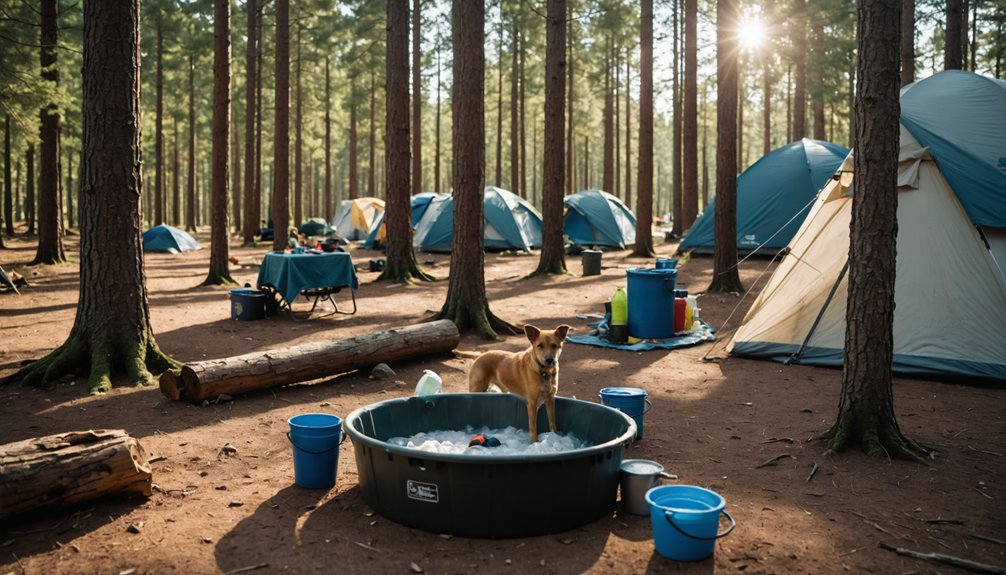
Location makes or breaks a portable rinse station. Your rinse location decides how fast cleanup goes and how much stress you avoid. Choose flat, firm ground—gravel, concrete, or pavers give you a stable, washable base instead of a muddy mess.
Skip low spots that collect water; sloped ground lets runoff move away naturally instead of pooling around your dog’s feet.
Ground preparation matters just as much as the spot itself. Clear rocks, sticks, and debris before you set anything up. Stay close to your water source or camp vehicle to cut down on hose runs and hauling buckets across camp. If you plan to use a rinse kit instead of a hose setup, pick a spot near your gear so it stays easy to grab and refill.
Look for mixed sun and shade too. A shaded, well-drained, flat site keeps both you and your dog comfortable, stable, and in control throughout the rinse. Strong, consistent water pressure at your chosen spot helps push water through dense fur and speeds up the whole process. Also consider a secure area to keep your dog from bolting off mid-bath.
Calculate How Much Water Your Dog Rinse Needs
Water math beats guesswork every time you’re setting up a rinse station. Start with your dog’s size: small dogs need 0.5–1 gal, medium dogs 1–2 gal, and large dogs 2–3 gal per rinse.
A 5-gal bucket delivers 2–4 efficient rinses when you pour and scrub instead of spraying continuously. Factor in coat type—double-coated breeds demand 1.5–2× more water—plus terrain and activity level. Beach trips and muddy trails push you toward full-body washes instead of quick paw rinses.
For multi-day trips, budget 0.5–2 gal per dog daily depending on activity. This kind of water conservation keeps your supply intact without sacrificing dog hygiene. Remember that dogs generally require one ounce of water per pound of body weight daily, so larger breeds will naturally need bigger rinse allotments. Skip the unrestricted hose; controlled pours and low-flow sprayers give you freedom to camp longer, cleaner.
Choose Your Rinse System: Pressurized, Manual, or Gravity
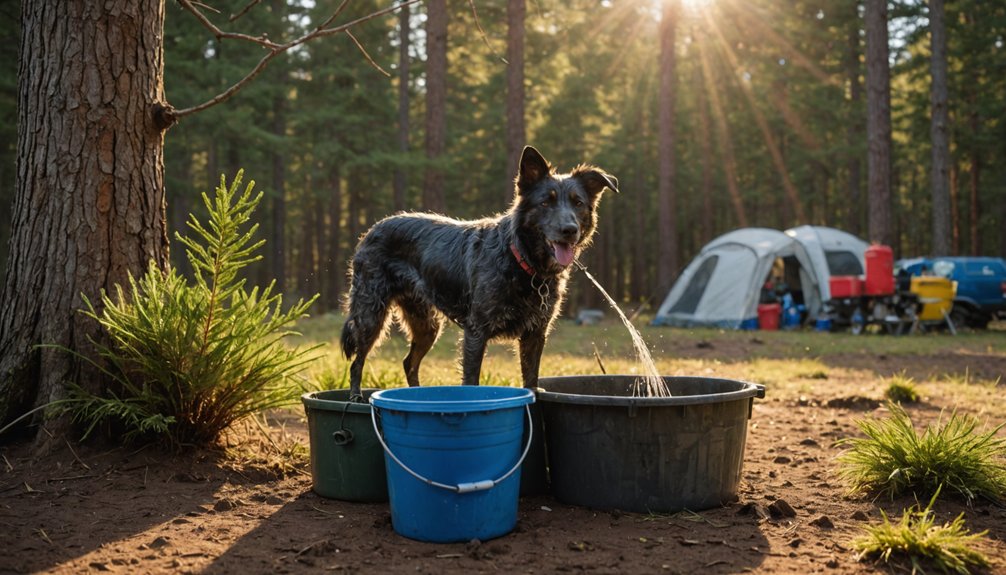
Once you know how much water you need, the next decision is how you’ll deliver it.
Rinse systems for dog cleaning fall into three categories, each built for different levels of grime and freedom on the trail.
Pressurized units deliver 40–65 PSI, cutting through caked mud on truly filthy dogs. The RinseKit PRO traps pressure from a standard hose spigot, making it strong enough to blast mud from paw pads or clean a dirty undercarriage.
Manual pump-up sprayers give you portable showers with 40–50+ PSI, no batteries or plumbing required—ideal outdoor rinsing gear for off-grid camping. Manual sprayers like the Chapin 20000 also feature an adjustable nozzle, letting you switch between a fine mist and a firmer stream.
Gravity-fed jugs and bottles offer the simplest mobile washing option, fine for loose dirt and sand but weak against dried mud.
Match your system to your dogs and terrain.
Heavy water pressure means faster cleanup; simpler gear means less to pack.
Either way, good pet hygiene starts with the right camping gear for dirty pets.
Pack a Rinse Kit That Fits in Any Vehicle
Space is the enemy of every overpacked rig, so your rinse kit needs to earn its spot. Vehicle storage is limited, so choose compact, boxy designs over wide, irregular containers—they slide easily into exterior bays, under-dinette gaps, or tight cargo corners.
A self-contained unit with a 3.5-gallon tank, hose, and sprayer built into one form factor cuts down on loose gear like buckets and external pumps. That’s space efficiency in action: fewer items to pack, less clutter to secure, and a solid fit for vans or SUVs alike.
Keep your core components together—tank, hose, nozzle, and any battery pack—so nothing rattles loose in transit. Box shapes stay put better than bulky tubs, making them the smarter choice for camp-ready travel. Unlike large professional setups such as the PDWS-02, which ships at 315lbs and requires dedicated space, a camp rinse kit trades power and capacity for portability.
Heat Water for Cold Camp Mornings
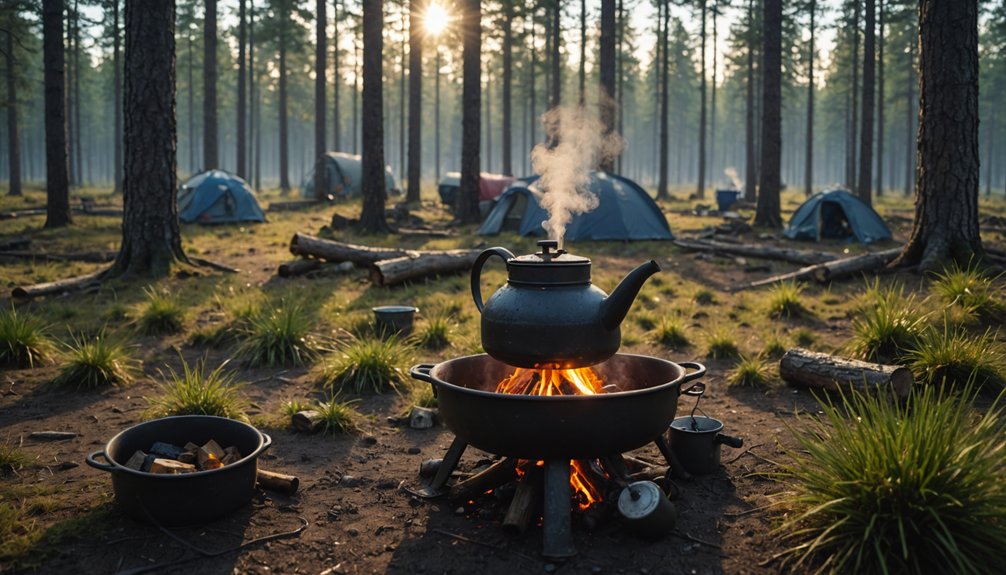
Since dogs don’t care about your comfort level, you’re the one who needs warm water on a frosty morning. Cold snaps slow everything down, so build in extra time before rinsing begins. Portable stoves may struggle in freezing temps unless you keep fuel warm—stash the canister in your sleeping bag overnight. Electric heating sidesteps fuel issues entirely, but only works if you’ve got vehicle power or a station on hand. A car kettle can plug directly into a 12V outlet and deliver boiling water in 16 to 20 minutes, making it a handy backup for chilly mornings. Remember that temperatures can drop to 7 degrees with a negative windchill, making it even more important to have warm water ready for the dog rinse. Sticking to short trips in mild cold before attempting freezing rinse mornings helps you gauge whether your setup can handle the conditions, since it’s best to test gear in progressively colder weather.
| Method | Cold-Weather Fix | Best Use |
|---|---|---|
| Propane stove | Warm fuel before use | Backcountry sites |
| Electric kettle | Reliable in any temp | Car camping |
| Wind shelter | Blocks heat loss | Exposed campsites |
Plan ahead, and freezing mornings won’t slow down rinse time.
Keep the Rinse Gentle Near Face and Ears
A dog’s face deserves more caution than the rest of the body during a rinse. Skip the direct spray—use a squeeze bottle, pitcher, or damp cloth for facial rinsing at camp. Warm water works best, applied in a small stream rather than flooded across sensitive skin.
Fold down your dog’s ears before you start, or rinse upright ears from behind to keep water out of the canal. Start at the back of the head and work forward gradually; this eases the dog into it instead of triggering a panic reaction from a nose-first splash. Remember that the ear canal’s natural “L” shape already helps protect it, but keeping water flow gentle and directed away from the opening adds an extra layer of safety.
Keep water away from the nose, use tearless shampoo, and apply it by hand near the eyes. Gentle washing near the face builds trust—rush it, and you’ll fight your dog every time after.
Stop Your Dog From Slipping During Rinses
Traction matters more than most campers think when it comes to keeping a dog steady during rinses. Non slip mats with raised ridges or suction-cup backing keep paws grounded and let water drain instead of pooling. Pair them with traction devices like grippy booties for smooth truck beds or portable tubs. If you want a similar setup at home, Heronrib dog grooming bath mats are slip-resistant and replace traditional metal sink liners. These mats also include antimicrobial and antifungal additives that help keep the rinse area more hygienic between uses. Trim excess paw fur and nails so pads make full contact with the surface, and rinse soap completely off feet before your dog steps down.
| Traction Fix | Why It Works |
|---|---|
| Non-slip mat | Adds grip, drains water |
| Suction-cup backing | Keeps mat anchored |
| Trimmed paw fur | Exposes grippy pads |
| Rubber-sole booties | Extra friction on smooth ground |
| Rinsed, soap-free paws | Prevents slick film |
A stable rinse means a calmer, freer dog.
Clean Muddy Paws Before They Enter the Tent
Once your dog’s footing is secure, the next job is stopping mud from ever reaching the tent floor.
Set up a rinse station at the threshold—your last line of defense before dirty dogs track filth inside. A paw washer cup with silicone bristles works fast for muddy paws, or a pressurized portable shower handles heavier grime on legs and fur. Place the station on a non-slip mat, positioned as a clear crossover zone between camp and tent. Keep a pre-filled water container within reach so you’re never scrambling mid-clean. If you want a DIY option, a large storage container fitted with a 1/2 inch male 1/4 turn boiler drain can double as a portable rinse basin at camp. Small and big rocks placed at the base of the station can also help keep things easy on your dog’s feet while they wait to be rinsed. Dump dirty water after every use—stagnant water breeds bacteria your dog doesn’t need. This setup keeps mud contained, paws clean, and your tent interior free from tracked-in filth.
Direct Runoff Away From Your Campsite
Where you put your rinse station matters as much as how you use it.
Start with slope planning: choose ground that naturally drains away from your tent, kitchen, and fire ring, not toward them.
Set up at least 200 feet from any lake, stream, or river, and pick a spot downhill from your camp’s living area so runoff follows existing drainage paths instead of cutting new ones.
Skip low spots and depressions—they turn into mud pits fast.
Steer clear of your dishwashing sump too; combining greywater sources overwhelms one area quickly.
Once you’ve got the slope right, add ground cover—a tarp, mat, or rug—to stabilize footing and keep dirty water contained where you want it, not spreading across camp.
Shampoo and Rinse Your Dog the Right Way
Good technique separates a genuine clean from a stressful, soap-streaked mess. Wet your dog thoroughly with lukewarm water, working from neck to tail, keeping flow gentle around the head. Use a diluted dog shampoo—never human products—and massage it into the dirtiest zones first before covering the whole coat.
| Step | Action | Focus Area |
|---|---|---|
| 1 | Wet coat | Neck to tail |
| 2 | Apply shampoo | Legs, belly, rump |
| 3 | Lather | Chest, armpits, paws |
| 4 | Wait | Skin contact time |
| 5 | Rinse top-down | Until water runs clear |
Protect eyes, ears, and nose from suds. Rinse until every trace is gone—residue left behind undermines coat care and invites itchy skin down the trail.
Dry Your Dog Fast After the Rinse
Letting your dog shake it out is the fastest first step—those instinctive full-body shakes eject a surprising amount of water before you even touch a towel.
From there, work head-to-tail, top-to-bottom, using a microfiber towel for serious water removal—it outperforms cotton and cuts your towel count. Wrap your dog fully, securing the towel around the chest and belly to pull moisture fast.
For fast drying at camp, focus on:
- A high-velocity dryer if you’ve got power access—it blasts water off the coat without heat
- Dry ground or a towel barrier under your dog to stop re-wetting from puddles
- Small, systematic sections, finishing each before moving on
Skip the guesswork—dry smart, and your dog’s back to camp life in minutes.
Backup Rinse Plans for When the Pump Dies
Speed only matters if the water keeps flowing, and pumps fail—diaphragms wear out, batteries die, hoses clog. That’s why emergency planning isn’t optional; it’s the difference between a quick fix and a ruined trip. Build system redundancy into your setup before you need it.
| Backup Method | Water Reserve Needed | Best Use |
|---|---|---|
| Gravity-fed jug | 3–6 ft elevation | Continuous low-pressure rinse |
| Garden sprayer | 1–3 gallons | Manual rinsing, spot cleaning |
| Bucket-and-pitcher | 5 gallons | Full-body rinse, no pump |
| Backup pumps | Equal capacity | Instant swap during power outages |
| Squeeze bottle | 1–2 quarts | Targeted paw/belly cleaning |
Pack equipment spares—hoses, fittings, fuses. Contingency plans mean you never stop rinsing, no matter what fails.
Frequently Asked Questions
Can I Use Human Shampoo on My Dog in an Emergency?
Yes, you can—once. Grab fragrance-free baby shampoo, dilute it 1:10, and skip pet shampoo just this time. It won’t wreck dog hygiene long-term, but return to proper pet shampoo the moment you’re back to civilization.
How Often Should Dogs Be Rinsed During a Multi-Day Camping Trip?
Rinse your dog daily or whenever he’s visibly dirty—don’t wait for a schedule. Good dog hygiene means tackling dirty dogs fast with freshwater rinses, saving full shampoo baths for trip’s end or extreme mess.
Is It Safe to Rinse a Dog in Freezing Outdoor Temperatures?
No, don’t risk it. Freezing temps spike hypothermia risks and frostbite dangers fast, especially once your dog’s wet. Rinse indoors or in a heated shelter with lukewarm water, then dry thoroughly before letting your dog roam free again.
What Should I Do if My Dog Is Afraid of Water?
Use desensitization techniques: let your dog approach water on its own terms. Start with gradual exposure—paws first, then ankles—pairing each step with treats and praise. Never force immersion; you’re building trust, not compliance.
Can Rinse Station Runoff Harm Nearby Plants or Wildlife?
Yes—soap, feces, and parasite residues cause water pollution and harm plants or aquatic life. You control the environmental impact: contain runoff, route it through vegetation, and never dump wash water directly into streams or root zones.
Conclusion
You don’t need a fancy setup to handle a muddy dog at camp—you just need a plan. Pick your spot, pack the right gear, heat your water, and know your backup options before you need them. Once your rinse station‘s dialed in, cleanup takes minutes instead of turning into a wet, chaotic mess. Get this system right once, and you’ll use it every trip.
References
- https://www.amazon.com/portable-dog-shower/s?k=portable+dog+shower
- https://www.reddit.com/r/camping/comments/1s3brct/portable_campsite_or_car_dog_wash_station/
- https://www.facebook.com/groups/9003421258/posts/10162979763896259/
- https://rinsekit.com/blogs/news/camping-showers-for-pet-washing-everything-you-need-to-know
- https://www.youtube.com/watch?v=IVCgVYYPCPg
- https://www.habitatista.com/465984/muddy-dog-solutions-for-camper-van-living/
- https://www.youtube.com/watch?v=vRxAJBy_Waw
- https://rinsekit.com/pages/portable-dog-showers
- https://www.tanklessheaterguides.com/best-hot-water-system-for-dog-wash/
- https://eu.eccotemp.com/blog/the-ultimate-diy-backyard-pet-washing-station-easy-setup-tips/