Postholing happens when your dog’s legs punch through soft snow, jamming joints against icy edges or hidden crust. You’ll see fatigue, twisting strains, and raw pads if you push too far into unpacked powder. Breed traits, conditioning, and gear all affect how well your dog handles deep drifts. Reading the snow before you commit, and knowing when to switch to snowshoes, keeps injuries at bay. There’s more to uncover about protecting your dog’s joints ahead.
TLDR Key Takeaways
- Postholing punches legs through soft snow, jarring joints against hole bottoms or icy sidewalls with each stride.
- Breakable crust over deep powder is the most treacherous condition, scraping pads and bruising carpal and hock joints.
- Breed traits like double coats, snowshoe paws, and long legs determine snow tolerance more than enthusiasm alone.
- Read the snow and favor packed, tracked trails over untouched powder to reduce postholing risk and fatigue.
- Watch for roached back, splayed feet, trembling, or refusing commands as signs of exhaustion or cold stress.
What Is Postholing, and Why Does It Hurt Dogs?
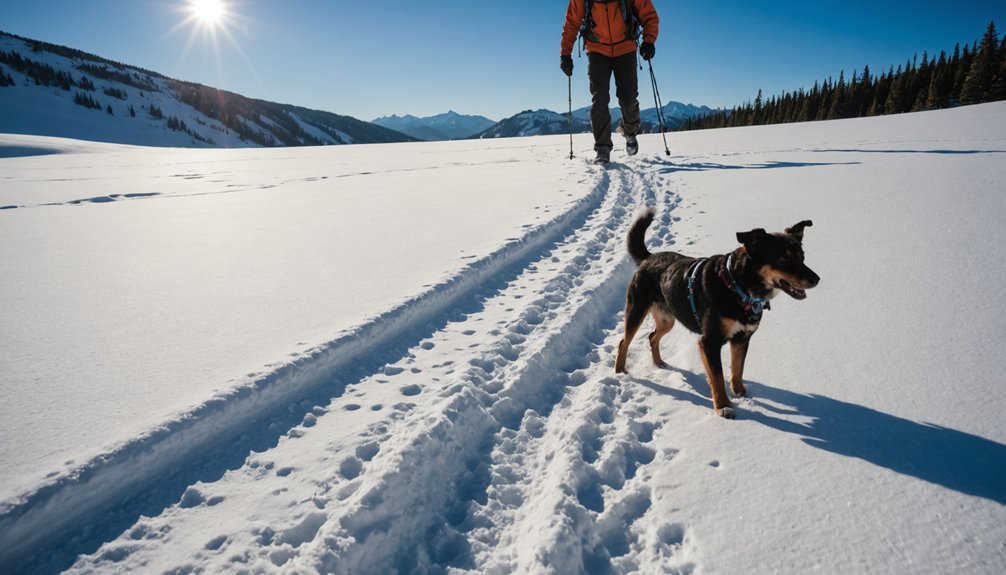
Image a fence post driven into the ground, leaving a narrow, deep hole behind—that’s the image that gives postholing its name. When snow’s too soft or deep to support weight, your dog’s legs punch through with each stride, plunging chest- or belly-deep instead of walking on a compacted track.
That’s postholing, and it’s a real winter hazard for off-trail expeditions. Every plunge slams paws and joints against hole bottoms or icy sidewalls. Narrow shafts can trap a leg, forcing your dog to twist free and risking strains. Hidden crust layers scrape pads raw, while collapsing snow bruises carpal and hock joints. The most treacherous conditions occur when snow forms a breakable crust over deep, unconsolidated powder underneath, since that surface may or may not hold weight from one step to the next.
Each stride demands far more energy than packed-trail walking, driving fatigue fast. Snow that feels firm in the morning can soften by afternoon as warming air temperatures and sun exposure weaken the surface, making postholing risk change throughout the day. Just as hikers rely on snow shoes to distribute weight and avoid sinking, dogs benefit from firm, packed trails to prevent the same fate. Understanding this mechanic is core to snow safety—recognizing postholing early keeps your dog moving confidently, not suffering silently.
How Deep Powder Strains Your Dog’s Joints
Every high-step through deep powder puts extra force on your dog’s stifles, hocks, and shoulders.
Unpacked snow forces repeated lifting against resistance, amplifying torque at the hips and stifles—especially if your dog is large, overweight, or already fighting osteoarthritis.
Paws sinking and rotating in soft snow create micro-twisting motions in the carpal and tarsal joints, straining ligaments and joint capsules with every step.
When discomfort sets in, your dog shifts its gait, shortening stride and shifting weight, which loads adjacent joints and spinal muscles. Dogs coping with joint strain may also show morning stiffness or a slower walking pace after exertion in the snow.
Weak cartilage means less shock absorption, so friction and inflammation build fast. Talking to a vet about starting joint supplements before heavy snow season can help support cartilage and reduce strain during winter activity. Formulas combining ingredients like glucosamine, green-lipped mussel, and chondroitin sulphate work together to help maintain healthy cartilage during demanding winter activity.
Strong muscle conditioning supports joint health and stability, but even fit dogs face real strain when powder’s resistance outpaces their limbs’ natural range and control.
Is Your Dog’s Breed Built for Deep Powder?
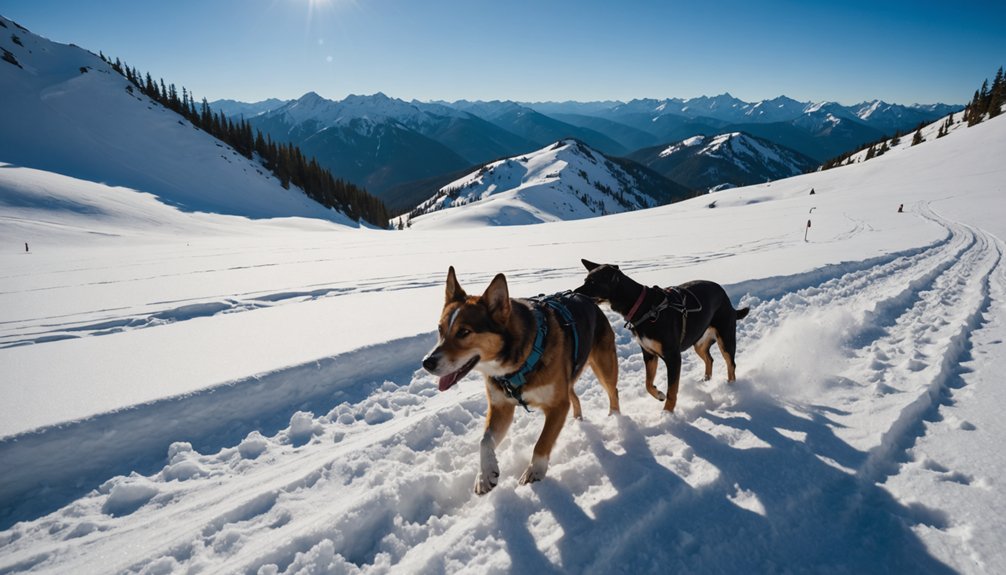
Not all dogs come equipped for snow travel, and genetics play a bigger role than most owners realize.
Breed traits determine snow tolerance far more than enthusiasm alone.
Dense double coats and water-resistant fur separate Arctic and mountain breeds from short-haired dogs prone to hypothermia.
Large, flat paws with thick pads act like natural snowshoes, while webbed toes and rear dewclaws add traction on ice and crust.
Tall frames and long legs keep dogs from sinking chest-deep, and strong hindquarters power through drifts without excessive fatigue.
Sled dogs, mountain rescue breeds, and cold-climate herders carry generations of adaptation behind them. Breeds like the Siberian Husky were originally bred for sled pulling in extreme cold, giving them a natural edge in deep powder conditions. Similarly, the Alaskan Malamute was developed to haul heavy loads through Arctic terrain, making it another prime example of a breed built specifically for hauling heavy loads in snow.
If your dog lacks these traits, that doesn’t mean no snow—it means shorter outings, extra gear, and closer attention to warning signs.
Building Cold-Weather Stamina Before a Big Hike
Good genetics only get a dog so far—stamina still has to be built. Cold acclimation takes 1-8 weeks, so start early with short, controlled outings and watch for shivering, paw lifting, or lethargy before extending time outside.
Winter conditioning works best when it’s year-round.
Running, swimming, and agility drills build the muscular strength and joint resilience your dog needs for postholing through deep snow.
Aim for 20-30 minutes of daily aerobic exercise, mixing steady efforts with interval bursts to enhance cardiovascular capacity without overtaxing muscles in the cold.
Add weight-bearing work on snow, sand, or soft ground to strengthen limbs for deep powder.
Increase intensity gradually—sudden jumps invite strain.
Warm up with light walks and stretching before any vigorous cold-weather push. Active dogs conditioning through winter also need higher-calorie food to maintain body heat and sustain energy levels. Endurance training should also mimic real hunting demands, including longer retrieves and steady field work in varied terrain. Since inactive dogs should ease into harder efforts, starting slowly is recommended when building up this kind of conditioning.
When Should You Switch to Snowshoes or Skis?
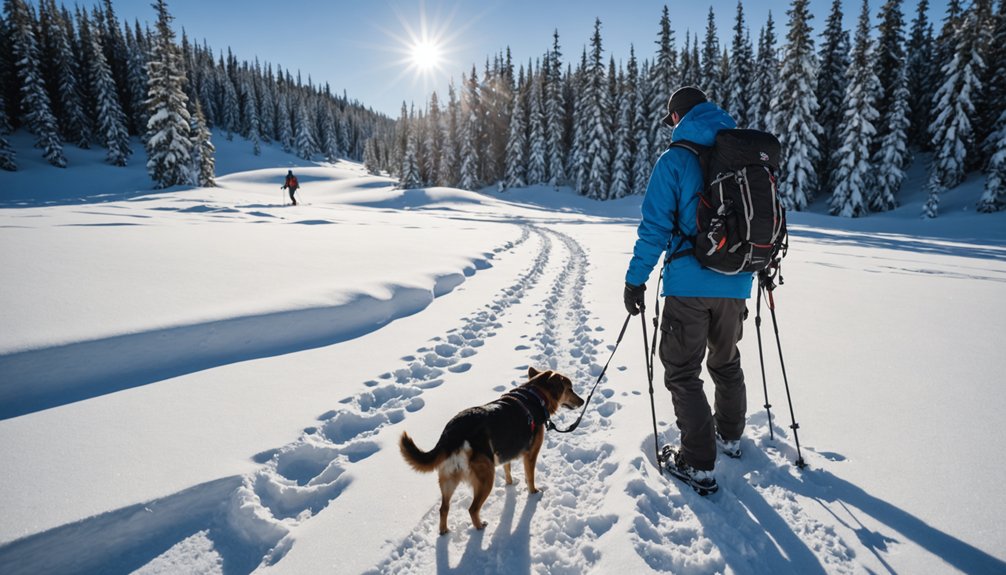
Boot depth tells you when it’s time to switch. Once your boots consistently sink past ankle height, you’re wasting energy and risking injury—yours and your dog’s. Watch your dog too: if she’s swimming through powder instead of running on top, flotation gear is overdue.
Snowshoeing techniques work best on mixed terrain, steep sections, or tight forest trails where control matters more than speed. They’re also safer for young or inexperienced dogs learning winter travel. Before heading out, check your dog’s feet for discomfort, cuts, or ice buildup, since deep powder can hide sharp crusts that irritate paws.
Skiing strategies shine on longer approaches with consistent snowpack and established skin tracks, cutting exposure time in cold, windy conditions. But keep skis away from dogs in crowded spots or descents—edges and sudden stops create real laceration risk. Recall training can help your dog resist the urge to chase you, so practicing recall training before hitting the skin track is worthwhile.
Match your gear to terrain, distance, and your dog’s comfort level.
Gear That Keeps Your Dog Safe in Deep Snow
Once you’ve matched footwear and travel method to the terrain, your dog’s gear needs the same scrutiny.
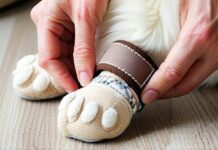
Insulated boots with secure closures protect paw pads from ice and prevent snowball buildup, while snow-specific tread adds traction on packed or uneven ground. No single type of dog boot is perfect, and each has its own set of drawbacks.
Winter clothing matters just as much: waterproof shells with stretch panels and high-back coverage block wind and shed powder without restricting movement.
Fit dictates function—too loose, and dog accessories twist or slip; too tight, and circulation suffers. Measuring around the widest part of the rib cage helps determine the right size for a proper fit.
Neck gaiters close gaps where snow sneaks in, and ear protection helps sensitive dogs handle blowing wind.
Add reflective trim or high-visibility colors for whiteout conditions.
Choose gear built for warmth, traction, and visibility together—not warmth alone.
That combination gives your dog real freedom to move safely through deep snow.
Choosing the Right Harness for Quick Rescues
Deep powder turns a routine posthole into a real emergency fast, and your dog’s halter becomes the single most important piece of gear you’re carrying. Smart design distributes weight across chest, ribcage, and hips, so you’re not fighting pressure points during a vertical lift. Multiple grab points matter too—you need options when your dog’s buried and you can’t see clearly.
| Safety Feature | Why It Matters |
|---|---|
| Top handle | Instant grab, no searching |
| Rear lift loop | Advantage for trapped hindquarters |
| Reinforced stitching | Holds under full-weight extraction |
| Cold-tolerant hardware | Won’t crack in sub-freezing temps |
Get the fit right—snug, balanced, non-restrictive—and that restraint becomes your fastest route to a safe extraction.
Protecting Paws From Ice Balls and Frostbite
Paws take a beating in deep powder, and ice balls are usually the first sign of trouble.
Snow packs between pads and toes, melts from body heat, then refreezes into hard clumps that cause limping, pressure sores, and frostbite risk.
If you’re running long-haired breeds, trim the fur between pads short—less surface area means less ice prevention hassle later on.
Musher’s wax or a similar balm adds another layer of paw protection, blocking snow adhesion and shielding pads from road salt and deicers.
Apply it thick before you head out, then reapply post-adventure on clean, dry paws.
Watch for swelling, tenderness, or grayish skin—early frostbite signs demand immediate attention.
Combining trimmed fur, wax, and vigilance keeps your dog moving freely through the deep stuff.
Spotting Fatigue and Cold Stress in Dogs
Because deep snow demands far more effort than a packed trail, your dog’s body burns through energy fast, and fatigue can sneak up before you notice anything’s wrong.
Watch for slower, clumsier movement, a roached back, splayed feet, or sudden trembling—these signal muscles giving out.
Changes in dog behavior matter too: refusing treats, wandering off, yawning excessively, or ignoring known commands all point to mental overload.
Cold stress escalates further.
Violent shivering, lethargy, withdrawal, or labored breathing means your dog’s system is struggling to cope.
Don’t wait for these signs to resolve on their own—rest, warmth, and shelter should follow immediately.
Treat pale or bluish gums, collapse, confusion, or refusal to eat/drink for over 12 hours as emergencies.
Recognizing these signs early keeps your dog’s freedom to discover snow country sustainable and safe.
Picking Routes That Avoid Postholes and Tree Wells
Since postholing drains a dog’s energy faster than almost anything else in winter terrain, route choice matters more than pace or fitness.
Safe routes start with reading the snow before you commit to it. Trail selection should favor packed, tracked surfaces over untouched powder, and low-angle, open terrain over tight, complex forest. Before you head out, check maps or satellite imagery for creeks, drainages, and dense tree cover—these hide the traps you can’t see from the trail.
Three route-picking priorities:
- Choose consolidated snow over breakable crust or aspects.
- Stay clear of tree canopies and creek beds, where snow bridges collapse without warning.
- Pick groomed or heavily-used trails that keep both of you moving efficiently and safely.
Trail Etiquette for Dogs in Deep Snow
Good route selection only solves half the problem—how your dog behaves once you’re on that trail matters just as much.
Winter Trails demand real Leash Control, whether that’s a physical leash or rock-solid voice command.
Keep your dog behind or beside you when breaking trail, out of classic ski tracks, and off to the side when others approach.
Cap it at two dogs per handler on busy routes—slippery snow reduces your margin for error.
Skip aggression, chasing, or surprise encounters entirely by staying alert and proactive.
When mushing or skijoring teams pass, get off-trail, position yourself between your dog and the team, and wait.
Freedom on the snow depends on trust other users can extend to you.
Emergency Prep for Postholing Injuries and Hypothermia
When your dog vanishes into a posthole and comes up favoring a leg or shaking uncontrollably, you need a plan before that moment, not during it.
Deep powder demands you know your priorities cold, because hesitation costs you time you don’t get back.
- Assess danger first. Check the scene for avalanche risk or hidden hazards before you approach, then run through DR ABCs to catch shock or hypothermia early.
- Stabilize before moving. Muzzle if needed, splint suspected fractures, and control bleeding with direct pressure—don’t let cold injuries go untreated in the field.
- Rewarm gradually. Hypothermia treatment means dry insulation and slow warming, never rapid heat that risks arrhythmias.
Freedom in the backcountry means carrying the skills to handle what powder throws at you.
Frequently Asked Questions
Can Puppies Safely Hike in Deep Powder Snow Conditions?
No, you shouldn’t take puppies into deep powder—their bodies can’t handle it yet. Prioritize snow safety by leaving them home; focus on puppy training and short, controlled outings until they’re older and stronger.
How Often Should You Feed a Dog During Winter Snow Hikes?
Feed your dog two main meals daily, 8-12 hours apart, adding small snacks during heavy exertion. Cold weather demands high energy—boost winter calories 50-100% for proper dog nutrition, keeping your pup fueled and free on the trail.
What Should Go in a Dog’s Winter Hiking First-Aid Kit?
Pack gauze, vet wrap, antiseptic wipes, booties, styptic powder, and tweezers. You’ll want warm blankets for hypothermia, plus cold therapy options for swelling. Add saline flush, electrolytes, and emergency contacts—you’re prepared for anything the trail throws at you.
Are There Vaccines or Health Checks Needed Before Winter Hiking?
Yes—you’ll want core vaccines current, plus leptospirosis if you’re crossing wet terrain. Schedule health checks beforehand, get medical clearance for cardiorespiratory fitness, and deworm your dog. This keeps you both free to roam safely.
How Does Altitude Affect a Dog’s Performance in Deep Snow?
At high elevation, you’ll notice your dog tires faster—thinner air cuts oxygen and stamina drops roughly 6% per 1,000m. Deep powder multiplies the effort. Prioritize snow acclimation, pace climbs gradually, and let your dog’s endurance rebuild naturally.
Conclusion
You know your dog best, and deep powder demands you use that knowledge. Check the snowpack, watch for fatigue, and don’t push past what your dog’s build can handle. Gear up with snowshoes when postholing gets bad, and always carry emergency supplies. Postholing isn’t just inconvenient—it’s a real injury risk. Plan your route, pace your dog, and you’ll both enjoy the snow without paying for it later.
References
- https://ruffwear.com/blogs/explored/5-tips-for-powder-hounds
- https://www.facebook.com/GrayBeardedGreenBeret/videos/are-you-guilty-of-post-holingthis-happens-when-the-snow-is-too-deep-to-walk-in-w/564486059860648/
- https://www.reddit.com/r/Backcountry/comments/ruqp6c/my_pup_loves_snow_but_im_wondering_how_deep_is/
- https://www.wta.org/go-outside/trail-smarts/tips-for-keeping-your-dog-safe-and-happy-on-trail
- https://www.reddit.com/r/hiking/comments/1sdijue/whats_so_bad_about_postholing/
- https://www.reddit.com/r/vermont/comments/zsmmtx/snowshoes_postholing_and_winter_trail_etiquette/
- https://myoutdoorbasecamp.com/postholing/
- https://www.adoptapet.com/blog/health/baby-powder-on-dogs
- https://7lakesalliance.org/news/mind-the-posthole-a-guide-to-winter-trail-etiquette/
- https://www.reddit.com/r/hiking/comments/1770ru/postholing_and_winter_hiking_etiquette/