Most airlines require your puppy to be at least 8 weeks old and fully weaned before you can fly domestically, with USDA/APHIS mandating five days post-weaning. International trips demand more—the EU requires 15 weeks, while the U.S. often pushes that to 16 weeks. Rabies vaccines can’t happen before 12 weeks, plus you’ll need a 21-30 day waiting period afterward. Destination rules always trump airline minimums, so there’s more you’ll want to know before booking.
TLDR Key Takeaways
- Most airlines require puppies to be at least 8 weeks old for domestic flights, but full weaning is mandatory.
- International travel raises the bar: the EU requires 15 weeks, while the U.S. often requires 16 weeks minimum.
- USDA/APHIS mandates puppies be weaned at least 5 days before flying, though vets suggest more time.
- Rabies vaccines require puppies to be 12+ weeks old, plus a 21-30 day waiting period before travel.
- Microchipping must occur before rabies vaccination for many international routes to meet entry requirements.
What’s the Minimum Age for Flying a Puppy?
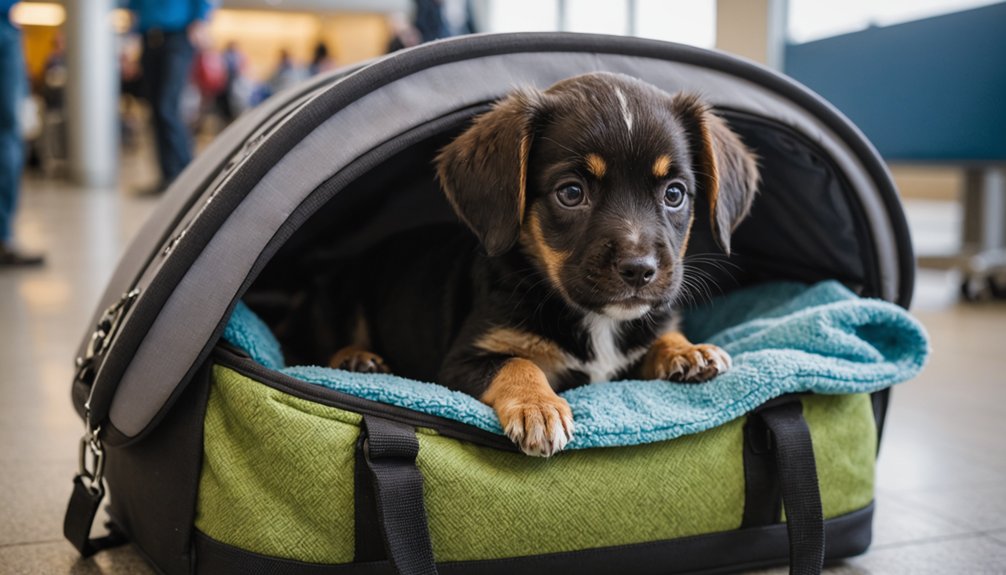
Age isn’t a suggestion when you’re booking a flight for your puppy—it’s a hard rule enforced by airlines and governments alike.
Most Airline Policies set 8 weeks as the baseline minimum for domestic flights, but that’s just the starting point. Puppies must also be fully weaned before airlines will accept them for travel.
International Puppy Transport demands more: the EU requires 15 weeks, while the U.S. often mandates 16 weeks—or a full 6 months under updated CDC import rules.
Airlines may allow younger pups, but destination-country regulations override carrier minimums every time. Additionally, some U.S. carriers won’t ship pets at all during certain summer months due to heat-related risks.
In India, domestic flights accept puppies at 12 weeks, yet international departures push that to roughly 7 months once rabies protocols kick in.
Know your route, know your destination’s laws, and don’t assume airline minimums are the final word—regulators have the last say. These minimum ages exist largely because young puppies haven’t fully developed their lungs, making them prone to breathing difficulties during flight.
Why 8 Weeks Is the Legal Minimum in the US
Because the USDA’s Animal Welfare Act sets a federal floor, you can’t legally fly a puppy younger than 8 weeks—airlines aren’t just being cautious, they’re following the law. This animal welfare standard exists because puppies under 8 weeks haven’t cleared the neonatal dependence stage; they’re still nursing and vulnerable to stress during transit. The USDA ties age directly to weaning status, recognizing that immaturity and milk-feeding reliance create real risk mid-flight.
| Factor | Requirement | Authority |
|---|---|---|
| Age | 8 weeks minimum | USDA APHIS |
| Weaning | Fully weaned | Animal Welfare Act |
| Feeding | Food/water within 4 hours pre-flight | USDA guidance |
You’re free to choose your carrier, but you’re not free to override this federal baseline—it’s the law, not a suggestion. Airlines are required to disclose these age and documentation policies as part of their optional service fee disclosures on their websites. Even once puppies clear this minimum age, some carriers may still request a vet-issued CVI for age verification, particularly with tiny breeds where maturity can be harder to judge visually.
What Are the Weaning Requirements Before Flying?

Meeting the 8-week threshold isn’t the whole story—your puppy also needs to be fully weaned, and USDA/APHIS defines that as weaned for at least five days before the flight, with no reliance on the mother’s milk during that window.
This rule applies whether your puppy travels in cargo or cabin, and airline staff must verify it before boarding.
Don’t stop at the federal minimum, though.
Many airlines push weaning expectations to 10-12 weeks, tying eligibility to a vet health certificate confirming your puppy’s nutrition and stability. This certificate must be signed by a licensed veterinarian within 10 days of travel.
Vets recommend giving the weaning process extra time beyond five days, ensuring solid food intake is consistent and digestion has settled. This is especially important since your two 8-week-old puppies are already at the minimum age, leaving little room for error before their 3.5-hour flight. It’s also wise to feed your puppies no less than 6 hours before travel, allowing time for digestion and a toilet break before the journey.
Give your puppy that buffer, and you’ll travel with confidence, not compliance headaches.
What Are the Age Rules for US Domestic Flights?
Eight weeks marks the federal floor for flying a puppy domestically, and every major US airline builds its policy on that baseline.
The USDA Animal Welfare Act sets 8 weeks as the minimum for puppy transport by air, and DOT guidance confirms carriers typically follow suit.
American and Delta both require dogs to be at least 8 weeks old for domestic travel; United enforces the same standard, insisting the full 8 weeks pass before departure.
Don’t assume every route follows identical flight restrictions, though.
Some carriers push thresholds to 8–10 weeks depending on the segment, and premium cabins may bar pets outright.
Airlines can deny boarding if your puppy looks underage, so call ahead and confirm specifics before booking your ticket.
Why International Flights Require 16 Weeks
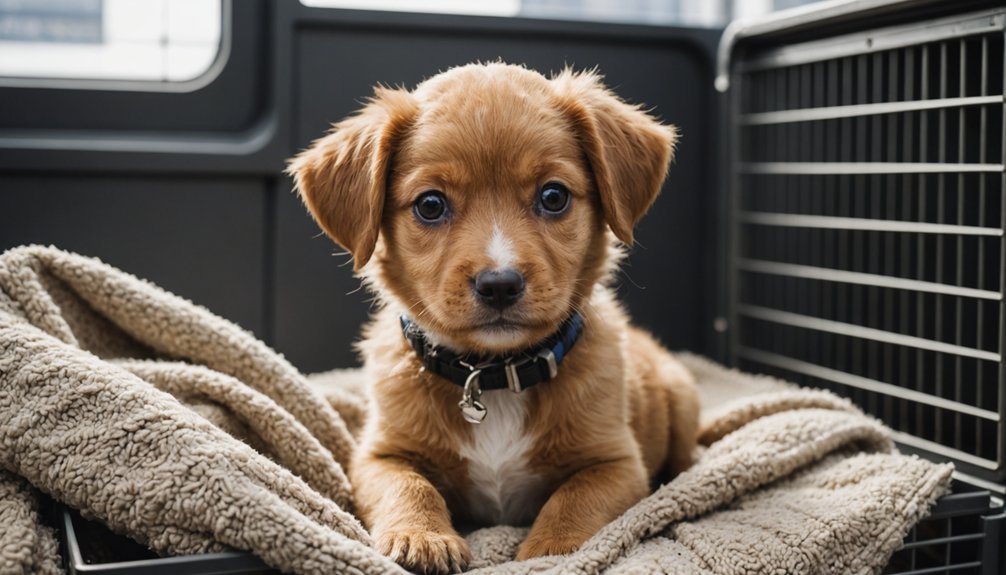
The 16-week threshold isn’t arbitrary—it reflects a collision between biology and bureaucracy.
Your puppy’s lungs and immune system aren’t fully developed until this age, making long-haul cargo holds genuinely risky before then.
Add international entry rules on top: the UK, EU states, and other rabies-controlled regions demand proof of effective vaccination plus a waiting period that simply can’t finish before 15-16 weeks. In fact, the European Union itself mandates that puppies be at least 15 weeks or older before they’re permitted to travel.
These aren’t suggestions—they’re flight restrictions with teeth.
Airlines enforce destination government rules at check-in, and mismatched documentation means denied boarding, quarantine, or forced return.
That’s why professional puppy transport services treat sub-15-week travelers as high-risk and push for the 16-week mark.
Waiting isn’t bureaucratic caution for its own sake—it’s what keeps your puppy safe and legally cleared to travel. Beyond age alone, most countries also require puppies to be microchipped before they’re allowed entry.
How Does Rabies Vaccination Affect Flight Timing?
Rabies vaccines don’t work like a switch you can flip whenever you want—they’re licensed for puppies 12 weeks and older, and that age floor is non-negotiable.
Vaccinate early, and most regulators won’t recognize the dose, forcing a restart on your rabies timelines.
Once your puppy gets that first shot, you’re locked into a minimum 21-day vaccine waiting period—some routes push it further, up to 30 days—before wheels-up is even an option. If your puppy needs microchipping too, remember that the microchip must be in place before the rabies vaccination for many international routes, or the shot may not count.
That’s why 15-16 weeks becomes the realistic earliest flight window, not 12.
Enhancers are different: given on time, they don’t reset your clock, so you keep your freedom to travel.
But let coverage lapse, and you’re back to primary-vaccination rules—full wait, no shortcuts.
Titre testing adds months more if your route requires it. Some destinations, such as Australia and Japan, require rabies titer tests before arrival, so factor that into your planning well ahead of time. Remember that the rabies vaccine’s validity is only recognized for one year from the date of vaccination, so keep boosters current well before any planned trip.
How Do India’s Puppy Travel Rules Compare to the US?
Once you’ve cleared the rabies-timing obstacles, you’ll find the actual age floors shift depending on which country’s rules you’re flying under.
Air India sets cabin travel at 8 weeks and cargo at 3 months, while US carriers like American, Delta, and United generally align at 8 weeks for cabin pet transport, provided your puppy’s fully weaned.
The real divergence shows up in airline restrictions for cargo and vulnerable animals:
- Weaning verification: US airlines demand proof of independent eating, not just a birthdate.
- Cargo age minimums: US cargo rules climb to 12–16 weeks for brachycephalic breeds; India holds firm at 3 months.
- Documentation windows: India requires a 10-day health certificate; US timing varies by carrier.
- Vulnerable animal bans: Both countries restrict pregnant or unweaned-litter travel, limiting your options either way.
Beyond age and weaning, India also requires a microchip for identification, with the microchip number recorded on the health certificate, adding another layer of documentation puppies must satisfy before they’re cleared to fly. Regardless of age requirements, India only permits puppies to travel in the cabin if their combined weight with the kennel stays under 10 kg.
Vet-Recommended Ages vs. Legal Minimums
Because federal law and airline policy set the floor rather than the ceiling, you shouldn’t assume 8 weeks means your puppy’s actually ready to fly. Federal rules require 8 weeks minimum and 5 days weaned, but many airline restrictions push that to 10-12 weeks, especially internationally.
Vets often recommend waiting even longer, since puppy development at 8 weeks still means immature immunity and incomplete weaning resilience. You’re free to book the earliest legal flight, but that doesn’t mean you should. Vets frequently flag 12 weeks as safer, particularly for small breeds or puppies still finishing vaccine schedules.
Rabies vaccines typically aren’t given until 12-16 weeks, which matters for international entry requirements. Treat 8 weeks as a legal baseline, not a readiness benchmark—your puppy’s actual condition should drive the decision.
Signs Your Puppy Isn’t Ready to Fly Yet
A puppy’s body often tells you what a calendar can’t.
Meeting the legal minimum age doesn’t guarantee readiness—puppy development varies, and travel anxiety can override any timeline you’ve set.
Watch for signals that outpace nerves and cross into genuine distress:
- Physical red flags: unresolved illness, incomplete vaccinations, or breathing difficulties signal your puppy’s body isn’t stable enough for flight stress.
- Crate resistance: panic, biting, or frantic escape attempts during rehearsals mean the crate feels like a threat, not shelter.
- Escalating anxiety: trembling, drooling, or vomiting that worsens as departure nears shows stress compounding rather than easing.
- Pre-flight withdrawal: hiding, refusing food, or excessive licking at home reveals distress beyond ordinary jitters.
Your freedom to travel shouldn’t cost your puppy’s wellbeing—read these signs before you book the flight.
Should You Choose Cabin or Cargo for a Puppy?
Size dictates this decision more than preference does. Puppy transport rules typically cap in-cabin weight at 7-9 kg, including the carrier, so if yours exceeds that, cargo becomes your only route.
Pet carriers must fit fully under the seat; travel crates for cargo are hard-sided and built for cargo safety, with modern holds pressurized and climate-controlled.
Airline policies vary widely—some ban cabin pets outright, others cap cabin quotas, and countries like the UK, UAE, and Australia require cargo entry regardless of size.
Check flight restrictions and flight duration before booking, since long-haul routes often push puppies into cargo.
Secure pet insurance beforehand, and nail down travel logistics early: puppy comfort depends on planning, not luck.
What to Pack for a Long Flight With Your Puppy
Packing smart beats packing much. Your puppy’s safety and your peace of mind on a long flight depend on choosing the right travel accessories, not hauling excess gear.
Focus on essentials that serve double duty: comfort, cleanup, and quick access under pressure.
Build your kit around these core categories:
- Identification and documents – ID tags, health certificate, and vaccination records keep you compliant and traceable.
- Feeding gear – regular food, collapsible bowl, and sealed bags prevent stomach upset and mess.
- Comfort items – a scented blanket or quiet toy eases anxiety without disrupting other passengers.
- Cleanup supplies – pads, wipes, and waste bags handle accidents fast.
Pack with purpose, and you’ll travel light while staying fully prepared for whatever the flight brings.
How to Time Your Booking Around Age Rules
Timing your booking starts with knowing the rules, not picking a date first. Puppy Transport regulations set the boundaries: most airlines require 8 weeks minimum, some demand 10–12, and international routes often push that to 16 weeks or more due to rabies protocols.
Before locking in your Flight Booking, confirm your airline’s exact policy and destination requirements, then work backward from that minimum age.
Factor in weaning, too. Puppies need 5 days post-weaning at minimum, though vets recommend waiting until 10–12 weeks for reduced stress. If you’re flying internationally, build in time for rabies vaccination (28–30 days pre-travel) and required waiting periods.
You control the calendar—choose dates that satisfy every rule, not just the earliest one.
Frequently Asked Questions
Can Airlines Deny Boarding if My Puppy Turns 8 Weeks on Travel Day Itself?
Yes, airlines can still deny boarding. Even though your puppy travel technically meets “at least 8 weeks,” airline policies allow discretion—stricter internal minimums, weaning proof, or missing paperwork can override the calendar-day cutoff at check-in.
Do Layovers or Connecting Flights Require Separate Age or Vaccination Checks?
No—your airline checks age and vaccination once at initial check-in, not repeatedly. Flight connections don’t trigger new checks unless you switch carriers. However, layover rules shift when transit countries impose their own import requirements, per CDC guidance.
What Documents Besides a Fitness Certificate Should I Carry While Flying With a Puppy?
You’ll need your puppy’s microchip ID, EU pet passport, valid rabies vaccination record, and complete travel papers. Don’t forget pet insurance documentation—carry printed copies for border checks. Verify all dates before you fly; freedom to travel demands airtight preparation.
Are There Breed-Specific Restrictions Affecting Minimum Flying Age?
Yes—breed rules matter. If you’re flying a brachycephalic pup, you’ll face stricter size limits, cabin-only mandates, and higher minimum ages (10-12+ weeks), per DOT guidance and airline-specific policies like those Chewy compiles.
Can I Get a Refund if My Puppy Is Refused Boarding Due to Age?
No, you generally won’t get a refund. Airline rules treat underage puppies as ineligible to travel, and refund policies classify this as your responsibility—so verify age requirements yourself before booking to protect your travel plans.
Conclusion
You’ve got the facts: 8 weeks is the federal minimum under USDA regulations, but you’ll want to confirm weaning and airline-specific rules before you book. International trips demand 16 weeks minimum, often more with rabies titer waiting periods. Don’t rush the process—check your puppy’s readiness signs, choose cabin travel when possible, and pack smart for the trip. Time your booking around these age thresholds, and you’ll avoid denied boarding or health setbacks.
References
- https://www.airtransportanimal.com/en/minimal-age-animal-travel-plane/
- https://www.petworks.com/articles/puppies-and-kittens-age-to-fly/
- https://www.akc.org/expert-advice/travel/puppys-first-flight-how-to-prepare/
- https://travelingwithyourpets.com/flying-with-a-puppy/
- https://www.facebook.com/groups/1180884898968404/posts/2744209615969250/
- https://tequestaveterinaryclinic.com/safe-pet-travel-tips-puppies-kittens-senior-pets/
- https://www.finnair.com/us-en/frequently-asked-questions/animals/what-is-the-minimum-age-requirement-for-puppies-to-fly–1905888
- https://www.carrymypet.com/can-puppies-travel-age-rules-every-pet-parent-must-know
- https://www.petcommute.com/post/how-old-does-a-puppy-need-to-be-to-fly
- https://ia600409.us.archive.org/23/items/international-pet-travel-2026/delta-pet-age-requirements-2026.pdf