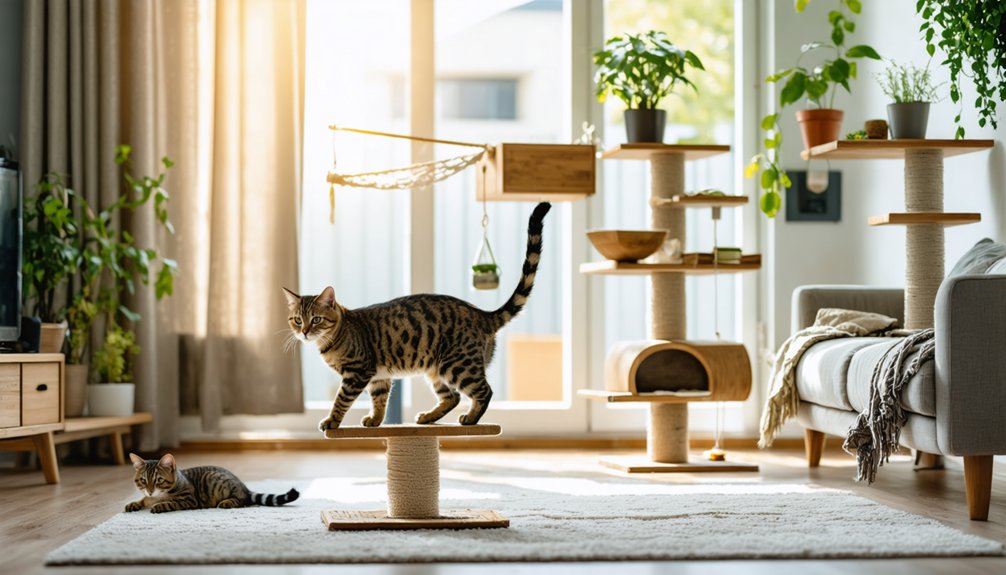
Stress can harm dogs’ and cats’ behavior, digestion, sleep, immune function, and urinary health. Common triggers include loud or high-frequency noises, disrupted feeding or activity schedules, and too much time alone. Dogs may pant, pace, bark, tremble, or soil indoors. Cats may hide, over-groom, vocalize, vomit, or develop urinary issues. Ongoing stress can mimic illness and raise disease risk, so persistent or severe signs warrant veterinary attention. The sections below explain triggers, warning signs, and practical relief.
Highlights
- Noise from fireworks, thunderstorms, and household beeps can trigger fear responses, causing panting, hiding, trembling, vocalizing, aggression, or escape attempts.
- Routine changes like delayed walks, moves, or schedule shifts can raise stress, leading to pacing, appetite loss, digestive upset, poor sleep, and house soiling.
- Isolation can harm dogs and cats emotionally and physically, contributing to vocalization, over-grooming, depression, immune suppression, urinary issues, and reduced quality of life.
- Predictable routines, safe retreats, exercise, enrichment, white noise, and pheromone diffusers can lower baseline stress and help pets feel secure.
- Persistent stress or red-flag signs like aggression, self-injury, vomiting, diarrhea, lethargy, or breathing trouble require prompt veterinary evaluation.
How Stress Affects Dogs and Cats
Although stress can look different in dogs and cats, it often shows up through clear physical and behavioral changes that signal strain on the body and mind.
Dogs may pant, tremble, drool, shed suddenly, lose appetite, pace, bark, chew destructively, or become clingy.
Cats may over‑groom, hide, vomit, lose weight, vocalize more, or stop using the litter box consistently. In some pets, stress can also lead to fear-based aggression toward people or other animals.
These responses can resemble separation anxiety or even seasonal allergies, so patterns matter. Medical problems such as pain, arthritis, or thyroid disease can also mimic stress, making a veterinary evaluation important when signs persist.
Persistent stress is linked with digestive upset, weakened immune function, urinary problems, heightened blood pressure, and greater illness risk over time. Early recognition helps prevent chronic stress from becoming a long-term pattern that affects overall well-being.
Recognizing these signs helps families respond early and support pets in ways that protect health, preserve routines, and strengthen the sense of safety and connection companion animals need to thrive together at home.
Why Noise Stress Hits Pets So Hard
Because pets hear a far wider range of frequencies than people do, noises that seem minor in a home, such as a smoke detector’s low‑battery beep, a microwave tone, or the whine of electronics, can register as intense and distressing.
This acoustic vulnerability helps explain why intermittent, high‑pitched sounds often unsettle dogs and cats more than steady background noise. UC Davis research found that high-frequency noises are especially likely to trigger anxiety in dogs. An animal’s sensitivity depends on whether a sound falls within its hearing range.
Research shows that sudden or persistent noise can accelerate heart rate, breathing, and sympathetic arousal, while very loud exposure may damage hearing. Thunderstorms and fireworks can be especially distressing because their explosive noises combine booming sound with other alarming sensory cues.
In dogs, hyperactivation of the locus coeruleus releases norepinephrine, strengthening fear responses after even one event.
Frequency masking also matters: when appliance noise covers environmental cues, pets lose access to signals that help them feel oriented and secure.
This helps households understand that everyday sounds may be genuinely overwhelming for companion animals.
Signs of Noise Stress in Dogs
How can a household tell when everyday sound has crossed into distress for a dog? Common signs appear in vocalization patterns and body language. Whining, barking, or howling may intensify during loud or sudden noises, sometimes alongside trembling triggers such as high-frequency sounds. Many dogs cower, shake, pin their ears back, or pace fixed routes when agitated. Dogs with noise phobia can show these reactions as an intense fear response rather than a mild startle.
Additional indicators include wide eyes, dilated pupils, rapid blinking, panting without heat or exercise, and repeated lip‑licking or drooling. Avoidance behaviors often follow: hiding, clinging to familiar people, refusing treats, or trying to escape. In more severe episodes, stress disrupts normal bodily functions, leading to indoor urination, defecation, vomiting, or diarrhea. Some dogs also show displacement behaviors such as excessive sniffing or digging when noise becomes overwhelming. These reactions can be part of noise aversion, a condition that often goes unrecognized because dogs may seem normal between noise events. Recognizing these signals helps a household respond early and support a dog with greater confidence and care.
Signs of Noise Stress in Cats
Cats often show noise stress differently from dogs, with the clearest signals appearing in ear position, eyes, posture, and sudden behavior changes. Common markers include ear flattening, ears swiveling constantly, pupil dilation in bright rooms, and a crouched posture held close to the floor. Their hearing reaches far beyond ours, making high-frequency sounds especially intense or overwhelming. Some cats freeze, tremble, avoid eye contact, or display tail twitching and heightened vigilance.
Behavior may shift quickly toward hiding, escape behavior, or defensive reactions such as hissing vocalizations, growling, or swatting when approached. Frantic grooming can follow repeated noise exposure and may progress to fur loss. A low, tucked tail, shaking, and unusual purring can also accompany distress. In more severe cases, stress induced urination may occur. Some cats may also show exaggerated swallowing motions during acute stress. Recognizing these signs helps people respond earlier and support a greater sense of safety and calm. Providing a quiet room with a covered bed gives cats a safe hiding spot during stressful noise events.
How Routine Changes Stress Dogs
When a dog’s daily pattern shifts, stress often rises quickly because predictable schedules for meals, walks, rest, and play help create a sense of security. Research links disrupted routines with anxiety, restlessness, pacing, and lower resilience to uncertainty.
Changes in Exercise timing or Feeding consistency can trigger barking, whining, destructive chewing, house soiling, and excessive licking. Similar stress patterns are also seen in cats, where sudden food or litter changes can act as stress triggers. In cats, stress may also show up as altered grooming, with some grooming excessively and others neglecting coat care.
Physiological effects may also appear. Dogs facing unstable schedules can show panting, elevated heart rate, reduced appetite, digestive upset, and disturbed sleep. Common triggers include delayed walks from work changes, moves, vacations, renovations, or new household members.
Evidence suggests gradual transitions reduce strain. Keeping core meal and walk times stable, offering puzzle toys, and reinforcing calm behavior with rewards helps dogs regain predictability, supporting emotional balance and helping them feel secure within the household group again. Predictable interaction and enrichment can also ease stress by creating a soothing routine dogs learn to expect each day.
How Routine Changes Stress Cats
Routine disruptions can affect cats as strongly as dogs, often because feline stress systems respond poorly to unpredictability in feeding, play, rest, and household activity. Cortisol commonly rises, while the nervous system shifts toward chronic vigilance; in contrast, predictable homes are linked with lower baseline cortisol and steadier behavior.
Behavior often signals the strain. Many cats eat less, play and investigate less, hide more, vocalize more, or begin urine spraying. Grooming may intensify to the point of sores or fur loss, while gastrointestinal, skin, and cardiovascular problems can appear. Research from Ohio State found routine disruption can triple sickness risk, even in otherwise healthy cats.
Supportive care centers on stable schedules, safe retreats, predicted enrichment before changes, and scent therapy using familiar odors to preserve calm and belonging.
How Isolation Affects Dogs
Isolation can strain dogs both behaviorally and physiologically, especially when time alone exceeds their coping capacity.
Common signs include barking, howling, whining after departure, pacing, drooling, house soiling, destructive chewing, and escape attempts from crates or rooms.
These responses reflect distress rather than disobedience and often intensify when isolation becomes routine.
Evidence suggests 15–17% of dogs may develop separation anxiety when left alone too long.
Emotional effects can include depression, decreased appetite, loss of interest in play, apprehension around strangers, boredom, social withdrawal, and disorientation linked to disrupted pack bonds.
Prolonged social deprivation may also weaken immune function, disturb sleep, and increase general health risks after about five hours without relief.
Companion, herding, hound, young, and senior dogs often require stricter limits and support.
How Isolation Affects Cats
Although cats are often viewed as independent, evidence indicates that prolonged separation can still trigger measurable stress responses in a notable share of individuals.
Around 13 percent show separation-related behaviors, with higher risk in single indoor cats and those accustomed to constant human presence.
Observed signs include excessive vocalization, hiding, house soiling, overgrooming, destructive clawing, and intense excitement when a caregiver returns.
Isolation may also disrupt sleep, appetite, digestion, and immune function through heightened stress hormones.
Veterinary sources note urinary tract problems, withdrawal, aggression, and reduced quality of life as important consequences.
Risk increases with routine disruption, owner absence, prior trauma, sensitive temperament, and medical issues.
Lower environmental interaction and limited scent stimulation may further deepen boredom, loneliness, and anxiety in vulnerable cats, especially after pandemic-related lifestyle shifts.
How to Reduce Stress at Home
How can stress at home be reduced for pets in practical, evidence-based ways? A calmer household begins with a quiet room, a predictable routine, and a safe retreat containing beds, blankets, favorite items, and scented toys.
Curtains, covered crates, and white noise can limit visual and sound triggers.
Consistent feeding, walks, play, and sleep help dogs and cats feel secure, especially during household changes.
Daily exercise and stimulation reduce nervous energy and support confidence.
Walks, fetch, puzzle feeders, snuffle mats, lick mats, and short training sessions can improve relaxation.
Carrier practice, gradual car rides, and brief “stay” exercises build tolerance for change.
Pheromone diffusers, calming vests, and gentle handling paired with rewards may further ease tension.
Light therapy may support settling in some home environments too.
When Pet Stress Needs Veterinary Help
Home-based calming strategies help many pets, but persistent or worsening stress can signal a need for veterinary care.
Ongoing pacing, shaking, whining, barking, drooling, hypervigilance, or sharp changes in eating and drinking suggest anxiety is exceeding home management. Veterinary triage becomes important when stress behaviors escalate, disrupt bonding, or reduce interest in normal activities.
Immediate evaluation is warranted for destructive behavior, aggression, self-mutilation, compulsive actions, vomiting, diarrhea, blood in stool or vomit, lethargy, breathing difficulty, collapse, seizures, or inability to walk. These signs may reflect both emotional distress and underlying medical disease.
Emergency protocols help guide urgent care when bleeding, convulsions, or dehydration appear. A veterinarian, or ideally a veterinary behaviorist, can perform exams, rule out medical causes, and create treatment plans that protect welfare and trust.
References
- https://dingosdogsitting.com/single-post/2025/01/15/sound-science-protecting-our-dogs-from-noise-stress/
- https://www.ucdavis.edu/health/news/common-household-noises-may-be-stressing-your-dog
- https://pmc.ncbi.nlm.nih.gov/articles/PMC8606548/
- https://www.youtube.com/watch?v=1KTE0T7FWYk
- https://naturesplus.com/blogs/pet-care/reducing-stress-in-pets
- https://www.kinship.com/pet-behavior/sounds-help-anxiety-pets
- https://thegrandpaw.com/the-mental-health-impacts-of-isolation-and-loneliness-on-dogs/
- https://www.youtube.com/watch?v=uP7zwZEsTZE
- https://krichelanimalhospital.com/signs-of-stress-and-anxiety-in-dogs-and-cats-how-to-help/
- https://mtpetvet.com/pet-stress-sos-identifying-anxiety-in-dogs-and-cats-effective-solutions/