The best insulated crate covers for cold-weather truck camping pair a heavy-duty 600D–900D shell with high-loft or closed-cell insulation, sealed seams, and overlapping door flaps to block convective heat loss. Look for snug crate-specific fit, glove-friendly zippers, adjustable vents, and reflective foil liners that return your dog’s body heat. Below 20°F, you’ll need more than a cover alone. Keep going to learn which picks, materials, and full thermal systems actually keep dogs warm.
TLDR Key Takeaways
- Choose multi-layer covers with a 600D-or-heavier shell and high-loft synthetic or closed-cell insulation for extreme cold.
- Prioritize windproof shells, sealed seams, and overlapping door flaps to block convective heat loss from highway gusts.
- Expect to spend $90–$180 for mild winters and $200–$350+ for temperatures below 20°F.
- Ensure snug crate-specific fit, cold-proof zippers, adjustable vents, and multiple tie-downs for warmth and moisture control.
- Below 20°F, pair covers with rigid foam board and radiant barriers, prioritizing floor insulation against conductive heat loss.
How Insulated Crate Covers Keep Dogs Warm
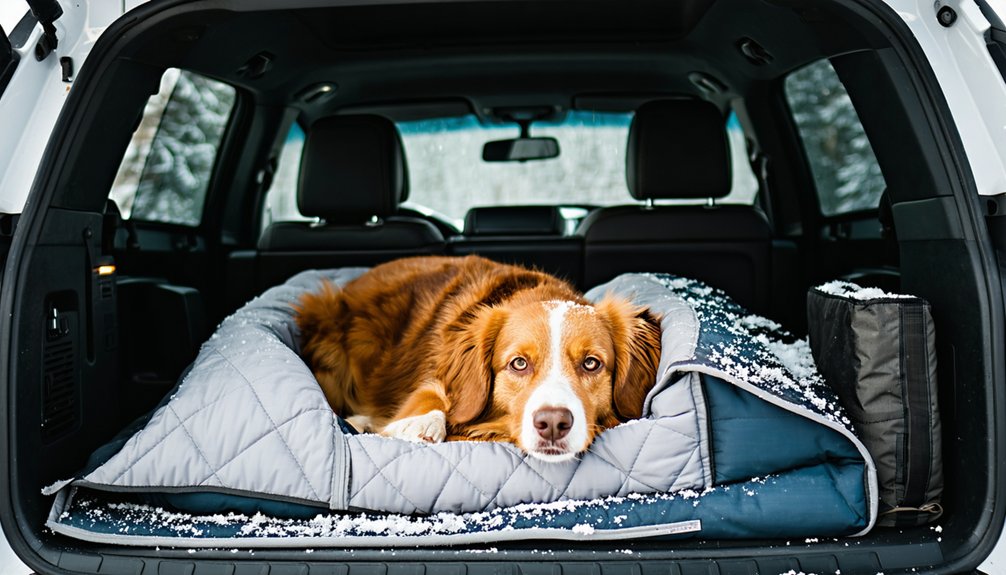
When temperatures drop, an insulated crate cover becomes your dog’s first line of defense against the cold. The cover creates a thermal barrier that blocks convective heat loss on three sides, while trapped air between layers slows conductive heat transfer from your dog’s warm body.
Reflective, foil-lined covers return radiant body heat back toward your dog, much like an emergency blanket. Together, these layers build a stable thermal microclimate, smoothing the rapid temperature drops you’ll face with truck-bed exposure.
You’re also gaining moisture management—moisture-resistant outer fabrics prevent waterlogging and evaporative cooling that would otherwise defeat the warming effect. Pair the cover with proper bedding, and you’ll ease your dog’s metabolic demand, keeping core temperature comfortably within the canine range.
What to Look for in a Cold-Weather Crate Cover
Before you buy, match the cover’s specs to the realities of truck-bed travel, where wind, road spray, and temperature swings hit harder than they do at home. You’re joining drivers who demand gear that performs when the weather turns. Prioritize a windproof 600D shell, waterproof coating, and overlapping storm flaps that block drafts and wind-driven moisture.
| Feature | Why It Matters |
|---|---|
| Snug, crate-specific fit | Prevents ballooning at highway speeds |
| Cold Proof Zippers | Glove-friendly pulls work in freezing temps |
| Adjustable vents | Balances warmth and airflow, prevents CO₂ buildup |
| Odor Free Liners | Moisture-resistant, quick-drying, dog-safe |
| Multiple tie-downs | Secures cover to crate and bed anchors |
Confirm clearance for caps, tailgate closure, and drainage-friendly hems. These details keep your dog warm, dry, and calm.
Materials That Survive Rough Truck Use
Truck-bed travel punishes gear, so your crate cover’s materials have to earn their place. Start with the shell: canvas, duck cloth, and denim all deliver the rugged, tight-weave durability you want, resisting tearing, fraying, and snagging from nails or rough handling. These heavyweight woven fabrics stay scratch resistant where loose knits fail.
Inside, layered thermal quilt or padded multilayer insulation holds loft and shape through repeated compression. Choose water-resistant or coated outer fabrics to manage snow, slush, and condensation that otherwise wreck insulation.
Reinforcement matters just as much. Look for double-stitched, tear proof seams, edge binding, and reinforced corners and hardware anchors where straps pull hardest.
Weatherproof zippers and UV resistant threads keep your cover sealed and intact through freezing loads, unloads, and re-stows. You belong out there—gear up right.
Why Fit and Ventilation Matter So Much
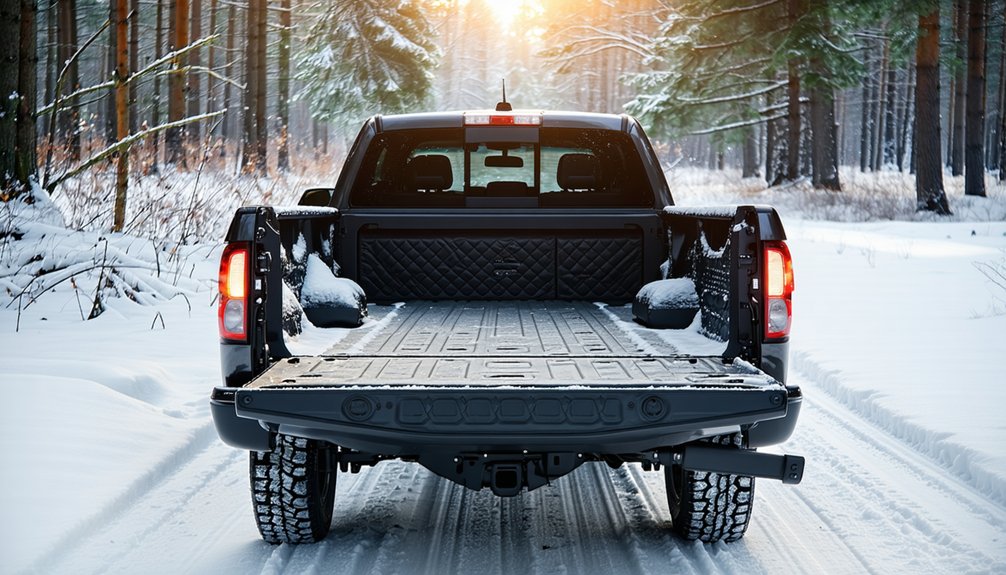
Why does fit make or break a cold-weather crate cover? A snug, form-fitting cover delivers draft sealing that loose, flapping fabric can’t match. Gaps around edges, doors, and vents let cold air infiltrate, forcing your bedding or heat source to work harder.
A properly sized cover blocks wind from circulating underneath, preserving the warm microclimate your dog depends on through sub-freezing nights. Secure anchoring keeps the cover from shifting during braking or off-road movement, so vents stay clear and doors open fast in emergencies.
Ventilation matters just as much. Your dog’s breath and wet fur add moisture that condenses on cold walls, dampening bedding and increasing heat loss. Smart vent alignment carries that moisture out while maintaining winter insulation, balancing warmth, airflow, and oxygen perfectly.
Best Insulated Crate Cover for Extreme Cold
Once you’ve nailed fit and ventilation, insulation quality decides how well your crate holds heat through sub-freezing nights.
The best extreme-cold covers use multi-layer construction: a rugged 600D-or-heavier polyester or ripstop shell, water-resistant PU or PVC backing, and high-loft synthetic or closed-cell insulation.
Thermal liner options range from poly-fill to thermal-reflective layers, all designed to retain your dog’s metabolic heat—your primary heat source in arctic conditions.
Wind chill blocking performance matters just as much; windproof shells, sealed seams, and overlapping door flaps stop convective loss from 30–40 mph gusts.
Pair one with an insulated, double-wall crate body and you’ll keep the interior 10–20 °F warmer than ambient.
That’s the setup serious waterfowl and upland hunters trust at 0–20 °F.
Best Value Insulated Cover for Hunting Dogs
While extreme-cold setups demand premium construction, most hunters find the real value sits in the mid-range, roughly $90–$150. Here you get durable 600D–900D polyester or nylon shells with PVC or polyurethane backing, providing weather resistant performance that protects insulation from soaking and heat loss.
| Value Feature | What It Delivers |
|---|---|
| Reflective lining (ArcticShield Retain) | Bounces body heat back without bulk |
| Reinforced abrasion points | Survives truck-bed ribs and brush |
| Storm flaps for zipper protection | Blocks drafts and driving rain |
You’ll appreciate synthetic fiberfill that stays warm when damp, bar-tacked handles and tie-downs, and rust-resistant hardware built for wet dogs and freeze–thaw cycles. Universal fit patterns sized to common kennel dimensions trim cost, and earth-tone camo lets you blend in alongside fellow hunters.
Best Insulated Cover for Roto-Molded Kennels
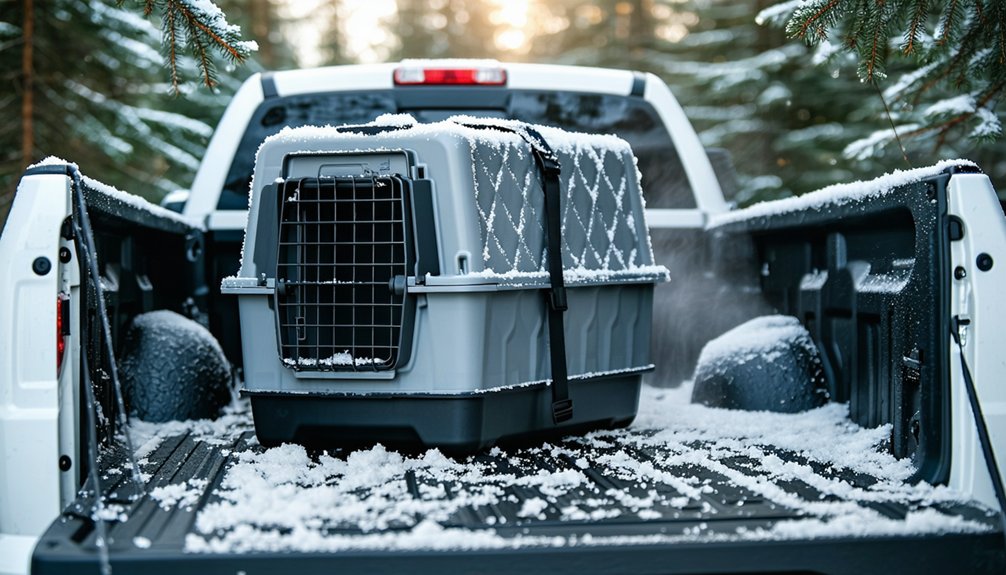
On a roto-molded kennel, you’re already starting with a higher baseline R-value than you’d get from a thin-wire crate, so the right insulated cover simply adds a trapped air layer and wind block to seal in your dog’s warmth.
Look for a cover that uses reflective insulation, the same system developed for extreme cold-weather apparel, which bounces radiant body heat back inward while blocking wind.
Choose a fitted securing design with adjustable straps, buckles, elastic hems, and tie-down loops that cinch around molded handles, since covers relying on gravity shift under highway wind.
Measure your kennel’s length, width, and height at the widest points, adding 2–3 inches for overlap.
Like fellow truck campers, you’ll trust brand-specific fitted covers over universal slipcovers for reliable, vent-aligned performance.
Best Waterproof Crate Cover for Snow and Spray
Sealing in warmth matters less when road spray and blowing snow soak through the cover first, so your priority shifts to materials built to shed water. Look for heavy-duty 600D–900D polyester or poly-canvas with PU coatings reaching 1,000–2,000 mm hydrostatic head. Waterproof sealing depends on taped, double-stitched seams that block ingress at every stitch hole.
| Feature | What It Protects |
|---|---|
| Storm flaps | Cover zippers from wind-driven spray |
| Anti splash skirts | Lower crate from wheel run-off |
| Zippered stormways | Access without exposing windward side |
| DWR coatings | Fabric from slush and freeze–thaw |
Choose full-coverage designs with snug corner straps so highway speeds can’t pump snow inside. When you’ve sealed the gaps, you’ll join the campers who keep their companions dry through any storm.
Pairing Your Insulated Cover With a Truck Topper
A truck topper converts your insulated crate cover from a standalone shield into one piece of a complete thermal system.
Add topper insulation upgrades—Reflectix panels or 0.5–1″ rigid XPS foam against the shell walls—to enhance interior heat retention through fiberglass or aluminum.
Don’t stop there: insulate the bed floor with 1–2″ rigid foam (R-5 to R-10), since metal conducts heat away fastest below freezing.
Aim for R-7.5 to R-10 at floor and crate level for nights under 20°F.
Seal tailgate seams and stake pockets to stop drafts that’d negate your cover’s benefits.
Then prioritize vapor moisture control—crack a window 1–2″ and run a small 12V fan to manage condensation from your dog’s breathing.
Together, these layers keep your companion genuinely warm.
Safety Features for Loading Dogs at Night
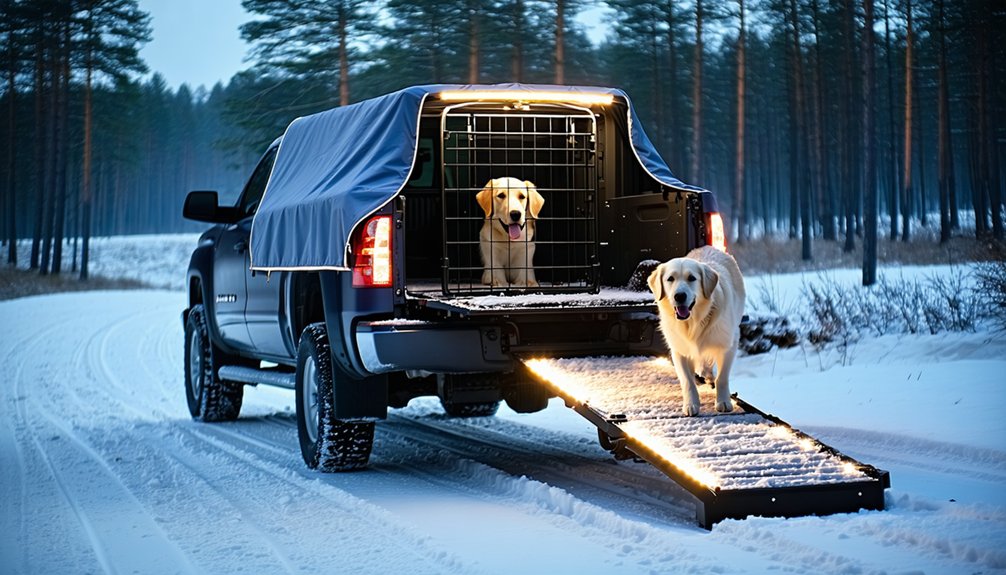
Once your thermal system keeps dogs warm overnight, you’ve still got to load them safely in the dark—where cold-weather conditions multiply the risks.
Start with night visibility lighting: wear a headlamp to free your hands, and mount fixed white LED floods on your topper to erase shadows near steps and tie-outs.
Add reflective tape to crate doors and tailgate edges, then use red interior lighting to check dogs without killing your night vision.
Build reflective restraint systems by fitting each dog with a reflective harness and glow-in-the-dark leash.
Keep that leash attached until the dog’s fully crated and latched, and open just one door at a time.
Choose well-lit, low-traffic spots, secure your crates, and lay non-slip mats on frosted tailgates.
We’ve all bolted dogs—prevention’s everything.
How Much Should You Spend on a Cover?
How much you spend depends on three factors: your climate, how often you camp, and the durability you need. For mild winters (30–40°F), a mid-range insulated cover ($90–$180) paired with basic DIY layers handles the job.
Below 20°F, you’ll want premium covers ($200–$350+) with thicker foam targeting R-10 or higher. Smart budget planning means matching spend to use: occasional trips favor budget-to-mid-range options, while frequent or extreme-condition campers justify premium gear that lowers cost per night and reduces equipment failure.
Don’t overlook size compatibility—covers must fit your crate properly to seal out wind and trap heat. Heavy-duty 900D fabrics cost more upfront but last longer, lowering replacement frequency.
A full cold-weather truck-bed system typically lands between $150 and $400.
When You Need More Than Just a Cover
When nighttime temperatures plunge below 20°F (-6°C), an insulated cover alone won’t cut it. Single textile covers rarely exceed R-1 to R-2, so you’ll need to build a full thermal system.
Add rigid foam board (XPS or polyiso) around and under the crate to reach R-7.5–R-10, and prioritize floor insulation—most heat escapes through conduction into the metal truck bed.
Wrap radiant barriers like Reflectix to reflect up to 97% of radiant heat inward.
Remember, a cover traps warmth around your dog but won’t raise the overall bed temperature, so cold air leaking through walls and gaps offsets your efforts.
That’s why wind draft proofing—weatherstripping the tailgate, stake pockets, and cap joints—matters.
Finally, prioritize condensation control through ventilation, keeping your companion dry, warm, and protected.
Frequently Asked Questions
Can I Leave My Dog Crated in the Truck Unattended?
No, you shouldn’t. Even with proper crate ventilation, cold-weather risks like hypothermia and frostbite escalate fast. Fellow campers know dog safety rules demand continuous supervision—many states legally require it. Stay close; your pup’s counting on you.
How Do I Clean and Store My Insulated Crate Cover?
Hand-wash with mild soap, then air-dry completely—moisture control’s essential. How often? After every trip. Run a detail inspection for tears and zippers, then fold and store at cool storage temperature. You’ve got this, fellow camper!
Are Insulated Crate Covers Safe for Puppies or Senior Dogs?
Yes, they’re safe when you follow heat safety tips and prioritize material breathability. You’ll protect vulnerable puppies and seniors by choosing vented covers, monitoring temperature, and introducing coverage gradually—joining countless owners who camp comfortably and responsibly together.
Will an Insulated Cover Work in Hot Summer Conditions Too?
Only with serious ventilation. Summer insulation performance depends on open vents and shade—otherwise you’ll trap heat, creating an oven effect. Watch condensation risk too. Like fellow dog owners, you’ll want mesh panels open and direct sun avoided.
How Long Do Quality Insulated Crate Covers Typically Last?
You’ll get 3–5 years from quality insulated covers with proper care. Durability warranties typically run 1–3 years, signaling expected service life. Gentle cleaning and air drying protect winter performance, keeping you and your pup comfortably covered.
Conclusion
Don’t gamble with your dog’s comfort when temperatures drop. A quality insulated crate cover isn’t a luxury—it’s essential gear that keeps your dog safe through cold-weather hauls. You’ve learned what matters: durable materials, proper fit, smart ventilation, and night-loading safety features. Pair your cover with a solid topper, spend wisely, and recognize when conditions demand more. Get these details right, and you’ll keep your dog warm, secure, and ready for every truck-camping trip ahead.
References
- https://www.truckcampermagazine.com/question-of-the-week/recommended-rv-covers-truck-campers/
- https://bisontonneaucovers.stck.me/post/1021500/Best-Hard-Tonneau-Cover-for-Snowy-Climates
- https://bedgearhq.com/bed/how-to-insulate-your-truck-bed-for-cold-weather
- https://outdoors.stackexchange.com/questions/4776/thermal-insulation-of-truck-cap
- https://rockcreekcrates.com/products/insulated-crate-cover
- https://www.gundogsupply.com/mudriver-large-brown-kennel-cover.html
- https://pawleaks.com/insulated-dog-crate-covers/
- https://www.facebook.com/groups/DogSportVehicleIdeas/posts/6708296689210977/
- https://www.maniacmoose.com/what-you-need-to-know-about-truck-cap-winter-camping/
- https://www.truckranger.com/blog/which-type-of-truck-bed-cover-is-best-for-protecting-your-cargo