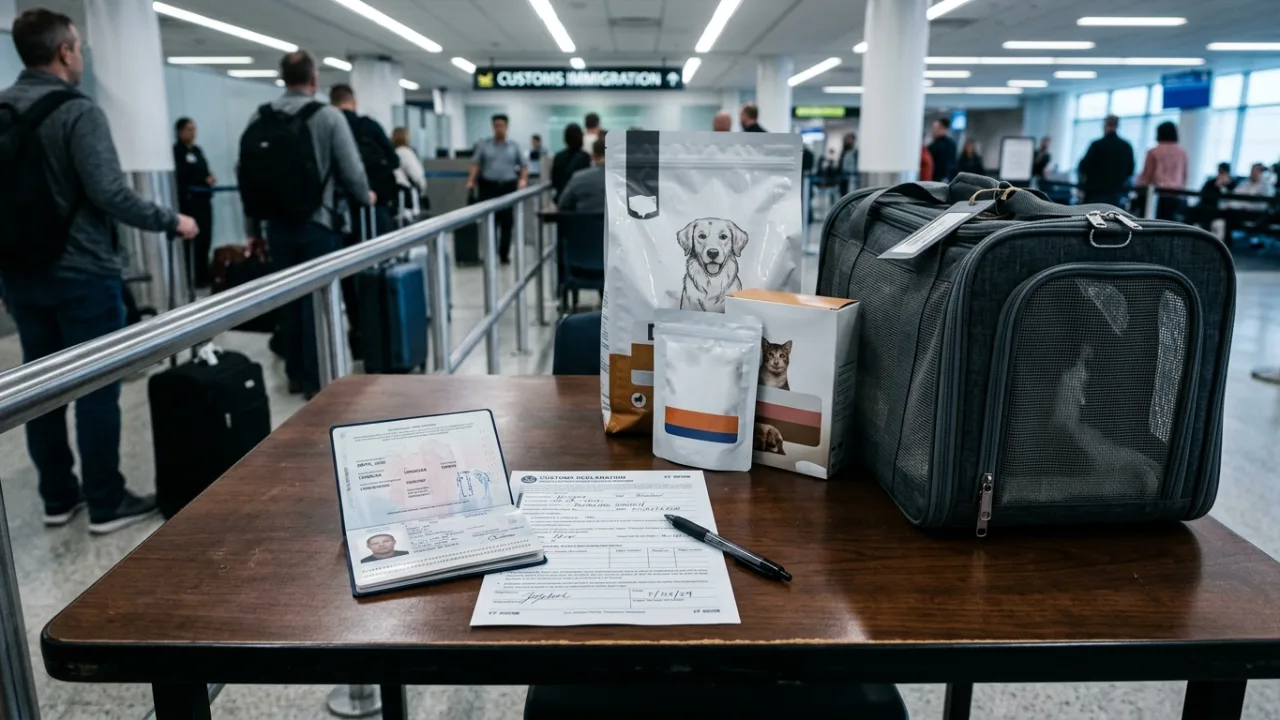
You’ve double-checked the pet passport, booked the airline-approved carrier, and packed your dog’s favorite blanket. Then, at customs, an officer pulls a half-empty bag of kibble out of your suitcase and drops it straight into a biohazard bin. It happens more often than you’d think, and it’s rarely because travelers are trying to break the law — most simply had no idea pet food was regulated at all.
Pet food import restrictions exist in nearly every country, and they’re enforced far more strictly than most pet parents expect. Whether you’re flying with a cat for a permanent move, driving across a border with your dog for a weekend trip, or shipping supplies ahead of a relocation, the rules around what you can and can’t carry are worth understanding before you pack a single can.
- Most countries restrict or ban meat-based, fresh, or raw pet food crossing borders because of disease-prevention laws, not pickiness about brands.
- Commercially packaged, factory-sealed pet food from a recognized manufacturer is almost always easier to bring than homemade, raw, or fresh food.
- Rules depend on both the country you’re leaving and the one you’re entering — always check both directions, not just your destination.
- Always declare pet food at customs, even if you believe it’s allowed. Undeclared food is the single most common reason travelers get fined.
- Prescription or specialty diets sometimes need a veterinary letter, but paperwork alone doesn’t guarantee entry.
- When rules are unclear or strict, it’s usually safer and cheaper to buy pet food after you land than to risk confiscation.
Why Pet Food Import Restrictions Exist in the First Place
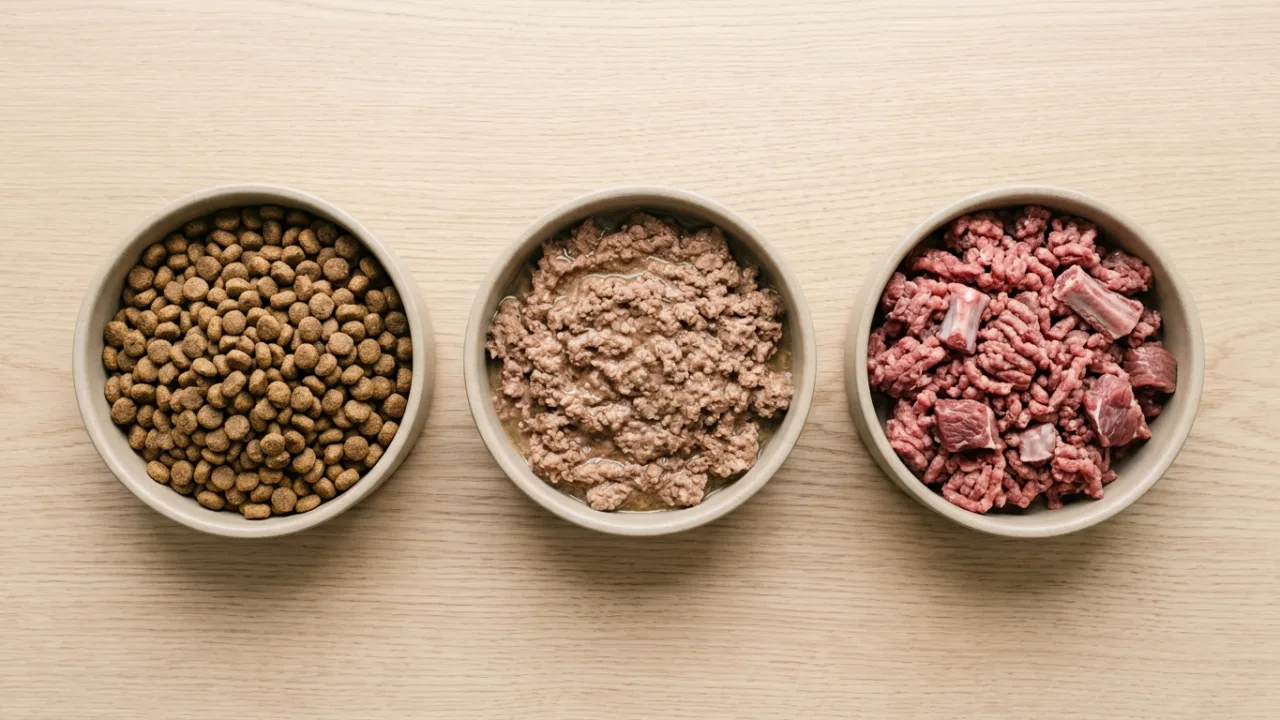
It’s tempting to assume these rules are bureaucratic overkill, but there’s real science behind them. Most pet food restrictions trace back to animal disease control, not human food safety. Diseases like foot-and-mouth disease, African swine fever, and avian influenza can survive in raw or undercooked meat products for surprisingly long periods. A single contaminated treat, if it ends up in the wrong place — say, eaten by livestock or scavenged by wildlife — can trigger an outbreak that costs a country’s agricultural industry millions.
This is why border agencies focus heavily on meat, dairy, and animal-byproduct ingredients rather than pet food as a whole category. A bag of plant-based treats is far less likely to raise a flag than a pouch of freeze-dried beef liver or a homemade batch of chicken jerky.
Understanding this logic helps explain why the rules can feel inconsistent from one country to the next. It’s not that one government is stricter for the sake of it — it’s that each country is managing its own agricultural risk profile, based on what diseases are currently active in the region you’re traveling from.
The Quick Answer: What’s Usually Fine vs. What Raises Red Flags
There’s no single global rulebook, but after digging through official guidance from multiple border agencies, a pattern emerges. Here’s a general comparison to set expectations before you dive into country-specific rules.
| Type of Pet Food | Typical Border Treatment | Why |
|---|---|---|
| Commercial, sealed, shelf-stable kibble (unopened) | Usually allowed, sometimes with limits | Processed under controlled conditions, low disease risk |
| Commercial canned wet food | Allowed in many places, banned in others | Contains meat; some countries restrict all meat-based products |
| Raw or frozen meat-based diets (BARF, prey-model) | Frequently banned or requires special permits | High disease-transmission risk |
| Homemade treats or meals | Almost universally restricted | No verifiable ingredient sourcing or processing standards |
| Freeze-dried meat treats | Mixed — sometimes treated like raw food | Still classified as an animal product in many countries |
| Plant-based treats and chews | Generally allowed | Low or no animal-disease risk |
| Prescription/veterinary diets | Often allowed with documentation | Medical necessity considered, but ingredients still matter |
Notice the pattern: it’s almost always about the ingredients, not the brand name or price point. A $2 can of wet food and a $60 bag of premium raw food face very different scrutiny, even if your pet loves them equally.
How Major Destinations Handle Pet Food: A Country Snapshot
Because pet food import restrictions genuinely vary by country, treat the table below as a starting point for research, not a final answer. Rules change, especially during disease outbreaks, so always verify with the official government agency of your destination within a few weeks of travel.
| Destination | General Stance on Pet Food | Key Notes |
|---|---|---|
| United States | Commercial pet food generally allowed in reasonable personal-use quantities | Products from certain countries with active disease outbreaks may be restricted; raw meat products face extra scrutiny |
| European Union / Schengen Area | Sealed commercial food from approved countries usually fine in small amounts | Meat-based products from outside the EU face tighter limits; travelers from non-EU countries should check personal allowance rules |
| United Kingdom | Commercial food generally permitted; personal meat and dairy products from non-EU countries are restricted | Post-Brexit rules differ slightly from EU norms — always check current guidance |
| Canada | Commercial pet food usually allowed for personal use | Raw pet food and certain meat-derived products require closer inspection |
| Australia | Extremely strict; most pet food, treats, and chews are banned or need permits | Known for one of the strictest biosecurity systems in the world |
| New Zealand | Very strict, similar to Australia | Declare everything — even sealed commercial products can be confiscated without prior clearance |
| Japan | Meat-based products heavily restricted | Import permits and advance notification often required for animal-origin food |
If you’re noticing a theme — island nations with strong agricultural exports (Australia, New Zealand, Japan) tend to have the tightest pet food import restrictions. That’s not a coincidence. Protecting livestock industries from foreign disease is a national economic priority in these countries, and pet food is treated as a potential vector, no matter how well-sealed the packaging looks.
Commercial vs. Homemade vs. Raw: Why the Type of Food Matters More Than the Amount
Many travelers assume that a small quantity of any pet food should be fine — after all, it’s just for one animal, not a shipment. Unfortunately, quantity is usually the second question border agents ask, not the first. The first question is almost always: what’s it made of, and how was it processed?
Commercial, Sealed Pet Food
This is your safest bet in almost every country. Factory-sealed packaging with a visible ingredient list, manufacturer information, and a “made in” label gives customs officials confidence about how the product was produced. It’s traceable, and if there’s a recall or contamination issue, it can be linked back to a specific batch.
Homemade Pet Food
Even if your homemade dog food is healthier and more thoughtfully prepared than anything on a store shelf, border agents have no way to verify what’s in it or how it was handled. Homemade meals, treats, and dehydrated snacks are treated with the same suspicion as any unlabeled food product — expect them to be confiscated in most countries with active biosecurity screening.
Raw and Freeze-Dried Diets
Raw feeding has grown enormously popular, but it’s also the category facing the most consistent restrictions internationally. Freeze-drying doesn’t fully eliminate the underlying disease-transmission concern in the eyes of most agriculture departments, since the meat itself isn’t cooked. If your pet is on a raw diet, plan to either transition them temporarily to a commercial diet for travel, or research the destination country’s raw pet food import permit process well in advance — it can take weeks.
Step-by-Step: How to Check the Rules Before You Fly
- Identify both directions. Check the export rules of the country you’re leaving and the import rules of the country you’re entering. They’re not always mirror images of each other.
- Go to the official source. Search for the agriculture or customs department of your destination country rather than relying on forums (see: official agriculture or customs department) or older blog posts, since rules change with disease outbreaks.
- Check for personal-use exemptions. Many countries have a small personal-use allowance (often a specific weight limit) that differs from commercial import rules.
- Look up your connecting countries too. If you have a layover with a customs check, that country’s rules apply as well, even if you’re not staying.
- Contact the airline separately. Airlines sometimes add their own restrictions on liquids or food items in carry-on bags, independent of customs law.
- Call ahead if anything is unclear. A five-minute phone call to a consulate or embassy can save you from an awkward conversation at the border.
Paperwork You Might Need
Depending on the country and the type of food, you may be asked to show one or more of the following:
- Original, unopened packaging with a visible ingredient list and manufacturer details
- Proof of purchase showing the food was commercially produced, not homemade
- A veterinary letter confirming a prescription diet is medically necessary for your pet
- An import permit for raw, frozen, or specialty pet food (required in several countries, including Australia)
- A certificate of origin in rare cases, particularly for larger quantities intended for extended stays
Keep these documents somewhere accessible in your carry-on, not buried in checked luggage. If a customs officer asks a question and you have to dig through a suitcase to answer it, that alone can slow things down (see: border officials question your paperwork) and draw extra scrutiny.
Common Mistakes That Get Pet Food Confiscated
| Mistake | Why It Backfires |
|---|---|
| Not declaring pet food on the customs form | Undeclared items are treated far more seriously than declared ones, even if the food itself would have been allowed |
| Repackaging food into travel containers | Removes the ingredient list and manufacturer traceability that customs relies on |
| Assuming “it’s just treats” doesn’t count | Treats made from meat, dairy, or eggs are subject to the same restrictions as full meals |
| Packing homemade food for a “just in case” backup | Homemade food is one of the most consistently restricted categories worldwide |
| Relying on outdated blog posts or forum threads | Rules change with disease outbreaks; a post from two years ago may no longer be accurate |
| Forgetting about layover countries | Some layovers require a customs declaration even if you’re not exiting the airport |
Practical Tips for Traveling with Pet Food

Once you understand the underlying logic of pet food import restrictions, packing smart becomes a lot easier. A few habits go a long way:
- Pack only what you need for the trip itself. A day or two’s worth of sealed, commercial food is far less likely to raise concerns than a large stockpile.
- Choose recognizable international brands when possible. Widely distributed brands are more likely to already meet import standards in multiple countries.
- Plan to buy locally after arrival. In many cases, this is simply the least stressful option, especially for strict destinations like Australia or New Zealand.
- Transition diets gradually before travel if your pet needs to switch from a raw or homemade diet to a commercial one, to avoid stomach upset mid-trip.
- Ship ahead when legal and practical. Some travelers arrange for pet food to be shipped separately under commercial import rules rather than carried personally — check whether this is allowed and cost-effective for your situation.
- Keep receipts and packaging together until you’re safely through customs, even if it feels like unnecessary clutter in your suitcase.
Special Situations Worth Knowing About
Prescription and Veterinary Diets
If your pet has a medical condition requiring a specific prescription diet, don’t assume the “prescription” label automatically clears customs. You’ll still want a vet’s letter explaining the necessity, and ideally confirmation that the specific product is available or approved in your destination country. In some cases, it’s genuinely easier to have your vet identify an equivalent prescription brand sold locally.
Treats and Chews
Rawhide, bully sticks, dried fish skins, and jerky-style treats are animal products and are treated accordingly at most borders — meaning they’re subject to the same restrictions as meat-based meals, not treated as a lower-risk category just because they’re small.
Service and Working Animals
Even service animals don’t typically get an exemption from pet food import restrictions. Their handlers still need to follow the same declaration and documentation process, though some countries offer slightly more flexible processing for working animals overall.
Long-Term Moves vs. Short Trips
If you’re relocating permanently rather than visiting temporarily, it’s often worth treating pet food as a separate shipping and import question entirely, rather than trying to carry a multi-month supply in your luggage. Many countries have completely different rules for personal travel allowances versus formal imports.
What Happens If You Get It Wrong
Consequences for undeclared or restricted pet food range from mild to genuinely costly. At the lower end, expect the food to simply be confiscated and disposed of. In stricter countries, undeclared animal products can result in fines, and repeat or serious violations can affect future entry processing. The most common scenario by far, though, is simply losing your pet’s food and having to source a replacement quickly at your destination — inconvenient, but rarely catastrophic if you’ve planned for a backup option.
An Expert’s Perspective
Veterinarians and pet relocation specialists tend to agree on one core piece of advice: treat your pet’s food supply as replaceable, and treat your pet’s paperwork as irreplaceable. It’s far less stressful to buy a familiar-enough brand after landing than to spend your first hours abroad arguing with a customs officer over a bag of kibble. If your pet has dietary sensitivities, the safest strategy is contacting your vet before travel to identify two or three backup brands available internationally, so you’re never caught without an option that works for your pet’s stomach.
Conclusion: Plan the Food Like You Plan the Paperwork
Pet food import restrictions aren’t designed to make travel harder for pet owners — they exist to protect agricultural systems that most of us never think about until we’re standing at a customs counter. The good news is that once you understand the underlying logic — commercial and sealed is safer than raw or homemade, and declaring everything is always better than hiding it — the rules become far less intimidating. A little research before you pack, a backup plan for buying food locally, and honest declarations at the border will get you and your pet through customs with a lot less stress than you might expect.
Before your next trip, take ten minutes to check the official pet import page for your destination country, and jot down what documentation you’ll need. Your future self, standing in a customs line with a nervous dog at your feet, will thank you.
Frequently Asked Questions
Can I bring dog or cat food in my carry-on luggage?
Usually yes, if it's sealed, commercial, and non-liquid. Solid kibble typically passes airport security without issue, though canned or wet food may be treated like a liquid and subject to volume limits. Always check both your airline's carry-on rules and your destination country's customs regulations, since they're separate sets of restrictions.
Is it illegal to bring pet food across international borders?
It's not automatically illegal, but many countries restrict or ban certain types of pet food, especially raw, homemade, or meat-based products. Bringing pet food isn't the problem — bringing it without declaring it, or bringing a restricted type, is what leads to fines or confiscation. Always declare pet food at customs, even if you believe it's permitted.
Why is raw pet food restricted more than regular kibble?
Raw pet food carries a higher risk of transmitting animal diseases like foot-and-mouth disease or African swine fever because the meat hasn't been cooked or processed at high temperatures. Commercial kibble goes through manufacturing processes that reduce this risk significantly, which is why it's treated differently at most borders.
Can I bring homemade dog treats on a trip abroad?
In most countries, no. Homemade treats lack the ingredient traceability and manufacturing documentation that customs agencies rely on to assess safety. Even simple treats made with meat, dairy, or eggs are typically restricted, so it's best to pack commercial, sealed treats instead.
What happens if customs finds undeclared pet food in my luggage?
Consequences vary by country, but undeclared pet food is usually confiscated on the spot, and you may face a fine depending on local enforcement policies. Repeated or serious violations can also complicate future border crossings. Declaring pet food upfront, even if it turns out to be allowed, is always the safer choice.
Are pet food import restrictions the same in every country?
No. Rules vary significantly based on each country's agricultural priorities and current disease risks. Island nations like Australia and New Zealand tend to have the strictest pet food import restrictions, while countries with less agricultural exposure may allow more flexibility for sealed commercial products in small quantities.
Do I need a permit to bring my pet's prescription food across a border?
Sometimes. Many countries allow prescription diets with a veterinary letter confirming medical necessity, but this doesn't guarantee automatic entry. It's worth checking whether the specific product is approved in your destination country, or asking your vet for a locally available equivalent as a backup.
Is it better to pack pet food or buy it after arriving at my destination?
For strict destinations or long trips, buying food after arrival is often simpler and lower-risk than trying to carry a large supply. For short trips, packing a small amount of sealed, commercial food for the first day or two, with a plan to purchase more locally, tends to be the most practical approach.