Your dog flops onto the trailhead after mile two, tongue lolling, paws already tender, and you realize the thru-hike you’ve been dreaming about for months is about to end before lunch. It’s a common story — dogs are enthusiastic but not automatically fit, and the gap between \”loves walks around the block\” and \”can carry a pack for eight miles a day over rocky terrain\” is bigger than most owners expect.
- Get a vet check before week 1 — heartworm test, weight assessment, and joint screening for large breeds are non-negotiable.
- A safe 12-week conditioning progression builds distance, terrain difficulty, and pack weight gradually, with 1-2 rest days per week built in from the start.
- Pack weight should generally stay under 10-12% of a healthy dog’s body weight, and paw pads need their own conditioning routine separate from cardio fitness.
- Brachycephalic breeds (pugs, bulldogs), very young puppies with open growth plates, and dogs with existing joint disease need modified or non-loaded plans — not a full thru-hike push.
- Build at least one overnight shakedown trip into weeks 9-11 to test gear, appetite, and sleep before committing to a real multi-day trip.
- Watch for limping, excessive panting, or reluctance to move — these are signals to scale back, not push through.
Is Your Dog Actually Out of Shape, or Just Out of Practice?
This distinction matters more than it sounds. A dog that’s out of practice has decent underlying muscle tone and cardiovascular capacity but hasn’t used it in a specific context — think a dog who hikes every summer but has spent the winter mostly indoors. A dog that’s genuinely out of shape has lost muscle mass, is carrying extra weight, or has never built the tendon and paw-pad toughness needed for sustained trail work at all.
A simple field test: take your dog on a moderate 2-mile walk with some incline. A dog that’s merely out of practice will be a little more tired than usual but recovers within an hour, eats normally, and shows no stiffness the next morning. A dog that’s genuinely out of shape will pant heavily well past the walk’s end, may lag or sit down partway through, and often shows soreness or reluctance to jump on furniture the following day. If you see the second pattern, plan on the full 12 weeks and don’t skip early phases even if your dog \”used to\” hike.
Before Week 1: Vet Clearance and Baseline Health Screening
Every credible conditioning program — human or canine — starts with a health baseline, and dogs can’t tell you when something feels wrong until it’s fairly advanced. Before starting any structured plan, schedule a veterinary visit that covers:
- Weight and body condition score — your vet can tell you objectively if your dog is overweight, and by how much.
- Heartworm test — increased exertion is dangerous for a dog with undiagnosed heartworm disease.
- Joint and gait assessment — for large and giant breeds especially, ask about hip and elbow screening; early dysplasia or arthritis changes how much loaded hiking is appropriate.
- Bloodwork — a basic panel can flag thyroid issues, anemia, or organ function problems that would make endurance training risky.
- Vaccination and parasite prevention status — confirm rabies, distemper/parvo, and leptospirosis (relevant in wet backcountry environments) are current, and start or confirm flea, tick, and heartworm preventatives well before you’re in tick habitat.
If your dog is a senior, has a diagnosed joint condition, or is a brachycephalic breed, ask your vet directly whether a multi-day backpacking trip is realistic at all — this isn’t a step to skip, and a good vet would rather give you an honest answer now than treat a heat stroke emergency on trail.
Breed, Age, and Body Type: Who Can Actually Thru-Hike?
Not every dog is built for multi-day trail life, and that’s worth accepting early rather than discovering it three days into a section hike. Structure, respiratory anatomy, and joint conformation all play a role.
| Breed Type | Examples | Thru-Hike Suitability | Key Limitations |
|---|---|---|---|
| Athletic/working breeds | Labrador, German Shorthaired Pointer, Australian Shepherd, mixed working breeds | Generally well-suited with proper conditioning | Still need full 12-week buildup; joint injury risk if rushed |
| Brachycephalic breeds | Pug, Bulldog, Boston Terrier, Boxer (partial) | Poor candidates for true multi-day thru-hiking | Restricted airways make heat regulation and endurance genuinely dangerous, not just uncomfortable |
| Short-legged/long-backed breeds | Dachshund, Corgi, Basset Hound | Day hikes only, generally | Spinal and joint stress accumulate faster over rough, multi-day terrain |
| Giant breeds | Great Dane, Mastiff, Saint Bernard | Case-by-case, vet-dependent | Joint development and lifespan considerations; often better suited to shorter, lower-impact trips |
| Toy breeds | Chihuahua, Yorkshire Terrier, Pomeranian | Not suited to load-bearing multi-day hikes | Body size limits pack capacity, thermoregulation, and endurance |
None of this means a bulldog can’t enjoy a gentle nature trail with you — it means the specific goal of a multi-day, load-bearing thru-hike is a poor fit for these body types, and pushing it is a welfare issue, not just an inconvenience.
Puppies and Growth Plates
Puppies are not small adult dogs when it comes to conditioning. Growth plates — the areas of cartilage at the ends of long bones — don’t fully close until somewhere between 9 and 18+ months depending on breed size, with larger breeds closing later. Loaded, repetitive, high-impact exercise before that closure is a recognized risk factor for joint problems later in life. A commonly cited veterinary rule of thumb is roughly 5 minutes of structured exercise per month of age, twice daily (so a 3-month-old puppy gets about 15 minutes, twice a day) — treat this as a general guideline rather than a hard rule, and check it against your own vet’s advice for your specific breed and pup. Free play and unstructured sniff-and-explore time is different from forced-pace road walking or pack loading, and puppies should get plenty of the former while avoiding the latter until they’re structurally mature.
Senior Dogs
Senior dogs can absolutely still hike, but the plan shifts. Expect longer warm-ups, more frequent rest days (often every other day rather than 1-2 per week), a lower ceiling on total daily mileage, and closer attention to arthritis flare-ups after rocky or uneven terrain. Joint supplements and a vet-approved pain management plan become more relevant here than for a young adult dog. A senior dog’s \”readiness ceiling\” might be a strenuous day hike rather than a five-day thru-hike section, and that’s a completely valid outcome of the assessment process.
The 12-Week Conditioning Progression
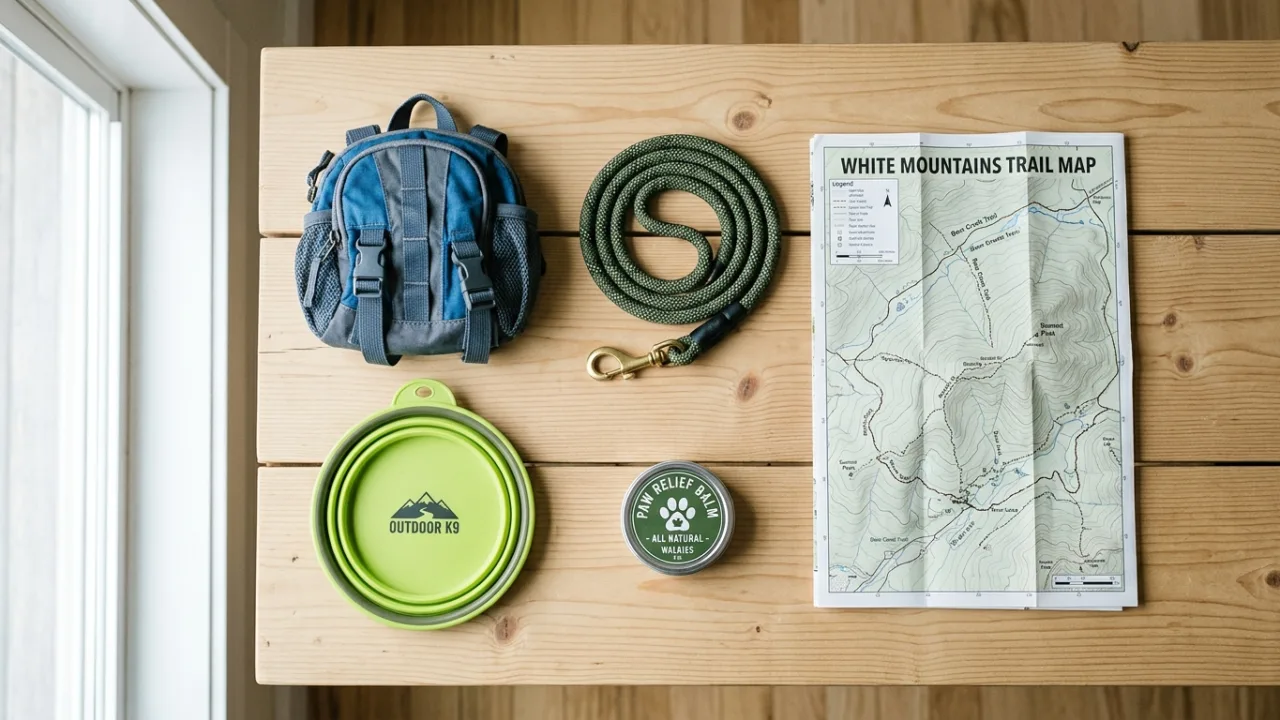
This progression assumes a healthy adult dog starting from a sedentary or lightly active baseline, cleared by a vet. Adjust pace downward for seniors, overweight dogs, or dogs recovering from injury — and upward cautiously only if your dog is already moderately active and shows no fatigue signs at each stage.
| Week | Walk Duration | Distance | Terrain | Pack Weight | Rest Days/Week |
|---|---|---|---|---|---|
| 1-2 | 20-30 min | 1-1.5 mi | Flat pavement/park paths | None | 2 |
| 3-4 | 30-45 min | 1.5-2.5 mi | Gentle hills, mixed surfaces | Empty pack introduced (fit only) | 2 |
| 5-6 | 45-60 min | 2.5-4 mi | Local trails, gravel, light roots | 5-10% body weight | 1-2 |
| 7-8 | 60-90 min | 4-6 mi | Moderate elevation gain, rockier trail | 8-12% body weight | 1-2 |
| 9-10 | Full day (4-6 hrs) | 6-9 mi | Real trail conditions, varied elevation | Target hiking load | 1-2, plus one overnight trial |
| 11 | Multi-day | 8-10 mi/day | Overnight shakedown trip, full gear | Target hiking load | 1 |
| 12 | Assessment week | Repeat week 9-10 mileage | Trail conditions similar to planned trip | Target hiking load | 2 (taper before trip) |
A few notes on reading this table correctly. Rest days aren’t optional filler — they’re when muscle and connective tissue actually adapt, and skipping them is one of the fastest ways to cause a soft-tissue injury in an eager, high-drive dog who won’t self-limit. Pack weight is introduced only after weeks of unloaded conditioning, and terrain difficulty increases before pack weight does, not simultaneously — stacking two new stressors at once (heavier pack plus rougher terrain) is a common cause of setbacks.
Sample Schedule: Week 1 vs. Week 12 (60-lb Labrador Mix)
Week 1, Tuesday: 25-minute flat walk on a paved greenway, no pack, moderate pace, five minutes of gentle leash-based recall practice at the end. Paw check and water when home.
Week 12, Tuesday (assessment week): 6-mile trail hike with 800 feet of elevation gain, dog wearing a fitted pack loaded to roughly 6-7 pounds (about 10-11% of body weight), one water break every mile, paw and gait check at the halfway point and again at the end, followed by a full rest day.
How Much Weight Can a Dog Safely Carry?
The commonly cited range in backpacking and veterinary guides is that a healthy, well-conditioned adult dog can carry roughly 10-12% of its body weight comfortably, with some very fit working dogs tolerating up to around 20-25% for short periods — but treat the higher end as an exception, not a target, and always source-check against your own vet’s opinion since formal research specifically quantifying safe pack loads across breeds is limited.
| Dog Weight | Conservative Pack Load (10%) | Upper Range for Fit Dogs (~15-20%) |
|---|---|---|
| 20 lbs | 2 lbs | 3-4 lbs |
| 40 lbs | 4 lbs | 6-8 lbs |
| 60 lbs | 6 lbs | 9-12 lbs |
| 80 lbs | 8 lbs | 12-16 lbs |
Load only the pack itself when introducing it, then add weight gradually across weeks 5-10, and always distribute weight evenly on both sides. Dogs with any joint concerns, growing puppies, seniors, or small/toy breeds should stay at the conservative end or skip pack-carrying entirely.
Gear: Packs, Boots, and Harnesses
Choosing a Dog Backpack
Look for a pack sized to your dog’s torso length (measured from the base of the neck to the base of the tail), not just their weight category — an ill-fitting pack causes chafing regardless of load. Frame packs distribute weight more evenly for larger loads and longer trips; frameless packs are lighter and fine for day hikes or lighter loads. Padded straps, a sternum strap, and adjustable girth straps matter more than brand reputation. Introduce it empty at home for short periods before ever loading it on trail.
Harness vs. Collar for Load-Bearing Hikes
A well-fitted harness is the right choice for any hike involving a pack or significant leash pressure — it distributes force across the chest and shoulders instead of concentrating it on the neck and trachea, which matters even more once a pack adds strain. Reserve a flat collar for ID tags and low-stress situations; it’s a poor tool for controlling a dog on uneven terrain or managing a loaded pack’s shifting weight.
Boots vs. Conditioned Paws
| Factor | Booted Paws | Conditioned/Unbooted Paws |
|---|---|---|
| Best for | Extreme terrain (sharp rock, snow, hot sand), injury protection | Long-term multi-day use once properly toughened |
| Drawbacks | Can alter gait, cause rubbing if ill-fitted, dogs often resist at first | Requires weeks of gradual surface exposure; risk of cuts on sharp terrain |
| Best practice | Carry boots as backup even if not used daily | Combine both — condition paws AND carry boots for emergencies |
Paw Pad Conditioning
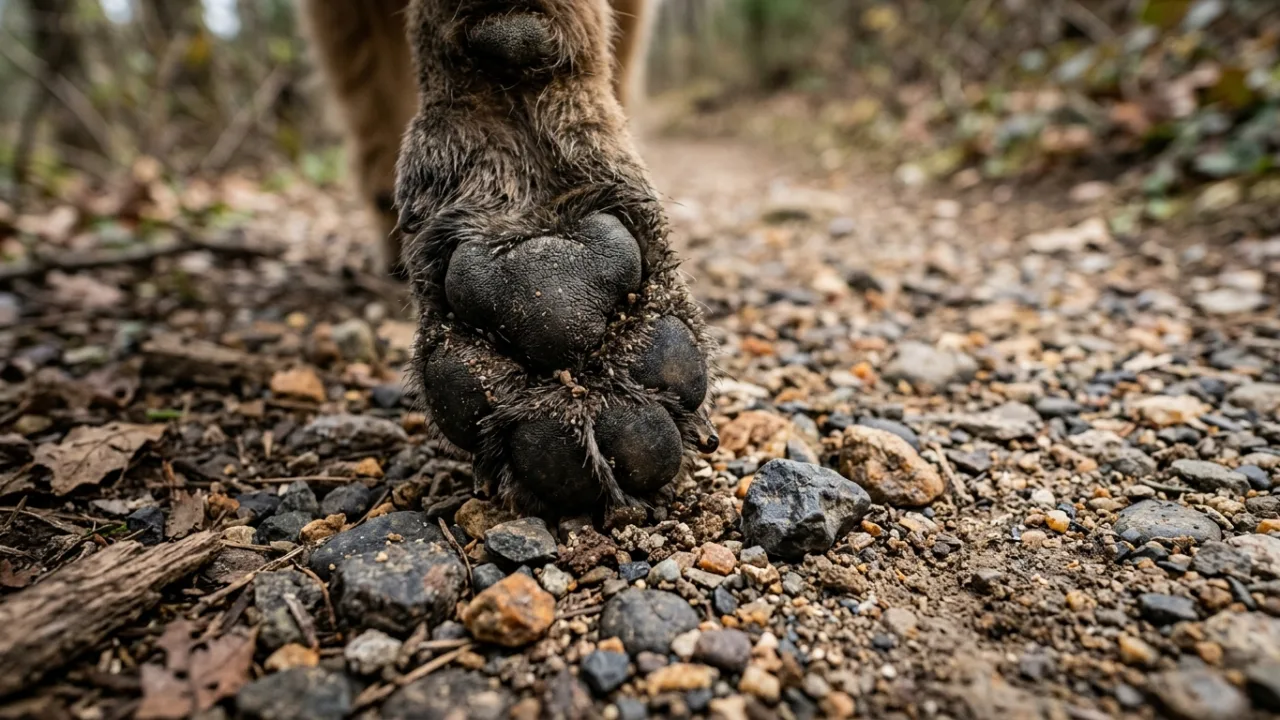
Cardiovascular fitness and paw toughness are separate systems, and treating them as one is a common mistake. A dog can have great lungs and still develop cracked, blistered pads on rocky trail. Build paw conditioning in parallel with the mileage progression:
- Weeks 1-3: Regular walks on pavement and packed dirt to build baseline toughness.
- Weeks 4-6: Introduce gravel and looser trail surfaces in short doses, checking pads after each walk for redness or tenderness.
- Weeks 7-9: Add varied terrain — sand, root-covered trail, rocky sections — increasing exposure time gradually.
- Weeks 10-12: Full trail conditions matching the actual planned route, with boots on standby for any hot pavement, sharp scree, or after any cut is spotted.
Check paws before and after every hike: look between toes for embedded debris, inspect pads for cracks or unusual softness, and feel for heat that might indicate inflammation.
Nutrition and Caloric Adjustments
As training volume climbs, so does energy expenditure, and a dog eating the same maintenance diet through week 10 of heavy conditioning will lose muscle and struggle to recover. General veterinary and AAFCO-aligned nutrition guidance suggests active or working dogs may need meaningfully more calories than a sedentary dog of the same weight — commonly cited increases range from roughly 20% up to 2-3x maintenance for dogs in heavy, sustained work, though the right number depends heavily on the individual dog, so treat any single figure as a starting point to discuss with your vet rather than a fixed rule.
| Program Phase | Approximate Calorie Adjustment |
|---|---|
| Weeks 1-4 (light conditioning) | Maintenance to +10% |
| Weeks 5-8 (moderate load) | +15-25% |
| Weeks 9-12 (full trail days/overnights) | +25-50%, more on multi-day trips |
Increase food gradually alongside training load, and monitor body condition weekly by feel (ribs easily felt but not visible) rather than relying on calorie math alone.
Joint Supplements: What’s Evidence-Based vs. Marketing
Glucosamine, chondroitin, and omega-3 fatty acids are widely marketed for active and aging dogs. The honest picture: omega-3 fatty acids have reasonably supportive evidence for reducing joint inflammation and supporting mobility in dogs with existing arthritis. Glucosamine and chondroitin have a much more mixed research record — some studies suggest modest benefit, others show little effect beyond placebo, and product quality varies enormously between brands. If you’re considering supplements, discuss specific products and dosing with your vet rather than assuming a supplement can substitute for a properly paced conditioning program — no supplement compensates for a training plan that increases load too fast.
Cross-Training Options
Straight walking isn’t the only useful conditioning tool, and variety reduces repetitive strain while building different muscle groups.
- Swimming: Excellent low-impact cardio, particularly useful for overweight dogs or those with joint sensitivity.
- Stair climbing: Builds hindquarter strength relevant to elevation gain, in short controlled sessions.
- Sniff walks: Low-intensity but mentally engaging; good for active recovery days without being a true rest day.
- Off-leash recall work: Builds trail-relevant obedience and burns energy through natural movement patterns rather than forced pace.
Heat, Cold, and Altitude Considerations
Dogs regulate heat primarily through panting, not sweating, which makes them more heat-vulnerable than people in the same conditions. Veterinary sources generally flag combinations of high heat and high humidity as particularly dangerous — heat stroke risk rises sharply once temperatures climb into the 80s°F with high humidity, and brachycephalic, overweight, senior, and thick-coated dogs hit that risk threshold sooner than a lean, short-coated adult. Warning signs include heavy uncontrolled panting, bright red gums, stumbling, or collapse — these require immediate cooling and emergency veterinary care, not \”pushing through.\”
In hot weather: hike early morning or evening, increase water breaks, and consider skipping midday sections entirely. In cold weather, watch paws for ice buildup between pads and consider a jacket for short-coated or lean dogs. At altitude, build in extra acclimation days and watch for the same fatigue and appetite-loss signs you’d watch for in a human hiking partner, since dogs can experience altitude effects too.
Hydration and Electrolytes
Dogs need regular water access on trail — a frequently cited general guideline is roughly half an ounce to one ounce of water per pound of body weight per day under normal conditions, increasing significantly with heat and exertion, though individual needs vary. Offer water every mile or so on hot or strenuous days rather than waiting for obvious thirst signs. Canine-specific electrolyte supplements exist and may help on very long, hot, multi-day efforts, but for most conditioning hikes and moderate trips, consistent water access and normal food intake cover hydration needs — check with your vet before adding supplements, especially for dogs with kidney or heart conditions.
Building Toward Multi-Day Trips: The Shakedown Hike
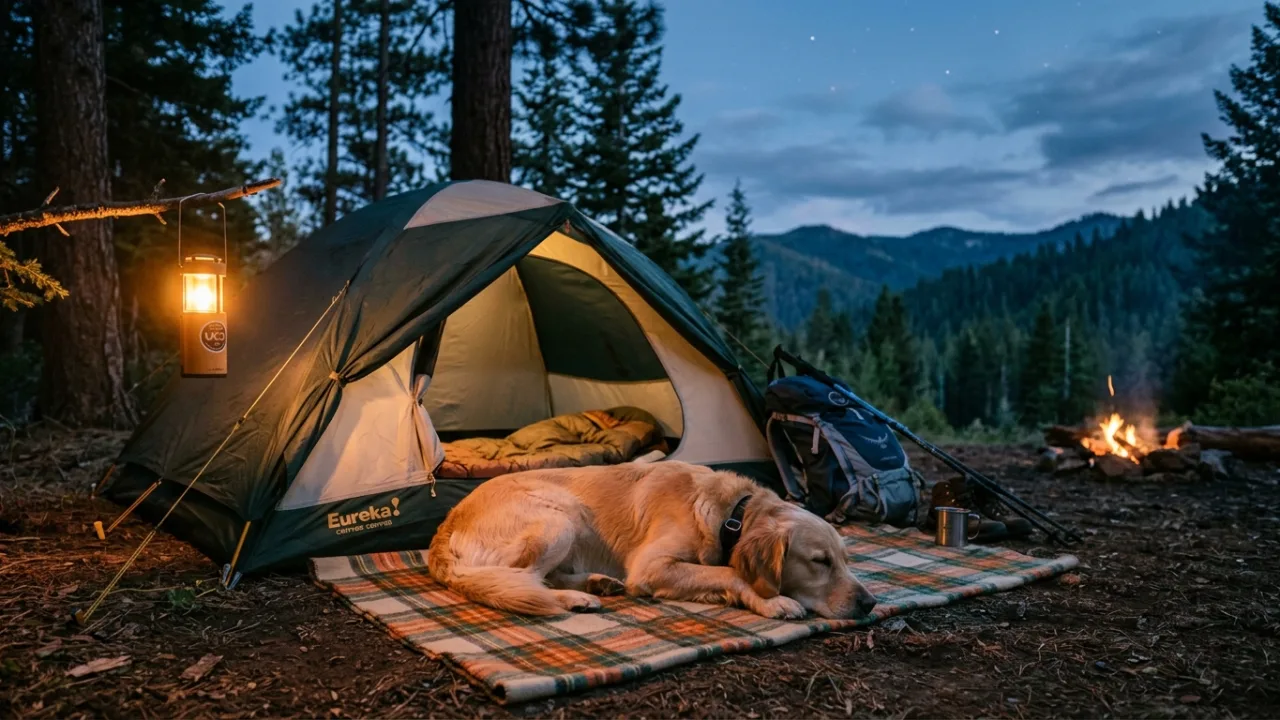
Somewhere around weeks 9-11, plan a full overnight trial trip that mimics your actual thru-hike conditions as closely as possible: same pack weight, same type of terrain, and — importantly — actual overnight camping with your dog in or near a tent. This is where you discover whether your dog settles at night, tolerates the tent, eats normally away from home, and recovers appropriately the next morning. A dog that aces day hikes but won’t settle overnight, or goes off food from stress, needs more acclimation before a real multi-day commitment. Treat this shakedown trip as a pass/fail checkpoint, not a formality.
Recovery Protocols
Recovery is where fitness gains actually consolidate. Build in gentle post-hike routines: a short cooldown walk, a paw and gait check, light massage over major muscle groups (shoulders, hips, lower back), and unrestricted rest access. Watch for stiffness the next morning — mild next-day stiffness that resolves within an hour of light movement is a normal training response; stiffness that persists all day or that gets worse over the following days is a signal to add an extra rest day and reassess.
Trail Etiquette and Regulations
Long-distance trails like the Appalachian Trail have specific dog policies that vary by section — some areas require leashes at all times, and a few sections (such as parts within Great Smoky Mountains National Park) prohibit dogs entirely, which matters enormously if you’re planning a true end-to-end thru-hike attempt. Research leash laws and permit requirements for every section of your planned route well before departure, carry waste bags and pack them out, and keep your dog under control around wildlife and other hikers regardless of local rules.
First-Aid Kit Essentials for Dogs
- Vet wrap and gauze for paw or wound care
- Tweezers for tick and splinter removal
- Antiseptic wipes or solution
- Styptic powder for torn nails
- A muzzle (even calm dogs may bite when in pain)
- Any prescribed medications plus a basic anti-inflammatory only as directed by your vet
- Copy of vaccination records
- Collapsible bowl and extra water treatment method
Normal Fatigue vs. Signs Requiring Vet Attention
| Normal Fatigue | Requires Vet Attention |
|---|---|
| Panting that slows within 15-20 minutes of rest | Heavy panting that doesn’t ease with rest and shade |
| Mild next-day stiffness resolving with gentle movement | Persistent limping or non-weight-bearing on a limb |
| Reduced enthusiasm on the last mile of a long day | Sudden collapse, stumbling, or disorientation |
| Normal appetite, slightly increased thirst | Loss of appetite lasting more than one meal, vomiting |
| Wanting to rest more than usual after a big day | Bright red or pale/blue-tinged gums |
Common Troubleshooting Scenarios
Dog Is Limping After a Walk
Stop the activity and check the paw first — a lodged pebble, thorn, or small cut is common and often the full explanation. If the paw looks clean but the limp persists more than a few hours or worsens, rest the dog completely and call your vet; walking through it risks turning a minor strain into a real injury.
Dog Lies Down Mid-Trail and Won’t Move
Check gum color, panting intensity, and responsiveness first. Heat exhaustion demands immediate shade, water, and cooling (wet the belly and paws, not ice-cold water suddenly). Simple fatigue usually resolves with a short rest and water. Pain-related refusal often comes with other signs like limping or guarding a limb — if unsure, treat it as a medical concern and turn back.
Paw Cracks or Cuts Mid-Program
Clean the area, apply a protective boot or wrap, and drop back to easier surfaces for several days while it heals. Resuming full trail terrain before a crack fully heals is one of the more common causes of a stalled conditioning timeline.
Dog Won’t Tolerate a Pack or Boots
Desensitize gradually: short indoor sessions wearing the empty gear paired with treats and praise, gradually extending duration before ever adding weight or heading outside. Rushing this step is the top reason dogs \”hate\” gear that could otherwise become a normal part of their routine.
Weather or Injury Forces a Training Break
Don’t resume at the same intensity you left off. Drop back roughly one to two weeks in the progression table for every week missed, and rebuild from there — treating a break as a full reset to week 1 usually isn’t necessary, but neither is picking up exactly where you left off.
Case Example: Conditioning a Dog With Mild Hip Dysplasia
Consider a 5-year-old dog with mild hip dysplasia diagnosed via X-ray. A modified plan keeps the same general week structure but caps elevation gain more conservatively, avoids pack weight above roughly 5-7% of body weight rather than 10-12%, adds an extra rest day most weeks, and leans more heavily on swimming as a cross-training substitute for hill repeats. The 12-week timeline may stretch to 14-16 weeks, and the end goal may shift from a rugged multi-day thru-hike to a series of shorter, well-supported day hikes — a completely reasonable and vet-appropriate outcome rather than a failure of the plan.
Week-12 Readiness Checklist
- Dog completes a full trail day (6-9 miles, target elevation) with normal recovery by the next morning
- Pack worn comfortably at target load with no chafing or gait changes
- Paws show no cracking, excessive wear, or tenderness after full trail days
- Dog eats and drinks normally during and after multi-hour exertion
- Successful overnight shakedown trip completed with normal appetite and settling behavior
- No unresolved limping, stiffness, or behavior changes in the prior two weeks
- Vet has reviewed progress if any concerns arose during training
Common Mistakes to Avoid
- Skipping the vet visit because the dog \”seems fine\”
- Adding pack weight and rough terrain in the same week
- Ignoring paw conditioning because cardio fitness looks good
- Assuming a human 12-week thru-hike training plan applies directly to a dog’s physiology — dogs build joint and paw tolerance on a different timeline than human cardiovascular fitness, and copying a human plan wholesale is a common source of injury
- Pushing through visible limping or reluctance because \”we’re so close\”
- Under-fueling a dog during the highest-mileage weeks
Conclusion
A dog’s enthusiasm for the trail is genuine, but it isn’t the same as readiness. The dogs who handle multi-day backcountry trips well are almost always the ones whose owners respected a real conditioning timeline — vet clearance first, gradual mileage and terrain increases, paw and pack introduced separately from cardio work, and rest days treated as part of the plan rather than a luxury. Twelve weeks feels like a long runway when you’re excited to get out there, but it’s a small investment against the alternative: a trip cut short by an injury that a slower buildup would have prevented.
If you’re mapping out a specific thru-hike section with your dog, start by talking to your vet about your dog’s individual health picture, then use the progression table above as your working framework — adjusting pace for age, breed, and any pre-existing conditions along the way.
Frequently Asked Questions
Can my dog really thru-hike the entire Appalachian Trail?
Very few dogs complete the full AT, partly due to fitness demands and partly because certain sections — including parts of Great Smoky Mountains National Park — prohibit dogs entirely. Many dog owners successfully section-hike large portions instead, planning around no-dog zones. A realistic, well-conditioned goal for most healthy dogs is multi-day sections rather than an unbroken end-to-end thru-hike.
How long of a walk should I take my 12-week-old puppy on?
A commonly cited veterinary guideline suggests roughly 5 minutes of structured exercise per month of age, twice daily — so about 15 minutes per session for a 3-month-old puppy. This differs from adult conditioning because puppies have open growth plates that are vulnerable to repetitive, high-impact loading; free play is generally fine, but forced-pace walks or pack weight should wait until skeletal maturity, which your vet can help assess for your specific breed.
What breed of dog is best suited for long-distance thru-hiking?
Athletic, medium-to-large working and sporting breeds — like Labradors, German Shorthaired Pointers, and Australian Shepherds — tend to handle multi-day trail conditions best when properly conditioned. Brachycephalic breeds (pugs, bulldogs), toy breeds, and short-legged/long-backed breeds like dachshunds are poorly suited to true multi-day, load-bearing hikes due to airway, thermoregulation, or spinal considerations.
How much water should my dog drink per mile hiked?
There's no exact universal number, but a general guideline is roughly half an ounce to one ounce of water per pound of body weight per day under normal conditions, with needs rising significantly in heat or high exertion. In practice, offer water every mile or so on warm or strenuous hikes rather than waiting for your dog to show obvious thirst.
Is it safe to hike with an overweight or senior dog if I go slowly?
Going slowly helps, but it doesn't remove the need for a vet check first. Overweight and senior dogs can often still enjoy conditioned hiking, typically with a longer buildup timeline, more frequent rest days, lower total mileage ceilings, and closer monitoring for joint pain — but a multi-day, load-bearing thru-hike may not be an appropriate goal even with a slow pace, depending on the individual dog's health.
Do I need to condition my dog's paws separately from cardio fitness?
Yes. Cardiovascular fitness and paw toughness build on different timelines, and a dog can have strong lungs while still developing cracked or blistered pads on rocky terrain. Gradually expose paws to varied surfaces — pavement, gravel, sand, rocky trail — over several weeks in parallel with the mileage progression, checking pads before and after each walk.
What vaccines or preventatives does my dog need before a multi-week backcountry trip?
Confirm core vaccinations (rabies, distemper/parvo) are current, discuss leptospirosis vaccination with your vet given exposure to standing water in the backcountry, and start flea, tick, and heartworm prevention well before departure. Your vet can tailor recommendations to the specific region and season of your planned trip.
How do I know if my dog's limping is normal soreness or an injury?
Mild next-day stiffness that eases within an hour of gentle movement is often a normal training response. A limp that appears during or right after a hike, worsens over time, or involves non-weight-bearing on a limb is more concerning and warrants stopping the activity, checking the paw for debris or cuts, and contacting your vet if it doesn't resolve quickly.
Should I use a dog backpack from day one or introduce it later in the plan?
Introduce the pack empty, for short periods, only after a few weeks of unloaded conditioning — not on day one. Loading it too early, or before your dog is comfortable simply wearing it, is a common cause of gear refusal and chafing. Gradually add weight starting around weeks 5-6, once base fitness and gear tolerance are established.