IATA lets you ship two comparable-sized dogs in one crate, but each must weigh under 14 kg (about 30 lb), and you can’t mix a dog with a cat. Airlines set the final rules, so call ahead—routes, temperatures, and breeds like Bulldogs or Pugs can block pairing. Each dog needs its own health certificate, rabies paperwork, and microchip match. Want to cut costs and avoid crate conflicts? The smart strategies follow.
TLDR Key Takeaways
- IATA allows two comparable-size adult dogs in one crate if each weighs under 14 kg (about 30 lb).
- Some airlines bill two compatible dogs sharing one kennel as a single pet, lowering costs.
- Alternatively, split dogs between two passengers, each using a separate under-seat carrier within one-pet-per-passenger limits.
- In-cabin pets typically cost $95–$150 each way, with combined pet-plus-carrier limits around 7–10 kg.
- Always call the airline, since route, aircraft, breed, age, and temperature embargoes can override baseline rules.
Can Two Dogs Share One Crate?
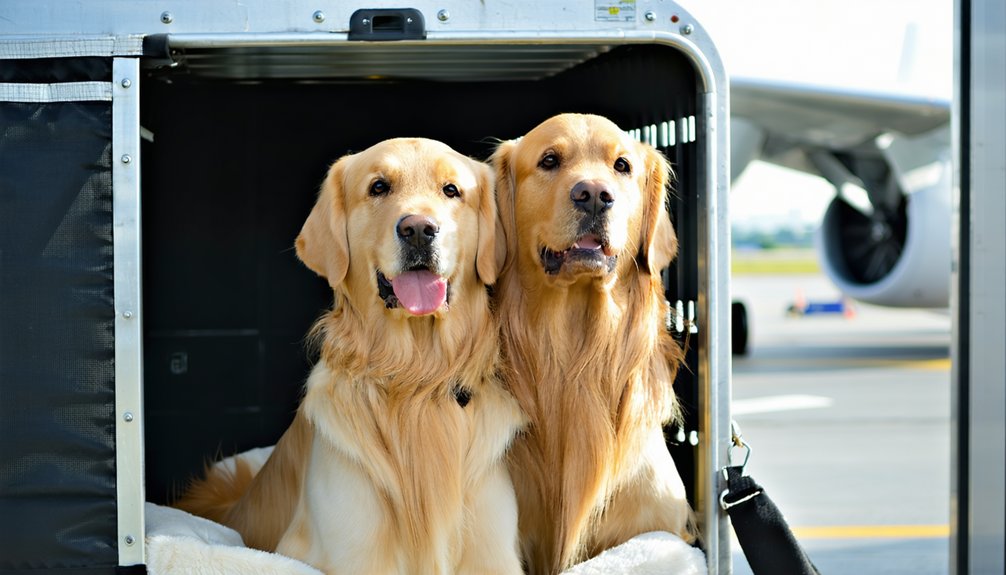
Why do most trainers and kennel sources push back on the idea of two dogs sharing one crate? Because confined space can raise stress, tension, and the risk of fighting.
Crates work as a dog’s personal den, so sharing can weaken that sense of security and spark territorial conflict.
You should never crate unfamiliar dogs together, and any history of aggression or resource guarding means separation.
The main exception is young puppies, especially littermates that are small, similar in size, and closely supervised.
If you’re considering it, lean on stress minimization protocols and build emergency separation planning into your setup.
For adults, shared confinement is almost never advisable.
Treat sharing as a rare exception, not a standard plan, and only when both dogs genuinely enjoy it.
What IATA’s Two-Animal Rule Allows for Two Dogs
While trainers warn against crate-sharing at home, the IATA Live Animals Regulations (LAR) carve out a narrow exception for air travel: you can ship two adult dogs of comparable size in one primary enclosure as baggage or cargo, provided you meet a few firm conditions.
This isn’t a loophole—it’s a welfare standard you’ll share with countless pet parents who’ve flown their pairs safely.
Here’s what qualifies your two dogs for one crate:
- Weight cap: Each dog must weigh no more than 14 kg (about 30 lb).
- Same species: Both must be dogs—no mixing a dog with a cat.
- Comparable dog sizing: They’ve got to match in size.
- Compatible cohabitation training: They must already be used to living together comfortably.
Dogs over 14 kg crate individually.
When Airlines Override the IATA Rule
Even when your crate setup checks every IATA box, the airline gets the final say—and it can set stricter rules than the baseline guidance. Think of these as overrides, not contradictions.
Carrier approval can hinge on route, aircraft type, load limits, and route specific embargoes that suspend pet carriage when temperatures raise welfare concerns. Space caps can block acceptance once a flight hits its live-animal quota, and interline connections often trigger extra scrutiny across carriers and airports.
That’s why IATA tells you to call the airline and confirm acceptance for your exact flight and day. Some airlines require advance notification, so late requests get denied more easily.
Always do your 48 hour reconfirmation before departure—it’s your best safeguard against a last-minute denial that strands you both.
Breeds and Ages That Can’t Pair
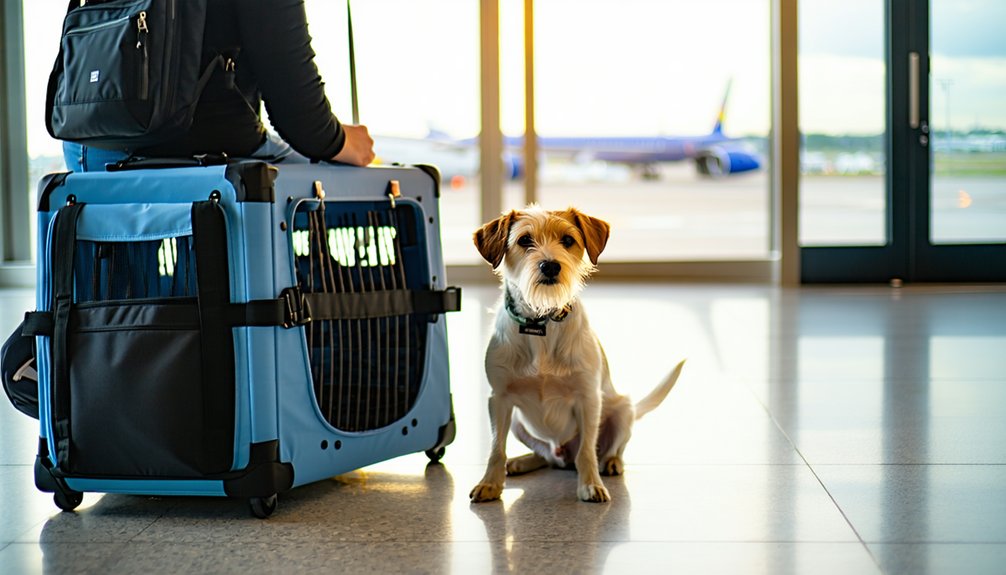
Before you book a shared crate, check whether your dogs even qualify to fly together—because some breeds and ages can’t pair, no matter how compatible they are. Airlines and USDA rules set hard limits, and your vet’s health certificate has to back them up.
- Puppy Stress Risk: Puppies under 8 weeks can’t fly, and many carriers raise the bar to 12–16 weeks; pairing’s off the table when one’s too young.
- Senior Health Screening: Dogs with cardiac disease, severe arthritis, or cognitive decline often get flagged “unfit to fly.”
- Brachycephalic breeds: Snub-nosed dogs like Bulldogs and Pugs are frequently refused or limited to single crates.
- Size mismatches: Large-to-small pairings get blocked to prevent injury.
When one dog’s marginal, vets decline combined crating.
In-Cabin vs. Cargo for Two Dogs
Once your dogs clear the breed and age checks, your next decision is where they’ll actually ride: in the cabin with you or below in the cargo hold.
In-cabin access only works for small dogs that fit in a carrier under your seat, usually with a combined pet-plus-carrier limit around 7–10 kg. Most airlines also allow just one in-cabin pet per passenger, so two cabin dogs often means a second traveler on your booking.
The cargo hold is pressurized and temperature-controlled, but in cabin temperature limits don’t apply there, and you’ll face cargo handling risks like loading delays, ramp temperatures, and misrouting. Splitting one dog up top and one below creates uneven stress, too, since you can only check on your cabin companion mid-flight.
How to Fly Both Dogs in the Cabin
The trick to flying both dogs in the cabin is matching your pets to each airline’s specific rules. You’ve got two main paths, and which one you use depends on your dogs’ size and your airline’s policy.
- One carrier, two dogs: Many airlines let you bring two small dogs in a single carrier if they’re the same species, similar in size, and behave well together. Delta charges these as one pet.
- Two carriers, two seats: Some airlines require a second seat assignment when you bring two carriers.
- Carrier placement: Each carrier must fit under the seat in front of you.
- Airline specifics: United seats the second dog beside you; JetBlue allows one pet per seat.
You belong here—plan smart.
Crate Sizing That Fits Two Dogs Comfortably
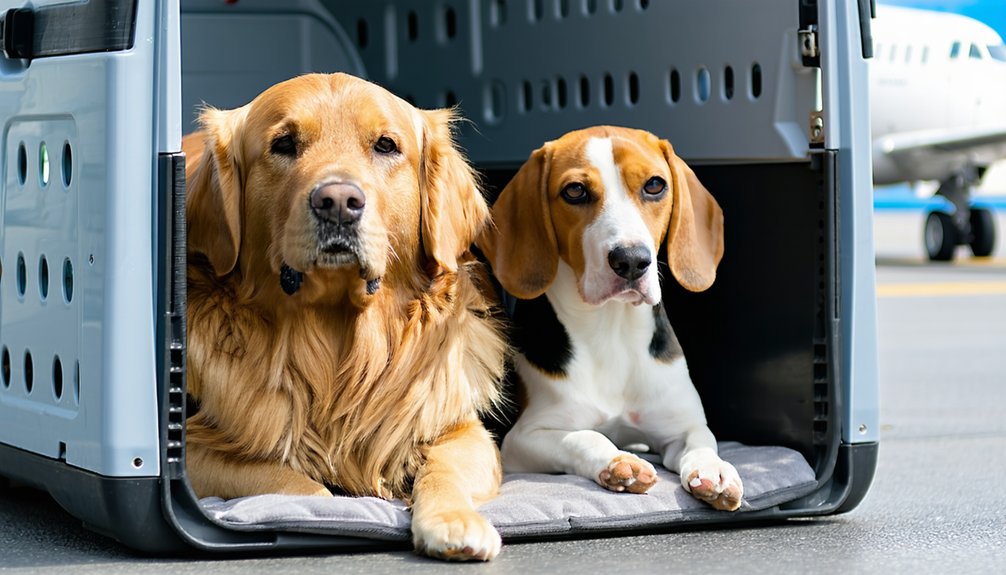
Getting both dogs into one crate comes down to measuring them right, not guessing. Measure nose to tail and shoulder span precisely for each dog, stopping at the tail base, not the tail tip. Add 2–4 inches per dog, then combine those lengths for a side-by-side layout.
For height, take your taller dog’s floor-to-head (or ears) measurement and add 2–4 inches so both can stand fully.
Width should let both lie flat on their sides with a few inches between bodies and walls.
Together, you want them to stand, turn, and stretch—while you avoid ceiling contact and crowding inside the crate.
Don’t oversize, though; extra room invites sliding injuries during turbulence and may exceed airline crate limits for cargo or checked travel.
Which Two Dogs Are Safe to Pair
Before you book two dogs into one crate, you’ve got to confirm they’re actually safe to share that space. Smart temperament screening starts with matching adult size and build, since large–small pairings risk trampling or crushing under flight stress.
Energy matching matters too—a senior dog paired with a high-energy adolescent breeds conflict in tight quarters.
- Sex and status: Opposite-sex, spayed/neutered pairs show the lowest hormone-driven aggression.
- Social history: Choose dogs with documented dog-social behavior; never pair biters or resource-guarders.
- Energy and play style: Match stamina and arousal over breed label.
- Body language: Look for loose bodies, soft eyes, easy disengagement.
Airline vetting commonly requires both dogs be compatible and non-aggressive, so you’ll want to anticipate stress triggers before travel day.
What Two-Dog Pet Fees Really Cost
Once you’ve confirmed your two dogs can safely share space, you’ll need to figure out what flying them actually costs—and the numbers add up fast.
Most major U.S. airlines charge $95–$150 each way per pet in-cabin, so two dogs in separate carriers means fee stacking: you’re billed twice per segment. A round-trip commonly runs $400–$800 in pet fees alone.
International routes climb to $125–$250 each way per dog.
Some airlines’ pet policies let two compatible dogs share one kennel, billed as a single pet—effectively halving your charges.
Watch for the hidden surcharge: many airlines count your carrier as a carry-on, forcing a $30–$75 checked-bag fee each way.
Seat constraints also limit in-cabin pets per row, sometimes pushing one dog to cargo.
Cut Costs by Flying With a Second Person
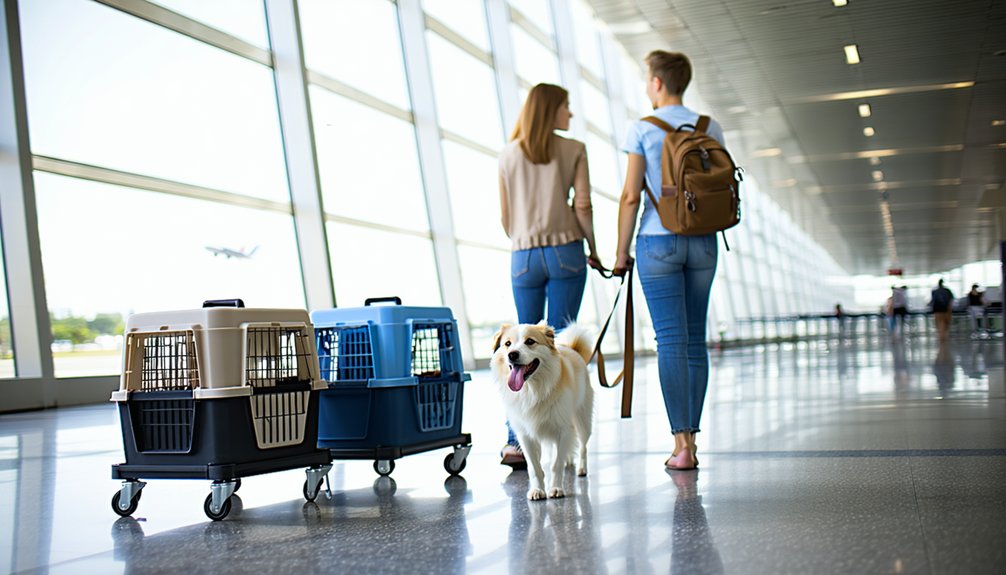
If you’re traveling with a companion, splitting your two dogs between you can cut your pet fees dramatically. Most U.S. airlines charge per passenger, per pet, so each of you flies a dog as a “first pet.” This fee duplication strategy often beats paying extra to bring two carriers yourself.
The second traveler benefits go beyond cost, too.
- Cabin seat savings: You skip the extra adjacent seat some airlines, like United, require for two carriers.
- Under seat space planning: Each of you uses one under-seat spot, so no stacking or crowding.
- Per-passenger limits: You both stay within one-pet-per-passenger rules.
- Crate freedom: You avoid forcing mismatched dogs into a shared kennel.
You’ll both fly standard economy and keep things simple.
Health Certificates and Paperwork for Each Dog
Splitting your dogs between two travelers solves the seating math, but it won’t simplify the paperwork. Each dog needs its own Certificate of Veterinary Inspection, with per dog rabies paperwork and microchip number matching on every form. You’ll pay duplicate certificate fees for separate USDA APHIS endorsement, calculated per certificate, not per household.
| Requirement | Dog 1 | Dog 2 |
|---|---|---|
| Health certificate | Separate | Separate |
| Rabies certificate | Individual | Individual |
| Microchip number | Listed | Listed |
| USDA endorsement | Per form | Per form |
Watch your document validity windows closely—many destinations demand certificates dated within 10 days of arrival. So mind USDA APHIS endorsement timing, book coordinated vet visit dates, confirm destination specific form requirements, and follow the airline document checklist for each dog.
Crate-Train Your Two Dogs Before Flight Day
Because crate comfort doesn’t happen overnight, you’ll want to start training both dogs weeks before flight day.
Begin with the crate bottom only in a familiar resting spot, keeping it open so entry stays voluntary.
Add favorite bedding, toys, and high-value treats to build positive associations, and use a cue word like “crate” only after each dog willingly enters.
- Reward sniffing, stepping in, and settling with treats and praise
- Feed meals inside, opening the door only when each dog stays calm
- Build closed-door time from seconds to several minutes, increasing only without vocalizing
- Practice desensitization games like short car rides and crate-lifting
Aim for calm settle targets, where both dogs enter, stay, and relax voluntarily.
Never use the crate as punishment.
Frequently Asked Questions
Can My Two Dogs Sit Together in Adjacent Cabin Seats?
No, your dogs can’t sit on seats. Seating Policies require carriers stowed under each seat. For Adjacent Feasibility, you’ll buy two seats, placing one carrier beneath each—keeping your pups side-by-side, safely together, just like you’d want.
What Happens if One Dog Gets Sick Mid-Flight?
You’ll notify the flight crew immediately. They’ll contain the mess and monitor your dog, relying on in flight temperature management. Keep your vet documentation checklist handy, and know your second dog usually stays put unless contamination’s suspected.
Are There Pet Relief Areas During Layovers for Two Dogs?
Yes, you’ll find Airport Relief areas at most layover hubs, both indoor and outdoor. Plan Time Allocation so both your dogs get breaks—check airport maps or ask gate agents. You’re not alone traveling this together.
Can Service or Emotional Support Dogs Bypass These Pairing Rules?
Service dogs follow access rules, not crate-pairing, so they often bypass these. You’ll need valid service animal documentation. Emotional support limits mean ESAs get weaker protections—carriers control outcomes, so check your airline’s current policy before booking.
How Early Should I Arrive at the Airport With Two Dogs?
Arrive 2.5–3 hours early for domestic flights, 4 for international. With two dogs, you’ll need extra check in timing for documents and crate sizing inspections. Stay inside the 4-hour pet-check-in limit, like fellow pet parents do.
Conclusion
You’ve got the rules, the costs, and the workarounds. Now it’s on you to confirm your airline’s policy, since carriers can override IATA’s two-animal allowance. Check breed and age restrictions, book early, and weigh in-cabin against cargo for your pair. Bring a separate health certificate for each dog, and crate-train both well before flight day. Do the prep, and you’ll keep your two dogs safe, calm, and ready to travel.
References
- https://www.petrelocation.com/blog/post/can-two-pets-travel-in-one-crate-when-flying
- https://www.starwoodpet.com/blog/can-my-pets-travel-together-on-a-plane
- https://www.iata.org/en/programs/cargo/live-animals/pets/
- https://topdogtips.com/flying-with-dogs-airline-approved-dog-crates-and-carriers/
- https://help.flybermudair.com/kb/guide/en/how-many-carriers-and-pets-can-i-bring-onboard-MF0CAfdiHI/Steps/2972317
- https://www.facebook.com/groups/191336279727916/posts/794799419381596/
- https://www.sandypaws.ae/information-library/can-my-two-pets-travel-together-in-the-same-crate
- https://www.chewy.com/education/dog/general/complete-airline-pet-policy-guide-for-all-u-s-airlines
- https://www.aacargo.com/learn/animals-kennel-guidelines.html
- https://tailwindglobalpet.com/blog/airline-pet-policy-guide/