Start by verifying every document against the air waybill—permits, health certificates, CITES paperwork, and 24-hour emergency contacts must match exactly. Confirm the animal’s fit-to-fly status, minimum age, and sedation details against IATA Live Animals Regulations. Inspect the container for rigid construction, ventilation, and correct “Live Animals” labeling. Check feeding and watering timing, then confirm every booked segment shows HK status before tendering. Remember: any “No” stops loading immediately. Here’s exactly how each step works.
TLDR Key Takeaways
- Verify all regulatory documents—export, transit, import permits, health certificates, CITES permits, and air waybill—for accuracy and completeness before acceptance.
- Confirm each AWB entry matches species names, animal count, microchip IDs, routing, and 24-hour emergency contacts exactly to avoid rejection.
- Check fit-to-fly status, including a veterinary exam within 10 days, minimum 8-week age, vaccinations, and sedation documentation.
- Inspect container construction for rigid build, secure locking, leak-proof flooring, ventilation, and IATA LAR space formulae compliance.
- Count all required labels—”Live Animals,” “This Way Up” arrows, scientific names, and hazard warnings—and reject any incomplete shipment confidently.
What the Live Animal Acceptance Checklist Covers
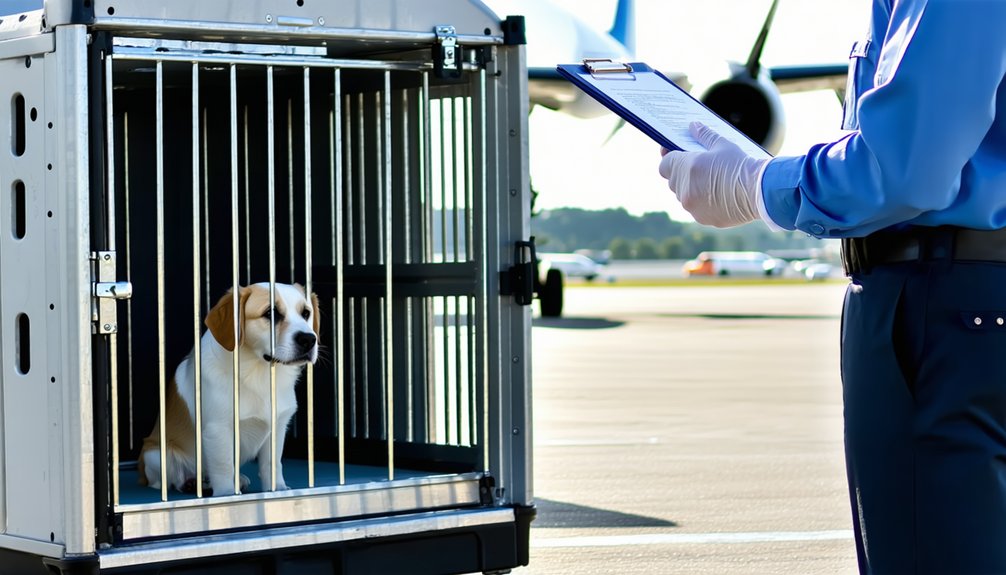
Before an airline accepts any live animal for transport, it runs through a thorough checklist that touches every aspect of the shipment.
You’ll verify documentation and regulatory compliance first: export, transit, and import permits, health certificates, CITES permits, and air waybill accuracy.
You’ll confirm the animals appear healthy, clean, and fit to travel, while completing species risk screening to flag primates or venomous creatures that demand extra safeguards.
You’ll check sedation status, age, and welfare standards against IATA Live Animals Regulations.
You’ll inspect the container’s construction, size, ventilation, and labeling, recording sanitation inspection notes to confirm absorbent material and leak-proof flooring.
You’ll also verify identification details and 24-hour contacts.
Master this checklist, and you’ll join the professionals who move animals safely and confidently every time.
Confirm Bookings and Routing Before You Start
Lock down your bookings and routing before you touch the acceptance checklist, because an animal’s trip can fall apart at any weak link in the chain. Verify that every segment accepts live animals and that each aircraft offers a temperature-controlled, pressurized compartment.
Quote interpretation matters: read fare rules and embargoes carefully to spot seasonal limits, restricted connections, and prohibited transit points. Through agent coordination, confirm space and quotas on each flight before finalizing the human booking.
- Confirm AVI capacity and per-PNR pet limits on every flight and date.
- Identify the right booking channel—phone, cargo agent, or pet desk.
- Verify advance windows, reconfirmation, and drop-off deadlines.
- Match routing to the animal’s service category, size, and breed.
Secure written confirmation in the record.
Check Regulations, Permits, and Eligibility First
With your bookings confirmed, turn next to the rules that decide whether the animal can fly at all.
IATA’s Live Animal Regulations are your core standard, so start there.
Confirm the species, verify the animal isn’t sedated, and check it’s clean and fit to travel.
Secure all required permits—including CITES documentation for regulated wildlife—and attach copies to the container when the checklist demands it.
You’ll need proof the animal is at least 8 weeks old, since unweaned animals can’t travel.
Remember that country specific restrictions and species specific exceptions often impose stricter age and documentation rules than your carrier’s policy, and some take months to obtain.
Which Documents Must Match the Air Waybill?

The air waybill (AWB) anchors your consignment, so every supporting document must match it exactly. As part of your team’s document crosschecks, you’ll verify that each certificate and permit aligns precisely with the AWB before acceptance.
Mismatches rank among the most common rejection causes, so confirm these details:
- Shipper’s Certification: Species names, animal count, shipper/consignee details, and 24-hour emergency contacts must match the AWB exactly, per IATA LAR.
- Health/Veterinary Certificates: Species, breed, sex, markings, microchip/tag IDs, quantity, and routing must align, with validity covering the entire transport.
- CITES/Wildlife Permits: Species, CITES status, and permit numbers must correlate with AWB entries and LAR classifications.
- Attachment & Linkage: Securely attach originals, clearly referencing the AWB number throughout.
How to Verify the Animal Is Fit to Fly
How do you know an animal can safely endure the stresses of flight?
You start with a current veterinary exam, usually within 10 days of departure, plus a signed health certificate (CVI) and a checked “fit-to-fly” box.
Confirm vaccinations, especially rabies.
Verify the animal meets minimum age (typically 8 weeks, weaned 5 days), shows good body condition, and isn’t heavily pregnant or frail.
Watch closely for brachycephalic breeds—they face higher respiratory and heatstroke risks.
Check baseline breathing and cardiovascular stability; no open-mouth breathing, wheezing, or cyanosis.
Review thermoregulation against seasonal temperatures and tarmac exposure.
Finally, confirm hydration planning and stress management so the animal stays comfortable in the hold.
When every box matches, you’re ready to accept the animal with confidence.
What to Record When an Animal Is Sedated
Document every detail when you accept a sedated animal, because most carriers discourage or outright refuse animals under sedation, and your records become the safety record if complications arise mid-flight.
As part of our shared duty to keep every animal safe, capture the full clinical context before acceptance.
- Drug classification and prescriber: Record whether the animal is sedated, tranquilized, or given anxiolytic/anti-emetic only, plus drug names, dosage, route, and the prescribing veterinarian’s license number and contact details.
- Medication dosing schedules: Note clock time, time zone, onset, duration, and any “no re-dosing” instructions relative to departure.
- Veterinary fitness statement: Capture written confirmation, including brachycephalic cautions.
- Airline sedation restrictions: Log any policy exception or special authorization number.
Does the Container Meet IATA LAR Requirements?
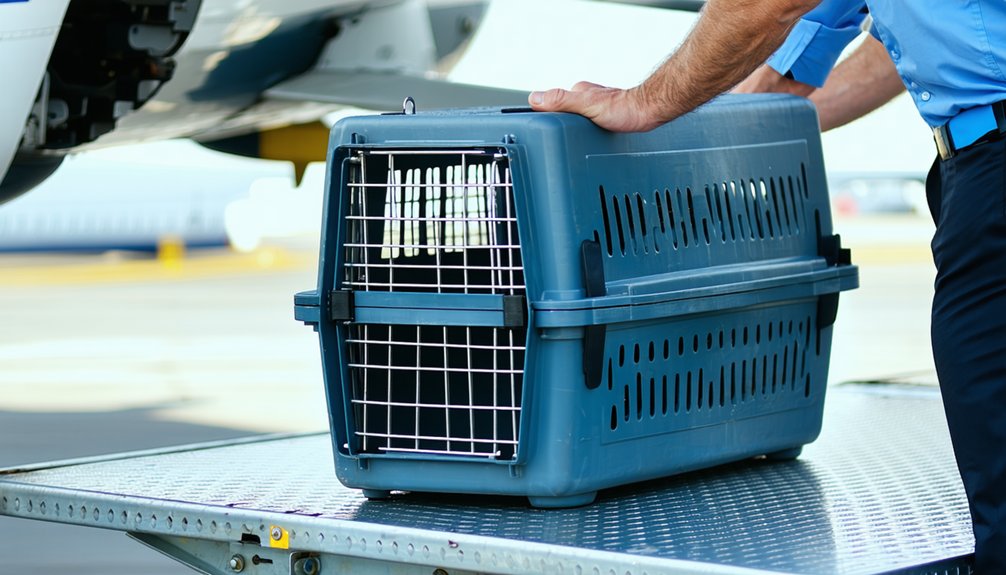
Once you’ve logged any sedation details, turn your attention to the container itself, because even a perfectly documented animal isn’t safe in a non-compliant box.
Start with structural strength: check that walls, floor, roof, and door use rigid materials with no gaps, sharp edges, or improvised repairs, and confirm a secure external locking mechanism.
Run species specific fit checks using IATA LAR formulae, verifying the animal can stand, sit, lie down, and turn naturally—giving snub-nosed breeds at least 10% extra room.
Confirm the floor’s leak-proof, handholds are integrated, and the base sits flat and stable.
For cats and dogs, you’ll need ventilation on all four sides totaling at least 16% of their surface area.
Finally, apply mesh strength standards, ensuring bars resist chewing, pawing, and impact.
Size, Ventilation, and Bedding Mistakes to Avoid
Even when your container passes structural checks, sizing, ventilation, and bedding errors can still trigger rejection at the counter. You’ll fit right in with seasoned shippers once you avoid the most common crate measurement errors and airflow blockage risks.
- Size it right: Measure by nose-to-tail base, leg length, height, and width using IATA formulas—never rely on generic “medium/large” labels. Account for bedding thickness so your animal can stand, sit, lie down, and turn.
- Maximize airflow: Provide ventilation on all four sides, meeting the 16% minimum.
- Keep vents clear: Don’t let labels, tape, or straps create airflow blockage risks.
- Choose safe bedding: Skip loose straw or sawdust; use absorbent, leak-proof liners that won’t clog openings or compress unevenly.
Get the Labels and Marking Right Every Time
At the labeling stage, you’re handling a safety-critical step where mistakes mean automatic rejection. You’ll need “Live Animals” labels showing the green sign on a light background, placed on at least one side—often the top too—plus “This Way Up” arrows on three sides. Label placement accuracy matters: never block ventilation openings or handholds.
Verify the consignor and consignee details match the air waybill, include a 24-hour emergency number with dialing codes, and add the animal’s common and scientific names and quantity.
Mark “POISONOUS” or “THIS ANIMAL BITES” when required, always in English.
Attach routing documents in a top pouch.
Training staff compliance keeps your team aligned with IATA LAR standards, so everyone counts the labels and rejects incomplete shipments confidently together.
Coordinate Feeding, Watering, and Transit Handling

Coordinate feeding and watering against regulatory minimums before you accept any animal. You’re part of a team that protects every traveler, so verify the shipper’s Feeding/Watering Certificate matches USDA water timing and food intervals. Confirm food and water were offered within the last four hours, and that the last-offered time is recorded and signed.
- Water timing: At least every 12 hours during transport; offered within four hours pre-tender.
- Container labeling: Attach feeding instructions and supplied food securely to the crate exterior.
- Transit logs: Record last offering, next-due time, and any mid-journey feeding for high-metabolism species.
- Emergency contact: Confirm a reachable shipper or consignee for delays exceeding stated thresholds.
Reject incomplete documentation; accuracy keeps everyone accountable.
Time the Tender and Confirm Every Segment
Once you’ve locked down feeding and watering compliance, you need to confirm the animal can actually move through every leg of its trip on time. Verify that all booked segments show HK/confirmed status, then check flight operation status, confirmed space for live animals, and codeshare or interline acceptance against IATA LAR on each leg. Once everything’s verified, record your “OK to forward” remark in the AWB notes.
Next, time the tender. Verify station acceptance windows—typically completing acceptance two to three hours before departure, never more than four where specified. Apply peak cutoff planning by adding buffer time for security screening, documentation checks, and problem resolution. Confirm aircraft type, transit capabilities, and ground temperatures stay within thresholds. Together, these steps keep your shipment moving without missing critical cutoffs.
What to Do When a Checklist Item Says “No”
When any checklist question gets a “No,” you stop—immediately and without exception. As part of a team that takes welfare seriously, you mark the issue, halt loading, and never load until compliance is restored. IATA LAR treats every “No” as a regulatory risk point, so override prevention policies exist to protect you from legal liability risks.
Identify the failed category, then act:
- Health/age “No”: Refuse or rebook—you can’t fix unfit animals, sedation, or under‑age pets onsite.
- Documentation “No”: Refuse until certificates, permits, or TIMATIC alignment are valid.
- Container “No”: Correct on the spot—larger kennel, 16% ventilation, leak‑proof base—then restart.
- Regulatory/operational “No”: Change flight or date for embargoes, space, or routing issues.
Never override to “help.”
Frequently Asked Questions
How Much Does It Cost to Ship a Live Animal?
You’ll pay anywhere from $150 to $5,000+, depending on species, distance, and service. Specialized cargo starts near $150–300, while professional shipping averages $2,526. Factor in pet certification and carrier requirements—you’re not alone in managing these costs.
Which Airlines Offer the Best Live Animal Transport Services?
You’ll trust Lufthansa, Qatar Airways, Emirates, and Air France–KLM—IPATA-awarded leaders. Their airline reputation, animal welfare policies, carrier experience, and cargo handling standards put you among pet owners who’ve chosen safe, proven transport for their beloved companions.
Can I Track My Animal’s Location During the Flight?
You can’t track live in-air location—tracking limitations mean no GPS works inside the cargo hold. You’ll get flight updates through airline communication at ground scan points, so trust those milestones and delivery timelines, like fellow pet parents do.
What Happens if My Animal Dies During Transport?
You’ll receive immediate reporting, a necropsy, and a liability assessment under legal requirements. We’ll guide you through burial options, repatriation procedures, and any medical delays, supporting you compassionately while you choose remains handling and file your claim.
How Long Does International Animal Shipping Usually Take?
You’ll typically spend 2–4 weeks shipping your pet internationally, excluding quarantine. Plan for documentation timelines stretching up to 6 weeks and possible seasonal delays from temperature limits. Direct flights take days; layovers add transit time.
Conclusion
You’ve now got the tools to work through any live animal acceptance checklist with confidence. Don’t rush it—verify every booking, document, and label against the air waybill before you tender the shipment. When something doesn’t match, stop and resolve it; never accept an animal that isn’t fit to fly. Your diligence protects the animal, satisfies regulators, and keeps your airline compliant. Treat the checklist as non-negotiable, and you’ll get it right every time.
References
- https://www.iata.org/contentassets/d7c512eb9a704ba2a8056e3186a31921/animalschecklist-en.pdf
- https://www.rj.com/-/media/RJ-policy/Consent-Form/form-for-CDG/Live-Animal-Acceptance-Checklist.pdf?rev=ab802b49362b478a83cde505b91da63a&hash=7935E7ED684DD26D90B365F6214445D8
- https://community.adobe.com/havfw69955/attachments/havfw69955/Document-Cloud-SDK/5208/1/Redacted.pdf
- https://www.scribd.com/document/683088021/lar-49-en-in-cabin-acceptance-checklist
- https://www.iata.org/en/programs/cargo/live-animals/
- https://www.iata.org/en/publications/newsletters/iata-knowledge-hub/questions-and-answers-for-shipping-live-animals-by-air/
- https://www.iata.org/contentassets/d7c512eb9a704ba2a8056e3186a31921/faq-acceptance-checklist.pdf
- https://arkjfk.com/blog/f/what-is-the-iata-761-live-animal-acceptance-checklist
- https://www.aa.com/i18n/travel-info/special-assistance/pets.jsp
- https://www.youtube.com/watch?v=eNcD8WlT4ug