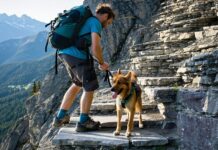
On an exposed ridge, you’ll spot early heat exhaustion when your dog’s panting quickens and deepens, refusing to ease during short rests. Watch for open-mouth panting with flared nostrils and heavy chest movement. Relaxed breathing shifts to effortful work. Check the tongue and gums—they’ll turn bright or dark red—and notice saliva thickening into ropey strings. These first signs demand fast action. Knowing what comes next could save your dog’s life out there.
TLDR Key Takeaways
- Watch for quickened, deepening panting that shifts from relaxed to effortful breathing, even during short rest stops.
- Check the tongue and gums for a bright or dark red color signaling early heat stress.
- Notice when saliva thickens into ropey strings, indicating a change in saliva quality.
- Look for open-mouth panting with flared nostrils and obvious, exaggerated chest movement.
- Recognize ridge-specific risks like full sun, dark heat-radiating rock, and high-altitude UV accelerating overheating despite cooler air.
The First Signs of Heat Exhaustion in Dogs
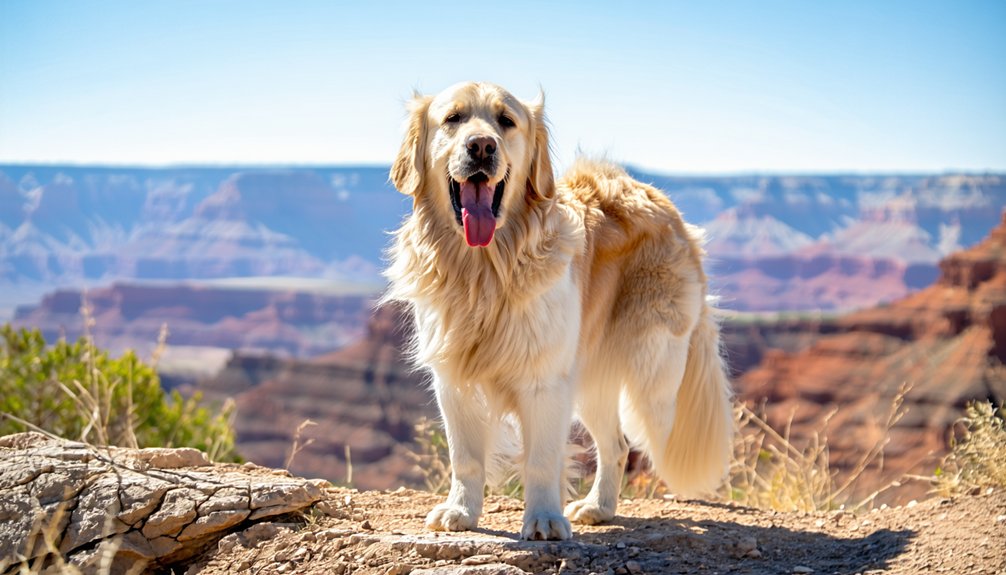
Watch your dog’s panting first—it’s the earliest and most reliable warning sign on an exposed ridge. You’ll notice the rate quicken and deepen, even during short rests. The quality shifts too: relaxed breathing becomes hard, open-mouth panting with flared nostrils and obvious chest movement.
When panting persists despite shade and water, your dog isn’t dissipating heat fast enough.
Check the tongue and gums—they’ll turn bright or dark red, and saliva thickens into ropey strings. These signs tell you it’s time to act.
Get your hydration timing right by offering water before distress sets in, and consider your electrolyte choice carefully, since plain water alone won’t replace what your dog’s losing.
Trust these cues, and you’ll protect your trail companion together.
Why Ridges Overheat Dogs So Fast
On an exposed ridge, your dog faces a brutal combination of heat sources that converge faster than you’d expect. Full sun strips away shade, raising radiant load beyond what the air temperature suggests, and dark coats absorb even more solar energy. High-altitude UV amplifies this heating despite cooler air.
These ridge specific warming patterns create dangerous microclimate effects: rocky terrain and talus absorb radiation and re-radiate heat upward, making the air at your dog’s height several degrees hotter than you feel standing upright.
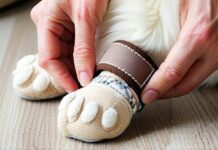
Don’t overlook paw pad risks, hot rock contact transfers heat directly into paws and distal limbs, adding to core heat load and risking burns. Meanwhile, steep climbing generates metabolic heat that overwhelms panting when no shaded recovery exists.
Which Dogs Overheat Easiest on Exposed Terrain
Although every dog can overheat on an exposed ridge, some face dramatically higher odds than others, and knowing which traits stack the deck lets you adjust your plan before you’re in trouble.
If you hike with a brachycephalic breed—Bulldog, Pug, Boxer, Shih Tzu—their shortened brachycephalic airway cripples panting, the primary cooling system.
Large and giant breeds carry a giant workload up steep grades, while a lower surface-area-to-volume ratio slows heat loss.
High-drive working dogs overheat when arousal overrides self-pacing, fueling rapid metabolic heat buildup during climbs.
Northern and mountain breeds—Huskies, Malamutes, Bernese—suffer from double coat insulation that traps heat, and dark coats absorb punishing solar radiation.
Add geriatric dogs, puppies, overweight, or unfit dogs, and you’re managing serious risk.
How Sun, Humidity, and Elevation Stack the Risk
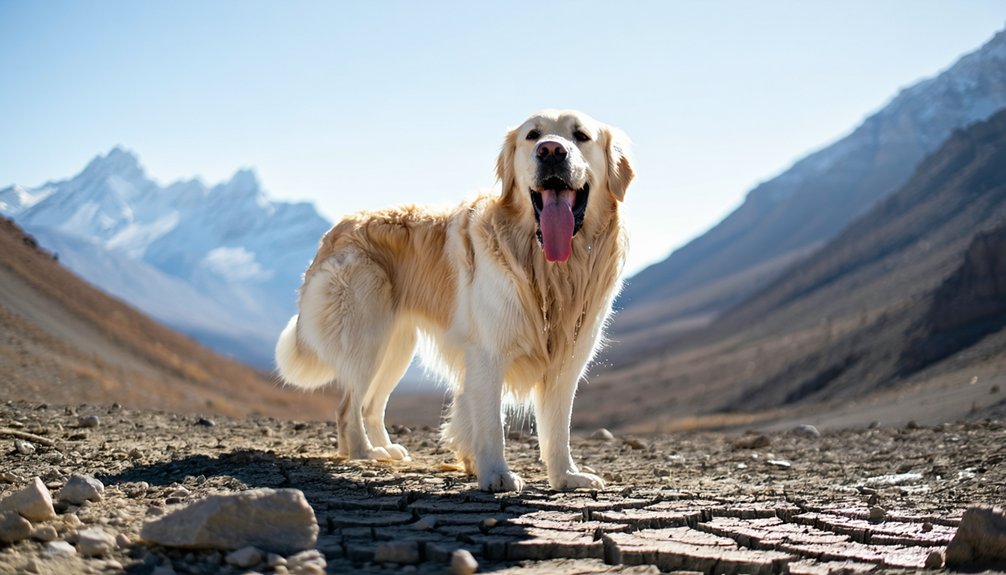
Three environmental forces—sun, humidity, and elevation—gang up on your dog’s cooling system on an exposed ridge, and they don’t act alone. Each amplifies the others, shifting heat stress from exertional to environmental and pushing core temperature toward the dangerous 41–43°C range.
- Sun: Direct solar load raises surface and body temperature 10–15°C above ambient, while dark rock radiates heat from above and below.
- Humidity: Above 60–70%, evaporative cooling from panting collapses, so your dog overheats even at 24–27°C.
- Elevation: Thinner air forces harder breathing, and UV intensity climbs ~10–12% per 1,000 meters.
- Interaction: No shade means continuous load with no recovery.
Watch hydration timing closely, and respect shade seeking behavior—it signals your dog needs relief now.
The Panting Changes That Signal Heat Trouble
Once shade-seeking tells you your dog needs relief, his breathing tells you how far the heat has already pushed him. Heavy, fast, persistent panting is one of the earliest signals, and it’ll look more intense than usual.
If panting doesn’t ease after rest or shade seeking, the heat strain is escalating.
Watch his mouth. The tongue may stretch abnormally long and wide, and his lips pull back to expose more gum and oral tissue—his body’s working to maximize evaporative cooling.
Thick drool or a dry mouth points to dehydration setting in, so your hydration timing matters now. Check his gums: bright red mucous membranes warn of heat exhaustion.
When panting pairs with these oral changes, you’re past observation—you need to act immediately.
What Your Dog’s Gait and Posture Reveal
When panting signals trouble brewing, your dog’s movement tells you how deep that trouble runs. Watch how your companion carries itself on the ridge, because gait and posture reveal what panting alone can’t.
Stumbling, weaving, or drifting signals early loss of coordination, while a lowered head and hunched body show your dog’s fighting to conserve energy.
- Track wobble: More pronounced wobble on uneven ground means heat-related instability is amplified by exposure and terrain.
- Shade seeking: Preference for shade or lying down shows your dog’s trying to reduce heat load.
- Stumbling retreat: Stiff, imprecise steps and delayed paw placement reflect failing motor control.
- Posture hunching: A wide-based stance and swaying signal impaired coordination.
Catch these signs early—together, you’ll prevent collapse.
Mouth, Tongue, and Drool Clues to Watch
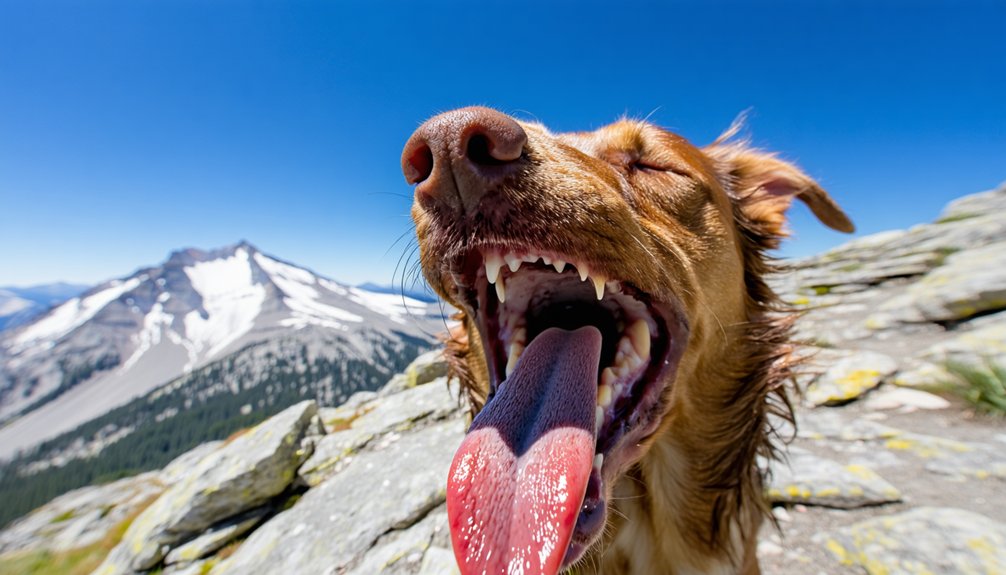
The mouth tells you more than any other part of your dog’s body when heat starts to take hold. On an exposed ridge, you’ll notice panting turn rapid and continuous, even at rest. The tongue protrudes longer and wider, while drool thickens into ropey, stringy strands. Watch the color changes closely—they signal how far heat stress has advanced.
| Sign | Early Heat Exhaustion | Worsening Emergency |
|---|---|---|
| Tongue | Bright red | Purple or blue-tinged |
| Gums | Bright red | Brick red, congested |
| Drool | Excessive, watery | Foamy, ropey froth |
Recognize progression by checking gum moisture too; tacky, sticky membranes mean dehydration’s setting in. When you read these clues together, you protect your companion and keep your group moving safely.
Behavior Shifts That Warn Before Heat Stroke
How does your dog act before heat overwhelms its body? Watch for subtle shifts that experienced handlers learn to trust. Your dog’s behavior often signals trouble before its body collapses, giving you precious time to act on the ridge.
- Trail pacing changes: Your dog suddenly slows, stops repeatedly, or lags far behind despite strong stamina.
- Shade seeking: It lies down in any small shaded rock or shrub, staying longer than usual.
- Restlessness signals: It paces, circles, or can’t settle even during breaks, reflecting rising heat load.
- Confusion onset: It veers off the trail, “spaces out,” or responds slowly to your name or whistle.
Trust these warnings—catching them early keeps your companion safe and your group together.
How to Spot Dehydration on the Trail
Why wait for collapse when your dog’s body reveals dehydration early? You’re part of a community that reads these signs before trouble strikes.
Start with gum moisture: healthy gums feel moist and slippery, never tacky or pale. Press a gum—color should return within one to two seconds. Slower refill signals fluid loss.
Check the nose for dryness or cracking, and watch for sunken, dull eyes.
Examine saliva too; thin and watery is normal, while thick, ropey strands warn of rising deficit. The tongue should stay moist and pink.
These hydration markers work best together.
Perform the skin tent test over the shoulders—pinch, release, and watch it snap back within one to two seconds. Persistent tenting means it’s time to stop and rehydrate immediately.
How to Check Your Dog’s Pulse and Body Heat
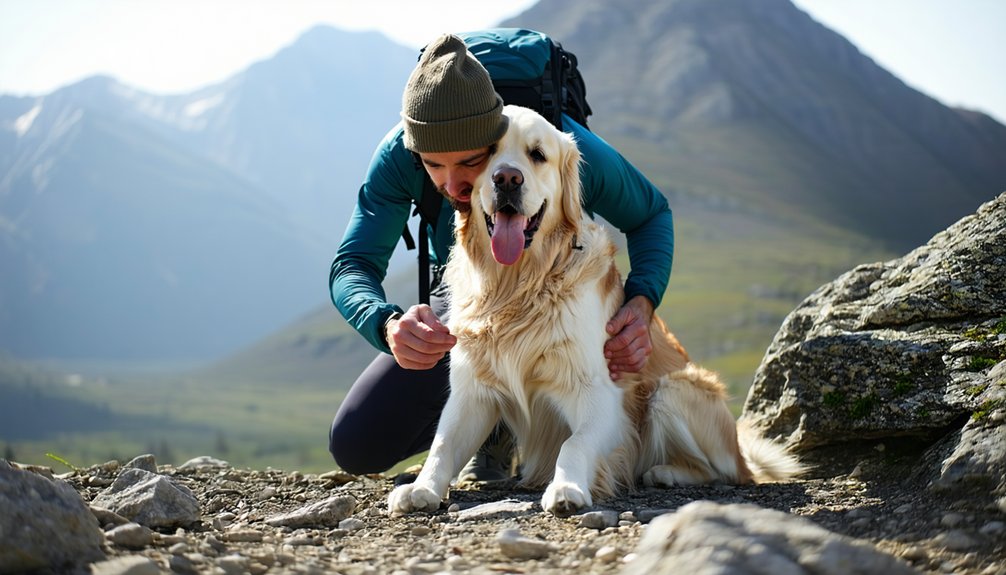
Press two fingers into the soft groove where your dog’s hind leg meets its body, and you’ll find the femoral artery—the most reliable pulse point in the field. Use your index and middle fingers, never your thumb, so you don’t mistake your own pulse for your dog’s. Stay quiet, count the beats, and trust what you feel.
- Position your dog standing or lying on its side, calm and unrestrained.
- Count beats for 15 seconds, then multiply by four for bpm.
- Assess rhythm, flagging weak, bounding, or irregular pulses.
- Check temperature rectally; normal runs 100.0–102.7°F.
Watch for gait shock—stumbling that signals overheating. Record every reading on your owner timeline, comparing trail numbers against your dog’s established baseline.
What to Do the Moment You See Heat Signs
The moment you spot heat signs—heavy panting, a bright red tongue, drooling, or unsteady legs—stop everything.
Halt all movement and play to prevent more heat buildup.
Move your dog to a shaded, breezy spot away from direct sun and reflective rock.
Seek overhang positioning beneath rock ledges or leeward slopes where the air stays cooler.
Set your dog on cooler ground—dirt or shaded rock—not hot stone or sand.
Maximize ventilation airflow by orienting their body broadside to the breeze for better convective and evaporative cooling.
Keep other people and dogs back so air can move freely.
Avoid enclosed tents or bivy sacks that trap heat.
Limit handling to essential repositioning, since stress raises heart rate and heat production.
Stay calm, act decisively—you’ve got this.
How to Cool Your Dog Safely and When to Call the Vet
Once you’ve moved your dog to shade and stilled the air around them, you’ll start active cooling—done right, it can reverse early heat exhaustion before it becomes heatstroke. Use cool or lukewarm water—never ice—on thin-haired, high-blood-flow areas, and pair it with airflow for evaporative cooling.
- Target the right spots: Wet the armpits, groin, neck, stomach, inner thighs, ears, and paws, then fan to speed heat loss.
- Offer water safely: Give small, frequent sips from a shallow, stable container. Don’t force it.
- Monitor Temperature: Use a rectal thermometer; stop active cooling around 103–104°F to avoid overshoot.
- Provide Shaded Rest: Keep your dog cool and ventilated afterward.
Call the vet immediately for collapse, seizures, ≥105°F, or no improvement within 10 minutes.
Frequently Asked Questions
How Much Water Should I Carry for My Dog on Ridge Hikes?
Carry 2–4 cups per 2–3 miles for your medium dog on exposed ridges. Plan hydration timing around dry stretches, doubling maintenance needs in heat. Track water intake closely, and you’ll keep your trail companion safe alongside fellow hikers.
What Time of Day Is Safest to Hike With Dogs?
Hike at early morning, just after sunrise, when temperatures are lowest. We’d recommend running safety checks on ground heat and watching for early symptoms like heavy panting. You’ll keep your dog safe alongside fellow trail lovers.
Can I Use Cooling Vests or Gear to Prevent Overheating?
Yes, you can! Cooling vests slow your dog’s heat rise during exertion, but they’re not standalone fixes. Pair them with hydration planning, shade rest, and paw pad care—we hikers protect our companions through layered, evidence-based strategies.
How Long Should I Rest Before Resuming the Hike?
Rest at least 20–30 minutes, often 30–60, until your dog’s breathing, gum color, and gait normalize. Your recovery timeline demands gradual reconditioning—if signs recur, you’ll end the hike together, prioritizing safety over pushing forward.
Are There Long-Term Effects After a Dog Recovers From Heat Exhaustion?
Yes, long-term effects are possible. Heat-related injuries can damage your dog’s kidneys or trigger shock, even after apparent recovery. You’ll want post-recovery monitoring for vomiting, weakness, or abnormal gums—and call your vet promptly to keep them safe.
Conclusion
On an exposed ridge, your dog can’t tell you when heat’s overwhelming them—but their body will. Watch for the early panting changes, sluggishness, and thick saliva you’ve learned to recognize, and act before mild signs become an emergency. Carry water, plan shade stops, and turn back when conditions stack against you. Cool your dog promptly, monitor their recovery, and call a vet if symptoms persist. Your vigilance is their best protection out there.
References
- https://www.noahsarkvet.com/11-symptoms-of-heat-exhaustion-in-dogs
- https://www.whole-dog-journal.com/health/heat-exhaustion-in-dogs/
- https://www.alvinanimalclinic.com/blog/what-are-the-three-stages-of-heat-exhaustion-in-dogs
- https://www.vetcheckforpetsgeorgetown.com/blog/how-to-recognize-heat-exhaustion-in-pets
- https://www.chewy.com/education/dog/health-and-wellness/how-to-prevent-heat-stroke-and-heat-exhaustion-in-dogs
- https://www.akcchf.org/disease-history/heat-stroke-and-heat-exhaustion/
- https://www.vet.cornell.edu/departments-centers-and-institutes/riney-canine-health-center/canine-health-topics/summer-heat-safety-tips-dogs
- https://chimacumvet.com/blog/signs-of-heat-exhaustion-in-dogs/
- https://www.rspca.org.uk/adviceandwelfare/pets/dogs/health/heatstroke
- https://animalemergencyservice.com.au/blog/heat-stroke-in-dogs/