Report the incident before you leave the secure arrival area—hit baggage claim, the live-animal office, or the gate desk. Get a written incident report with the employee’s name, plus a claim reference number. Snap time-stamped photos, gather your travel records, and obtain a veterinary report within 24 hours. File your written complaint with the airline, then escalate to the DOT if needed. Don’t miss the deadlines—they’re tighter than you’d expect.
TLDR Key Takeaways
- Report the incident immediately before leaving the secure arrival area, providing flight number, route, crate tag number, and last known location.
- Request a written incident report and claim reference number, including carrier details, cause, and the filing employee’s name and contact information.
- Gather evidence including time-stamped photos, travel records, kennel tags, the filed airport incident report, and a veterinary report within 24 hours.
- File your first written complaint with the airline within Montreal Convention deadlines: 7 days for damage, 21 days for delay.
- File a DOT complaint with the Office of Aviation Consumer Protection to trigger regulatory pressure, prioritizing precision over volume.
What Counts as Airline Mishandling of Your Dog?
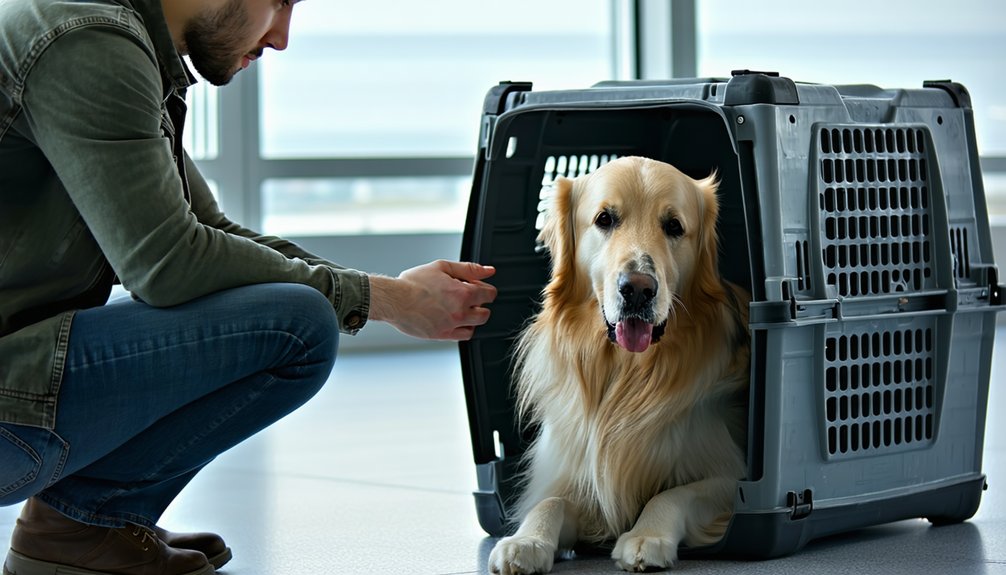
The Department of Transportation defines an “animal incident” as the loss, injury, or death of an animal during air transport, including while your dog’s on the ground but still in the carrier’s custody.
You don’t have to prove negligence—any loss, injury, or death in the airline’s care qualifies.
Reportable incidents include escapes from kennels, getting lost, or delays causing injury or death.
You’re covered if your dog suffers from inadequate ventilation, temperature control, extreme tarmac heat, or improper crate stacking.
Misrouting, extended delays reuniting you, or permanent disappearance during airline-controlled segments also count.
Documented kennel damage—tipping, breaking, or crushing—strengthens your case, as does a carrier policy breach, like accepting brachycephalic breeds in cargo.
Knowing these standards puts you among informed, protected pet guardians.
Report the Problem at the Airport Right Away
When something’s gone wrong with your dog, you’ve got to report it before you leave the secure arrival area—at baggage claim, the live-animal office, or the arrival gate desk. Acting fast triggers time-stamped internal incident procedures that protect you later.
Give agents the flight number, route, crate tag number, a description of your dog and crate, and the last known location so they can trace through live-animal tracking systems. Ask them to page ramp and baggage personnel while the aircraft’s still at the gate, and to check live-animal holding rooms and transfer zones.
Capture timeline documentation and crate condition notes as you go, jotting down extension numbers and departments contacted. You’re not alone here—insist staff help you, because early action increases recovery chances and strengthens your claim.
Get a Written Incident Report and Claim Number
Once you’ve reported the problem, ask the airline for a written incident report at the moment of finding so its account of what happened is documented in a form you can attach to a later claim.
This report should identify the carrier and flight number, the date and time, a description of your dog, and your contact information as owner or guardian.
It must also include the cause, any corrective action, and the name, title, and phone number of the airline employee filing it—solid dog behavior documentation you’ll rely on later.
Request a claim reference number too, and start a carrier communication log tying every email and letter to that single record.
Under 14 CFR Part 235, covered carriers must file these reports, so you’re entitled to one.
When to Ask for a Complaints Resolution Official
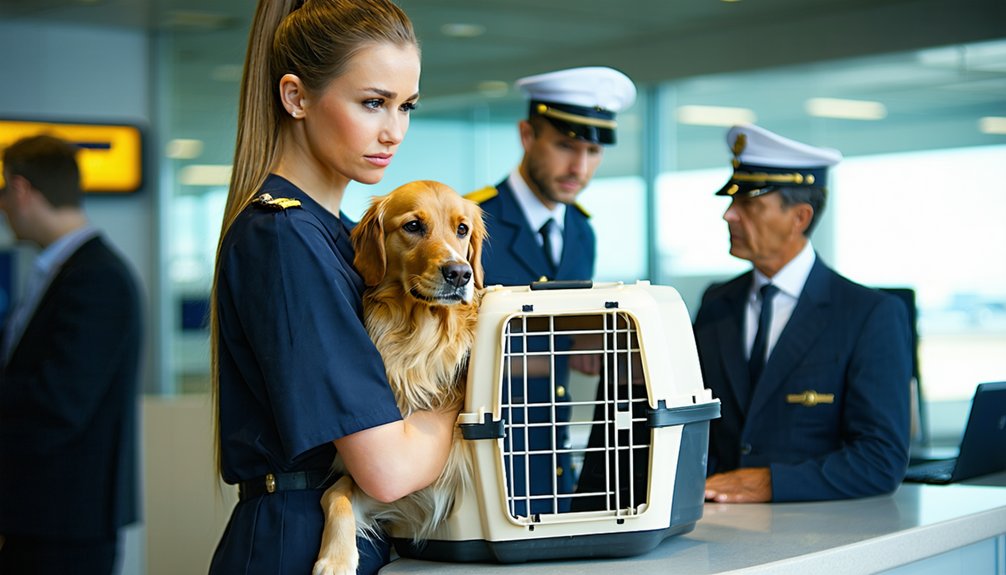
If your dispute involves disability access, ask for a Complaints Resolution Official (CRO)—the airline’s required escalation point for any conflict tied to a service dog or other disability-related travel need.
The DOT requires every airport to have a CRO available at no cost, either in person or by phone during operating hours.
Request one immediately—at the gate, counter, or baggage area—before you leave the airport, because that’s the clearest moment for on-site correction.
A CRO reviews the facts behind the airline’s decision, making them essential for Service Animal Handling disputes and Disability Access Rights questions.
If a carrier excludes you on safety grounds, it must give you a written explanation.
The CRO must also provide a written statement summarizing its decision—documentation you’ll need for any later DOT or airline complaint.
Deadlines That Can Make or Break Your Claim
Because deadlines can quietly bar your claim long before you ever reach a courtroom, you need to know which clock is ticking.
If your dog travels as checked baggage, the Montreal Convention gives you just 7 days to file a written damage complaint and 21 days for delay, measured from when your animal’s made available.
Verbal complaints at the airport won’t cut it—airlines demand written proof through forms, emails, or letters.
Some carriers impose even shorter internal windows, so check your contract carefully.
You’ve got 2 years to sue, but missing the notice period can still bar recovery.
Set deadline prompts, save every piece of airline correspondence, and build an evidence checklist immediately.
Acting fast keeps you among those who actually recover.
Evidence You Need to Gather for Your Claim
When you’re building a claim against an airline, your evidence does the heavy lifting—not your outrage.
Start with photos and video of your dog’s condition immediately after handoff: visible injuries, distress, mobility issues, plus the damaged crate.
Capture time-stamped images to anchor an injury timeline that shows harm tied to the flight.
Secure your travel records—itinerary, boarding pass, pet transport receipt, and kennel tags—to prove chain of custody and pinpoint where things went wrong.
Get a written veterinary report, exam notes, and invoices documenting cause and treatment.
File an airport incident report and note employee names, roles, and your claim reference.
Gather witness statements, document screenshots of every email and chat, and keep call notes.
Together, these records make your case undeniable.
Get a Veterinary Report if Your Dog Was Hurt
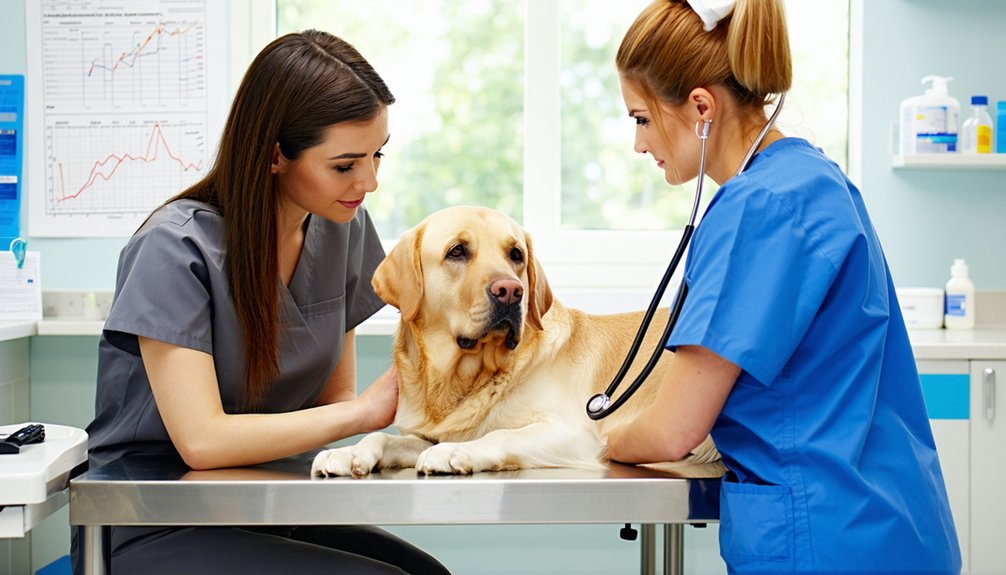
A veterinary report is the backbone of any injury claim, turning your observations into clinical proof an airline can’t easily dismiss.
Get your dog examined within 24 hours of landing, so the vet can document heat stress, dehydration, respiratory distress, trauma, and shock before symptoms fade.
Ask for a written report on clinic letterhead with the vet’s name and license number, detailing essential signs, injuries, radiographs, bloodwork, treatments, and prognosis.
To meet medico legal standards, request a clear timeline noting your dog’s pickup time, flight details, and pre-flight condition.
This establishes chain of custody evidence, linking injuries directly to airline handling.
Where supportable, have the vet state injuries are consistent with transport trauma and rule out pre-existing conditions.
Secure both digital and certified paper copies.
File Your Complaint With the Airline First
Before you escalate to government agencies or court, you’ve got to file your complaint with the airline first. DOT guidance is clear: pursue resolution directly with the carrier’s consumer office before going elsewhere.
Submit your complaint in writing through the airline’s official feedback form, email, or postal address—a verbal airport report won’t protect your rights.
Start with an airline policy review so you understand reimbursement limits and your obligations under the Montreal Convention, which requires written notice within 7 days for damage and 21 days for delay or loss.
Include your flight details, tag numbers, and the PIR number, plus photos and other documentation.
If third party witnesses saw the mishandling, name them.
Then request a case number and written acknowledgment to confirm receipt.
What Compensation You Can Actually Claim
Once you’ve filed with the airline, you need realistic expectations about what you can actually recover.
On international flights, the Montreal Convention treats your dog as baggage, capping claim coverage limits near 1,519 SDR (~$2,100).
A 2024–2025 EU Court ruling confirms this, and without a special declaration of higher value, you’re locked at that default—one Spanish traveler recovered just €1,578.82 for a lost dog.
You can recover veterinary expenses from negligence, refunds of pet transport fees, your dog’s market value (bring property value proof like purchase receipts), and incidental costs like extra boarding or lodging.
Emotional distress and companionship damages? Rarely paid, though Tennessee, Illinois, and New York offer narrow exceptions.
Punitive damages surface only with gross negligence or intentional harm.
Know these boundaries before claiming.
How to File a DOT Complaint That Sticks

Filing with the airline gets you compensation, but a complaint to the Department of Transportation triggers regulatory pressure that airlines can’t ignore.
You’re not alone in this fight—thousands file each year, and DOT Complaint Success comes from precision, not volume.
First, confirm DOT jurisdiction: air travel consumer protection and Service Animal Rights fall under the Office of Aviation Consumer Protection.
- Choose your complaint type: Use the informal online form for routine mishandling; file a formal complaint under 14 CFR Part 302 for serious violations.
- Meet the six-month deadline: File disability-related complaints within six months to guarantee an investigation.
- Back it with evidence: Attach kennel tags, veterinary records, photos, and your prior airline correspondence.
Cite 14 CFR Part 382 where applicable.
When to Send the Airline a Demand Letter
When the airline denies your claim, lowballs your settlement, or goes silent past a reasonable 30-to-60-day window, you’ve hit the trigger point for a demand letter. You’re not alone—plenty of pet owners reach this stage after DOT complaints stall and internal channels fail.
Send your letter once you’ve addressed emergencies, secured veterinary records, photos, and your claim reference number.
Time it when harm exceeds typical goodwill compensation, when negligence or broken contract terms surface, or when statute-of-limitations deadlines loom.
Use it to open settlement negotiation, clarify payment timelines, and address liability questions head-on, especially when carriers cite Warsaw/Montreal limits.
This isn’t a cease and desist; it’s your final pre-litigation step, giving the airline one last chance to settle before you file suit.
When Suing the Airline Is Worth It
Although a lawsuit is a serious step, it becomes worth pursuing when your dog was injured, killed, lost, or seriously delayed and the airline’s conduct looks negligent rather than a minor service slip.
You’re not alone in examining this decision, and a sound filing strategy starts with honest cost benefit analysis. Legal advisers say success depends on proving the airline knew about your pet, owed a duty of care, breached it, and has no contract or statute barring liability.
- Seek an attorney consultation to assess negligence evidence and quantify damages like vet bills.
- Investigate settlement negotiation first, since many claims resolve faster than litigation.
- File when harm is substantial and your documentation clearly shows causation, not just a bad outcome.
Frequently Asked Questions
Can I Bring My Dog in the Cabin Instead of Cargo?
Yes, if your dog meets carrier size limits—typically fitting under the seat at 15–20 lb combined. Check breed specific policies too, since flat-faced breeds face restrictions. Book early; cabin spots are limited, so reserve your pet’s seat promptly.
Which Dog Breeds Do Airlines Commonly Restrict From Flying?
You’ll often find brachycephalic breeds (bulldogs, pugs, Boston terriers), “bully” types like pit bulls, plus giant breeds restricted. Many airlines enforce breed-specific bans, though service animal rules may grant exceptions—you’re not alone maneuvering these policies together.
Does Travel Insurance Cover Pet Injuries During a Flight?
Usually not—standard policies treat pets as excluded property. Like many travelers, you’ll face insurance exclusions barring in-flight injuries. Pursue an airline grievance instead, gathering medical documentation and meeting claim requirements for any limited pet endorsement you’ve added.
Are There Temperature Limits for Transporting Dogs by Air?
Yes, you’ll face temperature limits—typically 45–85°F at every route point, with stricter caps for snub-nosed breeds. Like fellow pet parents, you must follow seasonal regulations and carrier health requirements, ensuring your dog travels safely within USDA-aligned standards.
How Do I Prepare My Dog for Stress-Free Flying?
Start crate training months early, feeding meals inside to build comfort. Get vet clearance and complete airline paperwork in advance. Practice a calm routine with desensitization to airport sounds, so you and your pup feel confidently prepared together.
Conclusion
When an airline mishandles your dog, you’ve got rights—but only if you act fast. Report the incident immediately, secure that written report and claim number, and watch your deadlines closely. Document everything: vet bills, photos, and communications. File your DOT complaint, send a demand letter, and don’t hesitate to sue if the airline won’t make things right. Your persistence and paper trail are what’ll get you fair compensation. Stay organized, stay firm.
References
- https://www.airclaimslegalservices.com/blog/flying-with-pets-vs-service-animals-what-airlines-owe-you
- http://www.disabilitylawco.org/sites/default/files/uploads/DLC AnimalsAirTravelFactSheet 2021.pdf
- https://law4u.in/top-answer/2688/what-actions-can-i-take-if-an-airline-misplaces-my-pet-in-transit
- https://www.transportation.gov/airconsumer/complaint-process
- https://www.transportation.gov/resources/individuals/aviation-consumer-protection/service-animals
- https://bcvlex.com/en/blog/damage-animals-baggage-air-transport/
- https://www.studiolegalebianucci.it/en/compensation-for-death-or-loss-of-a-pet-on-an-airplane
- https://abcnews.com/US/woman-sues-american-airlines-claims-emotional-support-dog/story?id=64958059
- https://doglaw.hugpug.com/doglaw_042.html
- https://www.transportation.gov/sites/dot.gov/files/2024-09/Service Animal – Air Transportation Form FINAL 9.20.24.pdf