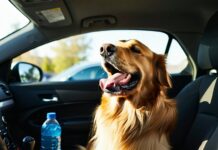
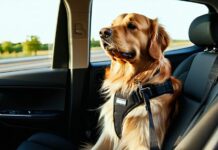
Start by teaching the “settle” cue at home on a comfortable mat. Build calm duration in seconds before minutes, rewarding relaxed postures quietly between the front paws. Next, desensitize your dog to engine sounds and movement using high-value treats. Progress from engine-off to short parked sessions, respecting your dog’s thresholds. On travel days, feed 3–4 hours before departure, plan rest stops every 2–3 hours, and drive smoothly. The right preparation makes all the difference.
TLDR Key Takeaways
- Teach a solid “settle” cue at home first, marking when elbows and hips touch the floor, building calm duration in seconds before minutes.
- Desensitize gradually to car noises and motion, starting with low-volume engine sounds and paired high-value treats, raising intensity only while the dog stays loose.
- Progress structurally from engine-off to engine-on sessions, using short micro-sessions (10–30 seconds) and expanding only after 2–3 calm sessions without panting or whining.
- Set up safe travel with a crash-tested crate secured by tethers, time meals 3–4 hours before departure, and plan rest stops every 2–3 hours.
- Drive smoothly with steady highway speeds and cruise control, keep a quiet cabin with a home-scented comfort item, and reward relaxed postures throughout the trip.
Teach Your Dog the Settle Cue at Home
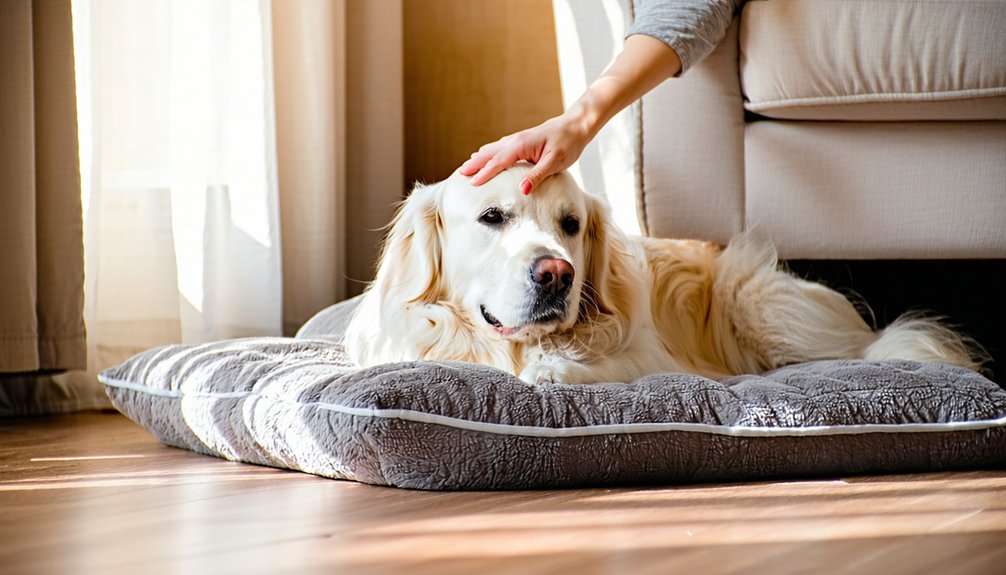
Before you can expect your dog to stay calm through hours on the road, you need to build the settle behavior where distractions are lowest: at home.
Start with a known down, then lure your dog onto one hip by moving a treat in a semicircle toward the ribs.
Mark the moment elbows and hips touch the floor, and deliver kibble between the front paws.
Keep sessions short—3 to 10 minutes—on a comfortable mat that becomes your dog’s settle spot.
Add the verbal “settle” cue just before calm emerges.
Pair counter conditioning drills with low, neutral tones to keep arousal down.
Handler posture consistency matters: sit the same way each time so your dog reads your stillness as the signal to relax alongside you.
Build Your Dog’s Calm Duration Slowly
Once your dog reliably settles on the mat, you’ll build calm duration in seconds, not minutes. Start with very short holds—just a few seconds—so your dog succeeds repeatedly before each reward.
Once she stays relaxed through several reps, extend the interval: try 5 seconds, then 10, then 30.
Add just a couple of seconds each session, never large jumps. Track calm increments so you know when she’s ready for more, and reinforce quiet behavior by providing treats quietly between her front paws.
Reward only the most relaxed postures—softened body, no attention-seeking.
Use multiple short sessions instead of one long drill, folding calm practice into daily routines.
Establish stable duration at home first, then you’ll transfer those longer holds to busier travel-day conditions.
Add Noise and Movement to the Routine
Although your dog now settles calmly at home, real car travel layers in sounds, vibrations, and motion she hasn’t yet faced.
Start with progressive sound desensitization: play recorded engine idling, closing doors, and traffic at very low volume during mat training, raising it only while her body stays loose.
Pair every new level with high-value treats or a lick mat to build a positive emotional response.
Add pre-drive cues—seatbelt clicks, gear shifts, door beeps—one at a time during calm sessions.
Keep sessions short, one to five minutes, repeated daily.
Next, introduce a real parked engine start while feeding, then gentle vibration cues like seat or crate movement.
If panting, salivation, or food refusal appears, lower intensity and resume later, easier.
Start Car Training With the Engine Off
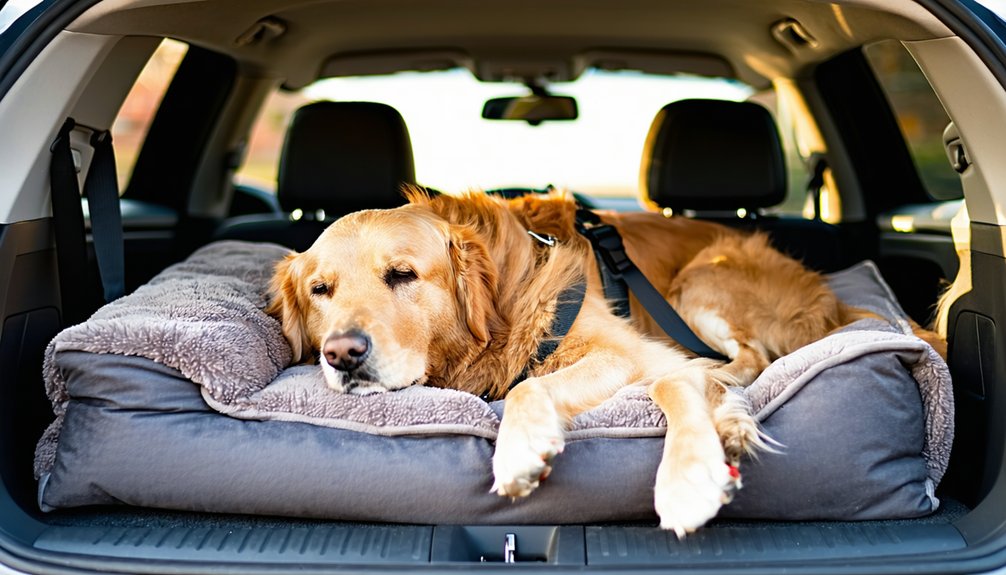
With your dog already settling on her mat at home, you’re ready to move that calm into the car itself—engine off. Start outside the vehicle, then desensitize vehicle entry by letting her approach and roam at her own pace. Once she’s comfortable, build a quiet seat pairing: she settles in the back, you sit in the driver’s seat, doors closed, no engine, no pressure.
| Step | Goal | Reward |
|---|---|---|
| Approach | Investigate freely | Treats |
| Enter | Calm seat entry | Stuffed Kong |
| Settle | Lie down 10–15 min | Quiet praise |
Reinforce calm lying with treats first, then fade to praise. End each session while she’s still relaxed. Perfect this engine-off foundation before adding any noise or movement.
Move to Engine-On Parked Sessions
Your dog now lies quietly for 10–15 minutes in the parked car with the engine off, so you’re ready to add the engine.
Start with micro-sessions of just 10–30 seconds to prevent stress buildup and allow gradual desensitization to vibration and noise.
Pair the engine start with high-value food rewards, building a positive emotional response.
Nail your reinforcement timing: reward calm body language every few seconds at first, then shift to an intermittent schedule as relaxation becomes reliable.
End each session while your dog stays relaxed—soft eyes, loose muscles, normal breathing.
Respect behavioral thresholds and expand duration only after 2–3 consecutive sessions show no panting, drooling, or whining.
Run short, frequent sessions in low-distraction spots like your driveway, keeping progress steady and your dog confident.
Take Short Mini-Trips Around the Block
Now that your dog stays relaxed through engine-on sessions, you’re ready to add actual motion with ultra-short loops of just 1–3 minutes around the block. Drive smoothly—gentle acceleration, wide turns, soft braking—to minimize nausea and anxiety. Keep windows mostly up to reduce overwhelming noises and smells, and schedule trips outside peak traffic to avoid stop-and-go chaos.
Stick to quiet residential loops, repeating the same simple route so predictability eases hypervigilance.
Deliver high-value treats during calm stops and reward consistently at ignition off, then at exit.
Measure stress signs like lip licking, yawning, or pinned ears, and end each loop before panting, drooling, or whining appears.
Track calm duration after every trip, holding at this level until your dog rides comfortably before progressing further.
Set Up a Safe, Secure Car Space
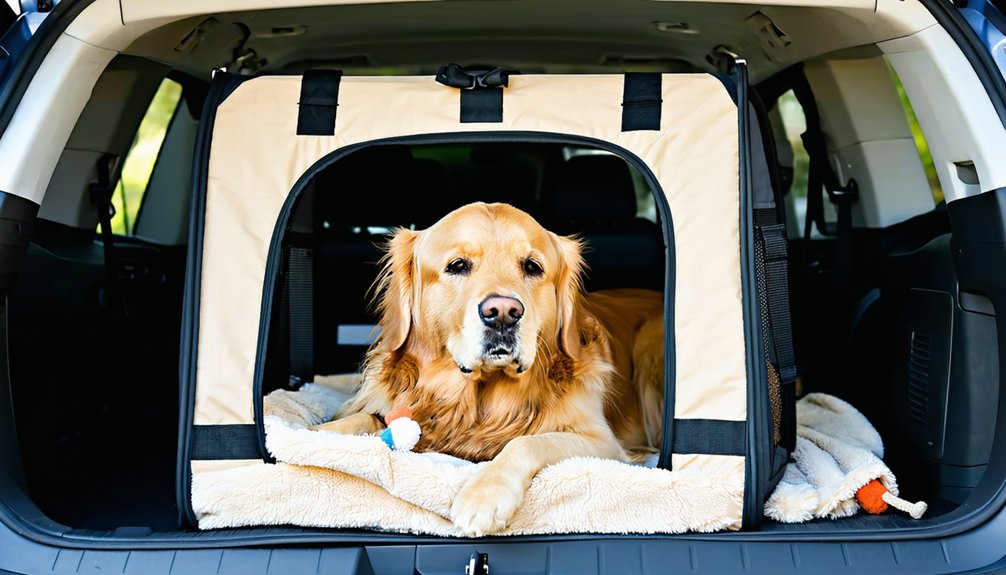
Before your dog rides comfortably for hours, you’ll need to build a car space that protects them in a crash and keeps them calm in between.
Start with crate sizing: measure nose to tail base, add six inches, and pick a crash-tested crate or carrier that lets your dog stand, turn, and lie down.
Prioritize seat belt safety by attaching carriers or strength-rated harness tethers to seat belts or LATCH anchors—never to a neck collar.
Place small and medium dogs on the back-seat passenger side, and secure large-dog crates in the cargo area using cargo anchor points or tie-down straps.
Add non slip liners or rubberized mats beneath crates to stop sliding during turns and braking.
Together, these steps keep your traveling companion secure and settled.
Time Meals Right to Prevent Car Sickness
Because a full stomach turns every curve into a nausea trigger, time your dog’s meals to put digestion ahead of departure.
Feed adult dogs 3–4 hours before you leave, and when mornings are tight, give half the usual portion—lighter, lower in protein and fat, higher in carbs.
Some guidance stretches the fasting window up to 8 hours, so an empty or lightly filled stomach reduces vomiting.
Puppies under four months need a shorter buffer, around 2–3 hours.
For your 8-hour driving days, build hunger adjustment into the plan: never feed while moving.
Instead, offer a small meal at a rest stop, then allow digestion before rolling again.
Make hydration planning part of the routine, balancing nausea prevention against energy needs so everyone travels comfortably together.
Plan Rest Stops for an 8-Hour Drive
With meals timed and digestion handled, you’ll need a stop schedule that keeps your dog calm across the full eight hours. Plan rest breaks every 2–3 hours, or roughly every 100–150 miles, with each stop lasting 15–20 minutes.
Make your first stop within the first hour in a quiet area to reset early excitement.
Map specific dog-friendly parks and green spaces ahead, prioritizing grass over concrete, and identify emergency stop locations in case your primary choice is closed, crowded, or too hot.
Clip the lead before opening doors, choose shaded spots away from traffic, and never leave your dog alone in the vehicle.
Build a hydration packing strategy with a go-bag holding water, a collapsible bowl, and waste bags, offering moderated water at every stop.
Spot Travel Stress Signs and Respond Fast
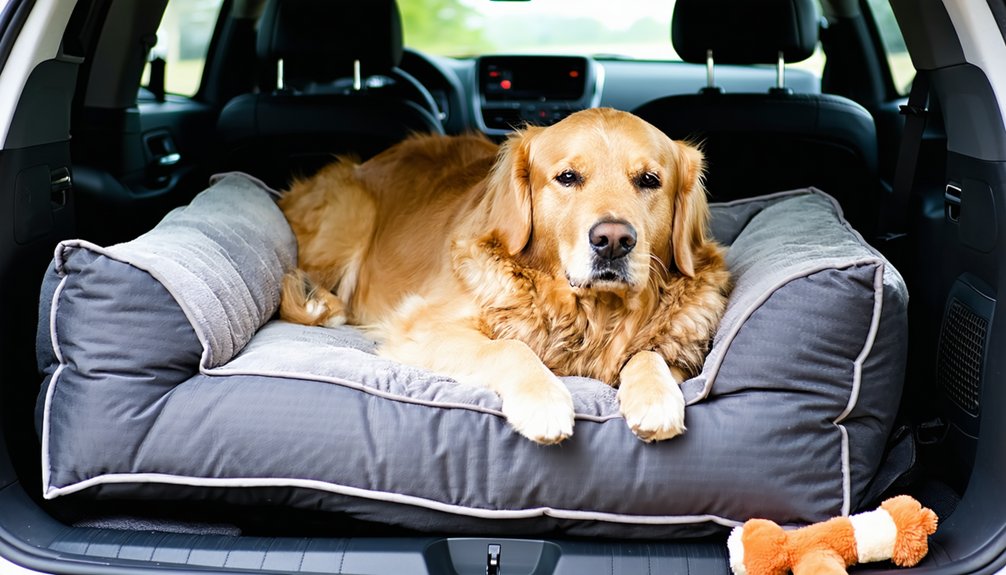
A solid stop schedule keeps most dogs calm, but you still need to read your dog in real time between breaks.
Watch for panting without heat, drooling, whining, pacing, or trembling.
Notice body language too: a tucked tail, pinned-back ears, whale eye, or repeated lip licking and yawning all signal rising stress.
The rule of thumb is simple—early intervention beats damage control.
The moment you spot trouble, reduce noise and visual input, improve ventilation, and offer a familiar comfort item carrying home’s scent.
If your dog stays responsive, reinforce calm with treats or praise.
Keep symptom tracking across trips, since drooling plus lip licking may point to motion sickness rather than fear.
When signs escalate toward vomiting or panic, stop and consult your veterinarian.
Drive in a Way That Keeps Dogs Calm
While stop schedules and stress monitoring matter, how you actually drive shapes your dog’s calm just as much.
Maintain steady highway speeds and use cruise control when safe—safer speed control lowers vehicle movement variability that unsettles dogs.
Reduce sudden braking and sharp lane changes, which startle dogs and trigger panting or pacing.
Accelerate and brake gradually at lights and exits so your dog keeps stable balance, encouraging rest.
Choose routes with fewer curves, stops, and heavy traffic, since winding roads heighten motion sickness risk.
Favor smooth road surfaces over rough, unpaved ones to limit anxiety-inducing vibration.
Keep audio low and calm, crack windows only slightly to curb wind noise, and maintain a relaxed cabin.
Drive this way, and you’ll help your dog settle.
Reward Calm and Keep Car Skills Sharp
Beyond smooth driving, you’ll lock in calm by rewarding it deliberately.
Mark relaxed postures—loose muscles, soft eyes, slow breathing—with calm markers and high-value food before you start the engine.
During short, easy rides, reinforce quiet behavior with intermittent treats or stuffed food toys, offering them only when your dog’s settled on their mat or fitted spot.
On 8-hour days, schedule rewards every 15–30 minutes early on, then space them out as manners stabilize.
At rest stops, use sniffing rewards, short walks, and quick training games to pay off sustained calm.
Rotate reward types to prevent satiation.
Between long trips, practice short rides and parked-car sessions so skills stay sharp.
Consistency keeps you and your dog confident, connected, and ready for every trip.
Frequently Asked Questions
At What Age Can I Start Car-Settle Training With My Puppy?
You can start at 7-8 weeks, depending on your puppy’s temperament and health. Begin with early exposure in a parked car, keeping short sessions low-stress. Nail your reward timing, treating calm behavior, and you’ll both thrive together.
Are Certain Dog Breeds More Prone to Travel Anxiety?
Yes, certain breeds share an anxiety predisposition rooted in genetic temperament. You’ll find herding and companion breeds—like Border Collies, German Shepherds, and Chihuahuas—often react more strongly to travel. Knowing your dog’s tendencies helps you prepare confidently.
Can I Use a Crate and Harness Together for Safety?
You don’t need both—reviewed sources recommend one properly fitted restraint. Choose a crate or seat-belt strap, then secure your dog. Practice at-home crate acclimation and leash safety checks, joining countless owners who travel confidently together.
How Long Does Full Car-Settle Training Usually Take?
You’ll usually need weeks, not hours. Like many of us, your dog learns through progress milestones—parked comfort, idling, then short drives. Handling expectations matters: anxious or motion-sensitive pups may need months before long travel days feel dependable.
Should I Hire a Professional Trainer for Severe Car Anxiety?
Yes, hire one. When your dog panics, vomits, or self-injures despite your efforts, you’ll benefit from professional med behavior consulting and safety protocol review. You’re not alone—credentialed experts create customized, humane plans that genuinely work.
Conclusion
You’ve now got a clear path: teach the settle cue, stretch duration gradually, and layer in real-world distractions before you ever start the engine. Move methodically from parked sessions to short drives, plan smart rest stops, and watch for stress signals so you can respond fast. Calm car behavior isn’t luck—it’s trained. Keep reinforcing those skills on every trip, and you’ll have a relaxed travel partner for even the longest 8-hour days ahead.
References
- https://www.dogstrust.org.uk/dog-advice/training/basics/settle-training
- https://www.heininger.biz/blogs/generic/keep-your-dog-calm-and-comfortable-during-long-car-rides
- https://www.youtube.com/watch?v=mXdAzdAO0ZY
- https://www.youtube.com/watch?v=UQouZzzed9Q
- https://vcahospitals.com/know-your-pet/dog-behavior-and-training-traveling-air-and-car-travel
- https://www.countrylife.co.uk/out-and-about/dogs/how-to-keep-your-dog-calm-in-the-car-by-top-trainer-ben-randall-256588
- https://www.youtube.com/watch?v=DfCQZIEmvWA
- https://www.express.co.uk/life-style/life/2023471/keep-your-dog-calm-car
- https://plushpawsproducts.com/blogs/news/how-to-calm-your-dog-during-long-car-rides-8-ways
- https://www.baxterandbella.com/post/helping-your-dog-stay-calm-in-the-car-support-for-reactivity-on-the-road