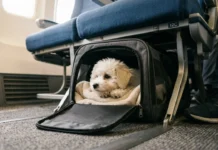
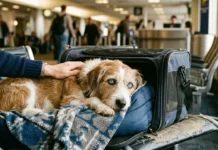
For long flights, you’ll want a crate liner that pairs a high-absorbency core with a non-slip, properly sized fit. Choose hybrid systems with a fast-wicking top layer, fluff pulp plus SAP core, and waterproof backing to pull urine downward and prevent scald. Size your liner to butt against interior walls—equal to or up to 0.5 inches smaller—so it won’t bunch. Below, you’ll find exactly how to nail each detail.
TLDR Key Takeaways
- Choose hybrid systems with fast-wicking tops, high-absorbency SAP cores, and waterproof backing to pull urine downward and prevent strike-through.
- Size liners equal to or up to 0.5 inch smaller than interior dimensions so edges butt against walls without curling.
- Select non-slip, anti-slip backings with built-in anchoring to resist sliding and tray displacement during ground handling and tilting.
- Prefer heavier, stitched-through kennel pads over thin fleece, since reinforced construction resists bunching, chewing, and moisture-softened breakdown.
- Pick one-piece, contiguous liners to minimize seams where moisture seepage and bunching typically start under pet weight.
What Makes a Crate Liner Flight-Ready
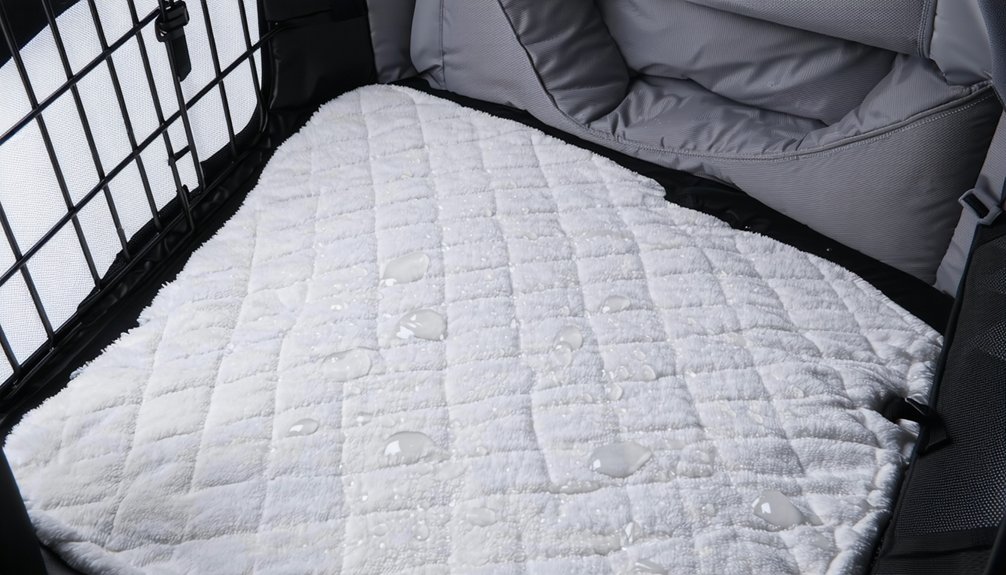
Because airlines and IATA enforce strict standards on what goes inside a travel crate, your liner has to do more than just absorb.
It has to lie flat and low-profile, so your pet can stand, turn, and lie down without obstruction.
Skip high sides, support pads, and loose stuffing—airlines reject bulky, fiber-filled bedding that can be chewed open and ingested.
You want a single, contiguous layer sized to match your crate’s footprint, with a non slip grip underside that resists sliding when ground staff tilt or lift the crate.
Built-in anchoring keeps it fixed under your pet’s weight.
Prioritize wicking speed, drawing urine and spilled water away from the body.
Choose durable, tear-resistant, non-toxic fabric with bound seams, and you’ll meet the standard fellow travelers trust.
How Absorbency Ratings Work for Crate Liners
Behind every absorbency rating sits a quantified measure of how much liquid a liner takes in and holds under defined test conditions, usually expressed in milliliters, grams, or relative levels. When you join fellow pet travelers seeking reliable liners, you’ll want to understand what those numbers mean.
Lab test methods simulate urine or water loads under controlled pressure and time, then measure leakage and rewet. The droplet scale meaning matters too: more filled droplets signal higher absorbency, but only within the same brand line.
- You’ll feel confident knowing your dog stays dry through hours of flight.
- You’ll avoid the dread of strike-through onto aircraft floors.
- You’ll belong to a community that chooses smarter, evidence-based protection.
Match the rating to your pup’s needs.
Why Some Liners Bunch and Others Stay Put
When a liner slides, folds, or wrinkles mid-flight, the cause usually traces back to a few measurable factors: material friction, retention features, fit, and your dog’s behavior.
Smooth, slick backings slide under paw movement, while anti slip traction keeps the liner anchored against the tray.
You’ll want reinforced stitching, since chewing and digging break down edges, making the liner easier to pull loose.
Fit matters too: an oversized liner creates excess material that bunches, so accurate interior measurement gives you a stable edge fit without gaps.
Heavier kennel pads resist displacement better than thin fleece, and water-resistant layers limit moisture retention that softens structure and invites slippage.
Choose durable, snug-fitting liners with grip, and you’ll keep your dog comfortable and your crate floor flat.
How to Size a Crate Liner Correctly
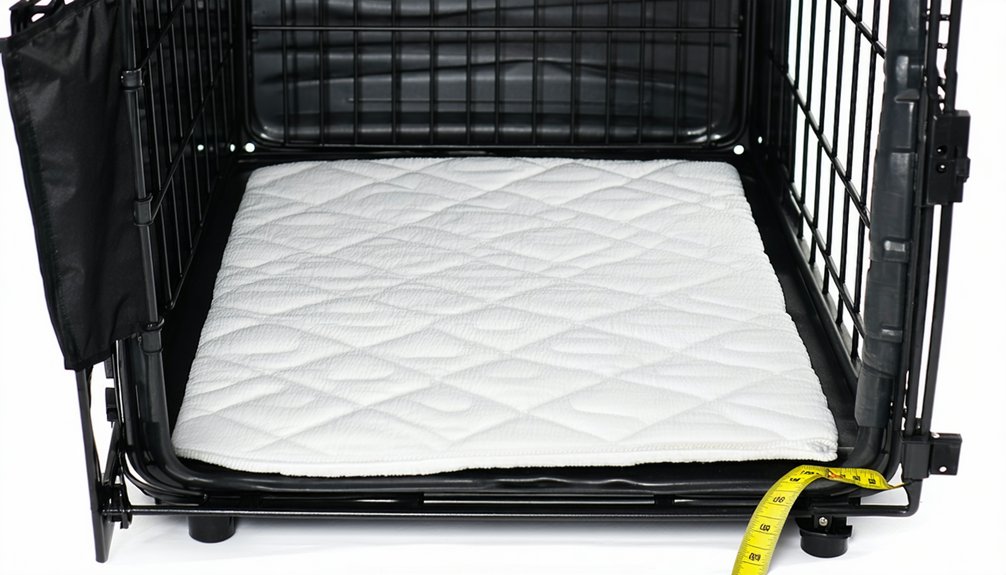
For a snug liner fit your fellow pet travelers trust, follow these targets:
- Match liner length and width equal to or up to 0.5 in smaller than interior measurements.
- Never exceed interior dimensions—that causes curling and rippling under movement.
- For raised-lip trays, subtract 2–4 mm per side so edges sit flat.
Cut-to-Fit Liners for Molded Crate Floors
The molded floors in airline-approved crates rarely come as clean rectangles—they’ve got corner radii, raised lips, drain channels, and ribbing that defeat standard pads. That’s why you’ll want a cut-to-fit liner.
Sold as oversized sheets or rolls, these let you trace your crate’s exact footprint and trim with scissors or a utility knife, so edges follow every contour without leaving gaps. You get one-piece coverage instead of multiple small pads, which means fewer seams where moisture seeps through or where bunching starts.
Cut all the way into molded corners for proper corner sealing, letting raised lips act as a stop. Choose a liner with a waterproof moisture barrier and grip backing, and you’ll keep it flat and your dog dry across long flights.
Do Your Crate Liners Meet IATA Flight Rules?
Cutting a liner to fit is only half the job—it also has to clear IATA’s Live Animals Regulations before your dog flies. Smart pet parents like you know absorbency compliance starts with a leak-proof crate floor, since wet or soiled floors count as non-compliant conditions that trigger refusal at airline check in.
Keep your liner thin, high-absorbency, and inside the crate so it never blocks ventilation or steals headroom.
Before you join fellow travelers at the gate, confirm your liner:
- Doesn’t extend past the crate or interfere with latches and closure.
- Won’t obstruct any ventilation holes or air circulation.
- Contains no free liquids, gels, or sharp inserts that violate Dangerous Goods rules.
Get these right, and you’ll board confidently.
The Best Disposable Travel Pads for Flights
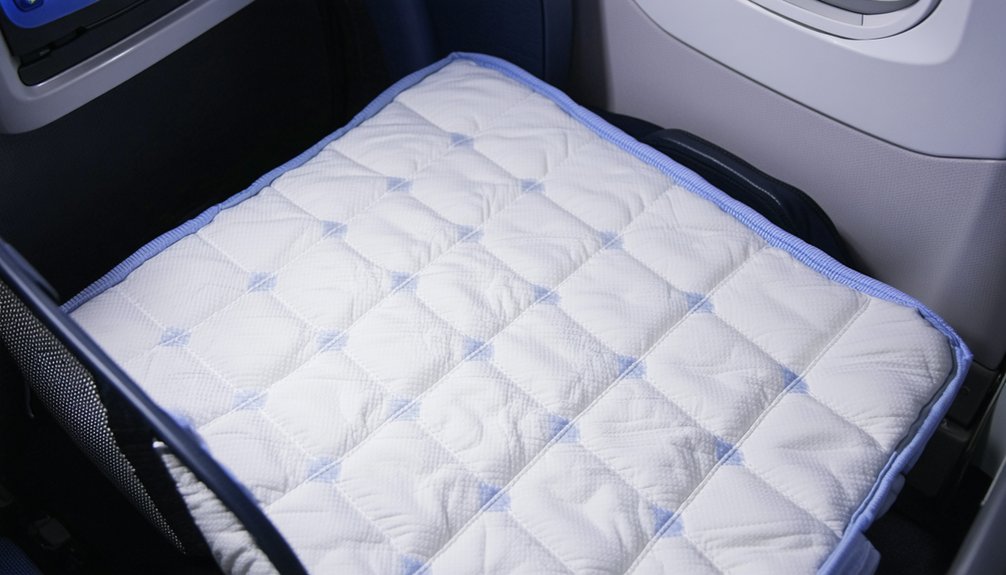
Confidence on a long flight starts with the right disposable pad, and absorbency is your first decision point. The longer you’re seated, the more retention capacity you need, especially when hydration, bladder irritation, or delayed toilet access come into play. Match the product to your flight’s duration, not just your baseline needs.
| Absorbency Level | Best For | Key Benefit |
|---|---|---|
| Maxi | Long-haul flights | Maximum liquid retention |
| Plus | Medium travels | Balanced protection |
| Normal | Short trips | Lightweight comfort |
| All-in-one | Limited toilet access | Highest absorbency style |
You’ll want strong odor control too, so wet wipes, cleansing gel, and disposal bags keep you fresh. Try your pad before travel, confirm the fit, and you’ll belong comfortably among confident, well-prepared travelers.
Top Reusable Fleece Liners That Resist Bunching
When you’re choosing a reusable fleece liner for a long flight, bunching is the failure point you’ll want to design around. Dense fleece tops stay flatter under movement than loose-woven fabrics, while quilted, stitched-through construction keeps internal layers evenly distributed during travel and washing.
Pair that with elasticized edges, fitted profiles, and a non slip attachment so the liner won’t shift when your dog turns or presses into corners.
- Confidence: You’ll know your companion stays dry and comfortable across every hour aloft.
- Belonging: You’re joining travelers who trust odor neutralizing fleece for cleaner, calmer trips.
- Relief: You’ll skip the panic of bunched, displaced fabric mid-flight.
Choose custom sizing and water-resistant backing, and you’ll prevent corner lift reliably.
Hybrid Liner Systems for Leak-Free Comfort
Every hybrid liner solves a problem that single-layer pads can’t: it combines absorption and barrier protection in one engineered system.
You get a fast-wicking top layer, a high-absorbency core of fluff pulp plus SAP, and a liquid-impermeable backing that keeps the crate floor dry.
Zoned quilting and heat-sealed edges prevent core migration, so the pad won’t shift or swell at the perimeter and curl under your dog’s paws.
A breathable film backing lets vapor escape, cutting humidity while still blocking strike-through.
Textured undersides and corner attachment points anchor the liner against creep during turbulence.
With distributed absorption zones concentrating capacity where your pet lies, you’ll keep the surface drier, reduce paw digging, and give your traveling companion stable, comfortable footing throughout long flights.
Layering Crate Liners for Extra-Long Trips
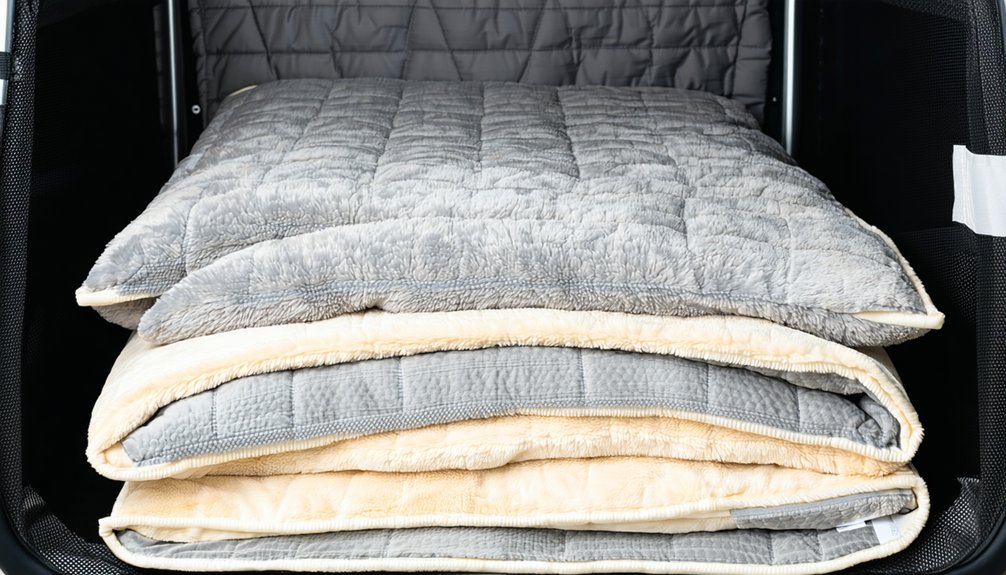
A hybrid liner handles most flights, but itineraries running 12 to 24 hours—once you factor in layovers, delays, and ground handling—demand more reserve capacity than any single pad delivers.
Stacking 2–3 absorbent pads under one fast-drying top layer gives you sequential absorption: the contact surface saturates first while lower pads stay dry as reserves.
Keep your total to two or three layers so the surface stays flat and crate height meets IATA rules.
For layover contingency and confident non slip placement, follow these steps:
- Anchor a quilted pad underneath to stop wrinkling under your dog’s weight.
- Match pad edges to interior dimensions so they butt against the walls.
- Trim excess so no ridges create pressure points.
You’ve got this covered.
Keeping Your Dog Dry and Scald-Free
Beneath every long-haul dog lies a hidden hazard: prolonged contact with pooled urine. Left unchecked, that moisture triggers urine scald—redness, inflammation, and painful lesions on paws, hocks, and the underside. You’ll protect your travel companion by choosing liners engineered to keep skin as dry as possible.
Prioritize a high-absorbency core that pulls urine downward fast, paired with a soft, moisture wicking top layer that reduces friction. A waterproof backing stops liquid from reflecting back as humidity, maintaining a drier microclimate around your dog. Breathable pads add odor control while letting vapor escape and locking liquid in.
Pay closest attention if your dog has a thin coat, light skin, incontinence, or anxiety. These dogs deserve dry, scald-free crates—and so does yours.
Swapping and Cleaning Liners During Layovers
The layover is where careful liner logistics pay off. You’ll move fast when you plan ahead. Target pet relief areas or family restrooms with floor space, and time changes to security re-checks when the crate’s already open. For short layovers under 60 minutes, just check visually and by smell through the crate door—swap only if you spot moisture or leaks.
- Change quickly: Slide a fresh pad halfway under your dog, lifting paws one side at a time—you’ll finish in under two minutes.
- Roll soiled pads inward from corners to center to trap liquid and prevent drips.
- Disinfect Airport Surfaces: Wipe the crate floor, then apply Odor Neutralizers formulated for pet urine.
Double-bag soiled liners and trash them immediately, keeping everyone comfortable.
Frequently Asked Questions
Can I Use Scented Liners to Mask Odors During Flights?
You can, but it’s not ideal. Scented liners offer odor masking, not true neutralization, and they risk cabin safety by irritating pets and passengers. Like savvy travelers, you’ll get better results choosing high-absorbency, unscented liners instead.
Are Crate Liners Safe for Puppies or Senior Dogs?
Yes, they’re safe when you choose wisely. You’ll want non-slip, chew-resistance, and proper size comfort for joints. Pick non-toxic, padded liners that protect both teething puppies and aging seniors—you’re giving your companion the care they deserve.
Do Crate Liners Affect Crate Temperature in Cargo Holds?
Yes, they do. Through Thermal Insulation, your liner traps heat around your dog’s body, while Airflow Considerations matter since thicker pads block floor vents. You’ll want breathable, low-bulk options that keep your companion comfortable and protected.
How Should I Dispose of Used Pads in Airports?
Seal used pads in a disposable bag, then drop them in terminal trash bins after screening. Check airport disposal signage and ask staff guidance when unsure—you’ll keep shared spaces clean and travel confidently alongside fellow pet owners.
Will My Dog Chew or Ingest the Liner Material?
Possibly, if your dog’s a known chewer. You’ll lower risk by choosing tear-resistant pads that address leakproof durability concerns and prioritizing sizing fit stability—flat, snug liners discourage digging. Like fellow travelers, you’ll keep your pup safer.
Conclusion
You’ve now got everything you need to choose a liner that performs when it matters most. Prioritize high absorbency ratings, non-slip backing, and a precise cut for your crate’s molded floor. Layer strategically for extra-long hauls, and pack spares so you can swap during layovers. Do this, and you’ll keep your dog dry, comfortable, and scald-free from takeoff to touchdown. The right liner isn’t a luxury—it’s essential travel gear. Plan accordingly.
References
- http://fis-net.com/fis/techno/newtechno.asp?id=71576&l=e&ndb=1
- https://www.teacupnethies.com.au/buy/dog-crate-absorbent-fleece-liners/
- https://dryfur.com/our-products/super-absorbent-breathable-travel-pads/
- https://www.petsmart.com/dog/crates-gates-and-containment/mat-and-crate-covers/drymate-dog-crate-mat-liner-80210.html
- https://www.dryfur.tv/dryfur-travel-pads/
- https://www.facebook.com/groups/1180884898968404/posts/2715344962189049/
- https://www.cntraveler.com/gallery/best-airline-approved-pet-carriers
- https://www.amazon.com/DryFur-Super-Absorbent-Carrier-Travel/dp/B00JQNM5S2
- https://www.reddit.com/r/TravelWithPets/comments/1ln0csu/bedding_suggestions_for_crate_on_plane/
- https://wunderpetscompany.com/collections/the-best-dog-crate-pads