Practicing Leave No Trace with your dog means controlling behavior, managing waste, and respecting wildlife. Keep your dog on a 6-foot leash in busy areas for easy yielding. Always pack out waste in sturdy, leakproof bags; burying only works as a last resort in dry, mineral soils. Prevent chasing, since it disrupts feeding and mating. Wash your hands after handling waste, and check local rules first. There’s more you’ll want to know below.
TLDR Key Takeaways
- Keep dogs on a sturdy 4–6 foot leash to yield easily and move predictably in congested trail corridors.
- Pack out dog waste in sturdy, unscented, leakproof bags tied with a tight double knot; never stash bags trailside.
- Prevent dogs from chasing wildlife, since chase causes fear and flight that disrupts feeding, mating, and caring for young.
- Keep dogs on the main trail and out of streams and lakes to protect vegetation and avoid blue-green algae exposure.
- Check destination-specific dog rules on land-manager websites and on-site signage before going, as some areas prohibit dogs entirely.
What Leave No Trace Means for Dog Owners
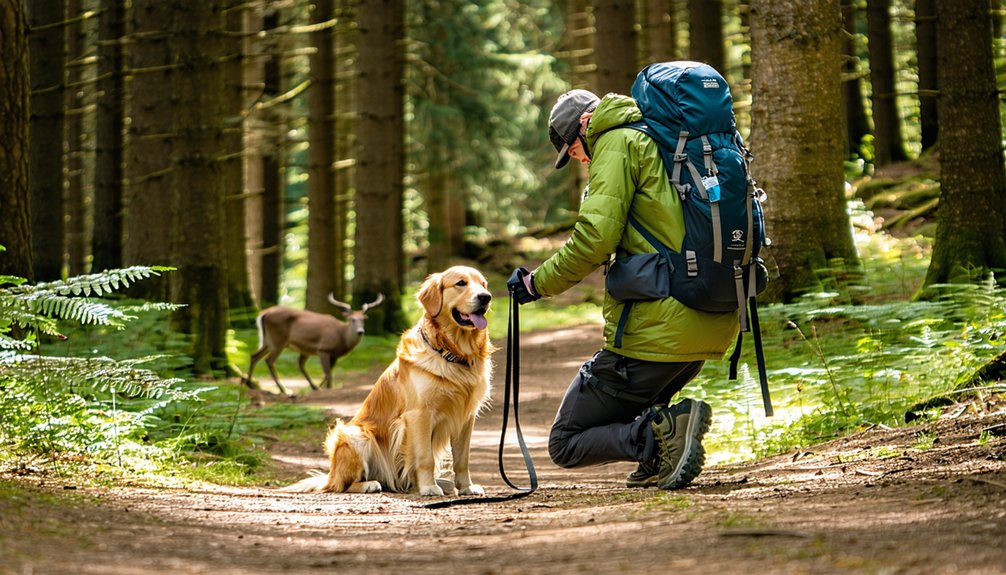
Although Leave No Trace started as a hiking and camping ethic, it applies just as much to you and your dog on the trail.
As a dog owner, you’re part of a community that values shared spaces, healthy habitats, and respectful encounters. That means keeping your dog under control, usually on a standard 6-foot leash, so you can yield easily and avoid crowding others.
It means practicing wildlife friendly behavior by preventing chasing, keeping your dog away from water sources, and never letting it investigate nests or dens.
It means using noise reduction techniques, minimizing barking and excited lunging that disrupt the natural experience.
And it means staying on the main trail, because your dog’s choices reflect your care for the land and everyone sharing it.
Pack Out Dog Waste the Right Way
When your dog poops on the trail, that waste becomes your responsibility to carry out. Start with sturdy, leakproof poop bags, and choose unscented ones to limit wildlife contact. Expel the air, then tie a tight double knot for odor control. Double-bag in hot weather or when sharp gear shares your pack. Know the compostable limits: those bags only break down in systems that accept them, not in most landfills, so don’t rely on them blindly.
For disposal logistics, store full bags in a hard-sided, opaque container lined with an extra bag and absorbent material, kept separate from food and water. Use pet waste stations when available, or pack out to home. Never stash bags trailside “to grab later”—that’s litter, plain and simple.
When Can You Bury Dog Poop Instead?
Packing out is always the safest choice, but burial works as a last resort in specific backcountry conditions. When you’re in remote, low-use areas without toilets, you can follow cathole rules—but only if local regulations permit it. We’ve all faced this dilemma, so know the conditions that make last resort burial defensible.
| Burial Works When | Burial Fails When |
|---|---|
| Dry, mineral soils | Saturated clay or frozen ground |
| 200+ ft soil separation from water | Near streams, wells, or wetlands |
| Remote, low-use backcountry | Urban or suburban settings |
| No packing-out requirement | Floodplains or high water tables |
| Deep enough for cover | Shallow or compacted soils |
How Deep to Dig a Cathole for Dog Waste
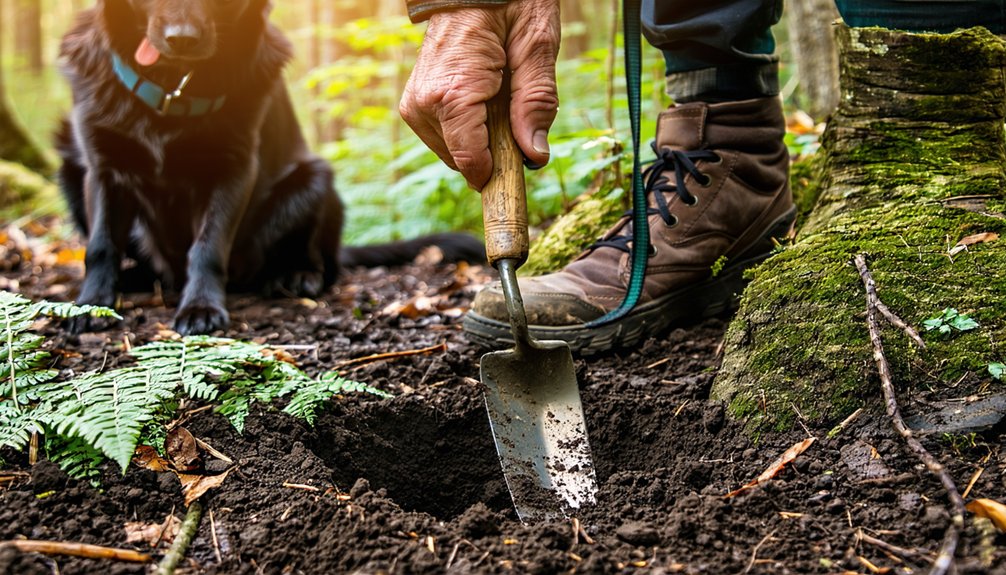
Beneath the surface lies the answer to effective dog waste disposal: dig your cathole 6–8 inches (15–20 cm) deep, the standard Leave No Trace depth for burying waste in typical soils. This depth range puts waste in contact with active microbes that drive soil pathogen breakdown, while keeping it below reach of scavenging wildlife, rain erosion, and foot traffic.
Go too shallow, and you risk exposure; go deeper than 8 inches, and colder, less biologically active soil slows decomposition and extends pathogen survival.
Adjust for your environment. In desert or arid soils, dig 4–6 inches to stay in the thin, active layer. In rocky or compacted ground, choose softer, organic patches.
A dedicated trowel helps you hit the right depth every time.
Keep Your Dog Leashed in Busy Areas
Where crowds gather, a leash isn’t optional—it’s essential. When you join others on busy trails, trailheads, and overlooks, leashing your dog keeps everyone safe and welcome. Dog on leash etiquette reduces bite incidents and conflicts with children, adults, and other dogs, while supporting crowded trail safety.
The U.S. National Park Service requires leashes no longer than 6 feet, and most park systems designate high-use zones as on-leash only. A short, non-retractable leash gives you real control where it counts.
- Use a sturdy, fixed-length leash (4–6 feet) for predictable movement in congested corridors.
- Leash up before reaching trailheads, parking lots, and staging areas.
- Step aside with your dog to let faster users and equestrians pass safely.
Ignore posted rules, and you risk fines or ejection.
Keep Your Dog On Trail and Off Plants
On the trail, every step your dog takes off the tread leaves a mark. When dogs trample plants, they compact soil, crush seedlings, and create bare patches that invite erosion and invasive species. Repeated off-trail steps widen trails, degrading more vegetation along the corridor. You protect these places—and your dog—when you stay on the tread.
Off-trail vegetation hides real dangers too. Toxic plants like lilies, foxglove, and yew can trigger vomiting, cardiac issues, or organ failure. Dense brush harbors ticks, foxtails, burrs, and concealed hazards like wire or sharp sticks.
Start with trail boundaries training, using commands like “stay” and “leave it.” Reward vegetation safe walking on short, non-retractable leads. Together, we keep trails intact and our dogs safe.
Keep Your Dog Out of Streams and Lakes
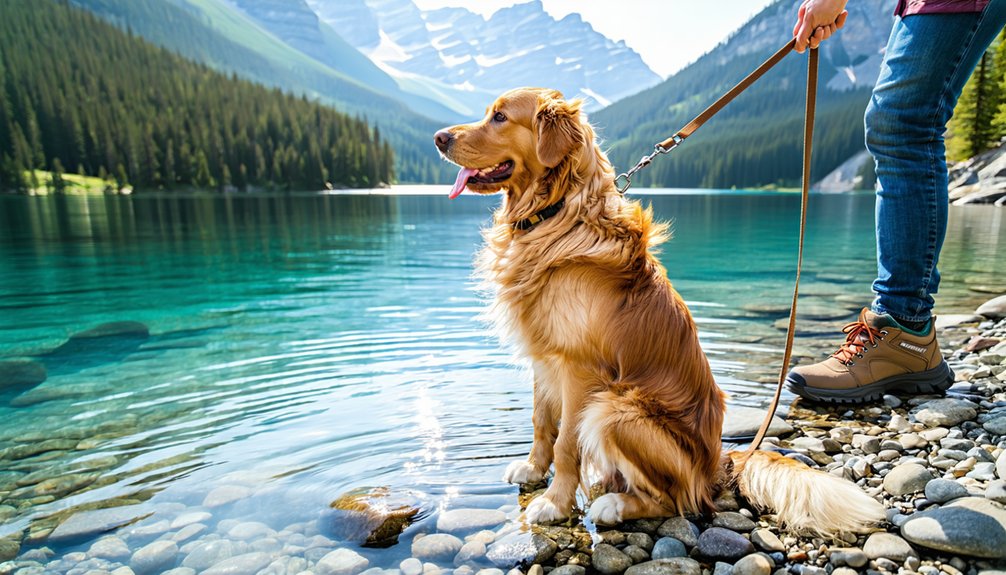
To a dog, a cool stream or lake looks like an invitation—but that water can carry serious threats.
As responsible owners who share trails, we keep our dogs out of natural freshwater.
Avoid untreated water that harbors waterborne pathogens like Giardia, Leptospira, and E. coli, which trigger vomiting, diarrhea, and even kidney or liver failure.
Prevent algal exposure too—blue-green algae release toxins that pose a fatal poisoning risk after tiny doses.
Our dogs also introduce fecal bacteria and resuspend sediments, fueling blooms and closing recreational waters.
- Pack safe drinking water; never let your dog lap from lakes or streams.
- Steer clear of scummy, discolored water, dead fish, or posted warnings.
- Keep your dog leashed near shorelines to protect water quality.
Why Dogs Shouldn’t Chase Wildlife
A bounding dog might look like it’s just having fun, but to wildlife, it reads as predator pressure. That predator perception triggers fear and flight, pulling animals away from feeding, resting, and breeding areas. Even a brief chase interrupts foraging, mating, and caring for young—and it can turn deadly in seconds for small mammals, birds, and fawns.
The hidden cost is energy depletion. When you let your dog give chase, animals burn stored reserves they need for migration, growth, or winter survival. In harsh seasons, that loss can mean death for juveniles.
You belong to a community that protects these places. Keep your dog leashed, sharpen recall and “leave it,” and give wildlife space—especially at dawn, dusk, and during spring nesting.
Store Dog Food So Animals Stay Away
Once you’ve packed dinner for your dog, store it where animals can’t smell or reach it. Out on the trail or at camp, an open bag invites wildlife, rodents, and insects fast. A sealed bin reduces odor release, which limits the attraction that draws scavengers your way. Don’t leave food loose in a tent, pack, or vehicle—that’s a guaranteed animal magnet.
- Use airtight bins or odor lock containers, keeping the original bag inside for freshness and best-by details.
- Choose rat proof storage made of metal or BPA-free plastic, kept off the ground and away from pest routes.
- Keep everything in cool dry storage below 80°F, avoiding heat, humidity, and direct sun.
Protect the wild places we all share—seal it tight.
Pack the Perfect Dog-Hiking Kit
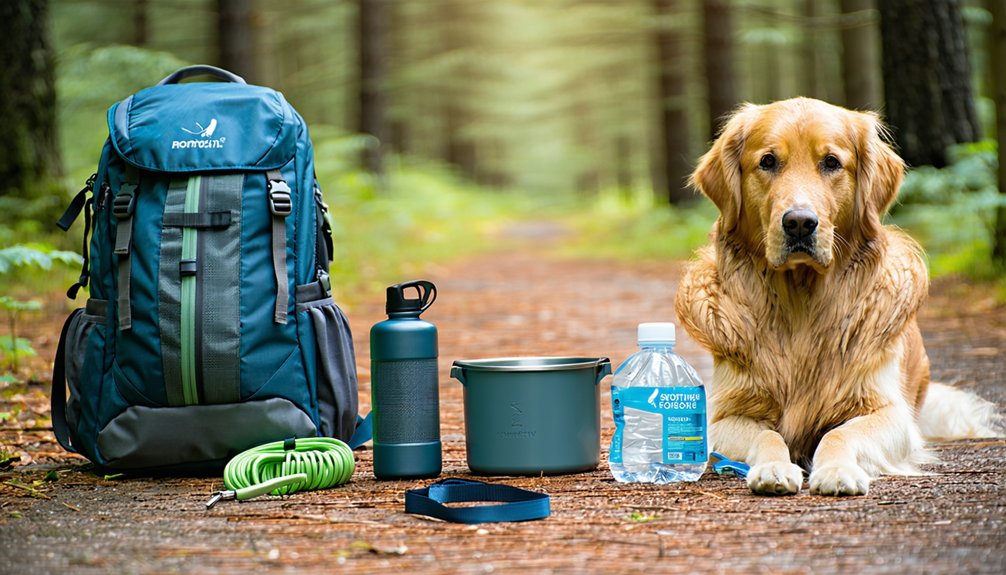
Build your dog-hiking kit around five essentials: a trail-safe leash and ID setup, a water system, a first-aid and paw-protection module, waste and clean-up supplies, and weather-ready extras.
Start with a 6 ft fixed leash, a well-fitted alternative, and current ID tags backed by microchip registration. Smart trail leash backup means carrying a spare in your pack. Add a reflective or LED light for low-light visibility.
For dog hydration planning, pack at least 8 oz per dog per hour, a collapsible bowl, and a water treatment method for natural sources.
Your first-aid module should include antiseptic wipes, vet wrap, tick remover, booties, and paw balm. Carry plenty of poop bags and a dry sack to pack out waste, plus weather layers matched to the forecast.
Clean Hands and Smart Hygiene on the Trail
Cleaning your hands after handling dog waste isn’t optional—it’s the single most effective way to stop fecal pathogens like E. coli, Campylobacter, and Giardia from reaching your mouth. Wash with soap and clean water for at least 20 seconds immediately after disposal, before you touch food, snacks, or your face.
When running water isn’t available, you’ve got reliable backups that keep your trail crew safe.
- Contact wiping with unscented, biodegradable wipes provides mechanical removal, then follow with alcohol-based sanitizer (≥60%) for chemical disinfection.
- Treat sanitizer as backup only—it’s less effective against parasites and norovirus.
- Keep strict separation between waste handling and eating to protect everyone.
Solid Giardia prevention starts with clean hands, so make hygiene your group’s shared habit.
Check Local Dog Rules Before You Go
Before you load the car, verify that dogs are even allowed at your destination—trail rules differ by park, forest, municipality, and managing agency, so a destination-specific check is non-negotiable. Some protected areas and nature parks prohibit dogs entirely, while others restrict them to roads, campgrounds, or parking areas. Make trail rule verification a habit by consulting park or land-manager websites for current guidance.
| Check This | Why It Matters |
|---|---|
| Access status | Confirms dogs are permitted |
| Leash length | Some require 1.5 meters max |
| Waste disposal | Bag, pack out, or bury rules |
| Seasonal closures | Protects nesting wildlife |
| On-site signage | Local exceptions override general rules |
Finish with a signage check on site, since posted rules can differ from published expectations.
Frequently Asked Questions
What Should I Do if My Dog Gets Injured on the Trail?
Stay calm and restrain your dog gently. Apply Trail First Aid: stop blood loss with firm pressure, clean wounds, immobilize fractures. For Emergency Care, contact vet immediately, evacuate carefully, and we’ll get your buddy home safely.
Are Certain Dog Breeds Better Suited for Long Hikes?
Yes, you’ll thrive picking endurance breeds like pointers or retrievers—their skill versatility and weather tolerance keep them steady on rugged trails. Choose medium-to-large, agile dogs with matching coats, and you’ll both belong out there comfortably.
How Much Water Should I Bring for My Dog?
Pack roughly 1 oz per pound daily, then double it for strenuous, hot hikes. Add a 25% buffer for first aid readiness. Match your gear water capacity so we hikers keep our dogs safe together.
Can Puppies Safely Join Backpacking Trips?
Wait until your pup’s 12–18 months old, when growth plates close. Start puppy training and gentle pack introductions early, but skip heavy mileage. You’ll both belong on the trail once they’re skeletally mature and vet-cleared.
What Signs Indicate My Dog Is Overheating on the Trail?
Watch for dehydration through heavy panting, thick drool, and tacky gums. You’ll recognize heatstroke signs like bright-red or pale gums, wobbliness, vomiting, and disorientation. We all want safe trails—stop immediately and cool your overheating companion down.
Conclusion
You’ve got everything you need to hit the trail responsibly. Pack out waste, dig proper catholes when allowed, leash up in busy spots, and store food where wildlife can’t reach. Bring the right kit, keep your hands clean, and always check local rules first. When you follow these principles, you’re protecting wild places, respecting other hikers, and proving that dogs belong outdoors. Leave no trace, and your expeditions will stay welcome everywhere.
References
- https://www.youtube.com/watch?v=3xvEhrrXydI
- https://lnt.org/wp-content/uploads/2018/10/2_2_18_OSMP_Pet_Waste_Final_Report-1-201802051053.pdf
- https://ruffwear.com/blogs/explored/leave-no-trace-dog-edition
- https://www.mec.ca/en/article/how-to-dispose-of-waste-on-the-trails
- https://lnt.org/pet-principles-the-leave-no-trace-guide-to-including-your-pets/
- https://www.fs.usda.gov/r01/dpg/safety-ethics/waste-management-grasslands
- https://lglc.org/leave-no-trace-dogs-included/
- https://happiestoutdoors.ca/leave-no-trace-with-dogs/
- https://www.nps.gov/articles/000/idkt_lnt_3.htm
- http://dogscouts.org/base/tonto-site/uploads/2020/08/Leave-No-Trace-Principles.pdf