Start by mapping dog-friendly stops with apps like PetStop, BringFido, and Petswelcome, then verify leash rules through Google Maps. Plan to stop every 2–3 hours for toileting, stretching, and decompression, keeping daily driving to 6–8 hours. Lock your mileage—usually 300–500 miles—to real pet-friendly hotels along your route. Choose rest stops with secure fencing, shade, and water. Want truly stress-free stops? The specifics below show you exactly what makes each one work.
TLDR Key Takeaways
- Use apps like PetStop, BringFido, and Petswelcome to map dog-friendly rest stops, parks, vets, and compare hotel pet policies.
- Schedule breaks every 2–3 hours lasting 15–30 minutes for toileting, stretching, and decompression, limiting driving to 6–8 hours daily.
- Plan 300–500 mile days locked to real pet-friendly hotels along major corridors like La Quinta, Best Western, and Motel 6.
- Choose rest stops with secure fencing, designated pet areas, shade, potable water, grass surfaces, and clear leash signage.
- Map 2–3 alternate stops every 100–150 miles, save them offline, and verify detours via State DOT sites for closures.
Map Your Dog-Friendly Route With the Right Apps
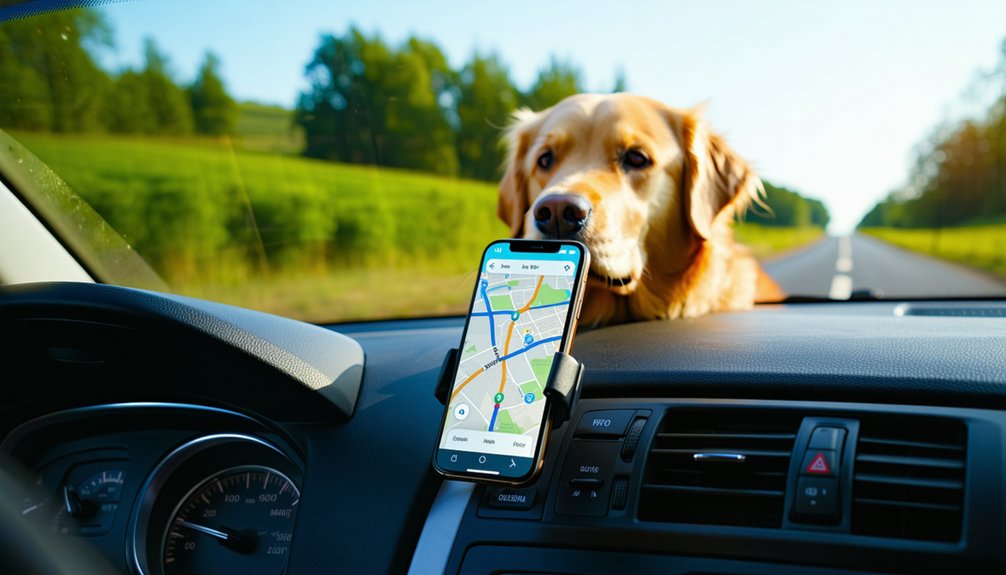
Before you map a single mile, the right apps can turn a challenging cross-country drive into a series of well-planned, dog-friendly stops.
Start with PetStop to map dog-friendly rest stops, off-leash areas, fenced parks, and emergency vets along your route.
Use BringFido or Petswelcome to add a dog friendly waypoint at hotels, restaurants, or campgrounds, and compare pet policies—fees, weight limits, and how many dogs they allow.
Lean on Google Maps to break the trip into manageable legs, then cross-check points of interest with pet-specific tools to verify leash rules.
Filter via crowdsourcing in PetStop, where reviews flag cleanliness, shade, and water.
For exercise breaks, AllTrails highlights dog-friendly hikes near your waypoints.
Together, these apps help you build a route where every traveler belongs.
How Often Should Your Dog Stop on Long Drives?
With your route mapped, you’ll need to know how often to actually pull over. Experts recommend breaking every 2–4 hours, though many seasoned travelers stop every 2–3 hours, keeping each break 15–30 minutes for toileting, stretching, and decompression.
Cap driving at roughly eight hours per day.
Adjust for your companion: puppies, seniors, small breeds, and brachycephalic dogs need more frequent stops, as do anxious dogs or those facing hot weather.
For hydration timing, offer water about every two hours, adjusting amounts to prevent gastric upset.
For bathroom planning, match your dog’s normal routine—most need to relieve themselves several times daily.
Watch for restlessness, whining, or sudden panting; these signal a stop sooner than scheduled.
Trust your dog, and you’ll both travel comfortably together.
Plan Daily Mileage Around Pet-Friendly Hotels
Once you’ve nailed down your stop frequency, you’ll want to set realistic daily mileage that revolves around where your dog can actually sleep. Most fellow travelers plan 300–500 mile days, leaving time for check-in, feeding, and unwinding. If you’ve got a senior, brachycephalic, or anxious dog, scale back to 200–300 miles. High-energy adults handle 400–500 with frequent breaks.
Lock your mileage to real hotel options, not theoretical distances. Tools like Petswelcome and BringFido map pet-friendly chains—La Quinta, Best Western, Motel 6—along major corridors, supporting 350–500 mile legs. Sticking to one brand family simplifies hotel policy tracking and keeps pet fees predictable.
Aim to arrive by 6–7 PM, building a cohesive itinerary that gives your dog daylight walks and decompression time.
What Makes a Rest Stop Actually Dog-Friendly?

You’ve mapped your overnight stops, but the gaps between them matter just as much.
A truly dog-friendly rest stop gives your pup a large, designated pet area with secure fencing, keeping curious noses safely away from highways and parking lots.
Look for multiple surfaces—grass, not just scorching asphalt—plus abundant shade and potable water to prevent dehydration and paw burns.
Cleanliness counts too: waste stations, regular sanitation, and hazard removal protect your dog from glass, bones, and parasites.
Visitor signage clarity tells you the leash rules, restricted zones, and cleanup expectations the moment you arrive.
If an off-leash run exists, reactive separation guidance keeps small or anxious dogs out of conflict.
When a stop checks these boxes, you and your dog both belong.
Find Truck Stops and Travel Plazas With Dog Parks
Because not every truck stop earns the “dog-friendly” label, you’ll want to target chains and travel plazas that actually list dog parks among their amenities. Love’s adds fenced off-leash areas at select stops, OnCue runs dedicated parks in Oklahoma with separate large- and small-breed sections, and Iowa 80 lists its Dog Stop Dog Park. As you map your route, compare amenity listings carefully, since quality varies by location—not by brand alone.
| Chain | Standout Dog-Park Feature |
|---|---|
| Love’s | Fenced off-leash areas |
| OnCue | Separate large/small breeds |
| Iowa 80 | Dog Stop Dog Park |
| Central Bark | One-acre off-leash park |
| Sacramento 49er | Pet-wash + walking areas |
Check off-leash policies, verify park hours, and confirm fenced access before you arrive somewhere unfamiliar.
Add Dog Parks, Trails, and Patios Off the Highway
Truck stops handle quick breaks, but the best exercise often sits a few exits away. Pull up BringFido, AllTrails, or Dog Parks Hub and filter for off-leash areas, dog-friendly trails, and patios near your route.
The Dog Parks Hub road trip planner maps parks, pet-friendly lodging, and emergency vet planning within about 30 miles each side of the highway. Cross-reference multiple sources, since user listings lag local changes—do your leash rule research before you arrive.
Schedule a stop every 2–4 hours for 15–30 minutes, using greenways and riverwalks for hydration breaks and mental stimulation.
Plan one dog-friendly patio or dog bar daily, and keep pet travel documents handy, since many venues require current rabies tags.
You’ll travel together, exercised and welcomed everywhere.
Pack the Safety and Comfort Gear Your Dog Needs
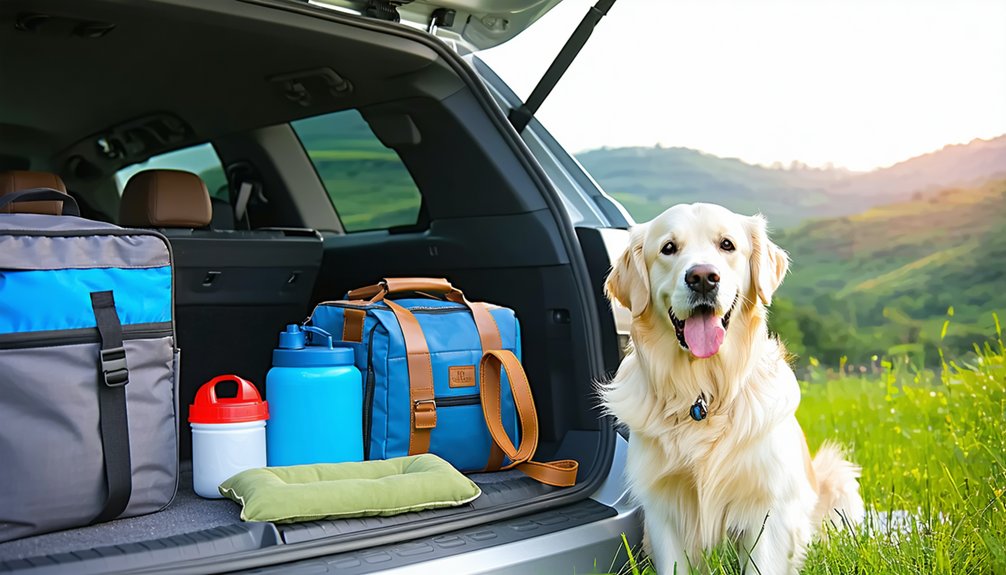
Once you’ve mapped your stops, pack the gear that keeps your dog safe, healthy, and comfortable through every leg. Smart packing protects your companion and gives you peace of mind on the road.
- Build a canine first-aid kit with gauze, antiseptic wipes, styptic powder, a tick remover, and a digital thermometer for emergencies.
- Pack emergency contact cards listing 24/7 vets along your route, poison control, and insurance details—stored in your phone and glovebox.
- Include travel-safe grooming tools like pet-safe wipes, a towel, and enzyme cleaner for quick cleanups.
Create a “vet quick check” routine to monitor temperature, hydration, and paws daily. Assure a consistent bedding setup with home-scented mats, reducing anxiety. Carry medications, preventives, water, and pre-portioned food too.
Keep Your Dog Restrained and Cool on the Road
With your gear packed, your next job is keeping your dog secure and cool while the wheels are turning.
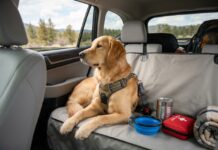
Start with Crate Restraint: use a crash-tested harness or crate rated for automotive use, place your dog in the back seat, and secure the crate with seat belts or cargo anchors so it can’t become a projectile.
Prioritize Airflow Management by running the AC, adding sunshades, and directing vents toward—not at—your dog.
Skip heavy blankets in warm weather.
Build in regular Water Breaks every 2–4 hours, offering cool water from a collapsible bowl to counter panting and stress.
Watch for excessive panting, drooling, or bright red gums.
Know your Heatstroke Response: move to shade, apply cool water, and reach a vet immediately.
You’ve got this.
Adjust Your Route for Heat and Season
Because heat is the single biggest threat to a dog on a long drive, you’ll want to build your route around temperature, not just mileage. Heat-timed driving means shifting long segments to early morning or late evening, when road-surface heat and UV peaks are lowest, and avoiding midday travel in hot months—interior temps can climb 20–30°F above outside air within minutes.
Pair that with seasonal shade scouting, favoring cooler routes that ease your dog’s heat load.
- Choose cooler corridors: higher elevations drop about 3.5°F per 1,000 ft of gain.
- Track forecasts: check 10–14 day regional outlooks, then recheck 24–48 hours before each leg.
- Seek shade and water: pick tree-lined rest areas near lakes or rivers.
You’ll travel smarter together.
Adjust Stops for Senior or Anxious Dogs
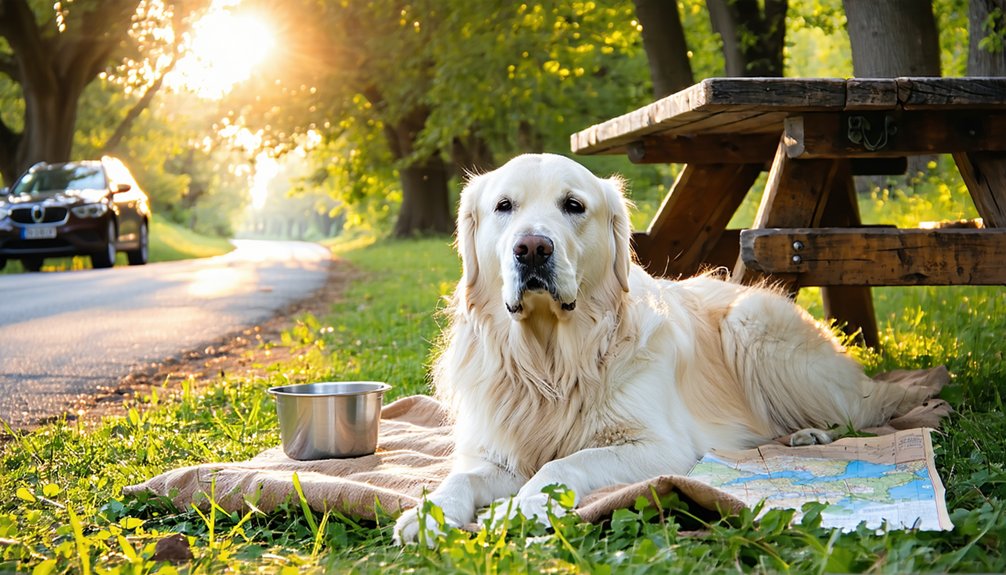
Heat isn’t the only factor that should reshape your route—your dog’s age and temperament matter just as much.
For senior or anxious dogs, limit driving to 6–8 hours daily and stop every 1.5–2 hours so they can stretch, decompress, and recover.
Choose quiet, low-stimulation rest areas with separate pet zones, flat non-slip surfaces, and minimal curbs or stairs.
Park away from semis and fuel pumps to avoid startling noises.
Keep walks short (5–10 minutes), and allow extra time for slow sniffing and gentle stretching.
Stick to consistent stop routines—potty, walk, water, rest—and plan hydration timing around breaks rather than driving stretches.
Use quiet feeding in calm corners with familiar bedding nearby, and coordinate anti-anxiety strategies with your veterinarian before you ever leave home.
Plan Backup Dog Stops for Closures and Crowds
Even the best-planned route hits snags—closures, construction, or a rest area packed with travelers and their dogs. That’s why fellow road-tripping dog owners build redundancy before departure.
Map 2–3 alternate stops every 100–150 miles, pairing interstate rest areas with off-highway city or county parks. Save them all as offline favorites so you keep options even where cell service fades.
Before you reroute, do your homework:
- Verify detour routes using State DOT sites for temporary closures and construction.
- Check pet policies by calling pet-friendly hotels, campgrounds, or visitor centers along the way.
- Scan crowd-sourced reviews to flag maintenance issues or heavy use.
Mix truck stops with dog parks, big-box stores, and greenways, so one always replaces another.
Handle the Logistics of Traveling With Multiple Dogs
Once you’ve built backup stops into your route, you face a bigger challenge: managing more than one dog on the road.
Start by securing each dog in its own crate or strap, sized for standing, turning, and lying down.
Assign spots based on existing relationships, placing reactive dogs in stable, low-stimulation areas behind barriers.
Pack a dedicated travel kit and labeled food bag per dog to prevent mix-ups.
Structure driving into 2–3 hour intervals so everyone gets coordinated potty, water, and exercise breaks.
Divide handler tasks at busy rest stops, and lean on leash training planning to keep control in crowded lots.
Watch behavior signals for stress or carsickness, and run a trial drive together first—you’ll spot conflicts before they derail your trip.
Frequently Asked Questions
What Documents Do I Need to Cross State Lines With My Dog?
You’ll need a current state health certificate (CVI) from an accredited vet and rabies proof showing vaccination dates. Pack vaccination records, microchip info, and ownership documents too. Check your destination state’s specific rules before you go.
How Can I Prevent and Treat Car Sickness in Dogs?
Prevent motion sickness by fasting your pup 3-4 hours pre-trip, maintaining travel hydration, and using calming techniques like pheromones. Treat with vet-approved meds (Cerenia). Practice symptom monitoring—watch for drooling—because we all want comfortable, happy travel companions.
Are There Pet-Specific Toll Roads or Border Crossing Fees to Consider?
No, you won’t face pet-specific tolls—toll road rules charge per vehicle or axle, never per animal. Borders skip pet fees too, but you’ll need proper paperwork. Find pet safe parking and you’re set, fellow traveler!
What’s the Best Way to Feed My Dog During Travel Days?
Stick to your dog’s usual Feeding Schedule, offering smaller portions at calm rest stops. Plan Mealtime timing 3–4 hours before driving, never in the moving car. Add regular hydration breaks every 2–3 hours, keeping everyone comfortable together.
How Do I Find Emergency Vets if My Dog Gets Sick Overnight?
Search “24-hour animal hospitals” or “mobile clinics” on Google Maps for overnight help nearby. You’ll find roadside guides and pet networks routing you to the closest open clinic. Call ahead—staff guide you through safe transport.
Conclusion
Planning a cross-country trip around your dog’s needs isn’t complicated once you’ve got the right tools and a solid strategy. Map your route with pet-friendly apps, schedule stops every two to four hours, and book dog-welcoming hotels in advance. Account for heat, your dog’s age, and unexpected closures with backup options. When you plan ahead and stay flexible, you’ll keep every dog—and yourself—safe, comfortable, and happy across every mile.
References
- https://www.gopetfriendly.com/blog/10-top-stops-on-a-pet-friendly-cross-country-road-trip/
- https://www.outdooractive.com/en/route/cross-country-skiing/yllaesjaervi/yllaesjaervi-aurinkotupa-dog-track/64607513/
- https://blog.wayro.ai/augsburg-hoorn-road-trip-guide-epic-cross-country-drive
- https://dogparkshub.com/road-trip
- https://figopetinsurance.com/blog/pet-friendly-road-trip-guide
- https://www.reddit.com/r/roadtrip/comments/19debf1/rest_stop_etiquette_with_dogs/
- https://www.bringfido.com/blog/top-dog-park-rest-stops/
- https://www.reddit.com/r/roadtrip/comments/11q357n/cross_country_with_a_dog/
- https://www.facebook.com/groups/rvwithdogs/posts/10026952843995181/
- https://www.wagbar.com/road-trip-with-your-dog-how-to-plan-stops-at-dog-friendly-bars-along-the-way