If your dog tops 20 pounds, you’ve got two main U.S. options for cargo: United PetSafe (up to 125 lb with kennel) and Alaska Airlines Pet Connect (up to 100 lb combined). Both ban brachycephalic breeds like Bulldogs, Pugs, and Boxers outright. American’s PetEmbark also flies pets but bans snub-nosed breeds, while Delta and United maintain civilian cargo embargoes through 2026. Below, you’ll find the crate sizes, costs, and paperwork that make or break your booking.
TLDR Key Takeaways
- United PetSafe ships medium and large dogs as manifest cargo, accepting weights up to roughly 125 lb including the kennel.
- Alaska Airlines Pet Connect accepts dogs up to 100 lb combined, with crates up to 53″×48″×34″ on mainline aircraft.
- American Airlines PetEmbark caps flights at 12 hours and bans brachycephalic breeds like Bulldogs, Pugs, Boxers, and Mastiffs.
- All major U.S. cargo programs ban snub-nosed (brachycephalic) breeds, with Alaska allowing narrow exceptions only for certain Hawaiʻi routings.
- By 2026, Delta and United reportedly maintain complete global cargo embargoes for civilian pets, while international carriers like KLM, Qatar, and Air France still ship large dogs.
What Counts as a “Large Dog” to Airlines?
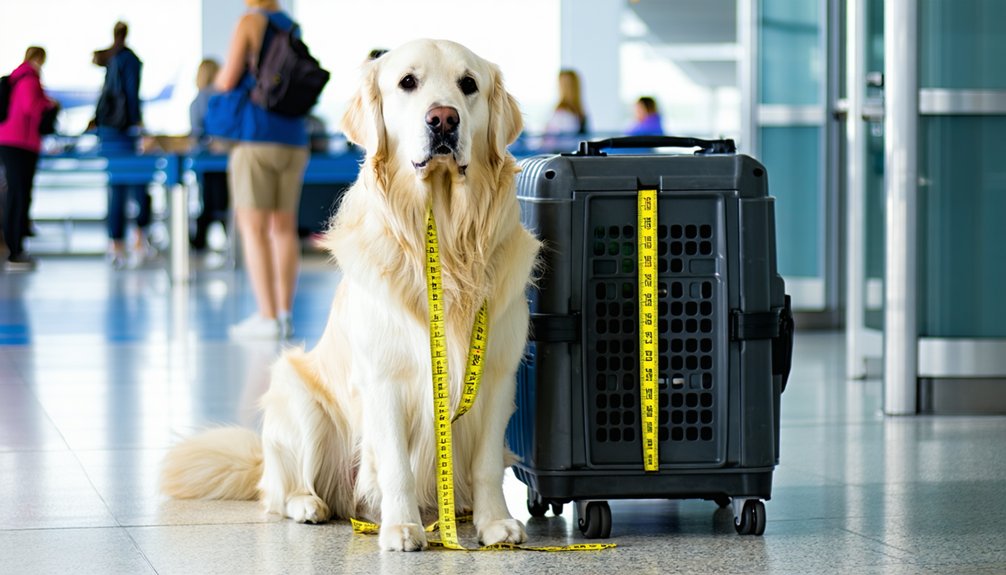
Ever wondered what actually makes your dog “large” in an airline’s eyes? Here’s the truth: it’s rarely about breed labels.
For most carriers, a large dog is simply any dog that can’t fit fully under the seat in a soft-sided carrier. That’s where carrier fit requirements come in—your dog and carrier must stay entirely beneath the seat, often within dimensions around 19″ × 13″ × 9″.
Cabin size limits matter too. Many airlines cap in-cabin pets at about 17–22 pounds, including the carrier, though exact thresholds vary.
A practical benchmark you can trust? Over 20 pounds, or too big for that under-seat space.
If your dog exceeds these limits, you’re not alone—most large-dog owners face cargo travel as the standard option.
U.S. Airlines That Still Fly Large Dogs in Cargo
While many U.S. airlines have scaled back or eliminated pet cargo service in recent years, a few still fly large dogs in the hold.
If you’ve got a big dog, you’ve got options.
United’s PetSafe program transports medium and large dogs as manifest cargo, accepting weights up to roughly 125 lb including kennel.
Alaska Airlines’ Pet Connect accepts dogs as checked pets or cargo up to 100 lb combined.
Both programs require proper dog kennel sizing—IATA-compliant, hard-sided crates that fit aircraft door dimensions.
You’ll also manage cargo pet embargoes: acceptance typically requires temperatures between 10°F and 85°F at every station, and brachycephalic breeds face hot-month restrictions.
Routes, aircraft type, and connection times matter too, so confirm your itinerary qualifies before booking with confidence.
American Airlines PetEmbark Rules and Breed Bans
If you’re shipping a large dog with American, you’ll work through American Airlines Cargo’s PetEmbark program, the carrier’s specialized live-animal service for pets that don’t qualify for in-cabin travel.
To join the program, your dog must be healthy enough to fly and meet the age rules: at least 8 weeks for domestic trips, 6 months for international.
PetEmbark flight duration is capped at 12 hours or less, so plan your route accordingly.
Breed matters too. American bars brachycephalic (snub-nosed) breeds and their mixes—think Bulldogs, Pugs, Boxers, Shih Tzus, Chow Chows, and Mastiffs—over respiratory-risk concerns.
You’ll also need a licensed veterinarian’s American health certificates, dated within 10 days of travel for both outbound and return trips, plus any destination-country compliance for international shipments.
How Alaska Airlines Handles Large Dogs in Cargo
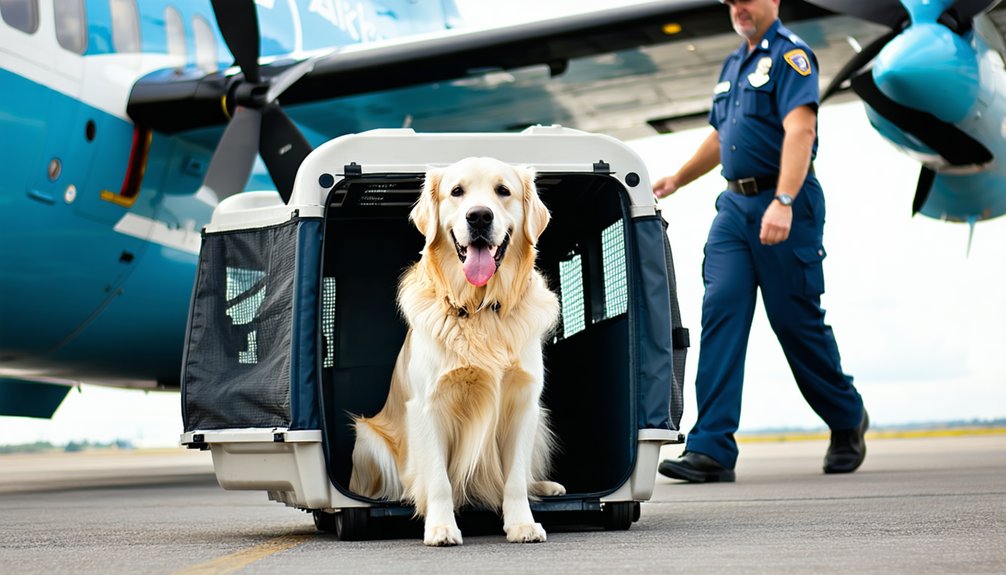
Your dog must be at least 8 weeks old, fully weaned, and weigh under 150 lb with its crate.
Crate size limits run up to 53″x48″x34″ on mainline aircraft, smaller on Horizon Air.
Airway risk rules ban brachycephalic breeds—Bulldogs, Boxers, Pugs, and similar—year-round, with narrow exceptions only for certain Hawaiʻi routings.
Why Delta and United Paused Large-Dog Cargo
After United’s PetSafe program recorded 18 pet deaths in 2017—more than double the prior year and more than American, Delta, and Alaska combined—the airline faced intense scrutiny. You’d have seen the headlines: a dog mistakenly flown to Japan, a puppy’s death, and mounting public backlash. United suspended new PetSafe bookings for a “comprehensive and systematic evaluation,” framing it as quality control, not termination.
Behind the scenes, animal welfare scrutiny intensified. DOT reporting exposed United’s outsized death numbers, and compliance liability pressure—including wrongful-death exposure—pushed both carriers toward caution.
Delta embargoed “Pet in Hold” (AVIH) shipments for the public, steering you toward in-cabin only. By 2026, you’ll find both Delta and United maintaining complete global cargo embargoes for civilian pets, prioritizing risk reduction.
Best International Carriers for Big Dogs in Cargo
With Delta and United out of the civilian cargo game, you’ll need to look overseas for carriers that still move large dogs in the hold. Three international airlines lead the pack, and each gives you solid airline routing options for relocating your big dog:
- KLM Royal Dutch Airlines: Accepts dogs and crates up to about 165 lb (75 kg), routing giant kennels as manifest cargo through Amsterdam.
- Qatar Airways: Moves large dogs across Europe, Asia, Africa, and the Middle East, with climate-controlled handling at its Doha hub.
- Air France: Uses the Air France–KLM network through Paris CDG and Amsterdam for oversized crates.
Each requires pet crate prebooking with their cargo desks, plus health certificates, vaccinations, and import permits. Expect strict snub-nosed breed restrictions throughout.
Lufthansa’s Gold-Standard Pet Cargo Setup
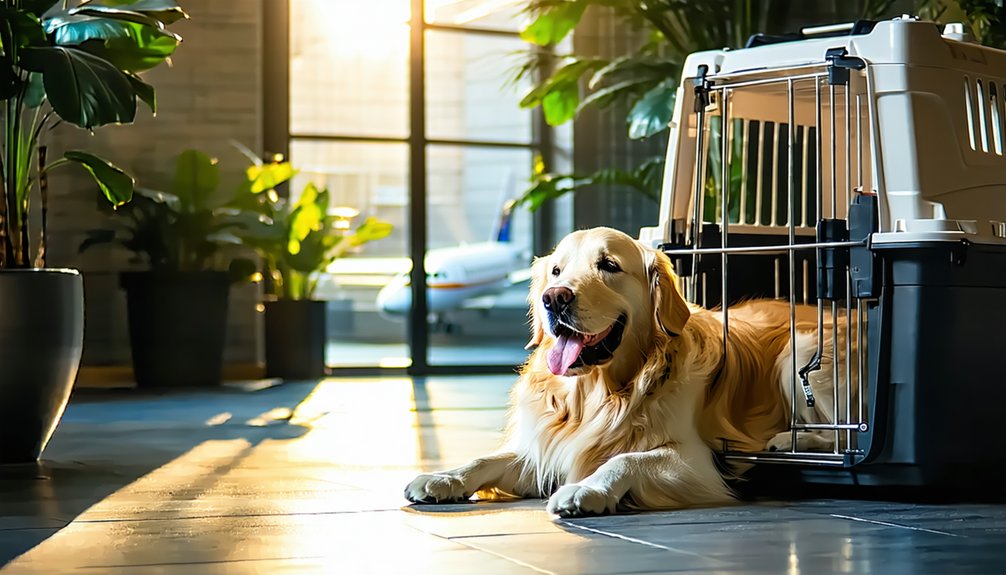
When it comes to moving big dogs in the hold, Lufthansa sets the bar with infrastructure no other carrier matches. You’ll find their Frankfurt animal lounge spans 4,000+ m², offering climate-controlled rooms, species-specific kennels, and rest areas that cut layover stress. Your dog gets unloaded, watered, fed, and rested, then re-loaded with direct ramp access limiting tarmac exposure.
| Feature | What You Get |
|---|---|
| Facility size | 4,000+ m² |
| Climate control | Door-to-door |
| Handling | LAR & IATA compliance |
| Weight limit | Up to 75 kg (animal + crate) |
| Cabin cutoff | Over 8 kg goes to hold |
You’re backed by IATA compliance covering crate standards, labeling, and travel times. With temperature-controlled holds and refused bookings during unsafe weather, you’ll know your companion belongs in trusted hands.
Which Breeds Get Banned From Cargo Holds
Even Lufthansa’s gold-standard setup won’t take every dog, because breed restrictions trump facilities every time. When you book cargo, you’ll quickly learn that breed risk tiers decide your dog’s fate before any kennel requirements come into play.
Carriers group banned breeds into clear categories:
- Brachycephalic (snub-nosed) breeds like Bulldogs, Pugs, Boxers, and Shih Tzus, excluded because respiratory heat stress causes higher rates of in-flight breathing difficulty and death.
- “Fighting” or “dangerous” breeds including Pit Bull types, American Staffordshire Terriers, and bully-type mixes, restricted for handling and containment risks.
- Mastiff-type and giant guardians like Cane Corso, Presa Canario, and Dogo Argentino, often requiring reinforced crates or facing outright bans.
You’ll face significant airline variance, so always confirm your specific breed’s eligibility first.
How Heat and Cold Embargoes Block Bookings
Although your breed clears every restriction and your crate meets spec, a temperature embargo can still ground your dog before takeoff.
Airlines suspend pet-in-hold bookings when forecast or actual temperatures cross safety thresholds—generally above 85°F or below 20–45°F—at any departure, transfer, or arrival station.
Because carriers apply airport-level risk weather limits, a single hot or cold stop can block your entire itinerary, not just one leg.
Your itinerary heat exposure includes pre-loading, ramp delays, diversions, and unloading, when climate control is least reliable.
During embargo windows, reservation systems disable “pet as checked baggage” options, and cargo offices refuse new air waybills.
You won’t get a waiver to override these rules, but you can usually rebook penalty-free once an embargo’s announced.
Checked Baggage vs Manifest Cargo Explained
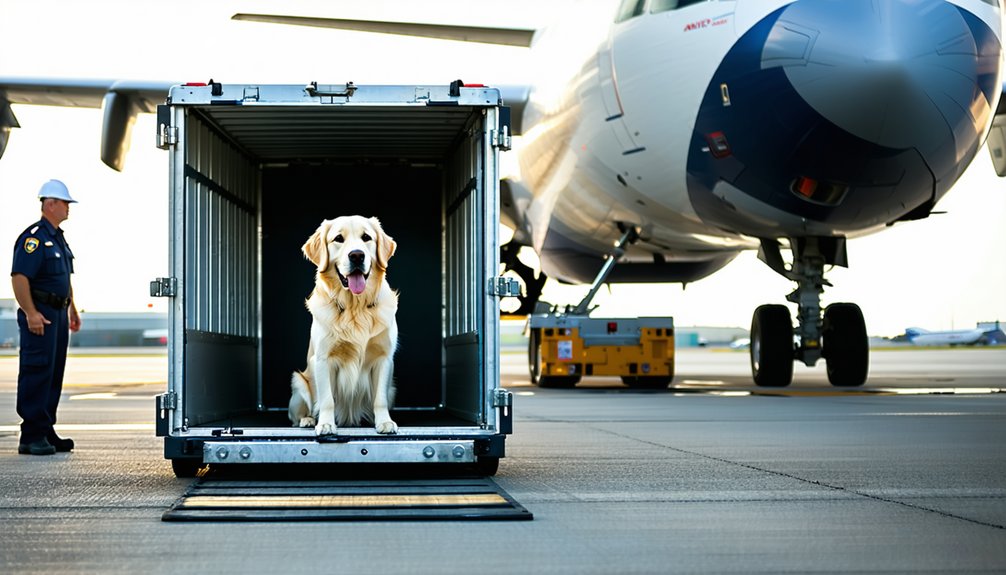
Once you’ve cleared weather embargoes, you’ll face another decision that shapes your large dog’s entire travel experience: whether to fly your dog as checked baggage or manifest cargo. The difference matters more than you might think:
- Checked baggage: Your dog flies under your ticket and PNR, accepted at the passenger counter, and joins you on every segment.
- Manifest cargo: Your dog ships under an air waybill through the airline’s cargo division, allowing complex routings and travel without you onboard.
- Handling: Cargo gets higher priority, better tracking, and stricter IATA compliance on crate standards.
For most large dogs, you’ll end up in cargo. Expect drop-off 2–4+ hours early, and plan for cargo pickup at the freight terminal, where handling fees may apply.
IATA Crate Sizes Your Large Dog Needs
When you book your large dog into cargo, the crate becomes the single most important purchase you’ll make—and airlines won’t hesitate to refuse a dog whose carrier falls short of IATA standards.
Most large breeds—Labs, Goldens, Boxers—fit the IATA 500 (40″ L x 27″ W x 30″ H), while giant breeds like Great Danes need a Series 700 (48″ L x 32″ W x 35″ H).
To get the right size, use the crate sizing formula: measure body length (A), leg length (B), shoulder width (C), and standing height (D).
Your crate’s interior length must reach at least A + ½B, width at least C × 2, and height at least D.
Run this IATA fit checklist: your dog must stand without touching the top, turn around, and lie naturally extended.
What Large-Dog Cargo Costs and Paperwork You Need
With your crate sorted, you’ll face the next reality of cargo travel: the bill and the paperwork. Airlines price large-dog cargo by weight, crate size, route, and airline—not a flat fee. International long-hauls can run roughly £2,600–£8,000, with XL crates landing in higher per-kg brackets. Domestic crate fees stay lower, but extras add up fast.
Watch for these common add-ons:
- Terminal handling and “live animal” processing fees charged on both ends
- Documentation, brokerage, and customs clearance fees, plus possible VAT
- Peak-season, fuel, and security surcharges
You’ll also need core paperwork: a health certificate within 10 days, current rabies certificate, ISO microchip, and any import permit or titer test your destination demands. Consider pet insurance options to protect your investment.
Frequently Asked Questions
How Can I Reduce My Dog’s Stress During Cargo Travel?
Start with crate familiarization weeks ahead, building positive associations. Add scent comfort by packing a worn shirt inside. Establish a calming preflight routine—exercise, light meals—and request quiet handling from staff. You’ll keep your companion feeling secure.
What Happens if My Dog Gets Sick Mid-Flight?
Crew monitor your dog, ascend into ventilation, and consult ground-based emergency veterinary support to guide in transit health decisions. For severe cases, the captain may divert or prioritize landing, ensuring you’re never facing this alone.
Are Sedatives Recommended for Dogs Flying in Cargo?
No, you shouldn’t sedate your dog for cargo travel. Veterinary guidance advises against it because sedation risks—impaired breathing, blood pressure drops, and overheating—endanger your pet. Like fellow responsible owners, you’ll find safer alternatives that protect them.
Can I Track My Dog’s Location During the Flight?
You can’t get live tracking of your dog during the flight under standard cargo policies. Instead, you’ll receive flight updates—milestones like loading, departure, and arrival—through your airline’s cargo desk using your shipment reference number. Stay connected throughout.
What Insurance Options Exist for Pets Traveling in Cargo?
You’ve got three options: airline declared-value cargo insurance, third-party pet travel coverage through relocation specialists, or pet insurance add-ons. Since airline liability limits cap payouts at a few hundred dollars, you’ll want extra protection for your companion.
Conclusion
You’ve still got options for flying your large dog in cargo, but they’re narrowing fast. American and Alaska remain your strongest bets, while Delta and United have stepped back. Check breed bans, heat and cold embargoes, and IATA crate requirements before you book. Get your paperwork and health certificates ready early, and confirm whether you’re shipping as checked baggage or manifest cargo. Plan ahead, verify every rule directly, and you’ll fly your dog safely.
References
- https://jetlinemarvel.net/10-airlines-that-allows-large-dogs-in-cabin/
- https://allpetworld.com/which-airlines-allow-large-dogs-in-cargo-2025-international-guide/
- https://www.aa.com/i18n/travel-info/special-assistance/pets.jsp
- https://companionpettravel.com/which-airlines-permit-large-or-oversized-dog-travel-pet-policies-compared/
- https://flyfreshflight.com/what-airline-allows-large-dogs/
- https://www.chewy.com/education/dog/general/complete-airline-pet-policy-guide-for-all-u-s-airlines
- https://companionpettravel.com/which-airlines-allow-large-dogs-to-fly-in-cargo-a-complete-guide-to-pet-friendly-airlines/
- https://www.petsthattravel.com/airlines-that-allow-dogs-in-cargo/
- https://www.alternativeairlines.com/airlines-with-pet-cargo
- https://citizenshipper.com/blog/pet-policies-on-the-largest-airlines-in-the-us/