Since Hawaii’s rabies-free, you’ll need two rabies vaccinations, a microchip, and a FAVN blood test showing antibody levels above 0.5 IU/ml before your dog arrives. Depending on your prep timeline, you’ll qualify for either the 120-day quarantine ($1,080) or the 5-Day-Or-Less program ($244), which requires at least four months’ lead time. Submit paperwork more than 10 days before arrival to avoid delays. The details below break down exactly how to prepare and save money.
TLDR Key Takeaways
- Dogs need two rabies vaccinations, a microchip, and a FAVN blood test showing antibody levels above 0.5 IU/ml.
- Qualifying for the 5-Day-Or-Less program requires at least 4 months’ lead time for adult dogs before arrival.
- A 30-day waiting period after the FAVN test is mandatory before travel qualification.
- All paperwork, including the AQS-279 form and rabies certificates, must be submitted 10+ days before arrival.
- Honolulu International Airport is the only entry point, with inspections held 8:00 a.m. to 4:30 p.m.
How Hawaii’s Rabies Quarantine Rules Work
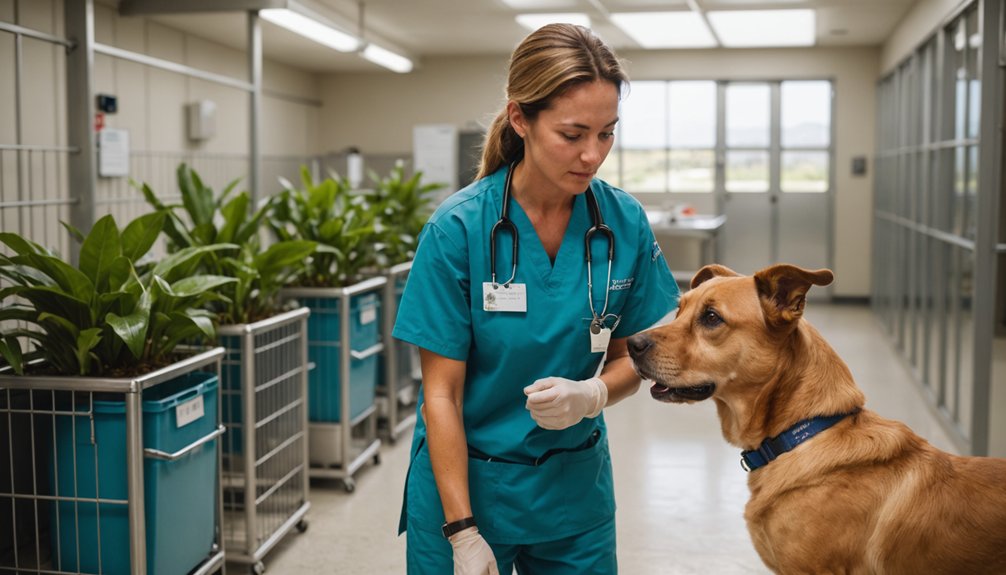
Because Hawaii is rabies-free, it enforces some of the strictest pet entry rules in the country. This rabies history drives every requirement you’ll face when bringing your dog from the mainland. Hawaii’s quarantine program dates back to 1912, when rabies was declared endemic in California.
You’ll need two rabies vaccinations, a microchip, and a FAVN blood test showing antibody levels above 0.5 IU/ml. Your dog’s second vaccination must come at least 30 days after the first, and your most recent shot must be at least 30 days before arrival.
Pet preparation isn’t optional—it’s the key to your dog’s freedom upon landing. Dogs that fail to meet every requirement will be quarantined for up to 120 days.
The state ties waiting periods to when the lab receives your FAVN blood sample, currently 30 days under the 5 Day Or Less program. This program costs $244 per pet, while the 120-day program costs significantly more.
Miss these windows, and quarantine becomes your only option.
Choose Between 120-Day and 5-Day-Or-Less Quarantine
Two paths lead your dog through Hawaii’s quarantine system, and the one you’ll take depends entirely on how well you’ve prepared before arrival.
This quarantine comparison boils down to paperwork, timing, and preparation—not luck. Your program selection gets locked in the moment you land, based on what you’ve completed beforehand.
To earn your dog’s freedom fast, you’ll need:
- Two rabies vaccinations documented and current
- A scannable microchip for identification
- An OIE-FAVN titer result exceeding 0.5 IU/ml
- A completed 30-day waiting period after your lab receives the blood sample
- All paperwork accurate and submitted on time
Miss any single requirement, and you’re defaulted into the 120-day program. Complete everything but submit documents late, and you’ll land in 5 Day Or Less instead of walking straight out with your dog. The 120-day program costs $1,080 per pet, while the 5 Day Or Less program costs $244 per pet.
Why Prep Starts Four Months Before Arrival

Qualifying for that 5-Day-Or-Less path doesn’t happen overnight—Hawaii’s Animal Quarantine Branch sets a 4-month minimum lead time for adult dogs with an existing rabies vaccination, and puppies or kittens need a full 10 months.
That window exists because vaccine spacing, FAVN testing, lab processing, and mandatory waiting periods all stack together, not run side by side. A minimum 30-day waiting period is required after the FAVN test, and it only begins once the lab has received the blood sample.
Your rabies research needs to happen early, since one failed test or paperwork mismatch resets the entire clock.
Guides recommend starting 4–6 months out, with 6–7 months as your safety margin.
Give yourself breathing room now, and you’ll sidestep quarantine concerns later.
Waiting until the last minute doesn’t just risk delays—it can cost you your dog’s freedom to walk off that plane with you.
Schedule Your Dog’s Rabies Vaccinations Correctly
Rabies vaccines form the backbone of Hawaii’s entire quarantine process, and getting the schedule wrong sends you straight back to square one.
Rabies timing isn’t flexible—you need two lifetime vaccinations, and the second must come at least 30 days after the first. Vaccine scheduling also has to account for age: your dog must be at least 91 days old before the first shot. Then there’s the arrival window to think about. The most recent vaccination must be given no less than 30 days, and no more than 12 months prior to arrival in Hawaii for 12-month licensed vaccines. Miss it, and quarantine becomes your reality instead of freedom.
- Confirm your dog is 91 days or older before dose one
- Space vaccines at least 30 days apart
- Verify the most recent shot isn’t expired
- Match vaccine type—1-year or 3-year—to your timeline
- Build your schedule backward from arrival date
Pass the FAVN Blood Test and Get a Microchip
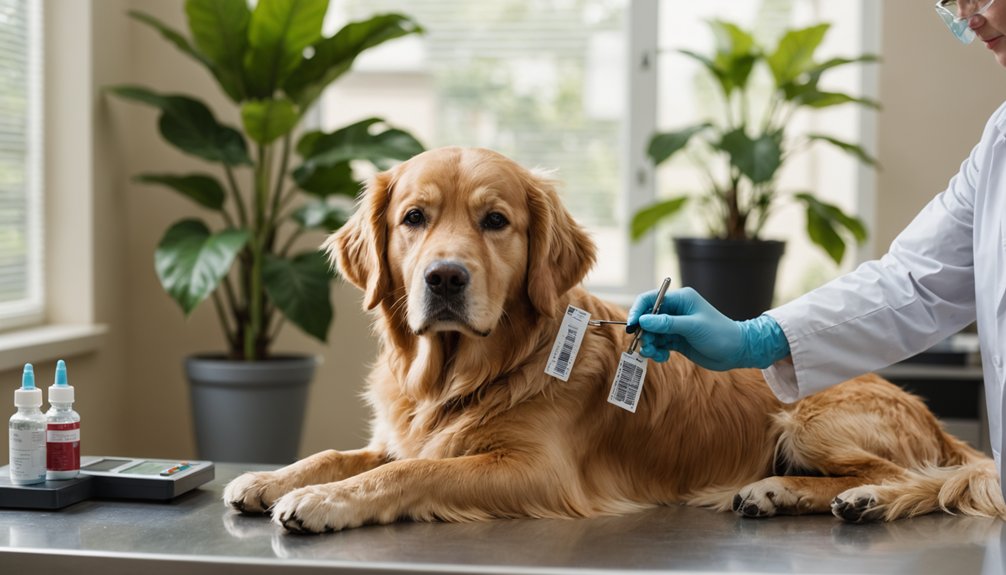
Once your dog’s rabies vaccinations are complete, you’ll need to prove they actually worked—that’s where the FAVN test comes in. This rabies testing method measures antibody levels in your dog’s blood, confirming real immunity, not just a vaccine record. Hawaii only accepts results from OIE-FAVN approved labs like Kansas State or Auburn University, with a passing score of 0.5 IU/mL or higher.
| FAVN Protocol Step | Requirement |
|---|---|
| Blood draw timing | 30+ days after vaccination |
| Lab destination | Must list Hawaii |
| Waiting period | 30 days after lab receipt |
Don’t forget the microchip—it’s your dog’s identity link to every result on file. Get both squared away, and quarantine-free freedom is within reach.
Time the 30-Day Waiting Period Right
Timing is everything with the FAVN waiting period, and it’s easy to get wrong. Hawaii’s quarantine rules demand a minimum 30-day wait after your dog’s rabies testing succeeds—and getting this date wrong can derail your entire pet relocation plan.
Don’t count from your vet visit. Count from the day the approved lab receives your dog’s blood sample.
- The clock starts the day after an approved lab (AU, KSU, or DOD) receives the FAVN sample
- Using Antech or Idexx? The wait doesn’t start until the approved lab gets it
- You also need 30 days past your dog’s most recent rabies vaccination
- An immunization enhancement resets your vaccination clock entirely
- Arrive even one day early, and you’re stuck in quarantine
- This same 30-day rule also runs concurrently with the lab processing time, so the two waiting periods don’t necessarily add extra months to your timeline
- Beyond the waiting period, remember that all required paperwork, including the Dog and Cat Import Form, rabies vaccination certificates, and a health certificate, must be submitted before arrival
Know both deadlines. Freedom depends on it.
Gather Your Health Certificate and Import Paperwork
Paperwork trips up more owners than any blood test ever will.
Certificate requirements demand precision: your vet must issue the original health certificate no more than 14 days before you land, in English, listing breed, markings, microchip number, and rabies vaccine details—product, lot number, dates.
It must confirm your dog’s free of parasites and treated for ticks with fipronil or an equivalent product, naming the product and application date.
Import regulations require the AQS-279 form (Rev. 1/24), two original rabies certificates, and your fees—submitted as one complete set. Fee payment must be made by cashiers check or money order, with the pet’s microchip number included.
Get everything to the Animal Quarantine Station more than 10 days before arrival if you want airport release or the 5 Day Or Less program.
Skip the copies—only originals count.
Submit Your Dog and Cat Import Form Online
The Hawaiʻi Pet Owner Portal (HIPOP) puts your entire application online, and it’s where you’ll handle dog and cat imports from start to finish.
Create your account, open a separate animal file for each pet, and build your import application directly in the system.
Online submission means no mailing delays and no guesswork about delivery timing. Your pet must also have a microchip and two rabies vaccinations completed before the OIE-FAVN test is administered.
- Create your HIPOP account before your first submission
- Open a distinct animal file for each dog or cat
- Upload rabies certificates, FAVN results, health certificate, and itinerary together
- Pay import fees online using Visa or credit card
- Submit at least 10 days out—30 days for neighbor island permits
- Missing any required upload can mean your pet faces up to 120 days of quarantine instead of release
Complete, accurate uploads keep your dog’s release on track and your travel plans intact.
What Happens During Airport Inspection?
Once you’ve submitted everything through HIPOP, your dog’s actual fate gets decided at Honolulu International Airport, Hawaii’s sole port of entry for incoming pets.
Airline staff transfer your dog to the Airport Animal Quarantine Holding Facility within an hour of landing. Inspection hours run roughly 8:00 a.m. to 4:30 p.m. daily—miss that window, and your dog heads to Halawa instead.
Airport procedures focus on verification: staff scan the microchip, cross-check your rabies certificate, FAVN results, and health documents. Your dog gets kenneled indoors with fresh water while records are confirmed.
Service and guide dogs face stricter pet inspection standards—a physical exam checking for parasites and disease signs. Arrange terminal inspection seven days ahead, or your dog goes through standard AAQHF processing like everyone else.
How Much Does Each Quarantine Option Cost?
Money talks in Hawaii’s quarantine system, and each option comes with its own price tag.
Your import fees depend entirely on how well you prepare and how fast you submit paperwork. Quarantine costs range from budget-friendly to steep, so plan ahead.
- Direct Airport Release: $185 per pet with early paperwork; $244 if you’re late
- 5 Day-Or-Less Program: $244 flat, no daily charges within the first 5 days
- Full 120-Day Quarantine: $1,080 per pet, covering $45 admin plus $14.30 daily kennel fees
- Neighbor Island Inspection Permit: $165 per pet for direct release outside Honolulu
- Overstay charges: $17.80 per day beyond your scheduled release date
Hawaii’s law demands a self-funded system—no discounts, no waivers.
Active-duty military can claim up to $550 per family in reimbursement.
Pets arriving before completing the required 30-day waiting period will face quarantine and added daily fees on top of program costs.
Beyond quarantine fees, owners should budget for other requirements, since a FAVN rabies test alone can cost around $800 before a pet ever boards a plane.
Know your costs before you book that flight.
Qualifying a Puppy for the 5-Day-Or-Less Program
Puppies don’t get a shortcut just because they’re young—if anything, they face the tightest timeline in Hawaii’s entire quarantine system.
You’re looking at a minimum of 10 months from birth to arrival, so start planning immediately.
Your puppy needs a rabies timeline that includes two vaccinations at least 30 days apart, with the first shot given once they’re old enough per the vaccine label—typically 12 weeks.
After the second shot, get a puppy microchip placed so it matches the blood sample and FAVN results.
That blood draw must show at least 0.5 IU/ml, then you’ll wait 30 days before travel.
Skip a step or rush the timeline, and you’re stuck with standard quarantine instead of freedom on arrival.
Skip Quarantine With the Rabies-Free Area Exception
If your dog’s coming from the British Isles, Australia, Guam, or New Zealand, you can bypass quarantine entirely.
Hawaii’s Animal Quarantine Branch recognizes these four areas as rabies-free, and under Hawaii Administrative Rules 4-29-10, your pet qualifies for a rabies exemption if it’s lived there for six months prior to travel.
But don’t mistake exemption for zero effort—compliance with quarantine rules still matters.
Here’s what you need to lock down:
- Fly your dog on the same aircraft straight to Honolulu or an approved port
- Avoid off-loading unless it’s a supervised transfer
- Get written certification confirming zero animal contact during any transfer
- Skip the import permit requirement—it’s not needed for these areas
- Contact the Hālawa Valley station with any pre-entry questions
Freedom from quarantine is real, but only if you follow the rules precisely. Hawaii’s rules apply to all dogs and cats regardless of age, so there is no age restriction carve-out for puppies coming from these exempted, rabies-free areas.
Frequently Asked Questions
Can I Appeal if My Dog Fails the Quarantine Requirements?
Yes, you can appeal, but only for clarification or errors in applying quarantine rules and import regulations—not to waive vaccinations, FAVN titer, or waiting periods. You’re stuck with core biosecurity requirements regardless.
What Happens if My Dog Gets Sick During Quarantine?
If your dog gets sick, staff activate the sick protocol immediately: a state-approved vet examines and treats your dog under quarantine care. You’ll get notified of any status changes, and you can discuss options with staff directly.
Can I Visit My Dog During the 120-Day Quarantine Period?
Yes, you can visit your dog. Quarantine visits happen Tuesday-Thursday afternoons and weekend middays, right at the kennel. You’ll get real dog bonding time—just bring your AQS pass and ID for entry.
Is There a Difference in Rules for Cats Versus Dogs?
No, you won’t find cat differences here—you follow identical rules for both. Whether you’re arranging pet transport for your dog or cat, you’ll meet the same vaccination, microchip, FAVN testing, and quarantine program requirements across the board.
Who Do I Contact for Questions About the Animal Quarantine Station?
For contact information about the quarantine process, you’ll want to email [email protected] first—it’s the preferred method. Need to talk it out? Call (808) 483-7151. Take control of your pet’s trip directly.
Conclusion
You’ve got two paths to bringing your dog to Hawaii: plan four months ahead for the 5-Day-Or-Less program, or accept the 120-day quarantine if you’re short on time. Get your rabies vaccinations timed right, pass the FAVN test, and microchip your dog before you fly. Don’t leave paperwork until the last minute—Hawaii’s Department of Agriculture won’t bend the rules. Start early, follow every step, and you’ll avoid unnecessary quarantine time.
References
- https://dab.hawaii.gov/ai/aqs/aqs-info/
- https://dab.hawaii.gov/ai/aqs/faq-for-animal-quarantine/
- https://hawaiivetmed.org/pet-owner-links/animal-quarantine/
- https://hawaii.com/blog/bringing-pets-to-hawaii
- https://www.vetinkihei.com/rabies-quarantine.html
- https://dab.hawaii.gov/ai/aqs/
- https://dab.hawaii.gov/ai/files/2013/01/aqsbrochure.pdf
- https://www.facebook.com/groups/191336279727916/posts/840602388134632/
- https://www.reddit.com/r/MovingtoHawaii/comments/1hzxdsx/the_definitive_way_to_bring_your_pet_to_hawaii/
- https://www.petworks.com/articles/pet-relocation-us-cities-to-hawaii/