Choose a double-wall tent with a bathtub floor and durable fabric, then claim a mesh-free zone near the vestibule for your dog. Handle grooming outside, towel-dry paws and underbody thoroughly, and lay down a sacrificial barrier before letting them settle in. Train calm entry and exit habits at home so doorway chaos never becomes a trail problem. Ventilate well to control odor and moisture. The system below breaks down exactly how each piece works together.
TLDR Key Takeaways
- Choose a double-wall tent with a bathtub floor and 3000mm-rated 68D fabric to block moisture and resist claws.
- Clean and dry your dog outside the tent, brushing coat and pressing paws before entry to limit dirt.
- Train your dog to wait at the threshold and use a dedicated zone near the vestibule for consistency.
- Protect the tent floor with a sacrificial barrier like Tyvek, secured with Velcro and inspected regularly.
- Maximize ventilation by opening vents, tensioning the fly, and cracking the vestibule to prevent damp, stagnant air.
Pick a Tent That Can Handle a Wet Dog
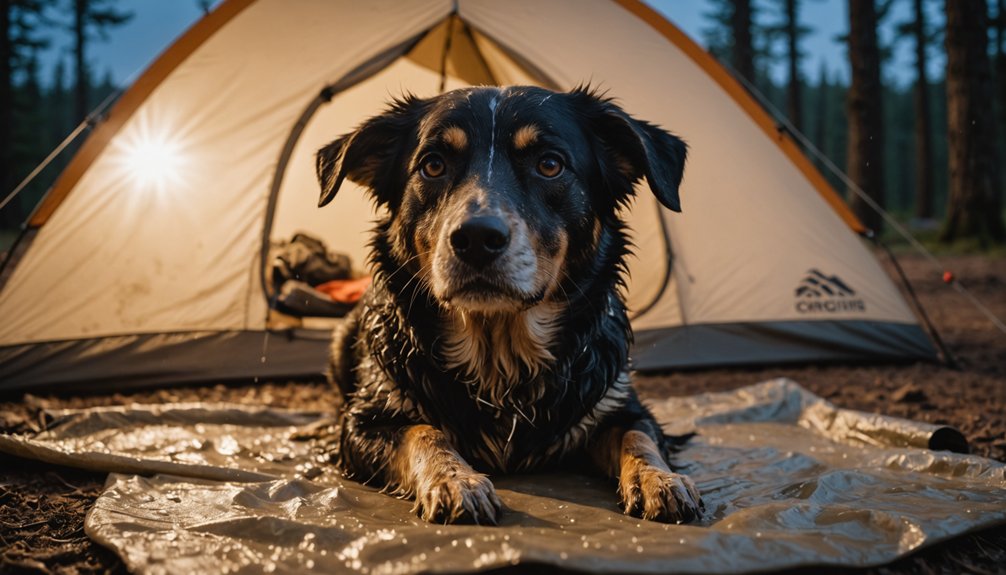
A wet dog changes everything about how your tent performs in the backcountry.
You need tent features built for mud, moisture, and movement—not just space.
Prioritize vestibule design first: a large, pole-supported vestibule holds gear and a soaked dog without touching your sleeping area.
It’s your buffer zone against muddy paws.
Choose a stand-alone, double-wall tent so the rainfly handles exterior moisture while the inner body stays dry.
Look for a bathtub-style floor with a high hydrostatic rating to block splash and runoff.
Durable materials matter too—sturdy nylon or canvas resists scratches, and flexible frames hold up when your dog shifts or leans against the walls. Floor durability is key, so look for at least 68D polyester or nylon with a 3000mm coating to withstand claws and grime. Avoid mesh walls, since mesh does not hold up well against dog claws and can tear easily during a muddy scramble. A freestanding tent also skips the stakes and guy lines that a wet, restless dog can easily trip over or tangle in.
Get these tent features right, and you’re free to camp anywhere, rain or mud be damned.
Set Up a Dedicated Dog Zone Before You Zip In
Chaos happens fast when a muddy dog has free rein of your tent, so claim territory before you settle in for the night. Pick a spot near the door or vestibule, away from your sleeping bag’s path. This tent organization move limits mud transfer and gives you an easy exit route without tripping over your dog mid-night. Training your dog to sit and lie down on command makes it easier to establish this zone, since basic obedience is essential before tackling gear protection.
Dog behavior thrives on consistency—use the same zone every night so your dog learns where to settle instead of roaming. Choosing a tent without mesh in this zone can help prevent sharp claws from tearing the fabric. A polycro sheet placed in this zone can further protect your gear from damage while making the spot less appealing for your dog to claim as their own.
| Element | Purpose | Placement |
|---|---|---|
| Footprint/Tyvek | Floor protection | Under dog zone |
| Foam pad | Insulation, moisture barrier | On top of footprint |
| Towel/mat | Catch drips, mud | Zone entry point |
Keep sharp gear clear of this space to protect pads and paws alike.
Train Your Dog to Enter and Exit Without Chaos
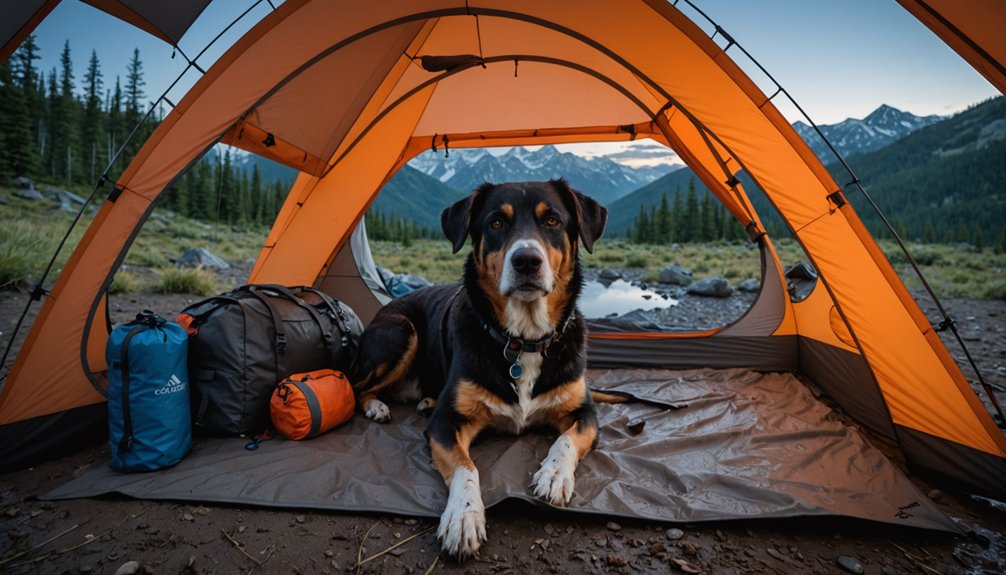
Door-darting turns a simple tent entry into a wrestling match, so teach your dog to wait before crossing the threshold.
Calm entry starts at home: set up the tent open, toss treats inside, and let your dog investigate without pressure.
Feed meals inside to deepen that positive association, then reward calm approaches at the opening. Reinforcing leash manners during this phase makes doorway control much easier once you’re on the trail.
For entry itself, wait for four-on-the-floor stillness, block the doorway with your body, and step in quickly once your dog settles. Avoid constant, direct eye contact as you approach, since this helps your dog recognize you as a calm, friendly presence rather than a threat.
Use a leash as backup if needed.
Exit control works the same way—train it in baby steps.
Start with hand movement toward the latch, then a small door crack, then a full opening, always waiting for a release cue like “free” before your dog moves. Just as pointing to the bed gradually shapes calm kennel entries, pointing toward the tent opening from increasing distances can shape a calm, controlled exit.
Pause if excitement spikes, and resume only once calm returns.
Build a Pre-Bed Dog Cleaning Routine That Actually Works
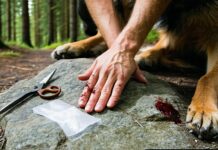
Handle dog cleaning outside the tent, before full entry—brush first to lift loose hair and grit, then wipe paws and coat with a towel or wet rag. Keep the routine short: a few focused minutes, not a full bath. Wipe each paw individually, dry it immediately, and check between pads and toes for hidden debris. While checking paws, also inspect closely for foxtails that may have snagged during the hike, since they can cause serious harm if left embedded.
For heavier mud removal, part thick fur and dry the underbody, focusing on armpits, groin, and tail base where moisture lingers. A lightweight towel is ideal for this nightly drying task since it keeps pack weight low while still getting your dog clean. Repeat this sequence every evening and after wet conditions, so your dog stays comfortable and your tent stays dry, clean, and ready for real rest.
Dry Your Dog Fast With the Right Tools
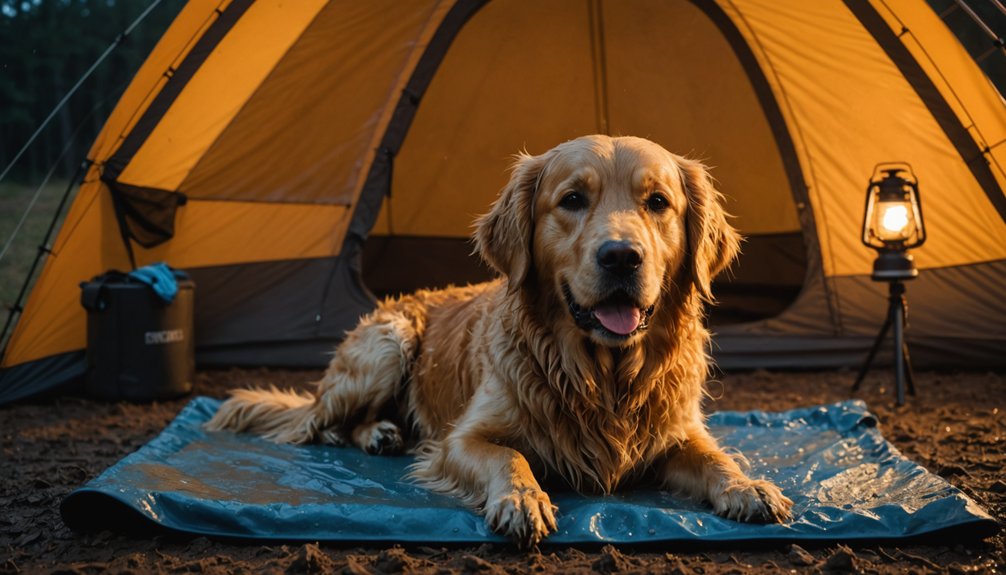
A quick towel wipe only gets you so far when your dog’s undercoat is soaked through—you need gear built for real absorption.
Microfiber dog towels outperform cotton, pulling moisture fast and drying quickly so your tent doesn’t turn damp overnight.
Choose high-pile chenille for double-coated breeds—it reaches the undercoat where flat towels fail.
Press and squeeze instead of rubbing; you’ll wick out more water while keeping your dog’s skin comfortable. Gently squeezing as much water as possible out of the coat before switching towels can meaningfully cut down overall drying time.
Keep drying mitts on hand for paws, legs, and belly—the muddiest zones after any trail walk—so you’re not tracking grit across your sleeping bag.
Switch to a fresh towel once one’s saturated; reusing a soaked towel just redistributes moisture. Rubbing too vigorously can cause tangles and mats to form in your dog’s fur, so gentle pressure matters as much as fresh towels.
The right combination means less shake-off, less cleanup, and more freedom to camp anywhere.
Give Muddy Paws a Quick Rinse Before Entry
Set up your rinse station before the first paw ever touches tent fabric. Place it just outside your sleeping area, using a shallow basin, kitty-litter pan, or nearby stream for quick paw cleaning.
Fill with a few inches of lukewarm water—never chemical-tainted containers. Lift each paw individually, working a MudBuster-style cup or spray bottle into pads and toe spaces where mud packs hardest. Twist gently to loosen debris, checking for stones or cuts as you go. For heavy mud removal, add a touch of dog-safe shampoo, then rinse thoroughly. Many campers find that creating a habit of rinsing paws at every tent entry makes the process faster and more effective over time.
Swap to a fresh water section or clean wipe for each paw to avoid re-depositing grit. Some dog owners jokingly compare this ritual to an early morning pedicure for their pup. Let paws drip or towel-blot before your dog steps inside—your gear stays clean, and your freedom to camp anywhere stays intact.
Manage Condensation and Wet-Dog Odor in the Tent
Damp fur turns your tent into a humidity machine, so ventilation has to be your first line of defense.
Open vents, doors, and windows early, and pitch your door toward a gentle breeze to maximize cross-ventilation.
Tension the fly tight to widen the air gap and keep walls dry.
Effective ventilation strategies only work if you tackle moisture at the source.
Keep wet towels, straps, and bedding out of the sleeping area—stash them in a dry bag or the vestibule instead, positioned centrally rather than against the tent wall.
Leave the vestibule cracked when weather allows to prevent stagnant, humid air from building up.
Come morning, unzip everything, air out gear, and wipe walls with a microfiber towel.
Consistent moisture management keeps odor and dampness from taking over your shelter.
Choose the Best Sleep Setup for a Muddy Dog
Mud doesn’t have to migrate straight into your sleeping bag if you set up the right sleep surface for your dog. Give your trail companion a dedicated zone with dog beds built for wet conditions—closed-cell foam pads resist moisture, while raised cot-style options keep muddy paws off damp ground entirely.
| Setup | Best For | Key Benefit |
|---|---|---|
| Foam pad + blanket | Weight-conscious backpackers | Easy shakeout, sacrificial layer |
| Dog sleeping bag | Cold, wet climates | Retains warmth despite dampness |
| Raised cot bed | Extra-muddy conditions | Improves airflow, faster drying |
Match the bed to your dog’s full body length, place it near the vestibule, and you’ll protect your gear while keeping your pup comfortable and free to roam without dragging mud into your rest zone.
Use a Sacrificial Barrier to Save Your Tent Floor
Claws don’t care about your tent’s denier rating, so give them something else to dig into.
Real tent protection means putting a sacrificial layer between your dog and the floor, not hoping the fabric survives.
Tyvek sheets, trimmed tarps, or a dedicated footprint all work as barrier materials that absorb claw scrapes, grit, and mud instead of your tent floor.
Old blankets and foam pads add comfort while cutting down on digging and circling.
Cover the whole floor, or at least the high-traffic zone near the entrance, and secure corners with Velcro so nothing shifts overnight.
Pair an inner barrier with an outer groundsheet for double protection.
Clean the barrier, not the tent, and inspect it after every trip for wear.
Keep Wet Fur and Grit Off Your Sleeping Bag
A soggy trail dog turns your sleeping bag into a mop if you don’t intervene before bedtime.
Your defense starts with dog grooming before your dog ever ducks into the tent—towel down the coat, hit the paws, and run a rubber curry comb through the fur to strip grit that would otherwise end up in your bag.
Once your dog’s dry, add a physical buffer: a bag cover, waterproof blanket, or Tyvek layer between fur and insulation.
These sacrificial layers catch what grooming misses and turn into simple dirty laundry instead of a ruined sleep system.
Skip either step and you’re stuck airing out a damp bag miles from a washer, trading trail freedom for cleanup chores.
Keep Your Dog From Wrecking Poles and Zippers
Because a spooked dog can snap a pole or shred a zipper faster than you can react, you need barriers and habits working together, not just luck.
Pole protection starts with structure: a crate, kennel, or designated sleeping spot keeps your dog from charging tent walls during startled moments.
Train a solid “no” at home, then reinforce it with backyard drills so calm entry and exit become instinct, not chance.
Zipper control matters just as much.
Keep pulls positioned high, out of paw’s reach, and add a small carabiner for extra security.
Never force a stuck zipper—work it gently instead.
Unzip fully before setup and teardown to avoid snagging fabric.
Trim nails, train commands, and build routine.
Freedom on the trail depends on gear that survives your dog’s instincts.
Keep Your Tent in Shape After the Trip Ends
Dog hair, mud, and trail grime don’t just make your tent dirty—they shorten its lifespan if you pack it away without care.
Good tent maintenance starts the moment you get home.
Shake out loose dirt, pine needles, and dog hair, then spot-clean mud and sap with cool water and mild, non-detergent soap.
Skip the washing machine—agitation and heat destroy coatings and seam tape.
Dry everything completely: pitch your tent in shade, open the doors, and pat down pooled corners with a towel.
Dry stuff sacks and pole bags separately.
Smart storage practices matter just as much as cleaning.
Store your gear loosely rolled in a breathable bag, in a cool, dry space away from sunlight, heat, and chemicals.
Frequently Asked Questions
What Size Tent Do I Need for Backpacking With a Large Dog?
You’ll want a 2-person tent for solo-plus-dog trips, or bump tent capacity up one size for groups. Look for 210+ cm floor length, a vestibule for muddy paws, and honest dog comfort margins—don’t just squeeze in.
Can I Use Human Wet Wipes Safely on My Dog’s Paws?
You shouldn’t rely on human wipes for pet grooming—fragrances, alcohol, and xylitol risk irritation or toxicity. Choose dog-specific hygiene wipes instead: they’re safer, effective for muddy paws, and let you roam trails freely.
How Do I Stop My Dog From Smelling Even After Drying?
Target dog odor at its source: dry toes, ears, and armpits fully, use a pH-balanced shampoo, and skip overwashing. If scent removal fails despite drying, check for skin or ear infection—don’t just mask it.
What Should I Do if My Dog Refuses a Jacket or Barrier Layer?
Don’t force it—switch strategies. Skip dog coats and use canine blankets or mats instead, letting your pup dry freely inside the tent. You’ll avoid battles, protect your gear, and keep your dog stress-free and comfortable.
How Do I Handle a Dog That Panics During Nighttime Storms in the Tent?
Set up a den zone, add white noise, and wrap your dog in a compression garment. Use calm techniques like rhythmic petting and soothing methods such as frozen chews to redirect focus. Stay neutral—your freedom to roam depends on their trust.
Conclusion
You don’t need a spotless dog or a perfect tent to make backpacking together work. You just need a system: the right gear, a designated zone, quick drying, and a barrier that takes the abuse instead of your floor and bag. Build that routine once, and every trip after gets easier. Your dog gets a warm, dry spot to crash, and you get a tent that survives season after season.
References
- https://www.reddit.com/r/camping/comments/1vb8yw4/dealing_with_wetmuddy_dog_at_camp/
- https://backpackinglight.com/forums/topic/63868/
- https://www.reddit.com/r/BackpackingDogs/comments/1bfknvu/how_do_you_deal_with_a_wet_muddy_dog_on_an/
- https://brainybackpackers.com/best-tent-for-camping-with-dogs/
- https://outdoors.codidact.com/posts/50389/50404
- https://www.thedogwalksme.com/2022/05/27/the-best-tents-and-considerations-for-camping-with-dogs/
- https://backpackinglight.com/forums/topic/52367/
- https://backpackinglight.com/forums/topic/best-tent-for-2-people-plus-dog/
- https://www.facebook.com/groups/albertacamping/posts/23988115257539584/
- https://talesofamountainmama.com/best-tents-for-camping-with-dogs/