Direct flights are usually your safest bet—fewer handoffs, less tarmac time, and reduced exposure to temperature swings. But direct isn’t automatically better for every dog. Older dogs or those with health conditions may fare better with shorter, controlled legs instead of one long stressful stretch. Connections can also route you through hubs with milder climates. The right choice depends on your dog’s age, health, and the route itself—here’s what actually determines it.
TLDR Key Takeaways
- Direct flights reduce handling risks with fewer stops, less tarmac time, and fewer temperature swings.
- Long nonstop flights can still stress dogs through prolonged, uninterrupted exposure without breaks.
- Connections split travel into shorter legs, letting stress markers partially reset between flights.
- Layovers increase risks from rough handling, crate transfers, and communication errors across segments.
- Choose single-connection itineraries through mild-weather hubs with short total travel time when direct options aren’t viable.
Direct vs. Connecting Flights: Which Is Safer for Dogs?
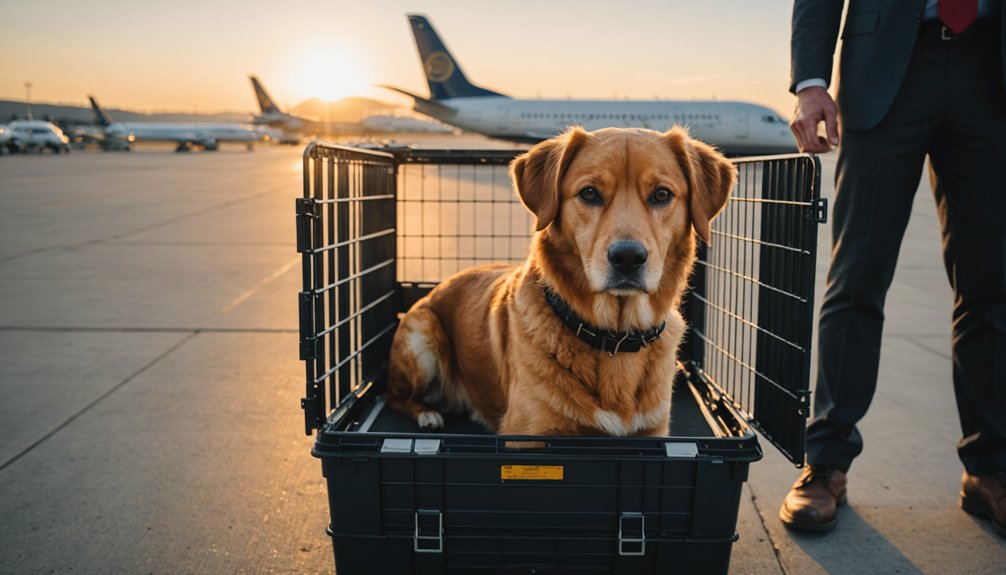
Because every extra handoff adds risk, direct flights are the safer choice for most dogs.
Fewer stops mean fewer loading cycles, less tarmac time, and less exposure to temperature swings—the core flight risks that threaten pet safety in transit.
Each layover forces another crate handling event, another chance for delays, and another stretch in an uncontrolled holding area instead of a pressurized cabin. Since ground handling often creates the biggest risk for pets during flights, minimizing layovers directly reduces the time your dog spends being moved and handled outside a controlled environment.
If you’re flying your dog in cargo, book nonstop whenever you can. Booking direct flights and choosing optimal flight times based on weather conditions is recommended to minimize temperature-related risks during layovers. Some animals are killed, injured, or lost on commercial flights each year, which is why reviewing an airline’s performance record before booking connections can help inform safer travel decisions.
When a direct option doesn’t exist, or when the nonstop carrier has a poor live-animal record, a single short layover at a pet-experienced hub can work.
For in-cabin dogs, connections carry less danger since they stay with you the entire trip.
Cargo Hold Conditions: Temperature, Noise, and Handling
Once you’ve picked a routing, the next question is what actually happens to your dog inside the hold. Pet safety hinges on climate control, not luck.
Cargo compartments are pressurized like the cabin and kept between 45°F and 85°F, with fresh air circulating continuously. Cargo security matters too—kennels sit in a separated section, away from general baggage, with restricted access and organized layout. It’s worth noting that any exposure outside the safe temperature range during loading or unloading should not exceed 45 minutes.
Here’s what your dog actually experiences:
- Temperature: Held between 45–85°F, never exceeding 90°F when animals are aboard
- Noise: Muffled engine and airframe vibration, plus steady mechanical hum from environmental systems
- Light: Dark, low-stimulation space that limits visual stress but demands acclimation
Direct flights minimize time in these conditions—fewer changes mean fewer variables affecting your dog’s comfort. If conditions shift mid-journey, a 24/7 Animal Help Desk contacts owners to rebook or delay travel to keep pets safe. Government data shows that transported animals arrive safely at a rate of 99.997%, underscoring just how rare serious incidents actually are.
Why Layovers Multiply Risk During Ground Handling
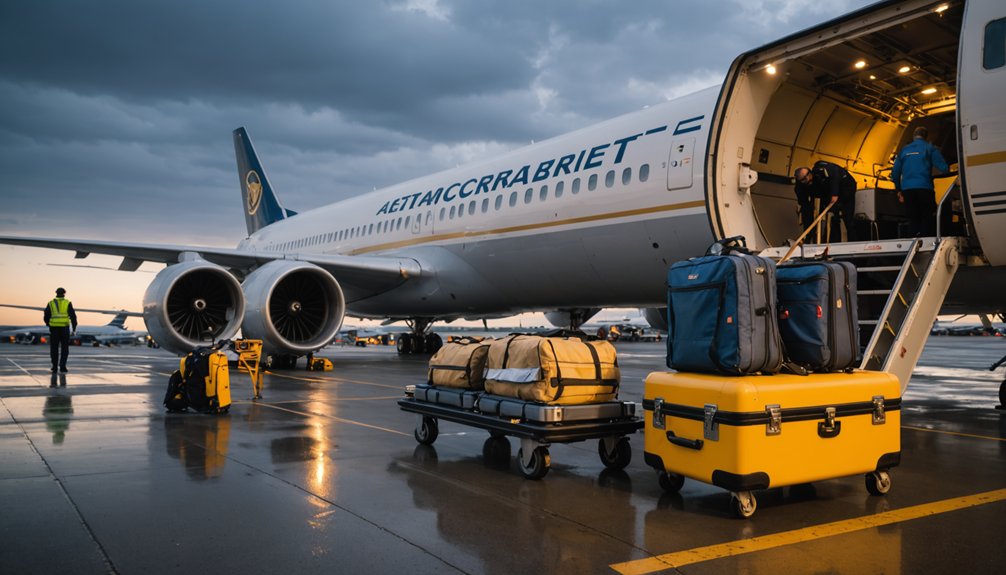
While your dog’s actually airborne, cargo holds run on regulated air and steady pressure—the real danger shows up before takeoff and after landing.
Ground handling is where the real threat lives: loading, unloading, and crate transfers between tarmac and terminal cause the biggest heart-rate spikes dogs experience, more than cruising flight ever does.
Every layover adds another round of transfer risks.
More connections mean more handling steps, more staff changes, and more chances for rough handling or improper stacking.
Each new airport brings its own crew, its own procedures, its own margin for error. Poor handling during these transfers is considered a high-risk handling point for animals.
Communication breaks down across segments too—mislabeling, misrouting, and paperwork errors multiply with every added leg.
Fewer connections mean fewer hands on your dog’s crate, and fewer chances for something to go wrong. Airlines also enforce temperature embargoes during extreme weather to reduce the odds of heat exposure at any of these transfer points. Some larger airports even maintain specialized animal facilities where dogs can be monitored and cared for between connecting flights.
Cabin vs. Cargo: Does the Direct-Flight Rule Still Apply?
Since fewer legs mean fewer handling risks, you might assume the direct-flight rule matters less for cabin travel—but the two options aren’t playing the same game.
Cabin flying keeps your dog close, calm, and buffered from the ground-handling chaos that drives cargo risk. The direct-flight rule still matters for pet safety, but it hits cargo travel harder. Cargo travel can also be the only option available on some airlines, particularly for longer journeys or to meet country restrictions.
- Cabin: Direct or connecting, your dog stays with you—flight risks come from turbulence or delays, not tarmac handling.
- Cargo: Every layover adds loading cycles, temperature swings, and handling exposure—direct flights cut that risk substantially. Airlines will also refuse to carry pets in cargo during overly warm or cold temperatures, so connecting flights through extreme-climate hubs add another layer of risk. Cargo holds themselves are fully pressurized and ventilated, so the added risk on connections comes from ground handling and climate exposure rather than the hold environment itself.
- Bottom line: If cargo’s your only option, book direct. If cabin’s available, layovers matter less for your dog’s wellbeing.
Choose the route that protects both freedom and safety.
When a Connecting Flight Is Actually the Safer Choice
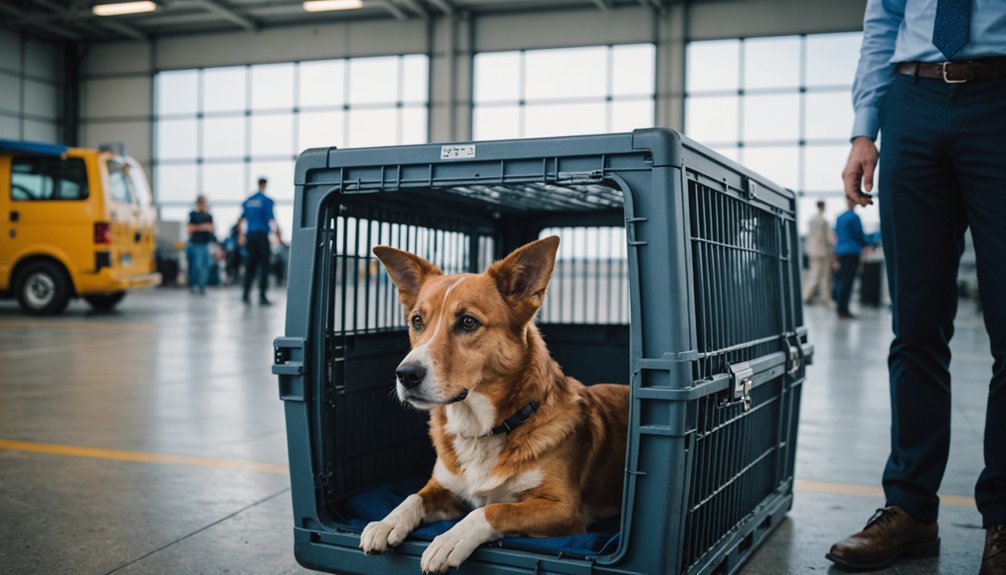
Direct isn’t always safer—sometimes it just means longer, uninterrupted exposure to stress.
If your dog’s direct flight runs 8-10 hours, you’re pushing past the thresholds pet-shipping pros consider risky.
Anything over 6 hours gets flagged; over 8 is often a hard no for anything but young, healthy dogs.
Splitting that itinerary into two 4-6 hour legs keeps each exposure window manageable and lets stress markers partially reset between flights.
That’s real Flight Risks reduction, not just convenience.
Connections also let you choose hubs with moderate climates, sidestepping extreme heat or cold that could trigger embargoes. Checking the airline’s temperature restrictions for cargo hold travel is essential when planning these layover routes.
For older dogs or those with health conditions, shorter controlled legs beat one marathon exposure every time. Sedating your dog isn’t necessarily the answer here either, since sedation can lower a dog’s metabolism and make it more vulnerable to the very bajas temperaturas a layover strategy is meant to avoid. Not every carrier handles transit the same way, either—some airlines maintain active tracking and specialized facilities for animals during connections, while others offer far less oversight.
Pet Safety sometimes means choosing the “longer” route on paper.
Airline Rules That Limit Direct Flight Options
Sometimes the choice between direct and connecting flights isn’t yours to make—airlines and airports strip it away before you even start searching.
Airport rules like the DCA Perimeter Rule cap direct flights beyond 1,250 miles, forcing long-haul travelers through Dulles instead. Only a handful of cities get exemptions, and Congress controls every addition.
Airlines add their own flight restrictions on top of this:
- Capacity cuts protect hub-to-hub routes first, trimming thinner direct city pairs
- Smaller aircraft swaps push carriers toward simplified, connection-heavy route maps
- Yield management makes connecting itineraries cheaper or more available than nonstops
None of this considers your dog’s comfort—it’s about airline economics and federal regulation. Knowing these rules exist helps you plan smarter instead of assuming direct flights are always on the table.
Breed Restrictions That Affect Your Flight Choice
Because breed matters as much as route logistics, your dog’s shape and size can quietly cross certain flights off your list before you even compare schedules.
Breed restrictions hit two groups hardest: brachycephalic dogs (French Bulldogs, Pugs, Boxers, Shih Tzus) face cargo bans over breathing risks, and bully-type breeds (Pit Bulls, Rottweilers, Cane Corsos) often get flagged as “aggressive,” blocking cargo access entirely. Some carriers ban both categories from cabin and cargo alike, erasing route options outright. If your dog exceeds cabin weight limits, breed restrictions can force cargo—and if that’s off-limits, so is the flight.
Smart flight planning means checking breed policy first, weight limits second, and route options last. Skip this step, and you’ll build an itinerary that collapses the moment you try to book it.
How Layovers Affect Stress on Long Dog Flights
While cabin and cargo decisions shape whether your dog can fly, layovers determine how much that trip wears on them.
Loading, unloading, and waiting cause the sharpest heart-rate spikes your dog will experience—more than cruise flight itself.
Each connection adds another round of handling, another chance for routing errors, and another stretch of unfamiliar noise, temperature, and light.
That’s why Flight Planning matters as much as booking the ticket itself.
If layovers are unavoidable, prioritize:
- Short connections under 2 hours to limit ground-handling exposure
- Pet-friendly airports with relief areas, water, and monitored rest zones
- At least 60 minutes to actually use relief facilities without rushing
For real Pet Safety, nonstop routes remain the gold standard—fewer shifts mean less cumulative stress on your dog.
How to Check an Airline’s Pet Safety Record
The U.S. DOT requires airlines to report every pet death, injury, or loss in cargo.
You’ll find this data in the monthly Air Travel Consumer Report—your best source for real Pet Safety numbers, not marketing claims.
Don’t judge an airline by one bad headline.
Look at multi-year incident rates per 10,000 animals transported.
Alaska Airlines consistently posts the lowest rate (0.26), while Hawaiian (2.03) and United (1.6) rank highest.
Check third-party Airline Ratings sites that aggregate DOT data—they’ll save you time crunching numbers yourself.
Look for carriers with zero incidents across multiple years, not just one lucky stretch.
You deserve facts, not fear.
Pull the data, compare rates, and choose the airline that’s actually earned your trust.
Best Practices for Booking a Safer Connecting Flight
Since every layover multiplies risk, you’ll want to book connecting flights with a strategy, not convenience alone.
Smart Flight Planning means choosing single-connection itineraries with the shortest total travel time, avoiding terminal changes and tight minimum connection windows that leave no margin for error.
Route through hubs with stable, mild weather whenever possible, and time your departure to match the season—early or late in summer, midday in winter.
- Book pet space simultaneously with your ticket and notify the airline on every leg
- Reconfirm all segments 24–48 hours before departure to verify booking and schedule changes
- Request “last on, first off” handling at each stop
These steps turn Travel Safety from guesswork into a real plan you control.
When Climate and Destination Should Guide Your Flight Choice
Booking strategy only gets you so far—climate and destination fill in the rest of the equation.
Climate risks don’t stop at your departure city; they follow your dog through every layover and landing.
Ground temperatures above 86°F or below 45°F sharply raise the odds of heatstroke or hypothermia, especially during loading, unloading, and tarmac delays.
Cabins and cargo holds have temperature controls, but the tarmac doesn’t.
Check the forecast for every stop, not just your final destination.
A hot desert layover or a frozen northern hub can undo an otherwise safe itinerary.
Fly early morning or late evening in hot climates, midday in cold ones.
Brachycephalic, senior, or thin-coated dogs need even tighter margins—when in doubt, reroute.
Weighing Cost, Breed, and Health in Your Final Decision
Once climate and timing check out, cost, breed, and health tip the scales on your final decision.
You’re free to choose your route, but that freedom comes with responsibility. A cheap connecting flight isn’t a bargain if your dog’s breed or health can’t handle the risk.
- Brachycephalic breeds (Bulldogs, Pugs) shouldn’t fly cargo, period—book in-cabin or skip the flight entirely.
- Medically fragile or senior dogs need a vet’s sign-off before you book anything; travel insurance won’t undo a bad decision.
- Healthy, non-brachycephalic dogs can often handle a short, direct cargo flight without added risk.
Pet owners who weigh these factors upfront avoid costly surprises and keep their dogs safer in the air.
Frequently Asked Questions
Can I Give My Dog Sedatives Before a Flight, Cargo or Cabin?
Don’t sedate your dog without vet approval first. Dog sedatives and pet tranquilizers raise cardiac, respiratory, and injury risks in cargo and cabin. Choose crate training, acclimation, and direct flights—safer, freedom-friendly alternatives vets actually recommend.
What Documents or Health Certificates Are Required for Flying With a Dog?
You’ll need a recent vet health certificate, updated vaccination records (especially rabies), proof of deworming, microchip ID, and, for certain countries, export permits. Check your destination’s rules early—don’t let paperwork clip your travel freedom.
How Soon Before Travel Should I Feed or Water My Dog?
Feed pre flight meals 4-6 hours before departure, keeping portions light. Offer small travel snacks 3-4 hours out if needed. Give water normally, then switch to small sips 1-2 hours before you leave.
What Size and Type of Crate Is Required for Cargo Travel?
You need a rigid fiberglass or hard plastic crate letting your dog stand, turn, and lie down freely. Calculate crate sizes using IATA formulas, then confirm flight requirements with your airline—weight caps and dimensions vary by carrier and aircraft.
Are There Age Restrictions for Puppies Flying in Cargo or Cabin?
Yes—most travel rules require your puppy to be at least 8 weeks old and weaned, though you’ll want 10-12 weeks for real puppy safety. International routes often demand 16 weeks minimum.
Conclusion
You don’t have to default to “direct is always best.” Weigh your dog’s breed, health, and the climate at each layover point. Check the airline’s pet safety record before you book. If a direct flight means brutal tarmac heat, a well-planned connection might actually protect your dog better. Trust the data, not assumptions—and always call the airline directly to confirm current pet handling procedures before you fly.
References
- https://www.pipperontour.com/blog2/viajar-con-perro-en-avion
- https://cms.volaris.com/es/informacion-util/servicios-opcionales/viaja-con-tu-mascota/
- https://www.aireuropa.com/es/es/aea/informacion-para-volar/pasajeros/mascotas.html
- https://www.aarp.org/espanol/turismo/consejos-para-viajar/info-2021/como-viajar-con-mascotas-en-avion.html
- https://www.youtube.com/watch?v=G11I6GAsP_o
- https://www.iberia.com/es/viajar-con-iberia/animales/
- https://daisypettransport.com/how-are-pets-handled-during-layovers/
- https://vcahospitals.com/know-your-pet/travel—airplane-travel-with-your-dog
- https://www.petngo.com.mx/blogs/blog-petngo-el-rincon-tips-mascotas/puedo-ver-a-mi-perro-en-un-vuelo-con-escalas
- https://www.humaneworld.org/en/resources/travel-safely-your-pet-car-airplane-ship-or-train