Start by honestly rating your dog’s body condition, muscle tone, and age—not their breed’s reputation. Match trail distance to that real fitness level: seniors cap around 3-5 miles, while conditioned athletic breeds handle 10-20. Then factor in terrain and elevation, since 1,000 ft of climbing can feel like an extra 1-1.5 miles. Watch for fatigue signs like lagging or excessive panting. There’s more to matching fitness to terrain than distance alone.
TLDR Key Takeaways
- Assess body condition score and palpate muscle mass to determine your dog’s true fitness baseline, not assumptions.
- Match trail distance to age and breed: seniors cap at 3-5 miles, athletic breeds handle 10-20 miles.
- Remember elevation gain taxes dogs more than distance—1,000 ft climbing equals 1-1.5 extra flat miles.
- Choose flat, stable-surface trails for puppies with open growth plates or dogs building paw toughness.
- Increase weekly mileage by 0.5-1 mile based on daily walk performance, avoiding sudden jumps.
Rate Your Dog’s Actual Fitness Level First
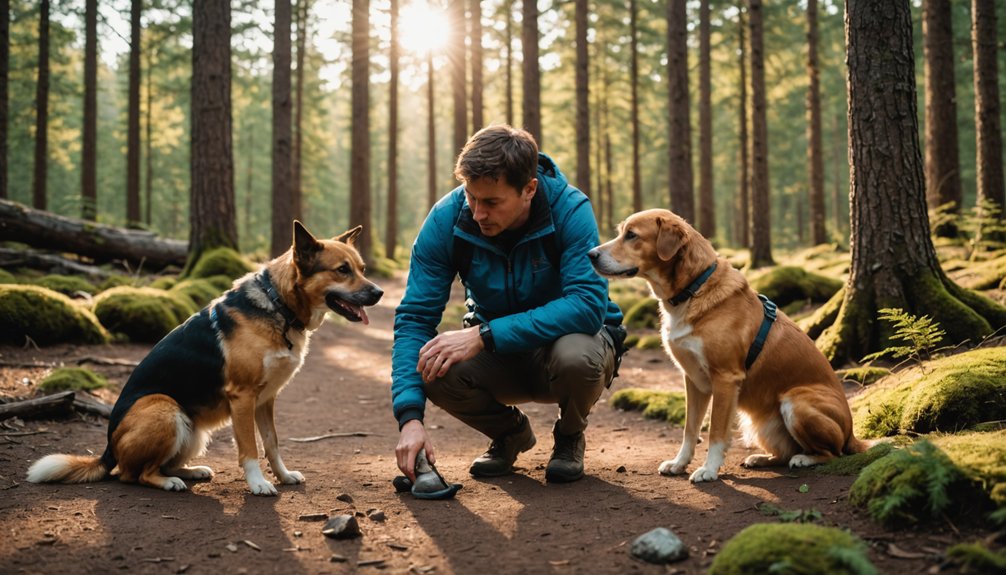
Honesty starts here. Before you pick a trail, you owe your dog a real fitness assessment—not a guess based on breed reputation or wishful thinking.
Start with body condition score. Use the 9-point scale: feel the ribs, check the waist from above, and confirm an abdominal tuck from the side. Fat pads at the tail base or hips signal excess weight that limits endurance. Keep in mind that the nine-point scale is often preferred by veterinarians for small animals, so it can offer a more precise read on your dog’s condition than a simpler scale.
Next, assess muscle mass. Stack your dog in a level stance and palpate shoulders, back, and thighs for firmness. Compare front and rear strength—imbalance often means uneven conditioning. Keep in mind that even standard scoring relies on visual observation and touch rather than precise calculation, so your own hands-on checks are just as valid as a quick vet glance.
Factor in age, breed, and any chronic conditions. Ongoing health monitoring matters more than a single check. A dog sitting right in the middle of the scale, or slightly leaner, tends to enjoy a longer, healthier life than one that’s overweight. Freedom on the trail depends on knowing your dog’s true baseline, not assumptions.
Match Trail Distance to Your Dog’s Endurance
Once you know your dog’s real fitness level, you can use it to set a realistic distance target instead of guessing. Trail planning works best when you match distance limits to age, size, and conditioning—not ambition. A senior dog capped at 3–5 miles needs a different trail than a conditioned Vizsla ready for 10+ miles.
| Dog Profile | Suggested Distance Limit |
|---|---|
| Puppy (under 6 months) | ≤1 mile |
| Senior (8+ years) | 3–5 miles |
| Athletic breed, well-conditioned | 10–20 miles |
Use your dog’s daily walk performance as a baseline, then increase trail distance by 0.5–1 mile weekly. This gives you the freedom to discover longer routes safely, without pushing past what your dog’s body can actually handle. Before committing to long distances, check that your dog’s breed has good hip health, since strong hips are essential for handling extended trail mileage without injury.
Why Elevation Gain Can Be Harder Than Mileage
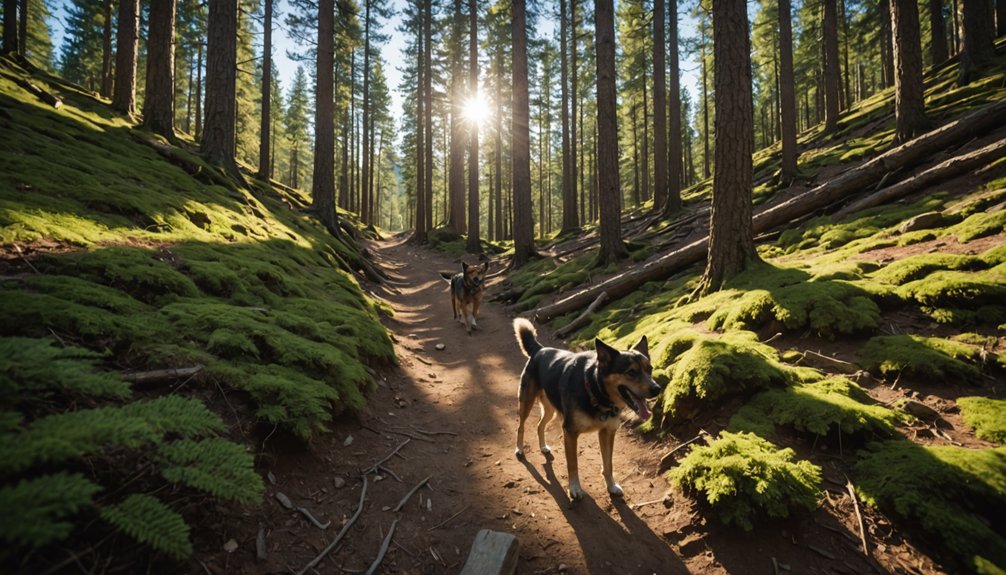
Because mileage only tells you how far your dog’s paws travel, not how hard your dog’s body works, it’s an incomplete measure of trail difficulty.
That’s the real elevation impact: climbing forces your dog’s heart, lungs, and muscles into overdrive, no matter what the map says. Dogs need conditioning through smaller, introductory hikes before tackling significant elevation gain.
- 1,000 ft of climbing feels like 1–1.5 extra miles on flat ground
- Inclines enhance caloric burn by 27–32% compared to flat terrain at the same pace
- Gaining 1,000 ft in one mile is far tougher than spreading it over five
- Steep grades mean slower pace, more rest stops, and greater joint strain
- Climbing at elevation also means less oxygen is available, so your dog works harder to deliver oxygen to muscles even before factoring in the grade itself
- Dogs can develop altitude-related hypoxemia above 8,000 feet simply because reduced atmospheric oxygen limits how much diffuses into the bloodstream
You want freedom on the trail, so respect the climbing effects—match the grade to your dog’s real capability, not just the distance on paper.
Is the Terrain Rocky, Flat, or Technical?
Surface texture matters as much as elevation or distance—it dictates how your dog’s paws, joints, and focus get taxed mile after mile.
Rocky terrain—loose scree, sharp bedrock, talus fields—cuts paw pads and drains stamina fast, since every step demands recalculated footing.
Fractured limestone is especially brutal, slicing pads into flap-like wounds.
Wet or mossy rock multiplies slip risk, and technical scrambles may stop larger dogs cold without a lift assist.
Flat trails, by contrast, give you room to breathe.
Packed soil, crushed gravel, or compacted rock dust keep footing stable, reduce injury risk, and let you gauge your dog’s true gait and endurance without technical noise.
They’re your go-to for building paw toughness through regular trail use or working with arthritic joints. Trails like the Lower Trail Loop offer 90% shade coverage and minimal elevation change, making them ideal for this kind of steady, low-risk conditioning.
Technical trails—roots, ledges, narrow tread—stack complexity on top of fitness demands, best reserved for seasoned, agile dogs, since short-legged breeds must work harder than proportionally-built dogs to negotiate the same technical obstacles.
How Age, Breed, and Health Shape Trail Choice
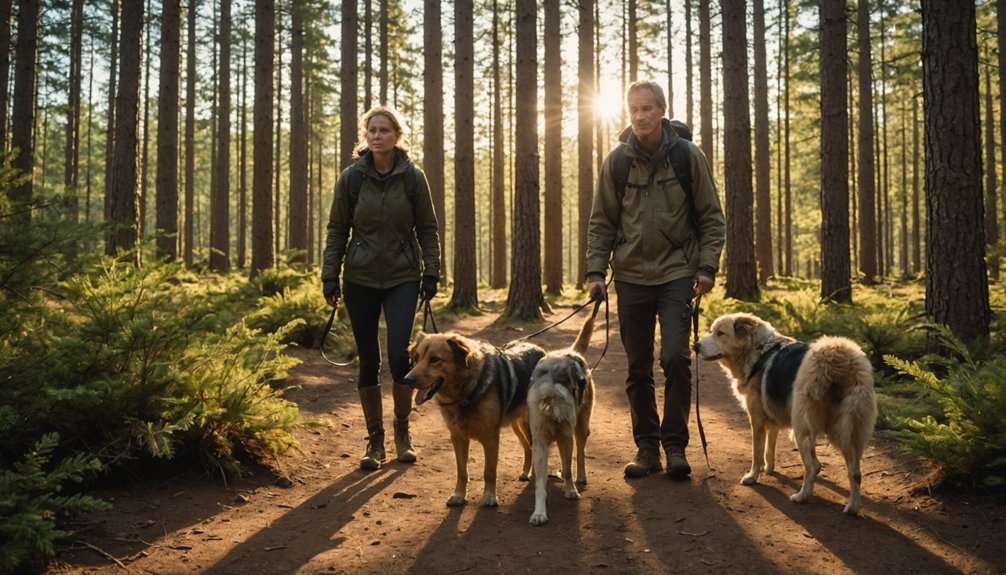
Just as terrain shapes physical demand, your dog’s age, breed, and health status determine how much of that demand they can safely absorb.
Puppy development stage matters most—young joints need conservative mileage, not endurance tests. Puppies should start with 15-30 minute walks, building up gradually as they grow. Adults in peak condition can handle bigger challenges when nutrition, weight, and dog training keep them ready. Seniors need flatter, shorter routes as arthritis and reduced cardiovascular capacity change what’s realistic.
Breed characteristics also matter: large breeds hit “senior” status earlier, while toy breeds face stride-length limits regardless of age. Understanding your dog’s behavior and canine psychology helps you spot fatigue before it becomes a problem. Health conditions such as painful hip conditions, long-term itchy skin issues, or epilepsy can also limit how far and how often a dog should be walked, regardless of age or breed. Research also shows that trail-related activity levels can vary simply because of dog breed, independent of age or size, so matching routes to your specific breed’s tendencies is as important as matching them to fitness.
- Puppies: short, shaded, low-impact trails with frequent breaks
- Adults: progressive distance or elevation, never both at once
- Seniors: soft surfaces, cooler hours, easy bailout points
- All ages: routine veterinary care to catch health issues early
When Growth Plates and Body Condition Score Matter
While your dog’s age tells you roughly where they stand developmentally, growth plates and body condition score tell you exactly how much physical stress their frame can handle right now. Growth plates are soft cartilage zones that drive puppy development, and they stay vulnerable until ossification is complete—months later for large and giant breeds than for small ones. Hit the trail too hard too soon, and you risk permanent joint health damage instead of freedom to roam later.
| Factor | Trail Impact |
|---|---|
| Open growth plates | Stick to short, low-impact, varied terrain |
| Confirmed closure | Safe for endurance, hills, technical trails |
| Poor body condition | Increases joint stress regardless of age |
Match trail difficulty to your dog’s actual structural readiness, not just their birthday, and trail safety follows naturally. Repetitive loading on immature joints from early, intense trail outings can trigger early growth plate closure, leading to lasting orthopaedic problems. Instead of guessing, watch for limping or other issues with movement during and after hikes, since these signs indicate your dog’s frame isn’t ready for the terrain you’ve chosen.
Signs Your Dog Needs Vet Clearance Before Hiking
Growth plates and body condition score cover structural readiness, but they don’t tell you whether your dog’s body is fighting off illness or managing a condition that hiking could worsen.
Before you plan a trail, screen for signs that call for a vet consultation:
- Digestive red flags: recent vomiting, diarrhea over 24 hours, blood in stool, or sudden appetite/thirst changes.
- Chronic conditions: known heart, respiratory, kidney, or orthopedic issues that reduce exercise tolerance.
- Breathing or heat concerns: labored breathing, excessive panting, or prior heatstroke episodes.
- Mobility or pain issues: limping, reluctance to move, or unresolved wounds.
If any of these apply, get medical clearance first.
Freedom on the trail starts with a dog whose body’s actually ready for it.
Fatigue Cues to Watch for on the Trail
A tired dog rarely collapses without warning—it tells you first through small shifts in pace and posture.
Watch for lagging behind, frequent stops on easy ground, or veering toward shade instead of the trail line.
Wobbly gait, tripping, or sudden limping means muscles and joints are strained.
Dog wellness depends on catching breathing changes early: excessive panting, a spatula-wide tongue, or raspy breath that won’t settle after rest are red flags.
Drooping ears, a lowered tail, glazed eyes, or lying down mid-hike signal real exhaustion, not laziness.
Bright red or pale gums and a racing heart rate demand immediate attention.
Trail safety means responding to these cues fast—rest, shade, water—rather than pushing forward and hoping your dog recovers on its own.
How to Know When to Turn Back Early
Because conditions can shift faster than your dog’s stamina, you need clear triggers for turning back—not just gut feelings.
Trail safety means watching for hard signals, not waiting until your dog struggles. Outdoor awareness is your edge—use it to read the environment before your dog pays the price.
- Weather turns: Darkening skies, wind, or sudden temperature drops mean it’s time to head back, not push forward.
- Trail hazards: Washouts, ice, or unstable footing threaten paws and joints—reroute immediately.
- Resource limits: Low water, food, or energy mismatches signal your buffer is gone.
- Body signals: Limping, wobbling, or reluctance are non-negotiable stop signs.
Emergency preparedness and trail etiquette matter here—respect your limits, other hikers, and your dog’s safety. Freedom means knowing when to retreat.
Building Trail Endurance Without Overdoing It
Knowing when to turn back only matters if you’ve built your dog’s endurance the right way in the first place.
Real trail conditioning comes from gradual progression, not one heroic weekend hike.
Start with 15–30 minute flat walks, then build toward multi-mile hikes over 6–8 weeks, adding distance and elevation systematically.
Effective endurance training means challenging your dog 3–5 times per week—not just once.
Mix one longer outing, one moderate terrain session, and short easy days with real recovery built in.
Keep total workload increases to 10–15% at a time.
Safe hiking depends on this structure: flat surfaces first, rougher terrain later, elevation gains introduced gradually.
Freedom on the trail comes from fitness you’ve actually earned, not guessed at.
Checking Leash Laws and Dog-Friendly Trail Rules
Once you’ve built your dog’s fitness, the next variable you can’t guess at is the law.
Leash regulations shift depending on who manages the land, so the same trail system can have different trail restrictions at the county line, the park boundary, or the forest entrance. Don’t assume city rules apply on state or federal land.
Before you go, verify:
- Land manager: municipal, county, state park, national forest, or BLM—each sets its own rules.
- Leash length: most developed areas cap it at 6 feet; some trailheads enforce buffer zones up to 200 feet.
- Elevation or zone limits: certain wilderness areas require leashes at all times, regardless of your dog’s training.
- Total bans: some reserves prohibit dogs entirely, no exceptions.
Check current signage or agency websites—rules change without warning.
Adjusting Your Trail Plan for Weather and Wildlife
While leash laws set the legal boundaries, weather sets the physical ones—and it’s often the more immediate threat to your dog’s safety.
Check weather forecasting before you lace up—heat index, wind chill, and storm timing dictate whether a trail’s safe at all.
In hot, humid conditions, pick shaded, flatter routes and hike early morning; skip midday entirely.
In cold seasons, midday works best, with short, brisk bookend walks.
Test trail conditions directly: press your hand on pavement or rock for 7-10 seconds—if it’s too hot for you, it’s too hot for paws.
Watch for icy patches, boggy ground, and stagnant water sources.
Carry water, offer it every 30-60 minutes, and reroute or cancel when thunderstorms, extreme heat, or ice make the trail unsafe.
Frequently Asked Questions
Should I Bring Extra Water or Food for Longer Hikes With My Dog?
Yes—bring extra water and snacks. Dog Hydration needs rise with heat, elevation, and distance, so smart Hike Planning means packing enough for breaks, watching for panting or lagging, and adjusting freely on the trail.
What Gear or Equipment Is Essential for Hiking Safely With a Dog?
You’ll need durable dog collars with ID tags, sturdy leash options suited to terrain, a well-fitted saddle, water, and a first aid kit. Pack booties and reflective gear—stay prepared, stay free to discover confidently.
Can I Carry My Dog if They Get Too Tired to Walk Back?
Yes, but only for small dogs within weight limits—use pet carriers or dog transport backpacks on moderate terrain. For medium/large dogs, you can’t safely carry them far; plan shorter routes and turn around early instead.
What Should I Pack in a Dog First-Aid Kit for Trails?
Pack gauze, vet wrap, and antiseptic for dog wounds, plus tweezers, saline, and Benadryl for pet emergencies. Add booties, a muzzle, and a contact card—you’ll handle trail surprises confidently and keep exploring freely, without hesitation.
Are There Specific Dog Breeds Better Suited for Long-Distance Hiking Overall?
Yes—breeds matter. Border Collies, Huskies, Labradors, and Vizslas excel long-term due to bred-in endurance. But don’t ignore individual fitness levels: match your dog’s actual conditioning, not just breed reputation, and you’ll hit the trail confidently.
Conclusion
You know your dog best, but honesty beats optimism when picking a trail. Match distance, elevation, and terrain to their real fitness—not the level you wish they had. Watch for warning signs, check local rules, and adjust for weather before you go. Start conservative, build endurance gradually, and you’ll turn every hike into a safe, enjoyable outing instead of a risky gamble on the trail.
References
- https://www.treelinereview.com/learn-skills/hiking-with-dogs
- https://sagepethospital.com/blog/trails-tails-dog-friendly-hiking/
- https://raintreepets.com/blog/guide-hiking-with-dogs/
- https://www.youtube.com/watch?v=gWzLyCbLJ6w
- https://settingmind.com/dogs-gone-hiking-the-importance-of-the-right-trail/
- https://www.allaboutpetsprovo.com/beginners-guide-to-hiking-with-dogs.html
- https://thedogeffect.com/dog-lifestyle/hiking-with-dogs/
- https://www.youtube.com/watch?v=YS1VzaFRYX4
- https://www.denverdog.co/how-to-condition-a-dog-for-trails-and-fitness
- https://www.akcchf.org/educational-resources/library/articles/beyond-the-scale-rethinking-how-we-measure-a-dogs-fitness/