If you’re bringing your dog from the US or Canada, SENASICA won’t require a health certificate—just a physical inspection at the port of entry, per current Mexican and USDA-APHIS standards. You’ll still need proof of rabies vaccination and parasite treatment, plus a clean, properly sized carrier free of bedding or toys. Dogs from other countries face stricter documentation. Starting in 2026, screwworm concerns may add new requirements—here’s what’s changing and how to prepare.
TLDR Key Takeaways
- Dogs from the US and Canada don’t need a health certificate, just a physical inspection at entry.
- SENASICA requires proof of rabies vaccination and parasite treatment, including product name and vet signature.
- Dogs must be visibly free of fleas or ticks during the mandatory OISA inspection upon arrival.
- Carriers must be clean, sturdy, ventilated, and free of bedding, toys, or treats.
- Starting in 2026, US dogs may need a new certificate addressing New World screwworm concerns.
Do You Need a Health Certificate From the US or Canada?
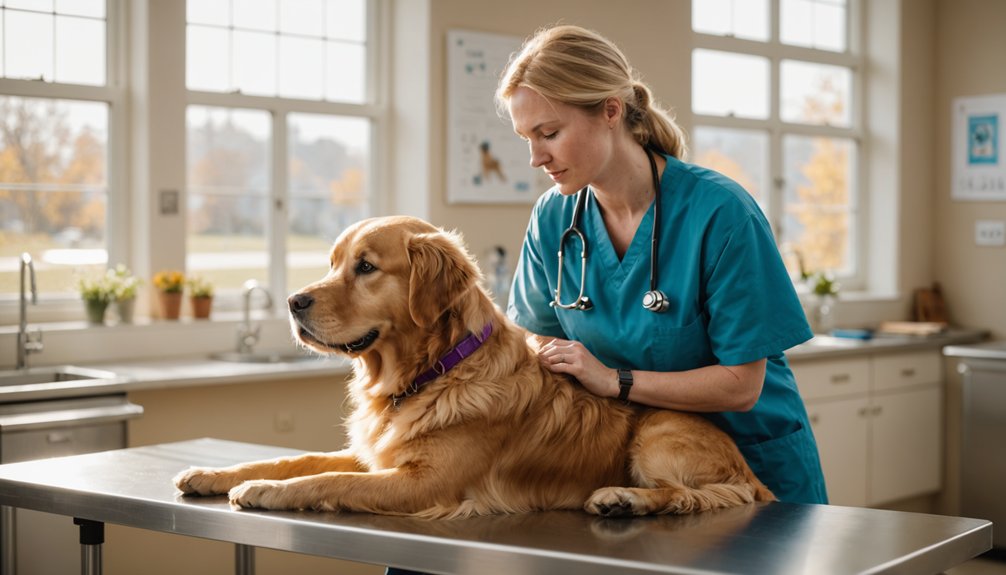
Good news: if you’re bringing your dog into Mexico from the United States or Canada, you don’t need a health certificate.
SENASICA confirms that dogs traveling from the US or Canada skip the “Certificado de Buena Salud” and vaccination paperwork entirely.
Instead, your dog undergoes a physical inspection at the port of entry—that’s it. Officials will also check your dog’s transport container to make sure it’s clean and free of certain items. Note that dogs coming from the US do need a document proving they are free of the cattle fever tick.
USDA-APHIS backs this up, confirming that as of December 16, 2019, health certificates aren’t required for dogs entering Mexico under US requirements.
Canada regulations align with this same standard, verified by Mexican consular offices.
This applies whether you’re crossing a land border, flying in, or arriving by cruise ship, as long as your trip stays within normal travel timelines.
If you’re unsure whether other rules might apply, it’s wise to check the Mdulo de requisitos zoosanitarios para exportacin beforehand.
No paperwork, no vet visits—just show up ready for inspection.
Which Countries Still Require a Good Health Certificate?
That exemption doesn’t apply everywhere, though. If you’re traveling from a country outside the US or Canada, expect Mexico’s pet regulations to require sanitary documentation, even if there’s no single global list confirming exact terms for every origin country.
Look beyond Mexico, and health certificates remain the norm. Canada asks for one in certain risk categories. Peru demands full vaccination, deworming, and a certificate. The EU requires a zoosanitary certificate or equivalent pet passport, while the UK insists on an Animal Health Certificate or valid EU passport. In the EU, such a certificate must be issued by an authorized veterinarian within 10 days of travel. Certificates signed by a veterinarian must also be presented in Spanish for entry into Spain. Requirements are always verified against official sources like the CDC and USDA before publication.
Bottom line: countries outside exemption structures—much of Latin America, Africa, Asia, and the Middle East—still require official veterinary-signed certificates matching the destination’s exact format. Don’t assume freedom from paperwork just because one route’s simplified.
What Rabies and Deworming Proof SENASICA Requires
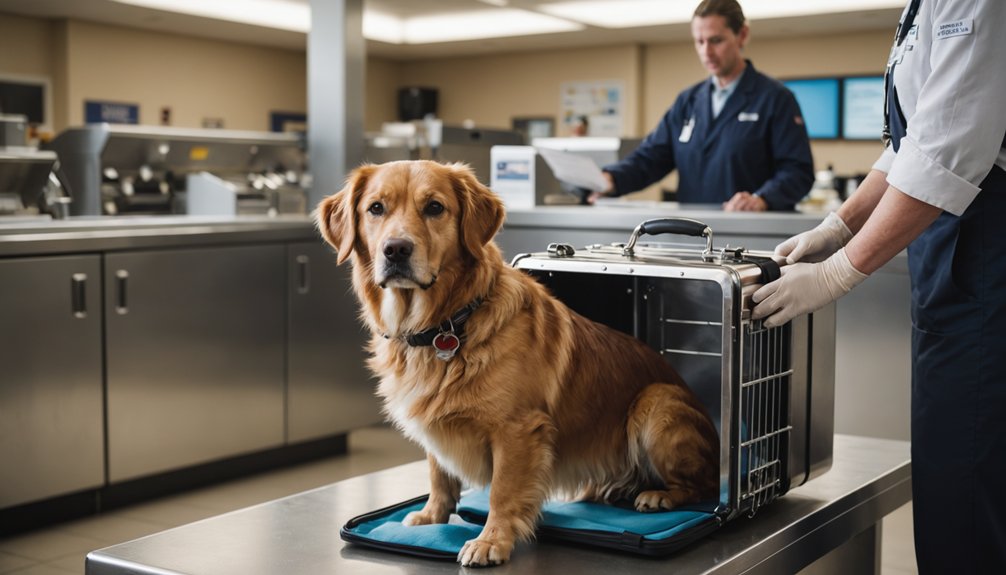
Two documents matter most at SENASICA inspection: a current rabies vaccination record and proof of parasite treatment. Rabies requirements demand a certificate showing the vaccination date and validity—1 year for initial doses, 3 years for enhancers—administered 15–30 days before travel and still current at arrival. Puppies under 3 months are exempt. Deworming protocols require documented treatment for both ectoparasites and endoparasites within the last 6 months, ideally listing product name, date, and veterinarian signature. Your dog must also appear visibly free of fleas or ticks at inspection. Missing either document means treatment happens in Mexico, at your expense. Note that Mexico actually dropped the routine health certificate requirement back in 2019, simplifying overall entry. A physical inspection at SENASICA is mandatory upon arrival, regardless of how complete your paperwork is.
| Requirement | Key Detail |
|---|---|
| Rabies vaccine | Current, not just completed |
| Validity | 1 year initial, 3 years enhancer |
| Exemption | Under 3 months old |
| Parasite treatment | Within 6 months |
| Documentation | Product, date, vet signature |
The New Screwworm Certificate for US Dogs (Starting 2026)
Because New World screwworm has resurfaced in the United States, cross-border pet travel is about to get more complicated.
SENASICA is expected to introduce new certificate requirements for U.S. dogs entering Mexico starting in 2026, mirroring existing screwworm prevention protocols already required for pets returning to the U.S. from Mexico. This comes as 41 cases of New World Screwworm have already been detected in southwest Texas and New Mexico. You’ll want to prepare now, since these certificate requirements will likely demand:
- Issuance by a government-accredited veterinarian, not just any practitioner
- Documentation of a physical exam confirming no wounds or larvae
- A short validity window—likely 5 days from inspection
- Proof of treatment with an approved systemic product like NexGard, including name, date, and route
The FDA has authorized NexGard chewable tablets as an Emergency Use Authorization product specifically for treating New World screwworm myiasis in dogs. Property owners are also being urged to remove anything that could cause animal wounds, since injuries increase the risk of infection. Staying ahead of these changes keeps your travel plans on track and your dog protected.
How to Prep Your Dog’s Carrier for Inspection
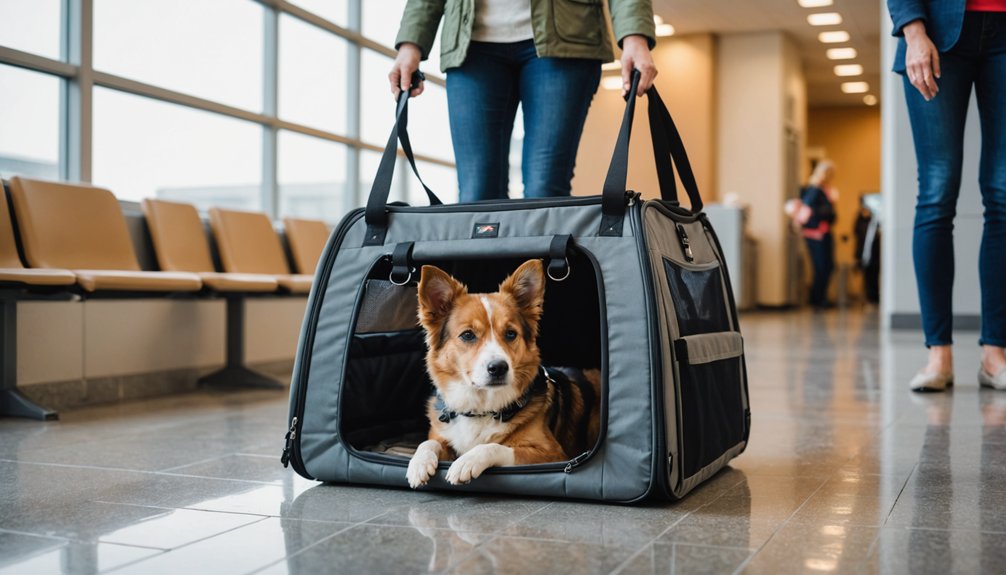
Your dog’s carrier faces almost as much scrutiny at OISA as your paperwork does. Carrier preparation isn’t optional—it’s your ticket to a fast, uneventful crossing. SENASICA officials expect a clean, structurally sound carrier with clear visibility for inspection readiness. Skip the bedding, toys, or treats; they’ll be confiscated and destroyed on the spot. These inspections take place at Animal and Plant Health Inspection Offices located at international airports, border crossings, and international seaports.
| Requirement | Compliant | Non-Compliant |
|---|---|---|
| Interior | Empty, clean | Bedding, toys, treats |
| Structure | No cracks, secure latch | Broken doors, sharp edges |
| Visibility | Open ventilation for viewing | Obstructed sightlines |
| Size | Room to stand, turn, lie down | Cramped, restrictive |
Collars and leashes stay on—no issue there. Officials spray disinfectant regardless, but a prepped carrier means fewer delays and no secondary inspection headaches. A dirty or disposable-material-filled carrier will trigger mandatory disinfection before your dog is allowed to proceed. If your dog has any unhealed wounds upon arrival, officials will require treatment with a topical larvicide before entry is permitted.
What Food and Treats You’re Allowed to Bring
Once your dog’s carrier passes muster, don’t let a bag of treats undo all that prep work.
SENASICA cares about what’s fueling your dog nutrition plan, and the rules are strict but freeing once you know them.
- Dry commercial food only—no ruminant-origin ingredients like beef, lamb, or goat.
- Original packaging required—torn bags, repackaged kibble, or homemade blends get confiscated.
- Clear ingredient labeling—brand, lot, expiration date, legible in Spanish or English.
- Personal-use quantities—unpackaged food limited to one day’s serving for your dog.
For pet snacks, stick to shelled nuts or seedless dried fruit.
Wet, raw, or artisanal products won’t clear inspection—officers simply confiscate them, no fines involved.
Toys, Bedding, and Other Items SENASICA Will Confiscate
A bare-bones carrier is the only acceptable carrier when you reach OISA inspection. Carrier rules demand a completely empty interior—no bedding, no toys, no treats. SENASICA staff will strip out anything organic or non-essential and destroy it on sight.
| Item Type | Examples | Outcome |
|---|---|---|
| Bedding | Newspaper, fleece, wood shavings | Removed, destroyed |
| Toys/Accessories | Squeaky toys, stuffed animals, chews | Confiscated, biohazard trash |
| Treats/Food | Any edible product | Destroyed |
| Dirty Carrier | Hair, feces, urine residue | Disinfected on-site |
Pet safety drives this policy: organic materials carry ticks, fleas, and pest risks. Collars and leashes stay put—everything else is fair game for disposal. Travel light, travel free.
What Happens During OISA Inspection on Arrival
With that empty carrier in hand, you’ll clear immigration and customs first, then head to the OISA desk near baggage claim or the arrivals hall.
This inspection process is quick, standardized, and non-negotiable—part of Mexico’s core entry requirements for pets.
SENASICA personnel check your dog against a checklist covering:
- General condition and behavior
- Fresh or healing wounds, rashes, or skin lesions
- Ectoparasites—fleas, ticks, mites—in the coat, ears, and skin
- Physical traits (sex, breed, color) matched to any health documentation
If everything checks out, you’ll get clearance on the spot, and you’re free to go.
No excessive paperwork, no unnecessary delays—just a straightforward health screening designed to keep disease out while letting you and your dog move on quickly.
How to Fill Out Mexico’s Pet Import Form
Paperwork trips up more travelers than any other part of this process, so precision matters here. Before touching customs forms, check the MCRZI to confirm which import regulations apply to your route.
Fill out “species” as “canino”—no abbreviations. List breed, sex, and age fully, using years or months. Under “common name,” write “perro”; add “Canis lupus familiaris” if the system requests scientific classification. Include microchip or tattoo numbers when required.
For origin, name where your dog was actually born or raised; procedence reflects the last country before Mexico, which may differ if you transited elsewhere. Describe your dog as a “companion animal,” not livestock, and select “companion” under zootechnical function—never a production category. Match your route to your documentation exactly.
How SENASICA Checks for Ticks and Ectoparasites
Once your forms clear, your dog still has to pass a hands-on exam.
SENASICA officers at OISA perform a physical inspection, checking your dog’s body directly instead of relying on paperwork alone.
They’re looking for:
- Ectoparasites — ticks and fleas
- Signs of infectious or contagious disease
- Rashes or skin irritation
- Open or healing wounds
If tick detection turns up a hit, officers take a sample and send it to an official lab for identification.
Your dog stays in OISA custody until results confirm the parasite isn’t foreign to Mexico.
You’ll need a vet for ectoparasite removal, and you’re responsible for that cost.
Keep your dog clean and your carrier empty—it makes the whole process faster and gets you moving again.
What Triggers Detention, Treatment, or Refused Entry
Because SENASICA enforces strict entry standards, several red flags can stop your dog at the border. Incomplete paperwork—missing Good Health Certificates, expired dates, or an incomplete FF-SENASICA-003 form—triggers secondary review and possible Pet Detention until a local vet corrects the records at your expense.
Physical red flags matter just as much. Fever, respiratory distress, open sores, healing wounds, or severe skin conditions can lead to Animal Rejection or detention for veterinary evaluation. Fleas, lice, or mites found during inspection mean mandatory removal and treatment before clearance—SENASICA won’t release your dog until every parasite’s gone.
Dirty carriers, bypassing inspection points, or arriving without presenting your dog for review also invite intervention. Bottom line: clean documentation, a healthy dog, and a sanitary carrier keep your travel plans on track.
Getting Your Dog’s Final Entry Certification
Passing inspection isn’t the finish line—you still need SENASICA to formally certify your dog’s entry.
At your first Mexican port of entry, SENASICA/OISA officials verify your travel documents against your dog’s physical condition, then issue formal certification confirming you’ve met all Entry Requirements.
Here’s what determines which certification you get:
- Physical inspection confirms no disease, parasites, or wounds.
- Documentary review checks your health certificate, vaccination proof, and import form.
- Import Certificate gets issued for standard entries without Frequent Traveler enrollment.
- Entry Record applies if you’re enrolled in the Frequent Traveler Program, valid up to 6 months.
Your dog and carrier must arrive clean, free of bedding or organic material—officials will disinfect or dispose of anything non-compliant before granting final clearance.
Frequently Asked Questions
Can Multiple Dogs Travel Together Under One Owner’s Paperwork?
Yes, you can group your dogs on one health certificate for pet transport, but SENASICA still inspects each dog individually, verifies rabies status per animal, and caps duty-free entry at three—preserving your freedom for dog companionship while traveling.
Are Puppies Under Three Months Exempt From All Entry Requirements?
No—you’re only exempt from rabies proof. Your puppy import still requires SENASICA inspection, deworming records, and clean equipment. Skip pet quarantine worries, but don’t assume free entry; officials retain full discretionary authority per SENASICA documentation.
Do Service Dogs Get Different Treatment at Mexican Border Crossings?
No, you don’t get special treatment. SENASICA’s Border Procedures apply equally—your service dog faces the same inspection, vaccination, and Travel Documents requirements as any pet, regardless of your airline paperwork (SENASICA/APASDEM guidance).
Is There a Fee Charged for OISA Inspection or Certification?
No, you won’t pay OISA costs for standard inspection. USDA-APHIS and SENASICA confirm no import fees for basic entry review; the CZE’s free too. You’re only liable if parasites demand vet treatment.
Can Entry Be Pre-Approved Before Arriving at the Airport?
No, you can’t fully pre-approve entry. Under Mexican regulations, SENASICA issues your CZI only through on-site airport procedures—physical inspection plus document review at arrival, not remote pre-clearance, even with Frequent Traveler Pet registration.
Conclusion
You don’t need a health certificate if you’re arriving from the US or Canada, but you still must show current rabies and deworming proof, per SENASICA’s published guidelines. Starting in 2026, you’ll also need that screwworm certificate for dogs entering from the US. Prep your carrier, fill out your import form accurately, and expect an ectoparasite check. Meet these requirements, and you’ll get your dog’s final entry certification without delay.
References
- https://www.gob.mx/cms/uploads/attachment/file/565030/If_you_are_traveling_with_your_pet2.pdf
- https://www.universalweather.com/blog/bringing-pets-into-mexico-updated-sagarpa-senasica-requirements-for-business-aviation-arrivals/
- https://www.aphis.usda.gov/pet-travel/us-to-another-country-export/pet-travel-us-mexico
- https://www.aphis.usda.gov/print/pdf/node/3669
- https://visitingmexico.com/mexican-pet-regulations/
- https://www.gob.mx/senasica/documentos/si-viajas-con-tu-mascota-194177
- https://inspection.canada.ca/en/animal-health/terrestrial-animals/exports/pets/mexico
- https://consulmex.sre.gob.mx/leamington/index.php/non-mexicans/other-services/122-taking-pets-to-mexico
- https://embamex.sre.gob.mx/suecia/index.php/es/travel-to-mexico/traveling-with-pets
- https://preflightpet.com/dog-from-usa-to-mexico/